Japan Earthquake | Page 1561
 taking off, will be back for a bit tonight.by lillymunster 6/9/2011 8:46:54 PM
 Wolf, that was back on March 16by Markfm 6/9/2011 8:46:55 PM
 @Markfm I know, thought it was interesting to see how many watched the blog...by WolfDK 6/9/2011 8:47:32 PM
- It was a pretty good surgeby Markfm 6/9/2011 8:48:02 PM
 heavy steam from 4 www.tepco.co.jpby Edano 6/9/2011 8:57:37 PM
static.grindtv.com
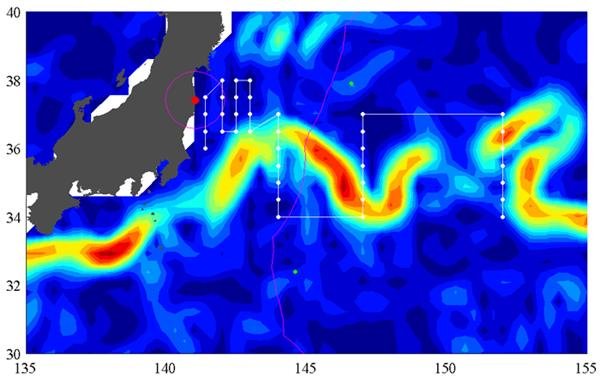
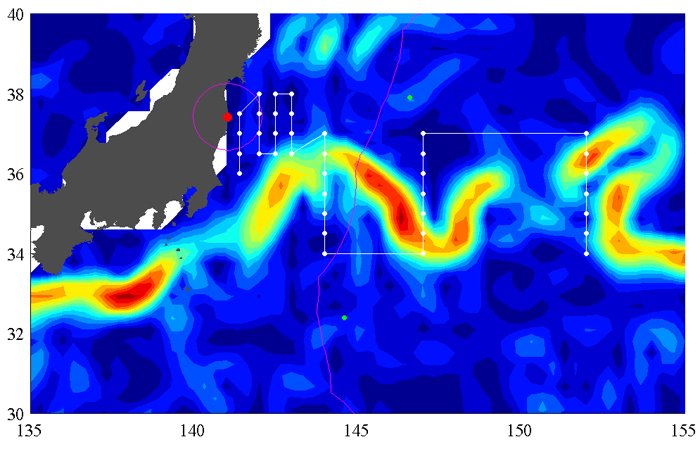
Woods Hole Oceanographic Institution's Fukushima Radiation Survey Daily Updates:
June 8
Connections:
"Oceanographers look at the chemistry of the water and examine chemical tracers (including radiation) to understand the physical processes governing the movement of water between ocean basins or between ocean and atmosphere. They look at the physical processes beneath the surface to help understand more about the marine organisms that can move thousands of miles each year or that stay in one place all their lives.
We’re taking samples of water, air, and biota (mainly the lowest levels of the food chain) to test for a suite of more than a dozen different radionuclides. These natural and man-made radioactive elements include isotopes of potassium, uranium, and thorium that are always present in sea water as well as the telltale fingerprint of releases from Fukushima and Cold War nuclear weapons testing that show up in cesium-134 and -137 and the short-lived isotopes of iodine.
Many of the samples we’re taking will not be analyzed onboard. In fact, the refrain here has been that we will leave the ship with very little data. What we will have instead is a wealth of samples that we are pre-processing and packaging to send to labs all over the world with specific expertise in studying one isotope or another."
June 9
Chasing Fish:
"The phytoplankton samples are filtered and will be analyzed for chlorophyll content back on land. The Bongo and Methot net samples are divided, with ninety percent destined to be freeze-dried and ground up for radiochemical measurements back at Stony Brook and for additional, more labor-intensive analysis at Oregon State University.
Comparing this to the amount and type of radioactive isotopes we find in the water will then tell more about how much of which substances is actually being assimilated into and passed among the lower levels of the food chain."
www.whoi.eduby Reed via Static.grindtv 6/9/2011 8:58:23 PM
lh4.googleusercontent.com
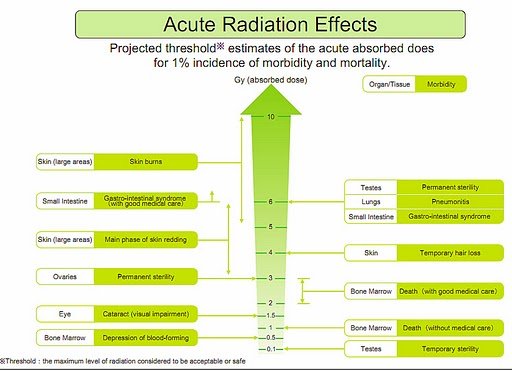
Federation of Electic Power Companies of Japan
www.fepc.or.jpby elainekirk via Lh4.googleusercontent 6/9/2011 9:10:20 PM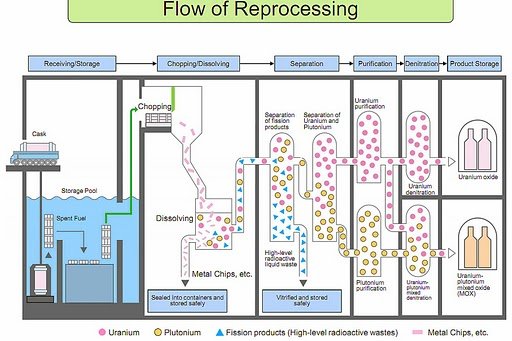
Mox production graphic v (v'large file warning)
by elainekirk via Lh6.googleusercontent 6/9/2011 9:30:06 PM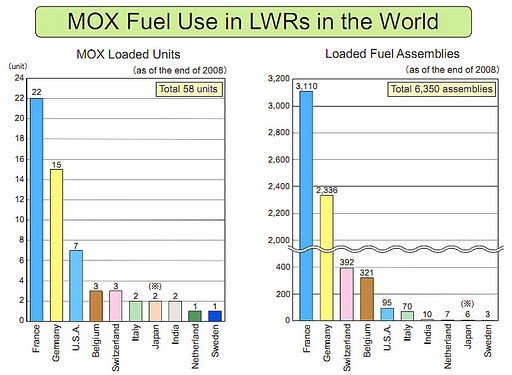
lh3.googleusercontent.com
@nancy @all this is confusing me how if fuku loaded 32 assemblies in #3 reactor why in 2008 did 2 Japanese units only have 6 assemblies loaded between them?by elainekirk via Lh3.googleusercontent 6/9/2011 9:37:28 PM- because fuku loaded mox in 2010 ? the 6 assemblies were in testing reactors ? there is * footnote.by Edano 6/9/2011 9:41:59 PM
- hey nancy, if you have time, rip this pdf: dels.nas.edu very nice pictures.by Edano 6/9/2011 9:43:47 PM
- @edano should we pin that? are there any pins that can come down?by elainekirk 6/9/2011 9:47:04 PM
 I vote to use a Bowling Ball on the Wall !by Veenie 6/9/2011 9:49:09 PM
- @veenie good to see the tweets rolling again :)by elainekirk 6/9/2011 9:49:49 PM
- @elainekirk : it is pinned, but not ripped.by Edano 6/9/2011 9:49:57 PM
- @elainekirk : the fuku mama story is over by now ?by Edano 6/9/2011 9:50:54 PM
- @edano I contemplated pretending that I knew what 'ripping a pdf' meant , but have decided that I will make us coffee and see if I can work it outby elainekirk 6/9/2011 9:52:38 PM
- @elainekirk : "The original Tepco data recordings" ???by Edano 6/9/2011 9:52:53 PM
- @elainekirk : extracting the pics :)by Edano 6/9/2011 9:53:16 PM
- @edano sounds good, whichever you think :)by elainekirk 6/9/2011 9:57:46 PM
- @elainekirk "sweet as pie voice" you got mail )by Veenie 6/9/2011 10:02:18 PM
- @veenie I go look @edano is it a big oops or a wee oops?by elainekirk 6/9/2011 10:04:00 PM
- @BrentH I am not a contributor on this side, but I wanted you to know, that the people here appreciate your comment )by Veenie 6/9/2011 10:05:55 PM
 Hello to everyone. LURKING since early May and I just wanted to finally make a comment to say what a fantastic job you people have been doing to bring the information to the masses, despite the continued lack of real info from our Governments. Keep up the good work!by BrentH 6/9/2011 10:08:15 PM
- @brentH thank you and thank you @veenie for reminding me to check the mod queue you are now on autopost Brent :)by elainekirk 6/9/2011 10:09:54 PM
- Residents of the Tokyo metropolitan area are becoming increasingly concerned about levels of radiation spreading to their neighborhoods from the tsunami-hit Fukushima No. 1 Nuclear Power Plant.
mdn.mainichi.jpby elainekirk 6/9/2011 10:12:39 PM  @ reed love the static grind Woods Hole post. @ elaine good job with the MOX dox.by carabnr 6/9/2011 10:15:27 PM
- @carabnr tyby elainekirk 6/9/2011 10:20:00 PM
- OhMy what is happening at #1 www.tepco.co.jp that is smokeby elainekirk 6/9/2011 10:25:46 PM
- Is it possible they opened the doors and that is the high level radioactive air coming out?by elainekirk 6/9/2011 10:28:09 PM
- If anyone knows how I can find out (or find a diagram) for Ft. Calhoun NPP in Nebraska, where the spent fuel pool is located? They are starting to get flooding and have had two electrical fires including knocking out cooling to their spent fuel pool. So that brought up the question of is the spent fuel pool at ground level or up high like in the BWR units? It is a PWR but an old one and seems to be a unique design. en.wikipedia.orgby lillymunster 6/9/2011 10:40:05 PM
- @nancy I will go lookby elainekirk 6/9/2011 10:50:25 PM
 Morning everyone!by Angie 6/9/2011 11:00:32 PM
- @elainekirk I did some google searching and NRC and had no luck
@angie - Morning!by lillymunster 6/9/2011 11:01:03 PM 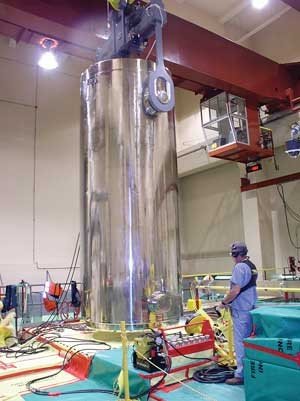
bloximages.newyork1.vip.townnews.com
not quite there but liked this pic from ft calhoun www.enterprisepub.com will keep lookingby elainekirk via Bloximages.newyork1.vip.townnews 6/9/2011 11:02:55 PM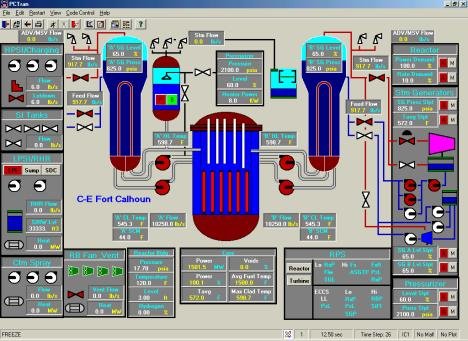
www.microsimtech.com
has this diagran got an sfp in it ?
ft calhoun www.microsimtech.comby elainekirk via Microsimtech 6/9/2011 11:04:39 PM- wow I am seeing lots of fancy looking pictures.............I think I need to read back to catch up lolby Angie 6/9/2011 11:06:02 PM
 back for a bitby dean 6/9/2011 11:06:51 PM
- hi @dean scroll down to nancy's ft calhoun postby elainekirk edited by dean 6/9/2011 11:07:27 PM
- I am looking for that info now elaine...by dean 6/9/2011 11:13:33 PM
- I think that is smoke coming out of reactor 1. has anyone else seen that on other days?.by AustralianCannonball 6/9/2011 11:16:19 PM
- Westinghouse pressurized water reactors like Ft Calhoun have their spent fuel pools at ground level, in this case the flood plain. The next reactor south of Ft. Calhoun, a GE Mark 1 and identical to those at Fukushima is the Cooper Station at Brownville, Nebrasks. It’s fuel pool is in the containment, above the reactor.
Cooper recently came within 24 hours of boiling it’s fuel pool after losing it’s cooling water circulation.
The heating in the pools is proportional to the quantity of fuel stored there. by John Sullivan, Special to ProPublica June 9, 2011, 11:20 a.m.
And the pool temperature when cooling circulation is lost.by dean 6/9/2011 11:16:51 PM - looking for more info lillyby dean 6/9/2011 11:17:23 PM
- Seems to look slightly thicker.by AustralianCannonball 6/9/2011 11:17:54 PM
- www.nrc.gov nrc noticeby dean 6/9/2011 11:18:04 PM


Japan Earthquake | Page 1561
- Who's Blogging
-
 hudebnik
 alblee
 UKVal
UKVal Jonathan Keebler
 Oliver (ScribbleLive)
 kaykodh
 Markfm
- Angie
 Mid Valley
 Matt (ScribbleLive)
 George Gibb
- elainekirk
 PKelley
- lillymunster
- dean
 bo
bo Edano
Edano Deb
Deb- Pedro Jesus
 IanGoddard