Japan Earthquake | Page 2507
 the question is - what is the criteria to be blocked - probably keywords, or a central blacklist. there must be a reason.by Edano 10/14/2011 10:24:50 PM
 @Edano yea. Sanford said "unknown website"
They used some off the shelf web filter system for their public wifi. I am guessing this off the shelf product blocks it but I don't know if they go a generic block from certain providers or some other criteria.
I know someone who used to work at Sanford - sent them a message to see if they know what program they useby lillymunster 10/14/2011 10:35:38 PM Fukushima Health Study Launched
webcache.googleusercontent.com
from nih.gov cached copy cos original has disapearedby elainekirk 10/14/2011 10:38:29 PM- @elainekirk Hrm - why don't they want the public to see it?by lillymunster 10/14/2011 10:39:43 PM
- Exposure to low level chronic radiation leads to adaptation to a subsequent acute X-ray dose and communication of modified acute X-ray induced bystander signals in medaka (Japanese rice fish, Oryzias latipes).
www.ncbi.nlm.nih.gov
interesting site the nih.govby elainekirk 10/14/2011 10:44:28 PM - The biobehavioral and neuroimmune impact of low-dose ionizing radiation.
www.ncbi.nlm.nih.govby elainekirk 10/14/2011 10:50:38 PM - Radiation exposure is related to risk of numerous types of cancer, but relatively little is known about its impact on risk of multiple primary cancers. Using follow-up data through 2002 from 77,752 Japanese atomic bomb survivors, we identified 14,048 participants diagnosed with a first primary cancer, of whom 1,088 were diagnosed with a second primary cancer. Relationships between radiation exposure and risks of first and second primary cancers were quantified using Poisson regression. There was a similar linear dose-response relationship between radiation exposure and risks of both first and second primary solid tumors [excess relative risk (ERR) per Gray = 0.65, 95% confidence interval (CI): 0.57–0.74 and ERR/Gy=0.56, 95% CI: 0.33–0.80, respectively] and risk of both first and second primary leukemias (ERR/Gy=2.65, 95% CI: 1.78–3.78 and ERR/Gy=3.65, 95% CI: 0.96–10.70, respectively). Background incidence rates were higher for second solid cancers, compared to first solid cancers, until about age 70 years for men and 80 years for women (p<0.0001), but radiation-related ERRs did not differ between first and second primary solid cancers (p=0.70). Radiation dose was most strongly related to risk of solid tumors that are radiation sensitive including second primary lung, colon, female breast, thyroid, and bladder cancers. Radiation exposure confers equally high relative risks of second primary cancers as first primary cancers. Radiation is a potent carcinogen and those with substantial exposures who are diagnosed with a first primary cancer should be carefully screened for second primary cancers, particularly for cancers that are radiation sensitive www.ncbi.nlm.nih.govby elainekirk 10/14/2011 10:54:45 PM
- 15october.net tomorrow (today) we will have "occupy wall street" in berlin. not sure how big it will be. it is somewhat chaotically organised.by Edano 10/14/2011 11:03:36 PM
- @Edano oh wow excellentby elainekirk 10/14/2011 11:04:03 PM
- @Edano It sounds like they are going to be everywhere.by lillymunster 10/14/2011 11:07:54 PM
- i hope so. when people began to protest against globalisation 15-20 years ago, i did not realise the full scale of the inherent problems, but now it's evident. it's really time for a change.by Edano 10/14/2011 11:12:01 PM
- @Edano totally if you saw some of the schemes europe is sneaking into our childrens lives they just show it for what it is a -'nice compliant workforce'- 'manufacturer'by elainekirk 10/14/2011 11:18:56 PM
 @lillymunster, I should have tried to access more Fukushima accounts to get an idea if it's Fuku-centric. I will next time I go. But it's really spooky how of all things on my site only my Unit-3 report iangoddard.com is selectively blocked, and like I said, even the thumbnail for it on my journal page! So there's a file-specific blocking and it sure seems to be selective for Fukushima. This is pretty spooky, why Fukushima discourse should be blocked. And now we also find Sanford Hospital has it blocked too. This might be grounds for a simplyinfo report. I'm off NIH campus now and I can get my report. This is government censorship on the NIH campus, so I think it's a First Amendment issue.by Ian 10/14/2011 11:37:17 PM
- Sanford Hospital has simplyinfo blocked too. Lilly, you might try to access my report from Sanford next time you're there. Perhaps there a 'master censor list' that gets distributed to governmental and educational institutions.by Ian 10/14/2011 11:39:44 PM
- @Ian Usually the web blocking software creates and distributes the lists.by lillymunster 10/14/2011 11:53:15 PM
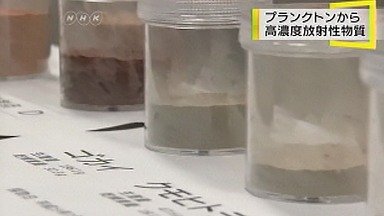
www3.nhk.or.jp
Radioactive cesium found in plankton off N-plant
High concentrations of radioactive cesium have been found in plankton from the sea near the Fukushima Daiichi Nuclear Power Plant.
Researchers from Tokyo University of Marine Science and Technology collected plankton in waters up to 60 kilometers from the coast of Iwaki City in July. They found 669 becquerels per kilogram of radioactive cesium in animal plankton from waters 3 kilometers offshore.
They say a wide range of fish feed on animal plankton and that the contamination could accumulate in the food chain and have a more serious impact when its gets into relatively large fish.
The research group's leader, Professor Takashi Ishimaru, says the plankton were so heavily contaminated because sea currents continuously carried contaminated water southward from the nuclear plant. He says detailed studies are needed to determine how long the effect on fish will continue.
Saturday, October 15, 2011 06:34 +0900 (JST)
www3.nhk.or.jpby Edano via Www3.nhk.or.jp 10/15/2011 12:13:08 AM- @Edano fancy that must be an elderly mermaid with something secreted under her rock ehby elainekirk 10/15/2011 12:15:11 AM
- this is a very serious but not suprising finding.by Edano 10/15/2011 12:16:03 AM
- @elainekirk arielle ?by Edano 10/15/2011 12:16:25 AM
- @Edano no suprise whatsoever and why has it taken 4 months to test for cesium or have they now got a good idea of the effect on fish and in 4 months will release that databy elainekirk 10/15/2011 12:17:41 AM
- @lillymunster, now I realize the NIH computers blocked my site's content based on files that have 'Fukushima' in the name! That'pics\s why the thumbnail was blocked fukushimaThumb.jpg. So this could be proved and would be clear evidence of an effort to suppress free speech on Fukushima by blocking access to it from at least one government library.by Ian 10/15/2011 12:18:28 AM
- @elainekirk in july, right. very strange, again.by Edano 10/15/2011 12:18:57 AM
- @Edano totally strange as after 4 months you would expect to have a full count pu str etc etc it just doesnt take that long surelyby elainekirk 10/15/2011 12:21:40 AM
3.bp.blogspot.com seehaikuhere.blogspot.com
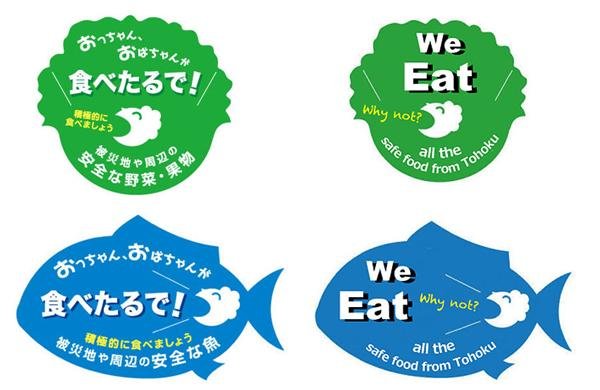
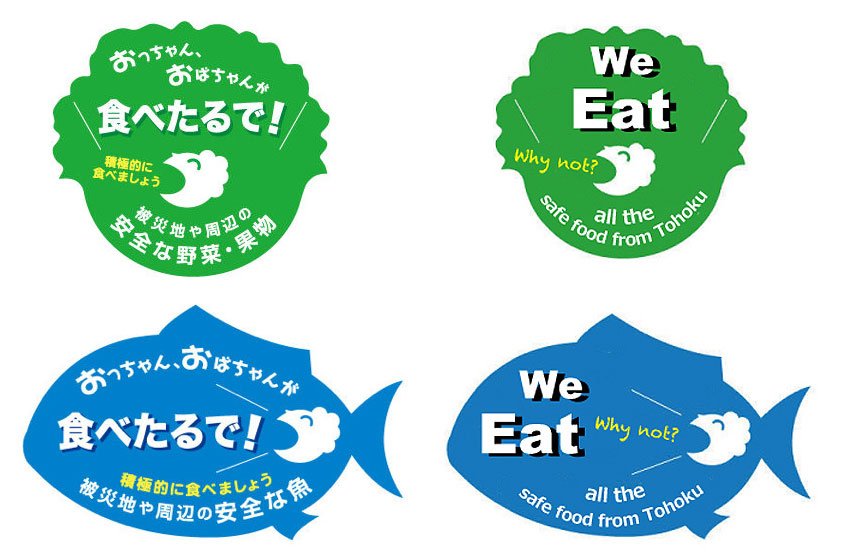
"Since the nuke problem broke out in Japan, and its news reaching throughout the world, there are wide spreading of rumors about radiation polluted foods. Food makers, farmers, fisherman, and such, are getting huge damage from the unfounded rumors.
The problem with nuke is that people prone to act on feeling rather than on data, which definitely states the foods are safe. People concerned cry out the safety of the foods, but the cry won't reach the people's ears.
Today, I received an email from an acquaintance in Tokyo. Attached it was these slogan sticker. it is a small way to calm the panic caused by the rumors, but I liked the idea so I made the English versions and sent them back. Just a small contribution of mine."by Edano via 3.bp.blogspot 10/15/2011 12:23:49 AM- @Edano gives me the shiversby elainekirk 10/15/2011 12:24:15 AM
- Jeezby lillymunster 10/15/2011 12:24:41 AM
 back for a bitby dean 10/15/2011 12:27:44 AM
- @dean gweetingsby elainekirk 10/15/2011 12:31:12 AM
- by Ian 10/15/2011 12:31:52 AM
- by Ian 10/15/2011 12:35:02 AM
- @lillymunster @Ian Today WORDPRESS is blocking all searches for “Fukushima” + they removed the WordPress blog-search bar from their sites August 19, 2011by Edano 10/15/2011 12:37:21 AM
- @Edano WTFby elainekirk 10/15/2011 12:38:59 AM
- @elainekirk i am googling censorships on fukushima ....by Edano 10/15/2011 12:39:35 AM
- @Edano, how do we test to see if Wordpress is censoring 'Fukushima'?by Ian 10/15/2011 12:40:19 AM
- @Edano nope! Just got all sorts of results off WP page en.search.wordpress.comby lillymunster 10/15/2011 12:40:37 AM
- Hi Dean!by lillymunster 10/15/2011 12:40:59 AM
- unit 2 water levels are rising docs.google.comby elainekirk 10/15/2011 12:44:25 AM
- my bedtime night night allby elainekirk 10/15/2011 12:46:26 AM
- @Ian : finally i found was i was looking for:
"Now the Japanese government has moved to crack down on independent reportage and criticism of the government’s policies in the wake of the disaster by deciding what citizens may or may not talk about in public. A new project team has been created by the Ministry of Internal Affairs and Communication, the National Police Agency, and METI to combat “rumors” deemed harmful to Japanese security in the wake of the Fukushima disaster.
The government charges that the damage caused by earthquakes and by the nuclear accident are being magnified by irresponsible rumors, and the government must take action for the sake of the public good. The project team has begun to send “letters of request” to such organizations as telephone companies, internet providers, cable television stations, and others, demanding that they “take adequate measures based on the guidelines in response to illegal information." The measures include erasing any information from internet sites that the authorities deem harmful to public order and morality." japanfocus.orgby Edano 10/15/2011 12:49:12 AM - @Edano.. has simplyinfo been hit by them?by dean 10/15/2011 12:50:12 AM
- @dean nope. The site and some of Ian's work were blocked at NIH library. I had the problem with a web filter system used at the regional hospital that blocked simplyinfo.org a few months ago. Claims it is an "unknown" site and won't let you access it from public wifi at the hospital.by lillymunster 10/15/2011 12:51:32 AM
- @lillymunster maybe you find blocking normal, but as far as i know there isn't any blocking here in europe. i even doubt that it would be legal here.by Edano 10/15/2011 12:54:26 AM
- @Edano @Edano corporate blocking done within the building/campus network is very typical. I find it stupid and distasteful but that is in a private building and not done by their ISP or the government. If ISP's start doing it they need an extended beating with a clue bat. The govt. starts doing it to the public through the telecommunications system your going to see things get worse than Wall street.by lillymunster 10/15/2011 12:59:26 AM
- @Edano It is very typical in corporate environments to keep their cubicle dwellers from having a moment of non-work or finding any information outside of the corporate bubble at work. They did a silly amount of blocking of websites at one company I worked at. I had both a Mac and a PC in my office and I wasn't sure why my predecessor had done that when there really was no need for the Mac. Then I realized why she had done it. The IT dept. ran filtering and spying programs on the PC network. They knew nothing about Macs. Anyone with a Mac had a clean connectioin out of the building, no spying, no nothing. So the photo lab and me had our own special uncensored computers.by lillymunster 10/15/2011 1:02:29 AM
- @lillymunster disturbing... i can understand that a big company blocks certain .... contents from its employees, but a library doing so is strange. our sites are surely not offensive.by Edano 10/15/2011 1:02:51 AM

Japan Earthquake | Page 2507
- Who's Blogging
-
 hudebnik
 alblee
 UKVal
UKVal Oliver (ScribbleLive)
 Jonathan Keebler
 kaykodh
 PKelley
 Markfm
 Angie
Angie Deb
Deb Mid Valley
- Pedro Jesus
 Matt (ScribbleLive)
 George Gibb
- elainekirk
- lillymunster
- dean
 bo
bo- Edano
 IanGoddard