Japan Earthquake | Page 1275
 @dh Thanks! I was worried it was about structural issues on #4. I found a document yesterday that mentioned the stairwell is gone and I have images of that corner where the building is wide open where the stairs used to be. Thanks for translating that.by Nancy 5/20/2011 7:10:42 PM
 en.wikipedia.org Nancy there are some nice images on this link.. just FYIby dean 5/20/2011 7:16:10 PM
- @dean those are creative commons so we can reuse those if needed for something.by Nancy 5/20/2011 7:19:15 PM
 This may not be news but I hadn't seen it before. From the New Scientist yesterday: www.newscientist.com Yesterday, Tokyo Electric Power Company (TEPCO), which operates the plant, admitted to Japanese media sources that an explosion on 15 March damaging reactor unit 2 occurred after two apparently failed attempts to relieve pressure within the reactor containment vessel by opening valves.
The damage, to a doughnut-shaped chamber beneath the reactor vessel, led to flooding of adjacent buildings and of tunnels beneath the unit with highly radioactive water. This leaked into the ocean for days, drastically raising radiation levels in seawater close to the plant. The leak was finally blocked early last month.by UKVal 5/20/2011 7:20:13 PM- testing
[Cleared now, at last. Lucky I got up at 3:20am (GMT+8) and had not shut down the laptop. Just now got @UKVal unstuck. - Alblee]by UKVal edited by alblee 5/20/2011 7:20:21 PM  @dean Hi! I found a pdf of the Technical Manual of the GE BWR Reactor. If that would help you at all, here's the link... api.viglink.comby Reed 5/20/2011 7:23:44 PM
- Nancy.. I'm pleased that there is another source of information I just found that is questioning the whole I idea on reactor fuel melt with in the first hour.. yeahhhhhhhhhhh "In actual news, evidence is growing that Unit 1’s meltdown was initiated by the earthquake
and only exacerbated by the ensuing tsunami. Bloomberg reports that a radiation alarm
inside Unit 1 went off before the tsunami even arrived, indicating coolant already had been
lost and fuel melting had begun. If true, this could also require a re-assessment of how quickly
reactors can melt down—that would mean meltdown had begun less than an hour after lossof-
coolant."by dean 5/20/2011 7:24:21 PM - ty
Rby dean 5/20/2011 7:24:32 PM - @dean YWby Reed 5/20/2011 7:25:12 PM
- ty Reed,,, I have started to search for HVAC systems in the buildings, in part to help bolster up where the HVAC lines leave the building and then tie in to the common line to stacks.. this will help (and others here are trying to theorize how H2 would get from unit 3 to unit 4 and explode)..by dean 5/20/2011 7:25:46 PM
 @dean I think that was a remote alarm (1.5 mile) nothing in particular to do with unit 1by RBeaner 5/20/2011 7:26:46 PM
- @Albee ty!by UKVal 5/20/2011 7:26:47 PM
- @dean wow. An hour is a very short period of time when dealing with something suddenly going out, power outage or a natural disaster. Taking off right now, didn't get the new copy of the paper yet. Will check when I get back.by Nancy 5/20/2011 7:27:05 PM
- see ya later Nancyby dean 5/20/2011 7:27:40 PM
- could have went off RBeaner due to the earthquake too shook the alarm out of itby dean 5/20/2011 7:28:19 PM
- @dean Yea, don't think it is evidence of hirad, but yuo never really know. They have rad monitors closer in, what did they say radlevels were at that time?by RBeaner 5/20/2011 7:33:31 PM
- www.heraldsun.com.au pretty damming reportby dean 5/20/2011 7:33:43 PM
- much lower RBeanerby dean 5/20/2011 7:34:03 PM
- RBeaner, the elevation print of the facility shows some HVAC system room information that I was thinking was the main exhaust plenum to go out to the stack.. I'm hunting on HVAC information or piping connection/cable trays common to units 3 and 4by dean 5/20/2011 7:37:07 PM
- @dean so an anomolous reading at the fence.. No big deal, but does create interest and promotes intrigue. The article on inspection lapses, I don't know if it is common in Japan, but it isn't routine in the US.by RBeaner 5/20/2011 7:37:27 PM
- @dean Good job, I still assume they have unified filtration systems, ... But I await your report:)by RBeaner 5/20/2011 7:39:16 PM

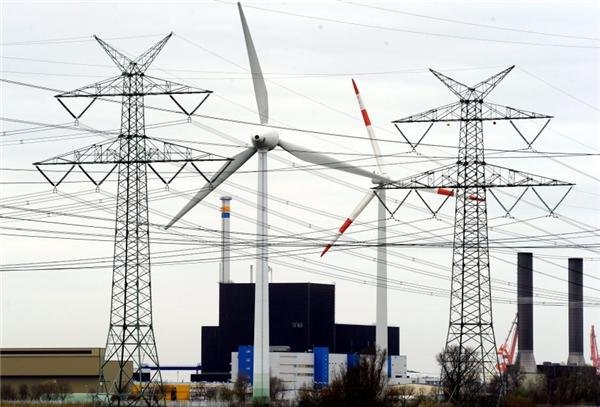
www.spiegel.de well, well, news from brave old germany testing for a better future: this weekend 13 out of 17 npps will be off grid, most of them forever. www.spiegel.de
by Edano via Spiegel.de 5/20/2011 7:40:40 PM- @All HEPA filtration banks can be a pain in the butt. They are so dense (filtering), that pollen or a dust rise, can render them useless. They have to be replaced whenever exposed to sig particles. They do a great job of filtering, just that they can become clogged (differential pressure increases across the filter) quite quickly when exposed to moisture (steam) or dust.by RBeaner 5/20/2011 7:44:07 PM
- @Edano my translator isn't working on that document, can you summarize?by RBeaner 5/20/2011 7:47:49 PM
- @Reed.. very very very nice find.. fitter should see thisby dean 5/20/2011 7:52:29 PM
- RBeaner do you have any material you've run across that you can reference, I know the TEPCO folks was saying that the H2 was blown over thereby dean 5/20/2011 7:56:03 PM
- @RBeaner : are 5 pages .... mainly it is a test for the national grid, if all regions in germany still have enough voltage with the existing power lines. but they don't expect any problems. in about a week they will decide if and which npp will be started again.by Edano 5/20/2011 7:56:47 PM
 Thanks, all. I'm off again on another 60-hour jaunt. Be back in a coupladays. Stay qewl, all.by ALBLEE 5/20/2011 8:00:39 PM
- @dean YW^3 I'll give fitter the link when I see him on the board.by Reed 5/20/2011 8:00:45 PM
 @alblee be safe hurry back :)by elainekirk 5/20/2011 8:01:08 PM
- @RBeaner :
Only four nuclear power on the power
Practice test for the nuclear phase
translate.googleusercontent.comby Edano 5/20/2011 8:04:29 PM - Before I go, if I may, at the other board is a post on a tropical storm churning up Yap Island southwest of Guam right now. Headed in the direction of the Philippines over the next 3 or 4 days but if it shifts direction early, based on experience these storms tend to curve north or northeastward and might just train their trajectory in a general heading toward Japan. Thanks. Alblee out.by ALBLEE 5/20/2011 8:13:49 PM
- @UKVal "doughnut-shaped chamber beneath the reactor vessel" :) i guess they mean the torus.by Edano 5/20/2011 8:13:54 PM
- Yes, @Edano, a while back I had thought that had to be torus. :o)by ALBLEE 5/20/2011 8:14:24 PM
- @Edano yes I suppose they didn't think people would know the termby UKVal 5/20/2011 8:15:22 PM
- @UKVal @ALBLEE : at first i wondered obout a new basement room.by Edano 5/20/2011 8:16:21 PM
- @dean Iknow I read an article that said R4 blew up from H2 from 3, But I haven't seen any detail on the exhaust vents for any of the sitesby RBeaner 5/20/2011 8:17:02 PM
- made a bit clearer later on in same article New information released by the company reveals that workers at the unit tried twice to vent pressure from unit 2, first in the morning of 13 March, then at midnight on 14 March. Six hours later, at 6.10 am on 15 March, the unrestrained build-up of pressure blew holes in the suppression chamber, whose normal job is to send steam for recycling from the reactor to a condenser.by UKVal 5/20/2011 8:17:44 PM
- @Edano I just hate these crappy translations. It appears to say that there are no power shortages, while down to 4 operating nuclear power plants. Thats good,,,, but the biggest draw of power will be when AC starts, won't it?by RBeaner 5/20/2011 8:20:09 PM
 Fukushima I Nuke Plant Reactor 1: Seawater Injection Halted on March 12 at Prime Minister's Order
Well, since this prime minister claimed to be a "nuclear expert" during the early stage of the Fukushima crisis, he must have good reasons.
Since the fuel was likely to have melted down by the morning of the day the seawater injection started, maybe it wouldn't have mattered anyway.
Kyodo News Japanese (9:28PM JST 5/20/2011):
1号機の海水注入を55分間中断 再臨界恐れ首相指示
Injection of seawater into the Reactor 1 RPV was interrupted for 55 minutes, at the order from the Prime Minister who feared recriticality
地震翌朝に燃料が溶け落ちるメルトダウンが起きたとみられる福島第1原発1号機で、政府が公表した3月12日の海水注入開始時刻の前に東京電力は注入を開始、政府の指示で55分間注入を停止していたことが20日、分かった。
It was revealed on May 20 that TEPCO had started the injection of seawater into the Reactor 1 at Fukushima I Nuke Plant sooner than the government had disclosed previously, but the company halted the injection for 55 minutes at the order from the government.
海水注入の遅れで被害が拡大したとの批判があり、専門家は「海水注入を続けるべきだった」と指摘している。
There are some criticisms that the damage got more grave due to the delay in the seawater injection. Experts say the seawater injection should have been continued.
政府の対策本部の資料では、海水注入の開始時刻は3月12日午後8時20分としていた。だが、東電が5月16日に公表した資料では、午後7時4分に海水注水を開始し、同25分に停止、午後8時20分に海水とホウ酸による注水開始、と記載されている。
The government information identifies the start of seawater injection at 8:20 PM on March 12. However, according to the data released on May 16 by TEPCO, the injection of seawater started at 7:04PM, but was halted at 7:25PM, and resumed at 8:20PM with boric acid mixed in the seawater.
政府筋によると、午後7時すぎの海水の注入は現場の判断のみで開始。原子力安全委員会への問い合わせで海水注入で再臨界が起こる恐れがあることが判明したとして、菅直人首相がいったん注水を止めさせたという。その後、問題ないことが分かり、ホウ酸を入れた上での注水が再開された。
According to government sources, the seawater injection at 7PM was the decision made by the people at the plant. After inquiring at the Nuclear Safety Commission and [supposedly] finding out that there was a danger of recriticality if seawater was poured into the RPV, Prime Minister Naoto Kan ordered the halt. Afterwards, it turned out that there was no such danger, and the seawater injection restarted with boric acid.
1号機は地震、津波による全電源喪失のため、3月12日朝には燃料の大半が溶け落ちていたとの暫定評価を、東電が公表している。
TEPCO has already announced its provisional assessment that due to the power loss resulting from the quake and tsunami, most of the fuel in the Reactor 1 had melted down by the morning of March 12.by Veenie 5/20/2011 8:32:51 PM @ Around five tons of seawater may have entered one of the reactors at the Hamaoka nuclear power plant in Shizuoka Prefecture along with about 400 tons of seawater found in its steam condenser when work was under way Sunday to put the reactor into a state of cold shutdown,
www.japantoday.comby Mona 5/20/2011 8:34:02 PM- @Mona : toast. :)by Edano 5/20/2011 8:34:36 PM
- Nancy's new site is wonderful! houseoffoust.comby Scilla 5/20/2011 8:37:22 PM
- @Scilla that isn't my site. That is the group's site. We just don't have the group name and domain on it yet. :-)by Nancy 5/20/2011 8:40:57 PM
- Huge kudos for creating it for the group!! Thank-you!!by Scilla 5/20/2011 8:42:59 PM

Japan Earthquake | Page 1275
- Who's Blogging
-
 hudebnik
 alblee
 UKVal
UKVal Oliver (ScribbleLive)
 Jonathan Keebler
 kaykodh
 PKelley
 Markfm
 Angie
Angie Deb
Deb Mid Valley
- Pedro Jesus
 Matt (ScribbleLive)
 George Gibb
- elainekirk
 lillymunster
 dean
dean bo
bo Edano
Edano IanGoddard