Japan Earthquake | Page 1741
 Defense Nuclear Facilities Safety Board recommendation concerning the failed safety culture at the Waste Treatment and Immobilization Plant at the Hanford site in the state of Washington [20 June, 2011]: cryptome.org
"The investigative record demonstrates that both DOE and contractor project management behaviors reinforce a subculture at WTP that deters the timely reporting, acknowledgement, and ultimate resolution of technical safety concerns.... The Board's investigation found significant failures by both DOE and contractor management to implement their roles as advocates for a strong safety culture.
Taken as a whole, the investigative record convinces the Board that the safety culture at WTP is in need of prompt, major improvement and that corrective actions will only be successful and enduring if championed by the Secretary of Energy."by es 6/24/2011 8:00:13 AM by Ralph Unger 6/24/2011 8:11:28 AM
 TEPCO's next president visits Fukushima
www.shimbun.denki.or.jpby bo 6/24/2011 8:20:25 AM- High School Baseball tournament to be played in Fukushima www.thepeninsulaqatar.comby bo 6/24/2011 8:22:13 AM
- Tepco Prepares to Face Shareholders online.wsj.comby bo 6/24/2011 8:24:29 AM
- GOJ prepares to face shareholders LOL.by Ralph Unger 6/24/2011 8:27:34 AM
- @bo estacion's stuck in mod and needs releasing :)by es 6/24/2011 8:39:52 AM
- Shizuoka gov. urges revision to radiation limit for tea leaves
TOKYO (Kyodo) -- The governor of Shizuoka Prefecture, a major tea leaf production region in Japan, urged the health minister Thursday to revise the provisional limit of radioactive substances in the product.
Shizuoka Gov. Heita Kawakatsu said the maximum level was unreasonable and a recent test showed tea leaves and processed tea in the area as being safe during a meeting with health minister Ritsuo Hosokawa, who promised to make public the results and check the limit's validity.
The survey was conducted under an instruction from the ministry of health, labor and welfare.
"The government applied the limit set for foods to tea, 95 percent of which is used for drinking. That was the cause of the confusion," Kawakatsu said. "Confusion and anger are swirling in the tea industry in our prefecture."
The health minister said the ministry will announce the safety of Shizuoka tea, which was once found unsafe under the provisional radiation limit, on the ministry's website. Hosokawa also said that the Food Safety Commission is checking the maximum limit's validity.
Agriculture, Forestry and Fisheries Minister Michihiko Kano met with Kawakatsu later in the day, and Kawakatsu told him, "The more we examine, the more clearly the limit appears groundless."
The government sets the provisional limit of radioactive substances in tea products at 500 becquerels per kilogram.
But after the process of drying fresh tea leaves and making them into tea products, their radiation density rises, and under the state's standard, many products could have been unable to be shipped. Shizuoka and other tea producing areas' authorities have been questioning the limit's validity.
(Mainichi Japan) June 24, 2011
mdn.mainichi.jpby estacion 6/24/2011 8:44:55 AM - High level of radiation exposure estimated
A group of doctors has found that the estimated level of accumulated internal radiation exposure for people living in Fukushima Prefecture has exceeded 3 millisieverts.
The researchers, including doctors who have provided medical care to A-bomb survivors, conducted analysis on the food and urine of 15 residents in Iitate Village and Kawamata Town in Fukushima Prefecture. These areas are about 40 kilometers from the Fukushima Daiichi nuclear power plant.
They estimate that residents have been internally exposed to up to 3.2 millisieverts for about 2 months, measuring from the date of the accident in March until early May.
Three millisieverts is 3 times higher than the long-term annual limit for ordinary people recommended by the International Commission on Radiological Protection.
One of the researchers, Nanao Kamada, says people should refrain from eating vegetables grown in the area where high levels of radiation have been detected.
Friday, June 24, 2011 07:00 +0900 (JST)
www3.nhk.or.jpby estacion 6/24/2011 8:45:02 AM 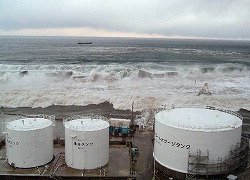
mdn.mainichi.jp
In this March 11, 2011 file photo released by Tokyo Electric Power Co., waves of tsunami come toward tanks of heavy oil for the Unit 5 of the Fukushima Dai-ichi nuclear complex in Okuma, Fukushima Prefecture, northeastern Japan. (AP Photo/Tokyo Electric Power Co.)
Quake expert urges Japan to overhaul nuke policy
TOKYO (AP) -- Japan needs to overhaul its nuclear policies and may never be safe for atomic power because it is too prone to earthquakes, a leading seismologist and former government nuclear safety adviser said Thursday.
Katsuhiko Ishibashi, a professor emeritus at Kobe University, said virtually all facilities around the country are in danger of the same kind of crisis faced by the Fukushima Dai-ichi plant after the March 11 earthquake and tsunami.
"It is very difficult to find a safe plant in Japan," said Ishibashi, who is also a former member of the government's nuclear safety committee.
Japan is one of the world's most seismically active countries. Ishibashi said that makes pursuing an aggressive nuclear power strategy more dangerous than in Europe or on the East Coast of the United States.
"From the viewpoint of seismology, all nuclear plants in Japan are in danger of earthquakes," he said at a news conference at The Foreign Correspondents' Club of Japan. He added that from an "economic and engineering perspective" it is difficult to strengthen them...
mdn.mainichi.jpby estacion via Mdn.mainichi.jp 6/24/2011 8:45:07 AM
english.kyodonews.jp
Fallen device retrieved from Monju prototype reactor
TSURUGA, Japan, June 24, Kyodo
A device that had accidentally fallen into the vessel of the prototype fast-breeder reactor Monju was retrieved Friday after 10 months, paving the way for resuming its operation by the autumn, the plant operator Japan Atomic Energy Agency said.
But due to the nuclear disaster involving the Fukushima Daiichi power plant triggered by the March earthquake and tsunami, it is unclear whether the country's nuclear fuel recycling project, in which the prototype reactor plays an important role, can move ahead as planned.
The agency hopes to test operating the reactor in Tsuruga, Fukui Prefecture, at 40 percent of its output capacity by the end of March with the aim of achieving full operation by the end of March 2014.
english.kyodonews.jpby Edano via English.kyodonews.jp 6/24/2011 8:49:44 AM- @Edano I hope the "little device" in the pic wasn't the fallen device mentioned!!by estacion 6/24/2011 8:56:23 AM
- @estacion : yes it is !
"Fallen device retrieved from Monju reactor
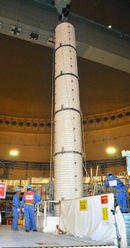
Supplied photo taken on June 24, 2011, shows a cylindrical container used in the operation to retrieve a 12-meter-long, 3.3-ton fuel exchange device which had fallen inside the reactor vessel of the prototype fast-breeder reactor Monju in Tsuruga, Fukui Prefecture, in August 2010. The device was retrieved the same day, paving the way for resumption of its normal operation by the autumn, according to its operator, Japan Atomic Energy Agency. (Photo provided by Japan Atomic Energy Agency)(PHOTO NOT FOR SALE)(Kyodo) " english.kyodonews.jpby Edano 6/24/2011 9:01:40 AM - i think japanese should not be allowed to operate npps.by Edano 6/24/2011 9:04:51 AM
- btw: the wholw fuku affair corrupts my belief in japanese technology and quality entirely. i can't help it, and i fear i am not the only one.by Edano 6/24/2011 9:07:01 AM
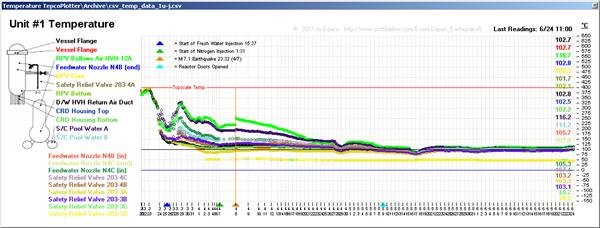
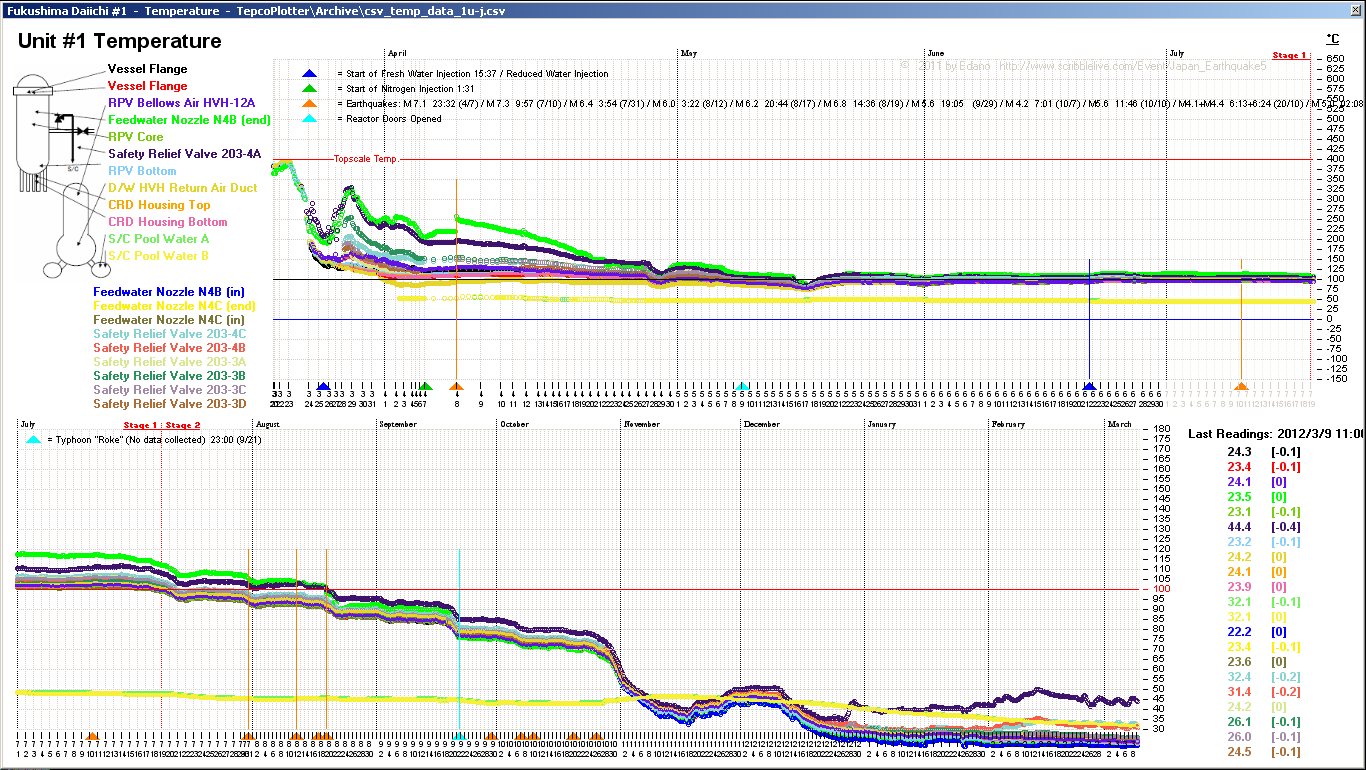
we see a sharp temperature rise in #1 since they reduced cooling. www.houseoffoust.com
by Edano via Houseoffoust 6/24/2011 9:08:21 AM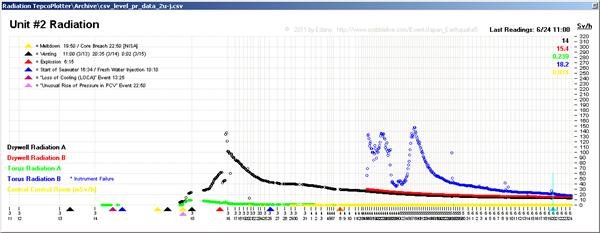
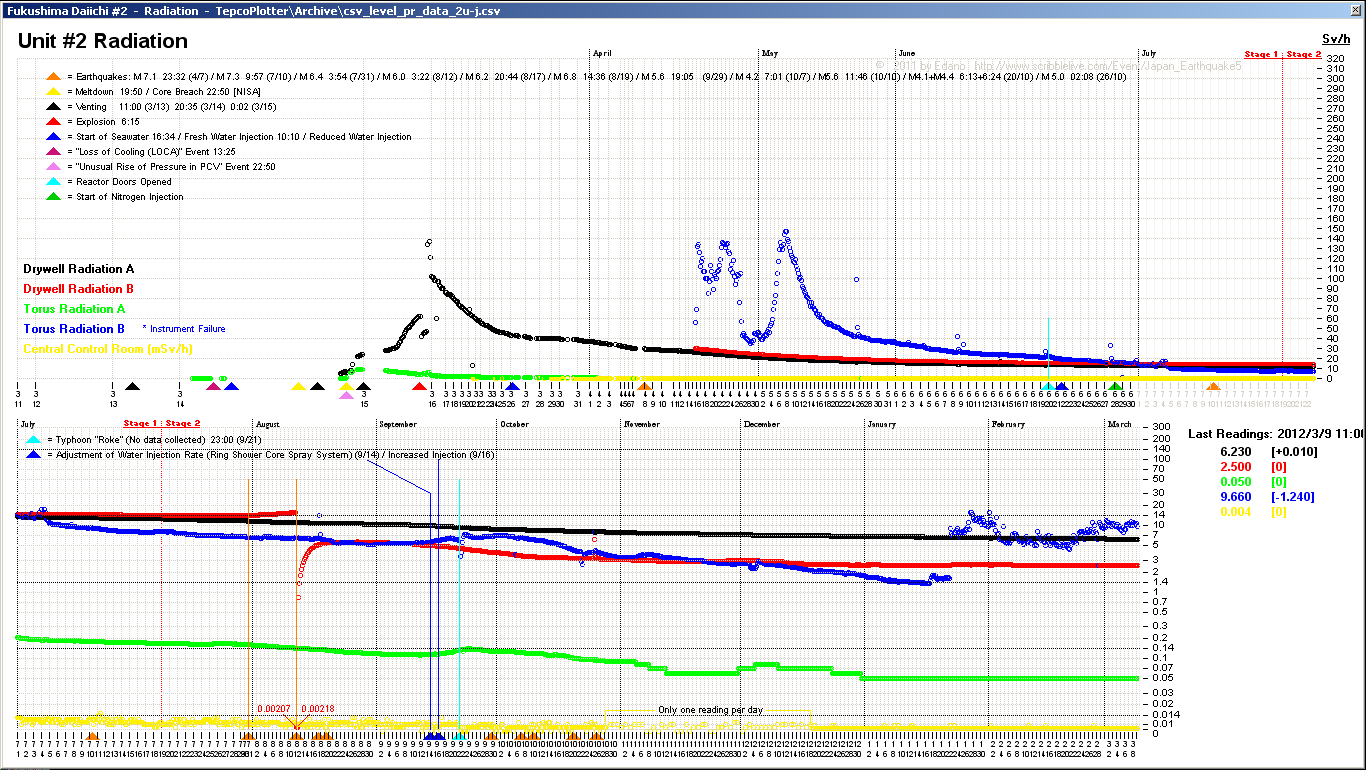
and we see a sharp radiation decrease in #2's drywell since they opened its doors. www.houseoffoust.com
by Edano via Houseoffoust edited by Edano 6/24/2011 9:09:40 AM- Well folks, time to head home. Be back later on.by bo 6/24/2011 9:20:21 AM
- See you bo.by estacion 6/24/2011 9:21:07 AM
- @Edano So it appears malfuction instrument is not so much truth in torus B radiaton!!by estacion 6/24/2011 9:24:03 AM

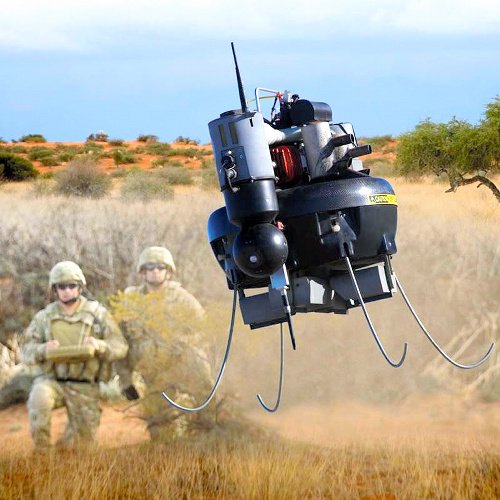
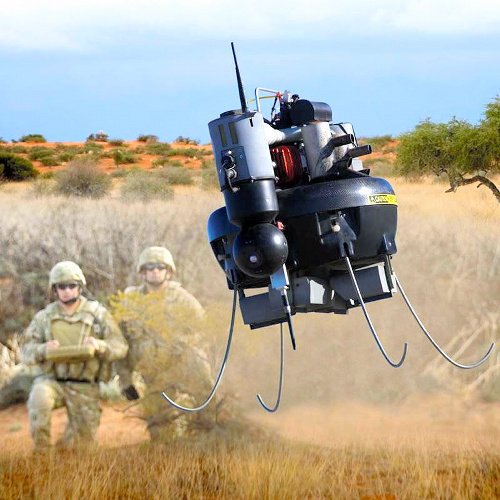
www.asahicom.jp It appears that the mini copter has crash landed on #2's roof translate.google.com
by elainekirk via Asahicom.jp 6/24/2011 10:28:42 AM Dr. Shunichi Yamashita, Radiation Advisor to Fukushima: "Fukusima Will Be World-Famous! It's Just Great!"
ex-skf.blogspot.comby bo 6/24/2011 10:32:02 AM- Even infants to get dosimeters in Fukushima: ex-skf.blogspot.comby bo 6/24/2011 10:36:33 AM
- @all testing is completeby elainekirk 6/24/2011 10:41:52 AM
- Oh good, I was going to tune into my CONELRAD station for more details!by bo 6/24/2011 10:42:51 AM
- @bo those dosimeters should be binned maybe parents have their weapon in them , if there is a collective refusal to allow their children to carry them and an insistance that they are issued with meter that inform parents of their own childs exposure...by elainekirk 6/24/2011 10:44:50 AM
- @veenie I cannot delete you twould break my heartby elainekirk 6/24/2011 10:45:26 AM
- @elainekirk, I had an interesting talk with a Japanese friend (and mother of a two year old) today. We talked about how in the early days there was so much coverage in the foreign press, and now hardly any, and she said that it is just the opposite here in Japan. At first very few stories, and always the narrative that there is nothing to worry about. But now, she says, there is tons of coverage, lots of skepticism, and a growing focus nationwide.by bo 6/24/2011 10:46:37 AM
- @Veenie can you start following sunnysunnynismo on twitter plsby elainekirk 6/24/2011 10:47:03 AM
- @veenie dont go i be 2 secs then you understandby elainekirk 6/24/2011 10:49:14 AM
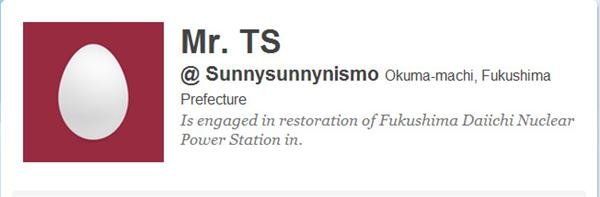
thre you go @veenie translation of his profile
by elainekirk 6/24/2011 10:50:42 AM- @bo I sit running tweets through translate and retweeting them in original japanese through simplyinfo I dunno what @veenie makes of it probably thinks I fell of my broomstick and banged my head when he sees timeline some mornings :)by elainekirk 6/24/2011 10:52:48 AM
- Doe he "think" it elaine? Or does he "know" it?by bo 6/24/2011 10:54:48 AM
 @elainekirk How are you reading his tweets in japanese?by Veenie 6/24/2011 10:55:30 AM
- @Veenie I copy them paste them in translate.google.com read then return and rt the good onesby elainekirk 6/24/2011 10:56:54 AM
- @bo ah that is for veenie to know and you to find out lol#by elainekirk 6/24/2011 10:57:32 AM
- I think this could do with a nice big plug :) safecast.org now to go find them on twitter English tweets from safecast under username safecastdotorg japan tweets username safecastjapan and finally safecast flickr site www.flickr.com now to make coffeeby elainekirk 6/24/2011 11:01:16 AM
- I'm sure it is true for Androids too, but there are almost a dozen or more realtime
rad tracking applications for the iPhone.by bo 6/24/2011 11:05:08 AM - @bo I like them because they are tweeting relevant news articles etc it is good to be getting a group in Japan who are tweeting in English it helps I wonder if simply info would invite them to do a multi language article for the website, @lilly said she is getting Japan traffic so it would help consolidate news sources ?by elainekirk 6/24/2011 11:13:43 AM
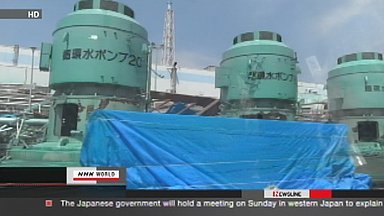
www3.nhk.or.jp
TEPCO working to prevent overflow of toxic water
The operator of the Fukushima Daiichi nuclear plant is striving to prevent highly radioactive water from overflowing the facility amid delays in restarting a key water decontamination system.
Tokyo Electric Power Company has been reducing the volume of water injected into the first 3 reactors since Tuesday to curb a further build-up of highly radioactive water at the plant.
On Friday, it further reduced the volume of water injected into the No.3 reactor by 0.5 tons to 9 tons per hour.
But limiting the amount of water could allow the temperature of the reactors to rise.
To aggravate the situation, rain is continuing to fall in the area where the power plant is located.
Last month, accumulated rainfall of 100 millimeters pushed up the water levels by around 50 to 60 millimeters.
TEPCO is plugging holes in the roofs of the turbine buildings and stacking sandbags to prevent rain water from entering the facility.
The power company is continuing test runs of the decontamination system to work out ways to ensure its optimal operation.
It says it has so far processed around 2,500 tons of radioactive water with the system. On Friday, it began work to desalinate treated water with the aim of recycling it to cool down the overheating reactors.
Friday, June 24, 2011 12:51 +0900 (JST)
www3.nhk.or.jpby Edano via Www3.nhk.or.jp 6/24/2011 11:15:22 AM- @elainekirk I think that is a good idea. I've been spreading the simply info link around here, especially among the many concerned expats. I'm sure many Japanese are interested as well. Off for dinner, back in a bit.by bo 6/24/2011 11:15:26 AM
- let's play dropping things on reactors.
Unmanned helicopter crash lands at nuke plant
The operator of the Fukushima Daiichi nuclear power plant says it lost control of an unmanned helicopter during a flight near the No. 2 reactor building, forcing the controller to make an emergency landing on a roof there.
Tokyo Electric Power Company says the remote-controlled light helicopter took off from an observatory south of the Fukushima plant just past 6:30 AM on Friday. Its mission was to collect airborne radioactive substances around the No. 2 reactor building.
The utility says its engine failed about 30 minutes later, making it impossible for the aircraft to ascend.
The helicopter -- 50 centimeters long and weighing 8 kilograms -- was found lying on its side on the rooftop.
TEPCO says it did not see any smoke or flames coming from the helicopter when it landed, and neither the craft nor the reactor building was damaged.
It says it plans to retrieve the helicopter using a mobile crane.
Friday, June 24, 2011 19:16 +0900 (JST)
www3.nhk.or.jpby Edano 6/24/2011 11:18:43 AM - Mihama Town favors reactor restart
Mayor of Mihama Town in Fukui prefecture says he favors the restart of 2 nuclear power reactors that are currently suspended for regular inspections.
Mayor Jitaro Yamaguchi made the remark on Friday after he met with officials from the Nuclear and Industrial Safety Agency, which is overseen by the industry ministry.
Agency officials assured the mayor of the safety of the Mihama plant's No. 1 and No. 3 reactors, since emergency security measures were implemented following the accident at the Fukushima Daiichi nuclear plant.
Yamaguchi indicated he hopes the 2 reactors will resume operations, although he added that the final decision would depend on the stance of Fukui Prefecture.
Fukui Prefecture hosts 13 commercial nuclear power reactors, the most in the country. Regular inspections of 4 of the reactors are expected to conclude by August.
But the prefectural governor, Issei Nishikawa, has not approved their resumption.
Mihama Town is the first of Fukui's 4 nuclear hosting communities to express a positive stance toward the restart of reactors.
Friday, June 24, 2011 18:36 +0900 (JST)
www3.nhk.or.jpby Edano 6/24/2011 11:20:12 AM - so what ?
Japan protests incursion of Chinese ship
The Japanese government has lodged a protest against China after a Chinese research vessel entered Japan's exclusive economic zone off the Pacific coast in the northeastern part of the country.
Chief Cabinet Secretary Yukio Edano told reporters on Friday that the Chinese ship was found navigating in waters 330 kilometers off the coast of Miyagi Prefecture on Thursday morning.
He said that the vessel radioed Japanese authorities to report that it was taking water samples. Edano said the ship left Japanese waters in the afternoon.
Edano added that it is not permissible for other nations to conduct scientific research in Japan's exclusive economic zone without its consent.
He said Japan issued a warning to the Chinese vessel on the spot, as well as lodging the diplomatic protest.
He added that even if China was taking water samples to check for radioactive materials, it should have discussed the matter with the Japanese government first. He said Japan releases all the results of radioactive monitoring of seawater to the international community.
Miyagi lies just north of Fukushima, where the troubled nuclear power plant is located.
Friday, June 24, 2011 13:35 +0900 (JST)
www3.nhk.or.jpby Edano 6/24/2011 11:24:09 AM - @Edano so it is ok to send China radiation by default but not okay for China to attempt to assess the situation !! It is time for Japan to accept that this is not a 'private' matter it is a global problemby elainekirk 6/24/2011 11:26:24 AM



Japan Earthquake | Page 1741
- Who's Blogging
-
 hudebnik
 alblee
 UKVal
UKVal Jonathan Keebler
 Oliver (ScribbleLive)
 kaykodh
 Markfm
 Angie
Angie Mid Valley
 Matt (ScribbleLive)
 George Gibb
- elainekirk
 PKelley
 lillymunster
 dean
dean- bo
 Edano
Edano Deb
Deb- Pedro Jesus
 IanGoddard