Japan Earthquake | Page 2688
 @Ian, lilly sent me the links to the articles. I shall read them asap. Thanks.by Peter 11/20/2011 6:02:10 AM
 @Peter, great! Let me know what you think.
I calculated the median annual dose to be just 0.45 mSv/y.by Ian 11/20/2011 6:48:40 AM good morningby elainekirk 11/20/2011 8:56:15 AM
 well of course it is not possible to get acute radiation symptoms from fuku in the us. even in japan it is impossible.by Edano 11/20/2011 11:34:17 AM
- this is really paranoid.by Edano 11/20/2011 11:36:11 AM
- #1 temps still rising, and #3 is back at 89° again. close to boiling.by Edano 11/20/2011 11:51:20 AM
- but from my practice i can tell there are always paranoid people, and they are resistant to explanations. they want to be paranoid and desperate.by Edano 11/20/2011 11:56:32 AM
- Nuclear disaster drills held near Genkai plant
Two prefectures have held major preparedness drills that assume an accident at the Genkai nuclear power plant in western Japan.
Sunday's exercises were the first comprehensive nuclear disaster drills held by prefectural governments since the accident at the Fukushima Daiichi plant in March.
In Saga Prefecture, the drill was based on the scenario that an earthquake caused an automatic shutdown of 2 reactors, triggering a total loss of power at the plant and possible leakage of radioactive substances.
Workers at the nuclear plant practiced restoring the supply of electricity using generator vehicles acquired after the Fukushima accident. A record-high number of people -- about 25,000 -- took part in the drill.
The other drill in the adjacent prefecture of Nagasaki simulated a scenario in which a quake caused a leakage of nuclear materials.
The prefecture expanded the evacuation zone to areas within 30 kilometers of the plant from 10 kilometers in previous drills.
On the small island of Takashima, which lies entirely within 30 kilometers of the plant, all of the more than 2,300 residents evacuated by bus, going over a bridge to the mainland, or by ship.
But the bridge could be blocked if evacuation orders are issued to areas within 10 kilometers of the plant. In such an event, the authorities would have to prepare many ships for the evacuation effort.
Sunday, November 20, 2011 14:49 +0900 (JST)
www3.nhk.or.jpby Edano 11/20/2011 11:58:10 AM - we pointed out before that genkai is a nightmare in a tsunami event. it is situated on an island on sea level and only connected by two bridges to the mainland. in case of a disaster, there will be no bridges and no ferries anymore, and the reactors will be overflooded without protection.by Edano 11/20/2011 12:00:10 PM
- ah, sorry i did not refer to genkai. i meant another nuke.by Edano 11/20/2011 12:01:57 PM
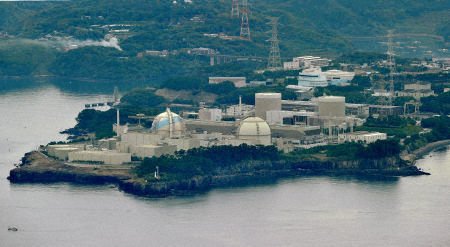
english.kyodonews.jp
this is genkaiby Edano via English.kyodonews.jp 11/20/2011 12:02:21 PM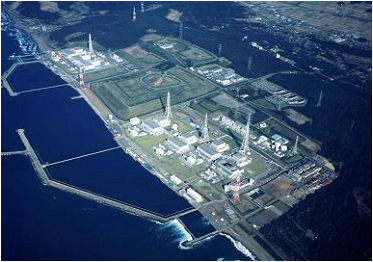
www.jsm.or.jp
Kashiwazaki-Kariwa i was referring to. three bridges and i would really like to see the evacuation plans.by Edano via Jsm.or.jp 11/20/2011 12:08:57 PM- again, they did not drill for a tsunami.by Edano 11/20/2011 12:10:59 PM
- Gov't reform body calls for drastic review of nuclear policy
TOKYO, Nov. 20, Kyodo
A government body tasked with reforming public policy began a four-day review session Sunday, with ruling party lawmakers and private-sector experts proposing a sweeping review of long-running nuclear research programs in the wake of the crisis at the Fukushima Daiichi power plant.
In the first such screening sessions under Prime Minister Yoshihiko Noda, all seven members engaged in reviewing energy policy told an open-door screening session that a program to develop nuclear fuel recycling technology using the Monju prototype fast-breeder reactor needs radical revision.
They recommended the cancellation of 2.2 billion yen of Monju-related spending included in the fiscal 2012 national budget request. english.kyodonews.jpby Edano 11/20/2011 12:11:52 PM - Intensity of mid-morning Ibaraki quake revised down to M5.3
TOKYO, Nov. 20, Kyodo
An earthquake with a magnitude of 5.3 shook Ibaraki Prefecture and its vicinity Sunday morning, the Japan Meteorological Agency said, revising down the intensity of the tremor from an earlier estimated M5.5.
There is no danger of tsunami due to the 10:23 a.m. quake, which is believed to be an aftershock of the magnitude-9.0 quake on March 11 in northeastern Japan, according to the agency.
There were no reports of injuries or damage from the quake, which registered upper 5 on the Japanese seismic intensity scale of 7 in Ibaraki Prefecture. english.kyodonews.jpby Edano 11/20/2011 12:13:07 PM - Voting under way to pick Fukushima Pref. assembly members, local leaders
FUKUSHIMA, Japan, Nov. 20, Kyodo
Voting got under way Sunday in quake-hit Fukushima Prefecture to select prefectural assembly members as well as local leaders, including the mayors of the towns of Okuma and Futaba, straddled by the crippled Fukushima Daiichi nuclear power plant.
The elections, which were originally to take place in April as part of nationwide local elections, had been postponed under a special law after the prefecture was seriously hit by the devastating March 11 earthquake and tsunami, which also damaged the Fukushima nuclear plant, forcing many voters to evacuate their homes.
The Fukushima assembly election, however, has lacked momentum as all the parties and groups concerned in October called for dropping nuclear power, leaving few issues to contest. The turnout rate was low, standing at only 12.81 percent as of 11 a.m. english.kyodonews.jpby Edano 11/20/2011 12:14:39 PM - we will se how this got manipulated.by Edano 11/20/2011 12:14:53 PM
 Is it really safe to play in the rain/snow again? Getting this from reading the last couple of pages. Living on the West Coast, this has been a big concern for me. If I don't have to get up on rainy days to drive the kids to school, or let them take my car for the day, that would be nice!by deb 11/20/2011 1:19:41 PM
 Wouldn't any risk now be related to current releases? The air releases are way down now compared to the spring. We don't have 4 burning/boiling off anymore and 3 isn't belching steam constantly. That isn't to say there are not air releases. What do the current readings on the west coast show vs. earlier months?
I do really worry that things like the flawed baby death study are going to send a few people into a tailspin. There is already lots of distrust of the government telling people the truth and distrust with the corporate side of medicine in the US. Add this kind of fear and it is not a good combination if someone struggles to find the facts for themselves or gets bad information.by lillymunster 11/20/2011 2:38:35 PM- Govt panel seeks to revise nuclear projects
A Japanese government panel says a project to build an experimental fast-breeder nuclear reactor should be thoroughly reviewed before a decision is made on its future.
The 7-member panel focused on the country's nuclear projects on Sunday, the first day of its 4-day policy screening.
Some panel members said it would be difficult to gain public understanding for the resumption of the Monju project. They added that it is not clear if the reactor can be put into commercial service by 2050 as originally planned.
Some members also said that the Monju project to build a fast-breeder nuclear reactor should be scrapped and a next-stage fusion reactor should be developed instead.
The Monju reactor uses plutonium extracted from spent nuclear fuel to generate power, and has been regarded as a prototype for Japan's next-generation nuclear plant.
The panel concluded that a budget of 29 million dollars for next summer's test-run of the Monju project should be cut along with various maintenance costs, except for the crucial portion.
It also questioned an allocation of 292 million dollars for an international nuclear fusion project, ITER, as the amount is about 5 times the total for the current fiscal year.
Some panel members said the funds should be used to rebuild the area around the Fukushima plant by decontaminating soil and installing radiation-monitoring systems.
The panel concluded that Japan should try to reduce the financial burden of the project by negotiating its suspension or cancellation with the other 6 participating countries.
The Science Ministry, which is in charge of nuclear projects, says it will consider the next step after seeing the results of the discussion by a panel of Cabinet members on the country's nuclear policies, including the fast-breeder reactor project.
Sunday, November 20, 2011 23:27 +0900 (JST)
www3.nhk.or.jpby Edano 11/20/2011 3:23:48 PM - wow, they could have saved the money for that panel. only coulds and shoulds, not a single solution.by Edano 11/20/2011 3:25:52 PM
- they are all cowards,it's so sad.by Edano 11/20/2011 3:28:36 PM
- I have to wonder about the thought process of anyone thinking Japan should still put research money into nuclear power.by lillymunster 11/20/2011 3:34:29 PM
- i have never heard of a japanese nuke scrapping scenario, a plan like the german one. nothing.by Edano 11/20/2011 3:34:53 PM
- maybe they depend too much on the export of nuke technology. but anyway.by Edano 11/20/2011 3:36:21 PM
- @Edano there are plenty of citizens that want them all shut down or gradually shut down. The government acts like they didn't just have one of the worlds worst disasters. They should be putting that money into the alt energy technology being developed now.by lillymunster 11/20/2011 3:36:47 PM
- @lillymunster i think they don't want to make final conclusions now. they want to wait until the people are quiet again and then just go on.by Edano 11/20/2011 3:37:56 PM
- i wonder if nuclear deterrent capability is causing this
by lillymunster 11/20/2011 3:48:13 PM - @lillymunster what an illusion. doesn't even their constitution forbid it ?by Edano 11/20/2011 3:49:52 PM
- @lillymunster , @edano, all factors play a role. Germany is an exemption from the rule. Germany does not show great interest in an own nuclear defense program. I presume there are still hundreds of warheads stationed in the country. Moreover, it is the only country in which a party with an anti-nuke platform has grown into a national force. That party does not exist in Japan. Change will take decades in as much as it will take decades to discover the full consequences of this disaster which must seem minor compared with the horrendous loss of life and damage caused by the tsunami.by Peter 11/20/2011 4:04:26 PM
- The Japanese constitution has two clauses, one mentions never going down the road of nuclear damage to people like Hiroshima. The other curbs ability to make war. Constitutional scholars are citing both of these as reasons the commercial nuclear program is a violation. I think they may be correct in their case. I don't know the courts system over their and their real odds of success.by lillymunster 11/20/2011 4:11:11 PM
- @lillymunster thank you, that's what i meant.by Edano 11/20/2011 4:12:21 PM
- @Peter the german constitution does not allow nuclear weapons as well:
"§ 17 Verbot von Atomwaffen
(1) Unbeschadet des § 16 ist es verboten,
1.
Atomwaffen zu entwickeln, herzustellen, mit ihnen Handel zu treiben, von einem anderen zu erwerben oder einem anderen zu überlassen, einzuführen, auszuführen, durch das Bundesgebiet durchzuführen oder sonst in das Bundesgebiet oder aus dem Bundesgebiet zu verbringen oder sonst die tatsächliche Gewalt über sie auszuüben,
1a.
einen anderen zu einer in Nummer 1 bezeichneten Handlung zu verleiten oder
2.
eine in Nummer 1 bezeichnete Handlung zu fördern.
(2) Atomwaffen im Sinne des Absatzes 1 sind
1.
Waffen aller Art, die Kernbrennstoffe oder radioaktive Isotope enthalten oder eigens dazu bestimmt sind, solche aufzunehmen oder zu verwenden, und Massenzerstörungen, Massenschäden oder Massenvergiftungen hervorrufen können
2.
Teile, Vorrichtungen, Baugruppen oder Substanzen, die eigens für eine in Nummer 1 genannte Waffe bestimmt sind.
Für die Begriffsbestimmung der Atomwaffen gelten außerdem Satz 2 der Einleitung und Abschnitt I Buchstabe c der Anlage II zum Protokoll Nr. III des revidierten Brüsseler Vertrages vom 23. Oktober 1954."
Ausführungsgesetz zu Artikel 26 Abs. 2 des Grundgesetzes § 17 dritter Abschnitt. www.gesetze-im-internet.de www.gesetze-im-internet.de (Kernwaffenkontrollgesetz)by Edano 11/20/2011 4:16:23 PM - in english:
"§ 17 Prohibition of Nuclear Weapons
(1) Notwithstanding the provisions of § 16 are prohibited
First
To develop nuclear weapons, establish, carry trade with them to purchase from another or others to leave, import, export, transit through the federal territory, or else to spend in the federal territory or the federal territory or otherwise to exercise actual control over them ,
1a.
another to lead to an act specified in item 1 or
Second
to promote an act specified in item 1.
(2) nuclear weapons as defined in paragraph 1 are
First
All kinds of weapons, nuclear fuels or radioactive isotopes contained or specifically intended to have such a record or to use, and cause mass destruction, mass injury or mass poisoning
Second
Parts, devices, components or substances which are specifically intended for a person referred to in paragraph 1 weapon.
For the definition of nuclear weapons also apply Theorem 2 of the Introduction and Section I, point C of Annex II to Protocol III of the revised Brussels Treaty of 23 October 1954. "by Edano 11/20/2011 4:18:26 PM - It seems like the US in both cases had provided the loophole for nuke weapons while they had bases there. Japan has a more tenuous relationship with the US military and them having any nukes in Japan.
by lillymunster 11/20/2011 4:19:04 PM - @deb In my blunt opinion, if you cannot let your children splash in the rain and play in the snow, you should consider moving.by MaryW 11/20/2011 4:26:50 PM
- @Edano , that will throw up a big obstacle, if anyone ever wished to begin such program. But, let us not forget that in the past there were several thousand nuclear warheads stationed in West Germany alone, and if i am not mistaken some hundreds are still there. The installations used to be guarded by German troupes by the way. It took a lot of pressure from the conservatives to implement this arrangement in the fifties. Even the most conservative CSU accolade did not dare to promote an own program then, had it been allowed by the allies. However, since the weapons were at hand anyway, FJS and friends could not argue for a need, even if they wanted to. The situation in Japan is quite different.by Peter 11/20/2011 4:43:29 PM
- @lilly, I wondered how a nuclear deterrent stance could be legal in Japan. The allies forbade Germany to pursue any nuclear research program civilian or otherwise after the war. The idea was very unpopular in West Germany as edano's post shows.by Peter 11/20/2011 4:49:42 PM
- @Peter the germans have no control over the us warheads in germany. they are "tolerated" within the nato treaties. i doubt that they are guarded by german troops. this would be a violation of the constitution.by Edano 11/20/2011 4:50:05 PM
- @Edano , that was still true in the 1970s as I know from own experience.by Peter 11/20/2011 4:51:21 PM
- @edano, there were even special forces with nuclear backpacks and suitcases, that were supposed to mingle with the local populace and commit acts of sabotage, once the Red Armies had overrun us. Imagine an American in Lederhosen carrying a nuke Ranzerl, speaking with an Bavarian accent?by Peter 11/20/2011 4:55:22 PM
- Video of Reactor 4 Spent Fuel Pool Shows Potential Damage to Racks. enformable.comby MaryW 11/20/2011 4:57:12 PM
- My thought on why Japan was encouraged by the US to adopt nuclear power and research and Germany was less so has to do with Russia. Greg Mitchell's series of articles about the end of the war explains the role Russia played in the end of WWII in the Pacific. Japan was ready to surrender before the bombs were dropped. It wasn't a matter of surrender but if they would do so to the Russians or the US. Russia wasn't going to offer them a decent deal. I think the bombings were more about fending off the Russians than they were about forcing a surrender out of Japan.
This plays out in the US's desire to export nuclear power to Japan and keeping a large base there. It was as much about boxing in Russia than rebuilding Japan.by lillymunster 11/20/2011 5:05:17 PM - @Peter The hubby was stationed as part of the cold war border forces in Germany in the early 80's. Their life expectancy was about 7 seconds if something happened. The whole border thing was just bizarre in hindsight. The two sides patrolling the border would do things to mess with the other side.by lillymunster 11/20/2011 5:07:45 PM
- Any armed conflict with the Soviets would have devastated the land beyond inhabitability. Fears were at the breaking point in Germany during the Cuban Missile Crisis. Only time I remember my parents being really afraid. Since J.F. Kennedy is held in highest regard among West Germans. There is hardly any small town without a J.F.K. Avenue. I am glad this time is over.by Peter 11/20/2011 5:18:31 PM


Japan Earthquake | Page 2688
- Who's Blogging
-
 hudebnik
 alblee
 UKVal
UKVal Oliver (ScribbleLive)
 Jonathan Keebler
 Matt (ScribbleLive)
 kaykodh
 PKelley
 Markfm
 dean
dean Angie
Angie- Edano
 Deb
Deb Mid Valley
- Pedro Jesus
 George Gibb
- elainekirk
- lillymunster
 bo
bo IanGoddard