Japan Earthquake | Page 2801
 @Majj And: Necropsies and laboratory tests to date have found skin lesions in most cases, as well as fluid in the lungs, white spots on the liver, and abnormal growths in the brain. Some seals and walruses have undersized lymph nodes, which may indicate compromised immune systems.by M.I.A. 12/21/2011 4:25:04 AM
 Fukushima fallout--loss of trust and why credibility rules supreme. A likely victim of this disaster was the trust that the Japanese citizen seemed to inherently have in their government and institutions--like Tepco, the Tokyo energy company responsible for Fukushima. www.emergencymgmt.comby Majj 12/21/2011 4:26:13 AM
- @M.I.A. Yesterday I was thinking wen the NE Pacific animals would start to to die. Today we read this. Is so SAD to see the Planet die in from of our eyes :-((((by Majj 12/21/2011 4:29:05 AM
- @you I never had the chance to go Alaska and NW Canada now is all over :-(by Majj 12/21/2011 4:29:49 AM
- @Majj I wish we still had @apollo (IIRC), who was a marine biologist, posting so we could pick her brain.by M.I.A. 12/21/2011 4:33:25 AM
- Japan to take over two thirds stake in Tepco: Yomiuri
www.reuters.comby MaryW 12/21/2011 4:41:28 AM - Cold Shutdown of Information – EX-SKF
ex-skf.blogspot.com
Quote:
Tuesday, December 20, 2011
#Fukushima I Nuke Plant “Cold Shutdown” Effect (2): No More Joint Press Conference on the Fukushima Accident
where the reporters get to ask questions to TEPCO and the relevant government ministries and agencies that deal with the accident, all in one room. The joint press conference, which has at least helped keep some politicians and bureaucrats honest or hold them accountable, is not only over for the month of December but over for good. nuclearhistory.wordpress.comby MaryW 12/21/2011 4:48:46 AM - @Majj I don't think its all over...go vacationing in Alaska and NW Canada. And if you drink coffee, everywhere you visit in Alaska has free coffee. It is great!by MaryW 12/21/2011 4:50:59 AM
@CNBCbrk
CNBC Breaking News
Japan Govt: To Start Removing Fuel From Storage Pool At Fukushima Daiichi Within 2 Years, Aim To Complete Decommissioning in 40 Years - DJ
37 minutes ago via Seesmic for BlackBerryby MaryW 12/21/2011 5:05:43 AM Thugs force out Fukushima-related signs: www.youtube.comby Ian 12/21/2011 5:45:04 AM
- There's also a surge of unexplained seal deaths in New England, suggesting something other than Fukushima may be the cause : motherjones.comby Ian 12/21/2011 5:50:37 AM
- bumpby M.I.A. 12/21/2011 7:01:21 AM
 bumpby elainekirk 12/21/2011 8:16:53 AM
 "Portugal: When there's no light at the end of the tunnel" (Laura Smith-Spark) edition.cnn.com
A very well written and accurate description of the current and past situations in my country. Served as a bump.by Pedro Jesus 12/21/2011 8:28:42 AM- [Investigation Results] Alarm activation “FLOW DIFFERENCE LARGE”
at SFP Cooling System of Fukushima Daiichi Nuclear Power Station Unit 2 www.tepco.co.jpby elainekirk 12/21/2011 9:32:54 AM - "EU judges back air emissions scheme" (Geoff Meade) www.independent.co.ukby Pedro Jesus 12/21/2011 12:10:22 PM
 @elainekirk hi elaine are you here ?by Edano 12/21/2011 12:10:57 PM
- FYI, I've changed my Facebook avatar. I shall use this one from now on.by Pedro Jesus 12/21/2011 12:11:29 PM
Egyptian police / military against their own people
by Edano 12/21/2011 12:24:01 PM- we have not seen such pictures with mubarak as president ....by Edano 12/21/2011 12:25:13 PM
- The French company Areva, which is building Finland's fifth nuclear reactor, has admitted that the Olkiluoto 3 unit will not be up and running until August 2014 -- five years later than originally promised.
yle.fiby VesaVA 12/21/2011 12:26:31 PM i hope this girl survived.
by Edano 12/21/2011 12:29:36 PM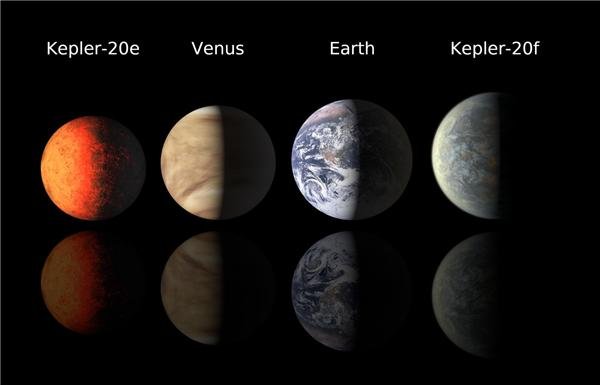
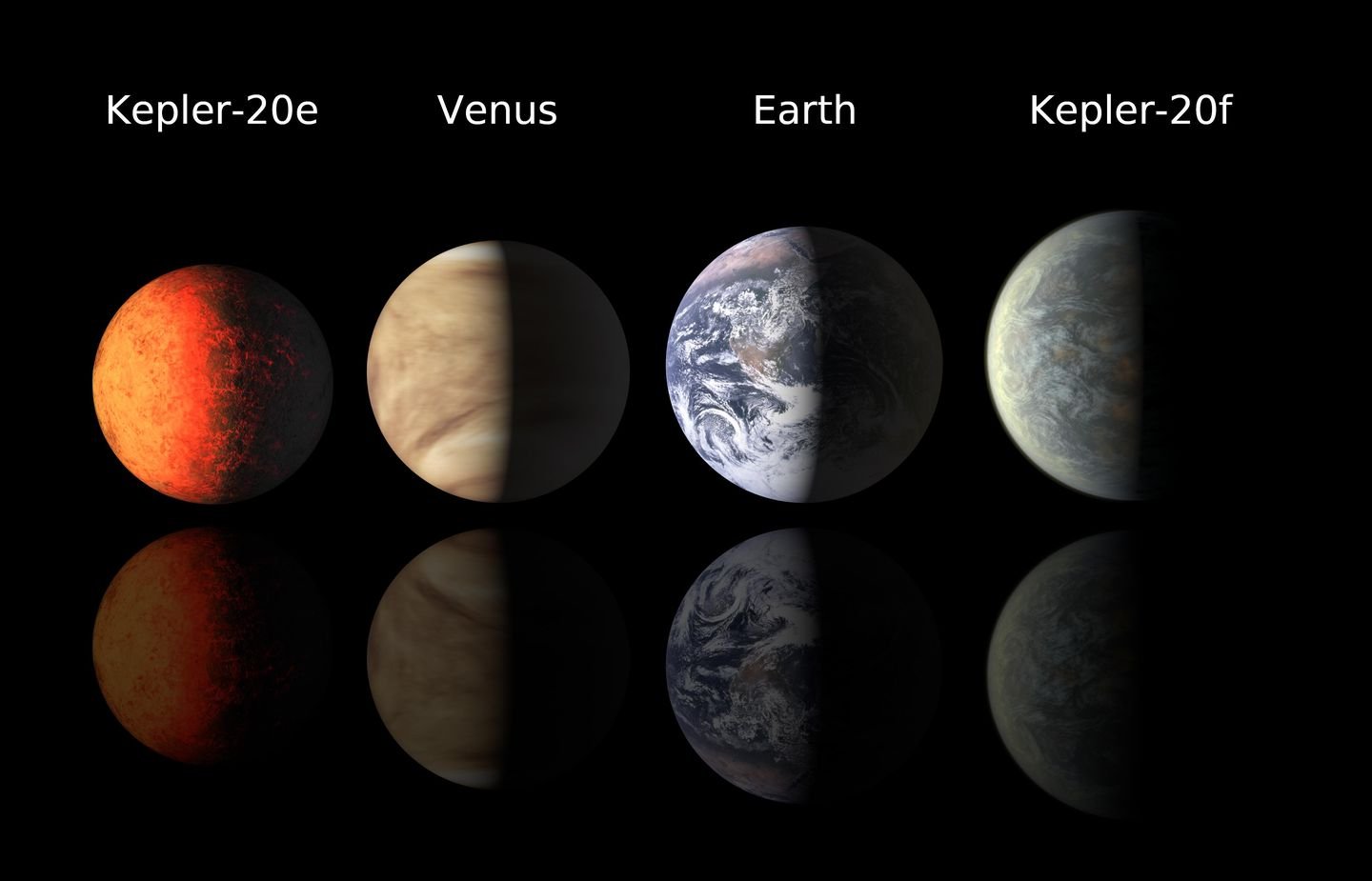
scr3.golem.de two new exoplanets dicovered in kepler20 system. same size as earth, but not habitable (too hot).
by Edano via Scr3.golem.de 12/21/2011 12:34:25 PMVideo: Planetensystem Kepler 20 - Nasa (0:33)
by Edano 12/21/2011 12:34:42 PM- Higher power rates, public funds mulled for TEPCO
The Japanese government and Tokyo Electric Power Company are considering plans to raise electricity rates and inject public funds into the utility.
TEPCO is facing financial difficulties amid uncertainty over the resumption of its nuclear reactors and increasing fuel costs for thermal power plants.
The utility will ask the government to approve an increase in electricity rates starting sometime in fiscal 2012.
The government is also considering a plan to inject about one trillion yen of public money, or nearly 13 billion dollars, into the company through a government-backed fund. Such a move would essentially place the utility under state control.
The government and TEPCO say the measures are designed to guarantee the payment of compensation related the nuclear accident at the company's Fukushima Daiichi nuclear plant. The moves will also allow the utility to continue work to decommission the crippled reactors.
A change to TEPCO's management and the further streamlining of the utility's operations are also under consideration.
The government and the utility are working to compile a comprehensive new business plan by the end of March.
The plan may face opposition from within the company due to a possible increase of government involvement in management.
Wednesday, December 21, 2011 19:41 +0900 (JST)
www3.nhk.or.jpby Edano 12/21/2011 12:38:36 PM - so the entire population has to pay for tepco's mess. that was clear. socialize the damage, privatize the gains.by Edano 12/21/2011 12:41:46 PM
- US expert: time to scrap reactors unknown
A US nuclear expert says it is impossible to predict the time needed to decommission the crippled reactors at the Fukushima Daiichi nuclear plant.
Charles Casto told NHK on Wednesday that the true situation inside the reactors remains unknown. Casto represents a team from the US Nuclear Regulatory Commission dispatched to Japan since the nuclear accident in March.
Casto said that after the accident his team advised the Japanese government to continue injecting sea water into the reactors, as well as fresh water, to cool down spent nuclear fuel.
He also said Japanese authorities failed to provide appropriate information to the US government soon after the accident.
Casto said his team felt deep dissatisfaction with Japan for providing only limited information from a small number of engineers.
Last Friday, Japan declared the Fukushima reactors had reached a state of cold shutdown -- the second phase in the program to bring the facility under control.
Wednesday, December 21, 2011 20:50 +0900 (JST)
www3.nhk.or.jpby Edano 12/21/2011 12:43:10 PM - Gov't, TEPCO set 40-yr work plan for scrapping Fukushima reactors
TOKYO, Dec. 21, Kyodo
The Japanese government and Tokyo Electric Power Co. said Wednesday they would seek to finish scrapping the four crippled nuclear reactors at the Fukushima Daiichi power plant in the next 30 to 40 years in a newly unveiled work schedule describing measures to be taken following the plant's stabilization.
Based on the road map toward decommissioning, the plant operator known as TEPCO would start removing the nuclear fuel stored in the spent fuel pools of the Nos. 1 to 4 units within two years and the melted fuel from the Nos. 1 to 3 reactors within 10 years.
A survey of the inside of the primary containment vessels of the reactors is expected around the latter half of fiscal 2017, and that of the reactor cores around fiscal 2020, government officials said. It is expected to bring to light what has happened inside the reactors in the world's worst nuclear crisis since the 1986 Chernobyl disaster.
english.kyodonews.jpby Edano 12/21/2011 12:46:28 PM - @Edano I haven't seen any specifics on the detailed Fukushima-Daiichi 40-year-long decommissioning plan. Is there any more info available, such as what the other stages are, the timeline, the companies involved...?by Pedro Jesus 12/21/2011 12:46:28 PM
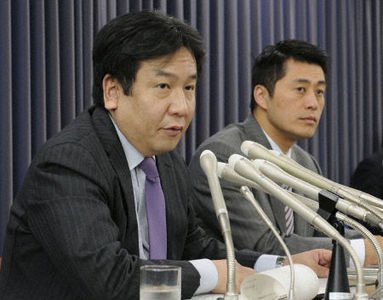
english.kyodonews.jp
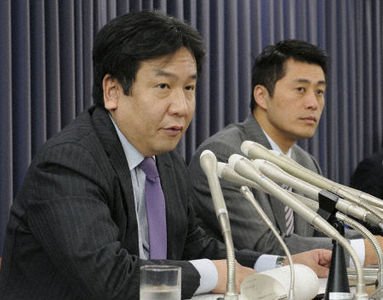
Ministers Edano, Hosono at news conference
Japanese industry minister Yukio Edano (L) and nuclear disaster minister Goshi Hosono give a press conference at the Ministry of Economy, Trade and Industry in Tokyo on Dec. 21, 2011. The government and Tokyo Electric Power Co. said they would seek to finish scrapping the four crippled nuclear reactors at the Fukushima Daiichi power plant in the next 30 to 40 years in a road map toward decommissioning. (Kyodo) english.kyodonews.jpby Edano via English.kyodonews.jp 12/21/2011 12:47:17 PM- @Pedro Jesus i think it's just a rough roadmap so far.by Edano 12/21/2011 12:47:43 PM
- Aomori municipalities call on gov't to maintain nuclear fuel recycling
TOKYO, Dec. 21, Kyodo english.kyodonews.jpby Edano 12/21/2011 12:48:15 PM - Piles of tainted tree bark, woodchips left at Fukushima lumbermills
SENDAI, Dec. 21, Kyodo
At least 16,000 tons of radiation-contaminated tree bark and woodchips are piled up at lumbermills in Fukushima Prefecture, left unattended in storage in the aftermath of the nuclear crisis at a Tokyo Electric Power Co. plant, a local industry group said Wednesday.
The prefectural wood-industry association Fukushimaken Mokuren's roughly 200 member firms are in the process of requesting TEPCO by the year-end to compensate for such storage and disposal costs, which, unlike those for quake rubble, are not covered by state subsidies, it said.
The companies have stopped the shipment of bark and woodchips produced in the process of lumbering and used for compost or floors of livestock barns after radiation above the state-set limit was measured in the group's voluntary monitoring begun in August, it said. english.kyodonews.jpby Edano 12/21/2011 12:49:32 PM - @Edano We'll have to keep our eyes and hears open, then.by Pedro Jesus 12/21/2011 12:52:27 PM
 will do a look for the roadmap.by lillymunster 12/21/2011 12:54:20 PM
- Enviroment Pollution in USA on Wednesday, 21 December, 2011 at 04:09 (04:09 AM) UTC.
Description
Radioactive material has been found in the groundwater around the Sequoyah Nuclear Power Plant. Tennessee Valley Authority officials have reported finding elevated levels of tritium in a groundwater sample taken from one of two new onsite monitoring wells at the Sequoyah Nuclear Plant. TVA says these elevated levels pose no threat to the health and safety of the public. "The newly installed groundwater monitoring wells were placed in an area known to have contained tritium that was previously reported," Sequoyah Plant Manager Paul Simmons said. "The health and safety of the public are our primary concern, which is why providing additional monitoring capability to the plant's groundwater wells is an important measure for protecting the community and the environment." There are a total of 16 groundwater monitoring wells on the Sequoyah site. The highest level found in the sampling on Friday, December 16, was approximately 23,000 picocuries per liter. A "curie" is the standard measure for the intensity of radioactivity contained in a sample; a picocurie is one trillionth of a curie.
None of the Sequoyah groundwater monitoring wells is used for drinking water or irrigation purposes and no potable water wells are downstream of where the tritium was found. Additionally, TVA confirmed no detectable levels of tritium in any sampling of the Tennessee River where the plant discharges water. "Sequoyah voluntarily communicated to federal, state and local officials these elevated sample results due to TVA's own conservative decision-making process and in accordance with a groundwater protection initiative established by the nuclear industry in 2006, " Simmons said. "TVA is reviewing the new monitoring well sample results, determining the cause of these elevated levels and how they relate to the previously reported releases of tritium." An Associated Press investigation published earlier this year found tritium leaks at 75 percent of the commercial nuclear power plants in the United States. The number and severity of the leaks has been escalating, even as federal regulators extend the licenses of more and more reactors across the nation. Tritium, which is a radioactive form of hydrogen, has leaked from at least 48 of 65 sites, according to U.S. Nuclear Regulatory Commission records reviewed as part of the AP's yearlong examination of safety issues at aging nuclear power plants. Leaks from at least 37 of those facilities contained concentrations exceeding the federal drinking water standard - sometimes at hundreds of times the limit. hisz.rsoe.huby Edano 12/21/2011 12:56:11 PM - This appears to be the version in EN, "digest" version. www.meti.go.jpby lillymunster 12/21/2011 12:57:13 PM
- "Special report - the billionaire from Brazil" (Brian Ellsworth) uk.reuters.comby Pedro Jesus 12/21/2011 12:58:32 PM
- "China tops U.S, Japan to become top patent filer" (Lee Chyen Yee) uk.reuters.comby Pedro Jesus 12/21/2011 12:59:49 PM
- On the seal outbreak, the Atlantic outbreak was determined to be a virus. All current marine mammal outbreaks have identified or likely causes except the one spreading from Russia to Alaska.by lillymunster 12/21/2011 1:03:42 PM
- Reading the METI roadmap. 2-10 years to empty spent fuel pools. Continued cooling of the reactors is in the 2-10 year plant. That is going to be a massive amount of leaky water to handle. With TEPCO already wanting to dump more in the Pacific I can see this being a huge ongoing problem. They want to start removing fuel within 10 years but have to decontaminate buildings first. How are they going to decontaminate them? Power washing? Is that going to run off too?by lillymunster 12/21/2011 2:27:27 PM
- another admission the treated water only has cesium removed.
" By 2012, new decontaminated water processing facilities against multi-radioactive nuclides,which can not be removed by existing Cesium treatment facilities, will be installed."by lillymunster 12/21/2011 2:34:03 PM - They also plan to dredge the harbor and pile up the contaminated silt and sand in front of the intakes. They claim this will keep more from leaking out the intakes and prevent it from coming out of the soil.by lillymunster 12/21/2011 2:39:36 PM
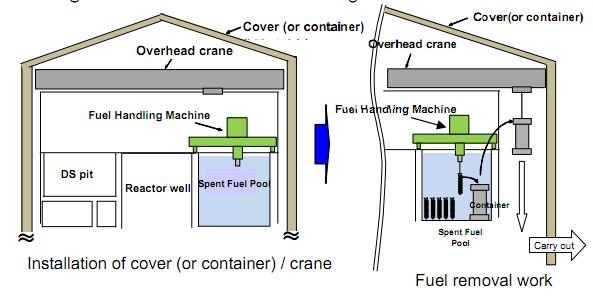
Fuel removal plan
by lillymunster 12/21/2011 2:42:42 PM- A couple of things in that illustration do not make sense. The crane is show running the long ways north-south above the reactor refueling floor. The overhead cranes that existed in the buildings run the other direction, east-west in the buildings. Of course 1, 3 and 4 can no longer make their overhead cranes function for obvious reasons. So this appears to be some sort of new crane installed for retrieving fuel. What are they going to install it to? Do the metal frameworks of the covers really have the ability to support a huge metal overhead crane? I am guessing they don't even with the expanded steel framework they used. So I am not sure how they pull this one off unless the framework was designed with the plan to put in an overhead crane and they are stronger than they appear?by lillymunster 12/21/2011 2:47:54 PM
Japan Earthquake | Page 2801
- Who's Blogging
-
 hudebnik
 alblee
 UKVal
UKVal Oliver (ScribbleLive)
 Jonathan Keebler
 kaykodh
 PKelley
 Markfm
 Angie
Angie Deb
Deb Mid Valley
- Pedro Jesus
 Matt (ScribbleLive)
 George Gibb
- elainekirk
- lillymunster
 dean
dean bo
bo- Edano
 IanGoddard