Japan Earthquake | Page 2799
 Hospitals refuse to see irradiated patients. Tokyo hospital posts sign at entrance: “We do not serve any tests for radiation exposure or treatment for irradiation” enenews.comby Majj 12/20/2011 4:35:19 PM
- Record-setting Japanese mountain climber has thyroid tested after endless fatigue, choking — Entered Fukushima evacuation zone to photograph abandoned cows — “What happened to my body?” enenews.comby Majj 12/20/2011 4:37:46 PM
 Tom @ antiprotons probably found strontium in a Japanese-soil sample : www.youtube.comby Ian 12/20/2011 4:57:36 PM
 New initiatives around the world are exploring the energy potential of nuclear recycling. www.fastcoexist.comby Cryptococcus 12/20/2011 5:35:56 PM
 Radioactive water floods tunnel at Fukushima plant
ajw.asahi.com
Tokyo Electric Power Co. on Dec. 19 released a photo showing about 230 tons of radioactive water that had accumulated in an underground tunnel at the Fukushima No. 1 nuclear power plant.
The tunnel, adjacent to the central waste treatment building, may have been flooded with water leaked from supposedly waterproof storage containers of highly radioactive water in the building.
The water in the tunnel was discovered on Dec. 18.
TEPCO said the tunnel is about 4.5 meters wide and about 54 meters in length. The radioactive water reached a height of about 50 centimeters and had one-100th the radioactivity concentration of the highly radioactive water in the building, according to the utility.
Water was dripping at the top of the tunnel from a tube about 5 cm in diameter used to house an electric wire. But that water had only about one-10,000th the radioactivity concentration of the water on the floor.
The Nuclear and Industrial Safety Agency on Dec. 19 instructed TEPCO to move the water in the tunnel to a facility where it can be placed under appropriate control and to determine where the water had flowed in fromby lillymunster 12/20/2011 5:54:57 PM The Nuclear Industry and Health
AN UNEXPECTED MORTALITY INCREASE IN THE UNITED STATES FOLLOWS ARRIVAL OF THE RADIOACTIVE PLUME FROM FUKUSHIMA: IS THERE A CORRELATION?
Joseph J. Mangano and Janette D. Sherman. - *Please note: This is a portion, only 17 pages of the original research study. * International Journal of Health Services, Volume 42, Number 1, Pages 47–64, 2012 © 2012, Baywood Publishing Co., Inc. www.radiation.orgby MaryW 12/20/2011 6:08:24 PM- @all if you find a Japanese website that is giving you limited access and you think it is based on not having an internet address in Japan let me know. I have a Japanese proxy set up on the desktop computer in my office so I can try to gain more access.by lillymunster 12/20/2011 6:09:15 PM
- @MaryW we have the entire paper. www.simplyinfo.orgby lillymunster 12/20/2011 6:10:09 PM
- @lillymunster simplyinfo has the same pages, 47-64, as the pdf article in my post below. The pdf copy has better display of the charts it present, than the article on simplyinfo. You may considers adding the charts to simplyinfl ?by MaryW 12/20/2011 6:16:39 PM
- @MaryW those are the page numbers from the journal. The foot notes are at the end and appears to be the entire paper. This is all they published on it.by lillymunster 12/20/2011 6:21:35 PM
 elaine, r u around ?by Edano 12/20/2011 7:54:06 PM
- Radiation impact on Fukushima kids to be monitored
The Japanese government will monitor the impact of radiation exposure on children born to mothers in Fukushima Prefecture.
The Environment Ministry said on Tuesday that the monitoring program will cover 25,000 children.
The program will look for any links between the radiation exposure of the mothers and congenital abnormalities, asthma, allergies or other diseases of their children.
The checks will continue until the children reach the age of 13.
The ministry decided to carry out the monitoring amid rising public concern about radioactive contamination from the disaster at the Fukushima Daiichi nuclear plant.
Fukushima Prefecture is already checking the health of all its residents and their radiation exposure.
Wednesday, December 21, 2011 04:00 +0900 (JST)
www3.nhk.or.jpby Edano 12/20/2011 7:56:50 PM - very good. i hope yamashita is out of this.by Edano 12/20/2011 7:58:17 PM
- Govt to designate nuclear clean-up areas
The Japanese government will pay for the decontamination of more than 100 municipalities in eastern Japan.
But the large scale plan is causing worries among some industries.
The Environment Ministry says it has decided to clean up 102 municipalities in 8 prefectures with a radiation level above one millisievert per year.
In Oshu City, Iwate Prefecture, cattle farmers say they are worried that consumers will avoid all beef produced in the designated areas.
Aizuwakamatsu City in Fukushima Prefecture is still debating whether to agree to the designation by the government. There is concern that the tourism industry will be hurt if the city is labeled as contaminated. Residents of areas with lower radiation readings say it is unfair that they cannot receive fund for decontamination work.
Tuesday, December 20, 2011 09:12 +0900 (JST)
www3.nhk.or.jpby Edano 12/20/2011 7:59:05 PM - @Edano I don't think he will have any part in that studyby lillymunster 12/20/2011 7:59:22 PM
- i don't know why but somehow i have hope that the japanese will make a trustworthy study.by Edano 12/20/2011 8:01:29 PM
- but on the other hand, it is impossible as long as the nuclear industry rules japan.by Edano 12/20/2011 8:02:15 PM
- okay, i am stupid to expect anything true.by Edano 12/20/2011 8:03:19 PM
- Hosono thanks US for help with nuclear accident
Japan's minister in charge of the nuclear accident has thanked the United States for helping to bring the crippled reactors at the Fukushima Daiichi power plant to a stable state.
Goshi Hosono thanked US Nuclear Regulatory Commission Chairman Gregory Jaczko when they met in Tokyo on Tuesday.
Hosono briefed Jaczko about last week's declaration by Japan's Prime Minister Yoshihiko Noda that the reactors have been brought to a state of cold shutdown -- the 2nd stage of a timetable for bringing the plant under control.
Hosono said the achievement was made possible by the advice of the US, particularly the commission.
Jaczko praised the completion of the 2nd stage as major progress.
He said that when he inspected the Fukushima Daiichi and nearby Daini plants on Monday, he knew how bravely nuclear workers dealt with the disaster.
He referred to the fact that all 4 reactors at the Daini plant were shut down 4 days after the March 11th earthquake and tsunami.
Jaczko said the experience will be a good lesson for all countries that want to increase the safety of their nuclear power plants.
Tuesday, December 20, 2011 17:33 +0900 (JST)
www3.nhk.or.jpby Edano 12/20/2011 8:04:26 PM - i may have missed how jaczko helped the japanese ...... ?by Edano 12/20/2011 8:05:06 PM
- US nuclear regulator calls for more info sharing
The chairman of the US Nuclear Regulatory Commission has called for more global information sharing to prevent an accident like the one at the Fukushima Daiichi nuclear plant.
Gregory Jaczko was speaking at a news conference at the US Embassy in Tokyo on Tuesday, a day after visiting the plant for the first time since the March accident.
He said various safety measures have been put in place at the plant, and that temperatures inside its reactors are low enough that there is no energy left to discharge radioactive material.
He said Japan's government made an appropriate decision in declaring last week that the reactors have been brought to a state of cold shutdown.
Jaczko added that the accident has strengthened the longstanding cooperative relationship between US and Japanese nuclear regulators.
He also noted that all countries want better information sharing in the event of accidents.
Tuesday, December 20, 2011 19:36 +0900 (JST)
www3.nhk.or.jpby Edano 12/20/2011 8:07:15 PM - huh, jaczko is really ugly.by Edano 12/20/2011 8:08:34 PM
- @Edano yes he is the poster boy for being celibate :-) I don't know what the NRC supposedly did to help bring Fuku under control. The DoE had some crews doing radiation readings and consulting, NRC I don't remember anythingby lillymunster 12/20/2011 8:09:52 PM
- @lillymunster he would really scare my children :) a monster, daddy !by Edano 12/20/2011 8:13:28 PM
- Scientific Amercian, debunking the 14,000 dead study blogs.scientificamerican.com that was quick :-)by lillymunster 12/20/2011 8:13:41 PM
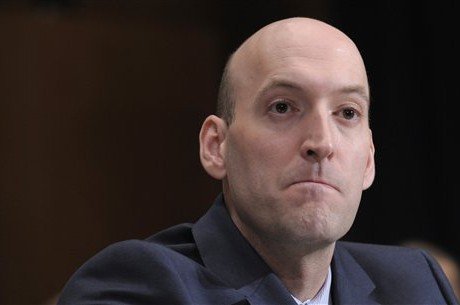 by Edano via Media.salon 12/20/2011 8:14:45 PM
@Edano we have seen what happens when people are selected for public office based on just their looks. :-) 0.tqn.com
by lillymunster via 0.tqn 12/20/2011 8:15:03 PM- @lillymunster is this the b...h from alaska (forgot her name) ? oh, yes indeed.by Edano 12/20/2011 8:16:06 PM
- from the Sci American article: " In sum: Sloppy statistics killed 14,000 people."by lillymunster 12/20/2011 8:18:13 PM
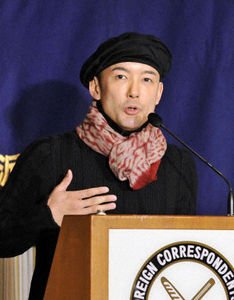
english.kyodonews.jp
Japanese actor Taro Yamamoto
Japanese actor Taro Yamamoto holds a press conference at the Foreign Correspondents' Club of Japan in Tokyo on Dec. 20, 2011. The 37-year-old actor, who has been calling for the elimination of nuclear power generation in Japan, lamented that the movement against nuclear power in the country, while showing some momentum in the wake of the nuclear disaster at the Fukushima Daiichi power plant, is not on a par with similar movements in other countries. (Kyodo) english.kyodonews.jpby Edano via English.kyodonews.jp 12/20/2011 8:23:47 PM- Actor hopes to spread antinuclear message in Japan using tips from abroad
TOKYO, Dec. 20, Kyodo
Japanese actor Taro Yamamoto, who has been calling for the elimination of nuclear power generation in Japan, expressed hope Tuesday to spread the antinuclear message using tips he has gained from visiting foreign countries.
Speaking at the Foreign Correspondents' Club of Japan in Tokyo, Yamamoto lamented that the movement against nuclear power in Japan, while showing some momentum in the wake of the nuclear disaster at the Fukushima Daiichi power plant, is not on a par with similar movements in other countries.
Noting that around 60,000 people gathered in Tokyo in September for a rally calling for all nuclear power plants in Japan to be shut down, Yamamoto said, ''Compared to before, we can see some enthusiasm, but from my recent visit to Germany, I learned that this is not enough. We have to make it much bigger.''
He said he took part in a civic protest in Gorleben, Germany, against the transportation of radioactive waste to a disposal facility in the town, and saw that the event was held in a festive atmosphere, drawing people of all ages, including mothers with babies and elderly people.
''In addition to those sitting on the railway tracks (to prevent the waste from being brought to the facility), there were people cooking meals for participants beside the tracks and someone playing the accordion as people around sang along,'' Yamamoto said.
''The atmosphere was so enjoyable that it was as if one could ask someone for a date, saying, 'Why don't we go sit on the railway tracks today?' I felt that we need to do something like this in Japan...to draw in more people who are considered disinterested in the issue,'' he said.
The 37-year-old actor said that at the rally he met a Japanese woman married to a German who spoke of her impression that German children tend to become interested in politics at a young age, relating her experience of being asked by a local kindergartener what was going on in Fukushima.
''For a moment, I was depressed with the difference in mood between Germany and Japan, but at the same time, I came to think that as we're both human beings it should not be something (Japanese people) cannot do,'' he said.
While not many celebrities in Japan have spoken out against nuclear power even after the March 11 earthquake and tsunami triggered the Fukushima nuclear crisis -- the worst nuclear accident since the 1986 Chernobyl disaster -- Yamamoto said he chose to make his stand because he wants to be alive 10 years from now so that he can continue to pursue dreams such as becoming a better actor.
''To continue living, we must eliminate the dangers in front of us. In earthquake-prone Japan, where we are in a period of vigorous seismic activity, we must stop nuclear power plants now or we will see another accident like the one in Fukushima,'' he said.
The Hyogo Prefecture native, who has a 20-year career as an actor, said since he began speaking out against nuclear energy following the outbreak of the nuclear disaster in Fukushima Prefecture, the number of jobs he is offered has plunged and his income has dwindled to less than a tenth.
But he said his activities have given him the opportunity to meet other people with shared interests and made him eager to bring change to Japan through people power.
He also reiterated his criticism of the Japanese government for not doing enough to address the nuclear crisis and urged it to take action, including moving children, who are more susceptible to radioactive substances than adults, far away from contaminated areas.
Concerning a criminal complaint filed against him and some other people by a man in Kyoto seeking punishment for their entry into the Saga prefectural government building in July, Yamamoto said he could not understand why Saga prosecutors accepted the complaint that was filed by someone who only saw what happened on TV news reports.
He said the prosecutors, who accepted the complaint in September, questioned him on Monday in Tokyo over the incident involving a protest by about 150 activists demanding that the local government not allow the restart of two idled reactors at the Genkai nuclear power station.
His lawyer Fumito Morikawa said the interview ended with Yamamoto's side saying they will not cooperate with investigations as they have ''absolutely nothing to clarify, be ashamed of or give excuses for.''
On July 11, the protesters demanded a meeting with Saga Gov. Yasushi Furukawa but after being refused a meeting with him, handed a letter of request to a prefectural official stating their demand not to restart the reactors.
==Kyodo english.kyodonews.jpby Edano 12/20/2011 8:26:02 PM - i like kyodo for their choice of topics.by Edano 12/20/2011 8:31:01 PM
- Gov't proposal calls for lower radioactive limit for ordinary food
TOKYO, Dec. 21, Kyodo english.kyodonews.jpby Edano 12/20/2011 8:31:47 PM - Scientific American: Fukushima radiation could very well lead to negative health effects in US, Canada. blogs.scientificamerican.comby Majj 12/20/2011 8:40:44 PM
- Nuclear Information and Resource Service
60 years ago today, the first U.S. nuclear electricity was produced in Idaho. It's radioactive waste is still radioactive, with no permanent storage site. Maybe they should've thought about that little detail first.... From Facebookby Majj 12/20/2011 8:46:59 PM - Breaking News: Iodine measured in Kanagawa again. fukushima-diary.comby Majj 12/20/2011 8:52:25 PM
- Radioactive material discovered in water around Sequoyah. Radioactive material has been found in the groundwater around the Sequoyah Nuclear Power Plant.
Tennessee Valley Authority officials have reported finding elevated levels of tritium in a groundwater sample taken from one of two new onsite monitoring wells at the Sequoyah Nuclear Plant.
TVA says these elevated levels pose no threat to the health and safety of the public. www.wrcbtv.comby Majj 12/20/2011 9:05:03 PM - Radioactive Material Discovered In Water Around Sequoyah. Tennessee, US. December 20.2011. Tennessee Valley Authority officials have reported finding elevated levels of tritium in a groundwater sample taken from one of two new onsite monitoring wells at the Sequoyah Nuclear Plant.
www.wrcbtv.comby MaryW 12/20/2011 9:10:39 PM - TRITIUM, RADIOACTIVE: Nuclear Power Plant Emissions
CASRN: 10028-17-8 www.frankmckinnon.comby MaryW 12/20/2011 9:14:00 PM
Subject: Calendar of Nuclear Accidents and Events (Updated 21st March)
Calendar of Nuclear Accidents
archive.greenpeace.orgby MaryW 12/20/2011 9:17:01 PM- Cooling systems, contaminated water major concerns after Fukushima's cold shutdown. TOKYO, Dec. 19 (Xinhua) ----- The Japanese minister in charge of the nuclear power said Monday the possibilities of a failed cooling systems and leaking contaminated water were the two major concerns for the Japanese government after it declared the reactors are stabilized at the troubled Fukushima No.1 nuclear power plant.
"The biggest problem we have in mind is the possibility that we will not be able to continue with the cooling system," Hosono told a press conference in the Foreign Correspondents Club of Japan in downtown Tokyo. english.cntv.cnby MaryW 12/20/2011 9:35:07 PM - Fukushima local government stopped urine test to measure internal exposure
December 20th, 2011 · Urine test has been one of the most major way of measuring internal exposure ,Fukushima local government decided to abandon the way.
They have been “studying” about urine test with National Institute of Radiological Sciences ,but they reached the conclusion that it is not as accurate as WBC.
WBC requires facility ,which costs more than 10,000,000 JPY and can test only 40 people a day. Anyway ,if you would like to have urine test ,this institution offers you the service.
www.naibu-hibaku.jp
//fukushima-diary.com/2011/12/fukushima-local-government-stopped-urine-test-to-measure-internal-exposure/by MaryW 12/20/2011 9:41:59 PM - fukushima-diary.com OPPS. Link for post belowby MaryW 12/20/2011 9:43:44 PM
- @MaryW I think that is partially correct, WBC is more accurate. But urine tests IIRC will show cesium being excreted out of the body so that would still be a worthwhile test. So are they just switching from one to the other or were they doing both and first and dropped just the urine tests?by lillymunster 12/20/2011 9:52:14 PM
- People saving their hair as evidence for future lawsuits if they get cancer from Fukushima. business.nikkeibp.co.jpby lillymunster 12/20/2011 10:50:34 PM

Japan Earthquake | Page 2799
- Who's Blogging
-
 hudebnik
 alblee
 UKVal
UKVal Oliver (ScribbleLive)
 Jonathan Keebler
 kaykodh
 PKelley
 Markfm
 Angie
Angie Deb
Deb Mid Valley
- Pedro Jesus
 Matt (ScribbleLive)
 George Gibb
 elainekirk
- lillymunster
 dean
dean bo
bo- Edano
 IanGoddard