Japan Earthquake | Page 696
 @radioguy - No, it's now higher. Bev's number removes normal atmospheric pressure. The number is actually about 1.033 mPaby Hank Scorpio 4/14/2011 6:58:59 AM
 The manually vented it at the Suppression chamber last time. Hard to do now.by radioguy 4/14/2011 6:59:11 AM
- ok...right...got it.by radioguy 4/14/2011 6:59:29 AM
 @radioguy It's up. Multiply by .101 to convert g presssure to abs.by Bev 4/14/2011 6:59:41 AM
 just fyi, fema's stash of rad monitoring stuff; search.fema.govby marie rich 4/14/2011 6:59:53 AM
- @Bev Thanks for the factor.by radioguy 4/14/2011 7:00:25 AM
- @NHK Listener - I think we're confusing eachother. Are you worried that i won't vent automatically until then?by Hank Scorpio 4/14/2011 7:00:40 AM
- fema mentions a small boat fixed monitoring program, but i haven't read much yet. like to tap into that!by marie rich 4/14/2011 7:00:55 AM
 I guess it got cut in the new budget lol.by Ralph Unger 4/14/2011 7:01:08 AM
 @Hank Scorpio I think it has a long way to go before anyone should worry..by NHK Listener 4/14/2011 7:02:32 AM
- A relief valve that is sitting under a hydrogen explosion would never be faulted, a bit of debris could jam it. Maybe, I am not sure of the details.by Ralph Unger 4/14/2011 7:04:23 AM
- @Ralph Unger Maybe the unidentified steam and nitrogen leak was through the unhardened and now damaged relief system.by radioguy 4/14/2011 7:08:00 AM
- A post of mine to Reuters about the water contamination. Comment #1. www.reuters.comby Ralph Unger 4/14/2011 7:08:15 AM
- @radioguy I followed a discussion that speculated a failure would more likely come from a Recirculation Pump Sealby NHK Listener 4/14/2011 7:10:44 AM
- by NHK Listener via Dac-3d 4/14/2011 7:11:24 AM
- @all reactor data updated, here is unit 1 fukushimadatapage.comby Jojo 4/14/2011 7:12:19 AM
- My names are www.reuters.com www.theoildrum.com .by Ralph Unger 4/14/2011 7:12:42 AM
- That post did not work, Potatoe1 at Rueters, Sharkman at TOD.by Ralph Unger 4/14/2011 7:13:16 AM
- @Jojo, I wonder why #4 is not listed.by Ralph Unger 4/14/2011 7:15:17 AM
- @NHK The pump seals are a point of weakness. They rely on electricity to maintain integrity. What condition they are in now is anybody's guess.by Bev 4/14/2011 7:15:28 AM
- @bev, do you mean the door seals?by Ralph Unger 4/14/2011 7:16:10 AM
- @Ralph Unger No data for the reactor, and no temp data for SFP 1, 3, 4.by Jojo 4/14/2011 7:16:51 AM
- @Bev A quote from another forum,,,Quote: a recirc pump seal failure could act like a break in the RPV. Technically, the RPV boundary can be extended to all piping attached. If there are any pipe breaks, fission products can be released from "the RPV" into the primary containment. A busted seal = a RPV system break.by NHK Listener 4/14/2011 7:16:53 AM
- In the SP's and SCV's?by Ralph Unger 4/14/2011 7:17:14 AM
- Did you watch the images on Google Earth? TEPCO has said that the height of the tsunami in Fukushima was 15 meters, but on Google Earth there is very little damage to the north and south of the plant, not the same as in the region of Sandai. TEPCO has supplied the video shows a huge wave (more than 15 meters) on the very northern dike and nothing else. Can we imagine that the flood comes only from the impact of the tsunami wave on the dike? If this is the case, these are all systems of protection for all Japanese plants that are to rethink whatever the height of the tsunami.by Olivier 4/14/2011 7:17:21 AM
- @Ralph No, the reactor coolant pump seals. www.nrc.govby Bev 4/14/2011 7:19:04 AM
- I look at Fukushimi Dainai which was pretty high and that plant was higher then Daichi.by Ralph Unger 4/14/2011 7:19:29 AM
- @NHK Listener Yeah, gaskets are pesky little buggers.by radioguy 4/14/2011 7:19:43 AM
- @Bev The control rod machine seals?by Ralph Unger 4/14/2011 7:20:21 AM
- @NHK Exactly.The link I just posted outlines the weak link.by Bev 4/14/2011 7:20:46 AM
- If you control from the top, no seals are needed, but these BWR's are controlled from the bottom.by Ralph Unger 4/14/2011 7:21:48 AM
- I got it covered. I have recruited many dutch boys who need some work. If heat destroyed any seals, these kids have fingers.by Ralph Unger 4/14/2011 7:23:49 AM
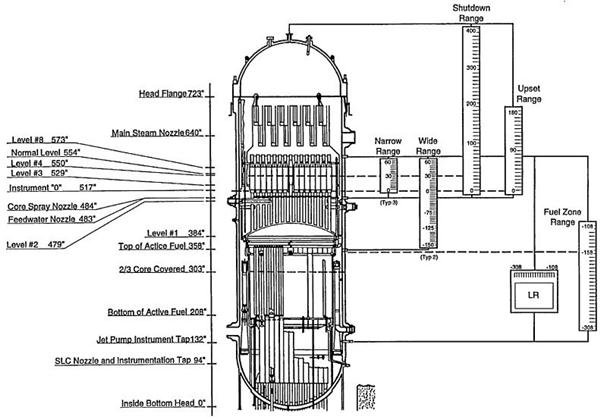
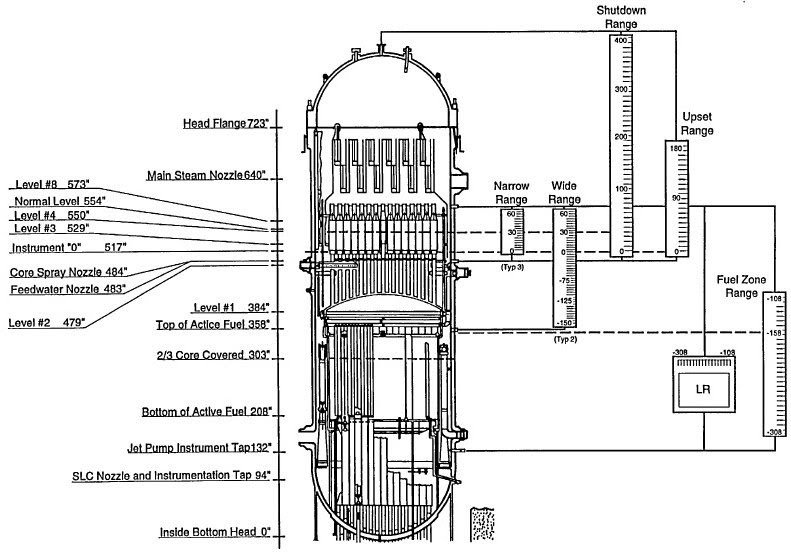
@Ralph Unger Does this help you? i140.photobucket.com
by NHK Listener via I140.photobucket 4/14/2011 7:24:19 AM- @NHK, nope, it does not show detail of control functions.by Ralph Unger 4/14/2011 7:25:25 AM
- What is that that goes out of the bottom of the reactor? "Inside bottom head" is no explanation.by Ralph Unger 4/14/2011 7:27:58 AM
- I cannot find the link, but from what I recall, the seals are temperature sensitive, they can be overheated and lose function.by Ralph Unger 4/14/2011 7:30:06 AM
- I don't trust www.fairewinds.com and I also don't trust www.iaea.org I am sure the truth lies somewhere in the middle.by Ralph Unger 4/14/2011 7:32:44 AM
- @Ralph Unger We have a diagram of them. Graphite gasket assemblies for the control rods.by radioguy 4/14/2011 7:33:28 AM
- Molten sieve came to mind.by radioguy 4/14/2011 7:33:51 AM
- And does graphite burn? Yep.by Ralph Unger 4/14/2011 7:33:59 AM
- at like 350C?by radioguy 4/14/2011 7:34:24 AM
- 400C in airby radioguy 4/14/2011 7:34:50 AM
 From the MIT FAQ:
Q: Why are reactors built in earthquake prone areas such as Japan? What type of risk assessment allows this to occur?
A: The Design Basis Earthquakes (DBE) is the maximum earthquake intensity that a reactor is expected to experience in its lifetime. Reactors in areas of higher seismic activity and severity must design for a stronger DBE than reactors in less seismically intense regions. The same basic strategy is employed for general building construction. Skyscrapers are built in both Kansas City and Tokyo, but a skyscraper in Kansas City is not designed to withstand the same earthquakes as one in Tokyo.
Three key points should be noted:
The DBE is determined through a historical database of earthquakes in the region and expert judgment. There is no way to determine if more severe earthquakes can occur than the historical database indicates. Reliable empirical data for earthquake intensity, location, and frequency has only been reliably collected for approximately the last 100 years, and prior to that the only source is historical accounts. There is no way to be 100% certain that a larger earthquake than designed for will hit the region in the lifetime of the plant
Rather than licensing using a seismic risk assessment, risk-information is used to define the DBE that the reactor is designed to survive.
When designing for the DBE, the failure criterion, which the reactor is designed to avoid during the accident are conservative. Failure in seismic engineering analysis is typically defined as the structural supports reaching their point of plastic deformation. Typically, metals can remain intact after this point. This conservatism can help explain why the reactors survived an earthquake larger than the DBE.
mitnse.comby Rob in SF 4/14/2011 7:35:47 AM- I must admit I kinda lean twords Arnie Gundersen from Fairwinds. I think he overstates his point, but I guess he has to do that to be heard at all.by Ralph Unger 4/14/2011 7:35:50 AM
- @Ralph Unger www.iaea.orgby NHK Listener 4/14/2011 7:36:10 AM
Japan Earthquake | Page 696
- Who's Blogging
-
 hudebnik
 alblee
 UKVal
UKVal Oliver (ScribbleLive)
 Jonathan Keebler
 kaykodh
 PKelley
 Markfm
 Angie
Angie Deb
Deb Mid Valley
- Pedro Jesus
 Matt (ScribbleLive)
 George Gibb
 elainekirk
 lillymunster
 dean
dean bo
bo Edano
Edano IanGoddard