Japan Earthquake | Page 1547
 estacion I realised that but I am not sure tepco wants you to , can't you just pretend to believe them, they did pay an awful lot of money to that PR outfit who suggested releasing 2 seperate issues together so people would see them as one issueby elainekirk 6/8/2011 5:17:41 PM
- @radioguy we should be able to get a shortlist of the material of vent pipe possibilities if we then google them and reaction with radioactive steam ?by elainekirk 6/8/2011 5:20:19 PM
 So the million dollar question remains "why they have cesium (and cobalt) in basement waters at DAINI if no melt have ocurred?"by estacion 6/8/2011 5:22:18 PM
- @estacion would you just get it from reactor ? could it come from sfp if conditions were right?by elainekirk 6/8/2011 5:23:16 PM
- Was there a photo release for the IAEA visit to daini?by elainekirk 6/8/2011 5:24:16 PM
 @elainekirk yes, the photos were generic guys standing around and one photo of a shed that was sitting at an odd angle due to the ground movement.by lillymunster 6/8/2011 5:25:50 PM
- @elainekirk: I think so, but they have not a blowed roof at DAINI, so no watering with a boom style like in DAIICHI, so I doubt water of SFP ends on basement.by estacion 6/8/2011 5:27:08 PM
- II think I am going to go-a-googlingby elainekirk 6/8/2011 5:28:03 PM
 @estacion That question has already been answered by someone else here. Those elements could have come from anywhere inside or outside the plant. You're talking about a nuclear power plant. It is a contaminated place. When the tsunami came through it probably dragged a lot of debris (including radioactive) into those basements. Then you have radioactive steam being vented and some particulates fall and accumulate inside the building. No real mystery there. Check the reactor schematics up there in the pinned up link and you'll be able to understand how that can easily happen.by Pedro Jesus 6/8/2011 5:29:05 PM
- @Pedro Jesus: Key detail -> 3.000 Tn's of water at 30 times legal limit radiaton are not some particules!!!by estacion 6/8/2011 5:32:09 PM
 Wednesday, 30 March
Smoke escaped from the Fukushima II nuclear plant. The smoke was being emitted from equipment which supplies power to a motor pump that collects outdoor water and stopped after workers turned off the motor.[5]
A sound truck driven by members of an Uyoku dantai group deliberately crashed through the front gate to the plant, then drove around the premises for 10 minutes before being stopped. The truck's occupants were arrested and required nuclear decontamination.[6]by Dean 6/8/2011 5:32:16 PM- japanese protestors from the UYOKU DANATAI group... crashing a gate.. wow .. surprised they were not shotby Dean 6/8/2011 5:32:57 PM
- interesting thing about that post was it was taken from the daini plant wiki... so... they just drove around the place and required decontamination.. hmmmmm,,, if the plant was safe and shutdown cooling established.. where did the contamination come from?by Dean 6/8/2011 5:34:31 PM
- Level 5: Accident with wider consequencesImpact on people and environment
Limited release of radioactive material likely to require implementation of some planned countermeasures.
Several deaths from radiation.
Impact on radiological barriers and control
Severe damage to reactor core.
Release of large quantities of radioactive material within an installation with a high probability of significant public exposure. This could arise from a major criticality accident or fire.
en.wikipedia.orgby estacion 6/8/2011 5:37:07 PM - lunch time.. will be backby Dean 6/8/2011 5:39:47 PM
- Bye Dean, I must go, too!
Bye Folks!by estacion 6/8/2011 5:41:20 PM - @estacion Radioactive caesium has a half-life of around 30 years. It accumulates, hence the high concentration. Still no big mystery, considering we are talking about a NPP that has been in service for decades.by Pedro Jesus 6/8/2011 5:41:40 PM
- @Pedro Jesus Basement it's outside of zone containment --> implies automatic clausure of the plant.by estacion 6/8/2011 5:44:04 PM
- @Dean The article says they and the vehicle had to be decontaminated. That's standard procedure at a NPP. It doesn't mean that they were in fact irradiated by any contaminants. Journalists should a bit more careful in the way they chose their phrasing sometimes.by Pedro Jesus 6/8/2011 5:44:16 PM
- there were fires at daini on 30th of March as @dean says and on 27th of may just looking for more detailby elainekirk 6/8/2011 5:46:16 PM
- @estacion Still, the water leaked there from outside. Did you look at the schematics? The basement is actually an open space. There are no isolated floors inside the unit. The secondary containment is a single open space protected from the outside by concrete walls and ceiling. Anything that leaks inside goes directly to the bottom floor that they call the basement.by Pedro Jesus 6/8/2011 5:47:47 PM
 Here'a a blurb from this article: U.S.-Japan joint survey reveals high radiation beyond evacuation zone www.asahi.com
"The first map of ground surface contamination within 80 kilometers of the crippled Fukushima No. 1 nuclear power plant shows radiation levels higher in some municipalities than those in the mandatory relocation zone around the Chernobyl plant.
The map, released May 6, was compiled from data from a joint aircraft survey undertaken by the Ministry of Education, Culture, Sports, Science and Technology and the U.S. Department of Energy.
It showed that a belt of contamination, with 3 million to 14.7 million becquerels of cesium-137 per square meter, spread to the northwest of the nuclear plant."
That map must be out there somewhere?by radioguy 6/8/2011 5:53:18 PM- Did it get posted here and I just missed it?by radioguy 6/8/2011 5:53:57 PM
- @Pedro Jesus Is that standard procedure in the US or in Europe? I have been into NPP in Japan in taxis, cars and buses (which have driven around the NPP picking up workers at different stops) and there was never any decontamination done. Or do you mean it is just standard procedure when there is some concern at a NPP (as at Daini currently)? Just trying to understand. Thanksby Will 6/8/2011 5:58:59 PM
- It does look as if this problem has been recognised after the event but it seems that recycled metals containing radiation have entered the manufacturing indusrty translate.google.comby elainekirk 6/8/2011 6:01:04 PM
- @radioguy interesting there should be at least a mapby elainekirk 6/8/2011 6:03:29 PM
- @Will I mean, it's standard procedure under emergency situations and I'm pretty sure it is so all around the world. Every single vehicle circulating inside both Fukushima NPPs has been scanned and/or decontaminated. There are specific safety measures that must be observed under emergency situations such as that one in Japan. We must remember Japan power plants are all under very specific safety regulations at the moment. Daini stands inside the exclusion zone so decontamination and scanning are mandatory, afaik. Correct me if I'm wrong.by Pedro Jesus 6/8/2011 6:09:37 PM

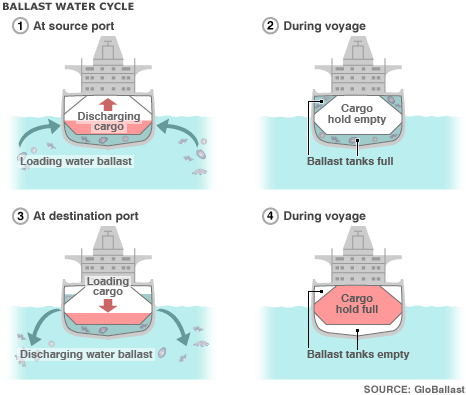
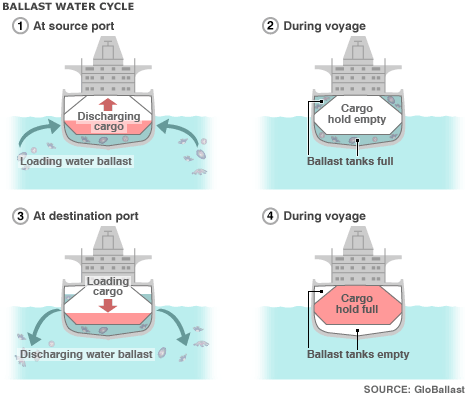
I'm waiting some answer to letters I send to captains but this photos says every thing.... www.netpeckers.co.in
by Majj via Netpeckers.co.in 6/8/2011 6:17:00 PM- @Pedro Jesus Thanks. Just wanted it clarified that standard procedure at a NPP means standard procedure at a NPP under emergency situations.by Will 6/8/2011 6:19:23 PM
- @Will It was my fault not to contextualize my comment. I apologize. I thought the context was clear enough. =)by Pedro Jesus 6/8/2011 6:22:07 PM
- the monitoring post data for Fukushima Daini from March 13 to present is here translate.google.comby elainekirk 6/8/2011 6:22:55 PM
- backby Dean 6/8/2011 6:27:10 PM
- @elainekirk Don't they have those pages in the English version of the site? They would be easier to understand.by Pedro Jesus 6/8/2011 6:27:20 PM
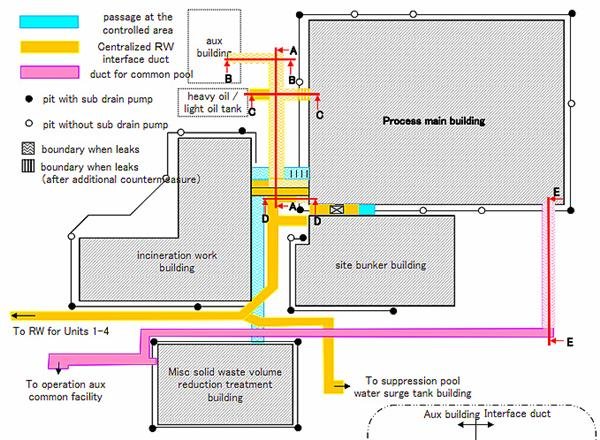
1. Summary In regard with the large quantity of radioactive wastewater at turbine buildings of Unit 2 and 3 (hereafter stated as “high level wastewater”), we decided to urgently transfer it to the Process Main Building and High Temperature Incinerator Building, as we cannot deny the possibility of its leakage continued www.tepco.co.jp
by elainekirk 6/8/2011 6:28:51 PM- @pedro I keep forgetting after so many weeks of the good stuff not appearing in English I am slow in getting used to the idea that they now have to ...albeit that it is amany hrs after the Japanese vesion at timesby elainekirk 6/8/2011 6:31:05 PM
- @elainekirk My computer doesn't even read most Japanese scripts so I end looking at squares when I look at Japanese pages. They should get a faster translator. lolby Pedro Jesus 6/8/2011 6:33:04 PM
- @pedro English version of monitoring post data from Fukushuma Daini
www.tepco.co.jpby elainekirk 6/8/2011 6:34:44 PM - @elainekirk Thanks. I usually only consult the Daiichi data. They update those on a daily basis.by Pedro Jesus 6/8/2011 6:37:07 PM
- @ Pedro, the press via wiki could have assumed they were decontaminated.. in my experience and at the facility I work at, if some vehicle crashed the gates they would be apprehended and placed under arrest but they and their vehicle would not be decontaminated unless they had some detectable contamination ... that just caught me as perhaps some link to if there was outside contamination on the ground from things we don't know about the daini facilitiesby Dean 6/8/2011 6:38:14 PM
- @Dean That was what I thought. But anyway, aren't there different procedures that are put in effect when under emergency situations such as the present one in Japan? Or are those specific of Japan as, for example, the radiation exposure limit (which is a lot lower in Japan than in the rest of the world)?by Pedro Jesus 6/8/2011 6:44:39 PM
- @Pedro.. where I worked they wouldn't have been able to bust through the gate in any vehicle so I was really surprised to hear that they had done it at the main gate. When in emergency conditions which would have warranted an evaculation, security would be all over guarding the entrances, people who evacuated would have been loaded in buses and transported off site to a staging area. The presence of contamination would be picked up with the emergency personnel who immediately monitor for external contamination or radiation. If for some reason a vendor or other person didn't get out of the area they would be surveyed along with their vehicle and decontaminated to acceptable levels. The exposure limits have more to do with "re-entry procedures and would only be raised with upper management. ie: company approval"by Dean 6/8/2011 6:52:04 PM
- Guardian are reporting 'melt-through' : www.guardian.co.ukby jt 6/8/2011 6:56:09 PM
 @jt : ha - haha :)by Edano 6/8/2011 6:57:40 PM
- @Dean That is something that really surprises and confuses me in Japanese culture. They don't have that kind of preventive measure because they assume everybody will comply with the official directives and decisions. Here in Europe is basically the same as in the US. Preventive actions are set to prevent such situations. In extreme cases the Military is called to enforce the Government decisions when the Police do not possess the means. But then again, Japan doesn't even possess a proper Military force. Completely different culture, isn't it?by Pedro Jesus 6/8/2011 6:59:08 PM
- ABC (Australia not US) reporting sewage: www.abc.net.au www.abc.net.auby jt 6/8/2011 7:01:00 PM
Japan Earthquake | Page 1547
- Who's Blogging
-
 hudebnik
 alblee
 UKVal
UKVal Jonathan Keebler
 Oliver (ScribbleLive)
 kaykodh
 Markfm
 Angie
Angie Mid Valley
 Matt (ScribbleLive)
 George Gibb
- elainekirk
 PKelley
- lillymunster
 dean
dean bo
bo Edano
Edano Deb
Deb- Pedro Jesus
 IanGoddard