Japan Earthquake | Page 1718
 but it will not be provable.by Edano 6/21/2011 11:53:18 PM
 @Edano The end of the article... This is not to say that the radiation from Fukushima is not dangerous (it is), nor that we shouldn’t closely monitor its potential to spread (we should). But picking only the data that suits your analysis isn’t science—it’s politics. Beware those who would confuse the latter with the former.by Majj 6/21/2011 11:54:40 PM
- The British government made contingency plans at the height of the Fukushima nuclear crisis which anticipated a "reasonable worst case scenario" of the plant releasing more radiation than Chernobyl, new documents released to the Guardian show. www.guardian.co.ukby Majj 6/21/2011 11:56:53 PM

mdn.mainichi.jp
Tokyo area parents' radiation worries grow with discovery of local 'hotspots'
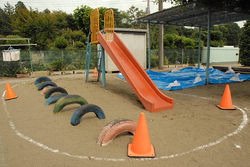
Pylons and a blue tarp mark the parts of a nursery school playground pronounced off-limits after the discovery of a radioactive "hotspot" there, in Noda, Chiba Prefecture. (Mainichi)More than three months after the Great East Japan Earthquake and the meltdowns at the Fukushima No. 1 Nuclear Power Plant, Tokyo region residents are becoming increasingly worried over radiation exposure as a number of radioactive "hotspots" have been discovered in and around the capital.
Local governments are calling for calm, as annual doses of radiation at the hotspots -- sites where radiation levels are significantly higher than their surroundings -- would not exceed 20 millisieverts as they do in parts of Fukushima Prefecture. Residents are nevertheless calling on their local governments to take some kind of action...
mdn.mainichi.jpby estacion via Mdn.mainichi.jp 6/22/2011 12:01:49 AM @Majj That may be true about picking data, but the SA article really didn't contribute anything except to point that out.by Bobby1 6/22/2011 12:02:11 AM
- @Bobby1 I agree youby Majj 6/22/2011 12:03:12 AM
- OK, for the cities Honolulu HI, Fresno Glendale Long Beach Los Angeles Pasadena Sacramento San Diego San Francisco San Jose CA, Portland OR, Seattle Spokane Tacoma WA, there is a defensible increase in number of deaths for age 45-64, and 65 and over. I am going to stop there.by Bobby1 6/22/2011 12:06:08 AM
 @Majj there are many stillbirths happening in Japan , there is nothing official but to me in the circumstances that means nothing, if the people say they are happening that is good enough for me.
In Fukushima they are looking at ways to reduce the cost of clearing playgrounds, at the moment they 'turn' the soil or bury the top layer in a corner of the playground - how do you reduce the cost of that?
The Guardian FOI'ed the UK government and many docs were not releasedby Elaine Kirk 6/22/2011 12:08:25 AM
Thom Hartmann: Nuclear Power - We almost Lost Nebraska youtu.beby Majj 6/22/2011 12:15:56 AM @Majj I have a news update to do. what does he say?by RadioGuy 6/22/2011 12:17:35 AM
- @Elaine Kirk Its all abalt money They don;t care of Kids or normal population. Is just a big ugly game. And the kids are the lozersby Majj 6/22/2011 12:17:57 AM
- @RadioGuy ????by Majj 6/22/2011 12:18:08 AM
www.yomiuri.co.jp
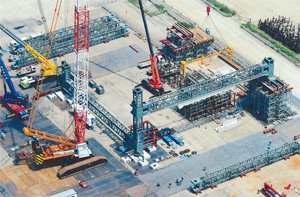
Work proceeds at Onahama Port in Iwaki, Fukushima Prefecture, on Monday morning to assemble parts of a giant cover for the No. 1 reactor building of Tokyo Electric Power Co.'s Fukushima No. 1 nuclear power plant.
www.yomiuri.co.jpby estacion via Yomiuri.co.jp 6/22/2011 12:19:37 AM- @estacion ...to assemble parts of a giant cover "UP". The cyclones will come :-(((((by Majj 6/22/2011 12:21:23 AM
 @all Good Morning...Good Evening...Hello!by smoss 6/22/2011 12:21:52 AM
 Found this website that has Japanese-English online libraries of Japanese laws and legal terms. You need to run through google translate to get to that section. Might be useful when people have question related to Japanese law. hounavi.jpby lillymunster 6/22/2011 12:23:18 AM
- In 2009 Japan added enough solar panel capacity to replace one smaller nuclear reactor martinjapan.blogspot.comby lillymunster 6/22/2011 12:28:08 AM
- Thom Hartmann really did a nice video. If people in the America University see it . America wood stand a chance. Only people that stud can understand the risks. They change Brazil in the 70's and they can change America now. youtu.beby Majj 6/22/2011 12:28:54 AM
- Sorry Majj I was rushing and had been trying to find any new numbers. I keep hearing peopel refering to the Nebraska thing as "whew we just dodged that one." But it hasn't stopped raining or melting.by RadioGuy 6/22/2011 12:29:24 AM
Uhmmm...
www.asahicom.jp
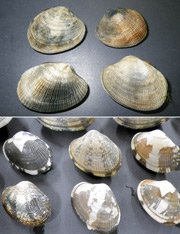
Normal clam shells, above, and ones showing changes in patterns (Provided by Kenji Okoshi)
Abnormal patterns on clam shells a sign of stress from tsunami
BY TOMOYUKI YAMAMOTO STAFF WRITER
2011/06/21
Even hardy marine creatures are showing signs of stress from the disastrous effects of the March 11 Great East Japan Earthquake.
Abnormal shell patterns have been found on clams off the coast of Fukushima Prefecture since the tsunami radically changed their habitat, according to research team led by Kenji Okoshi, a professor of environmental dynamic analysis at Toho University.
Okoshi's team studied the density of clams in their habitats and other changes in May at Matsukawaura bay and inlets in Soma, Fukushima Prefecture. These areas are noted for their clam cultivation.
Of the 216 clams studied, 192, or about 90 percent, had ruts in the middle of their shells. The ruts marked the start of different colors and patterns leading toward the edges, the team said.
In contrast, a survey conducted in June 2009 in Matsukawaura bay found only 10 percent of the clams showed changes in their shells, such as parallel striations.
Okoshi said the latest clams likely came under great stress due to the long distances carried by the tsunami, the sudden change in salt concentration, and the unnatural mix of sand and mud in the seabed.
Okoshi added, "This phenomenon itself won't necessarily affect the taste and quality of the clams."
www.asahi.comby estacion via Asahicom.jp 6/22/2011 12:29:52 AM- @RadioGuy Teoric the water will keep rising until Agost...by Majj 6/22/2011 12:30:32 AM
- I knowby RadioGuy 6/22/2011 12:30:54 AM
- sowhy does he say "we ALMOST lost Nebraska? That was my qhestion.by RadioGuy 6/22/2011 12:31:14 AM
- This is causing so much worry amongst the Japanese people this is just one (translated) tweet
"No. 4 of the camera images on June 14, Aichi clothes, the Cherenkov light is not out, and re-criticality is happening, foreign media has reported. Japan has not reported anything?"
why can't these pocket lining b'st'rds stop trading on peoples fears it is sick hawaiinewsdaily.comby Elaine Kirk 6/22/2011 12:31:37 AM  @estacion And they don't even mention the radiation!!!by LM 6/22/2011 12:31:47 AM
- @LM Nooo, they want sell the clams!!! ;)by estacion 6/22/2011 12:34:13 AM
- @RadioGuy I think he refer to the RUBBER walls. If he talk in the future they jail hin as terrorist. Funny that the Russians are becoming the best "protectors "of America. I think is because they want to sell OIL and Gas. But at list they are bringing the Truth outby Majj 6/22/2011 12:35:40 AM
- @estacion I can't imagine anyone buying a Fukushima clam...simply frightening!by LM 6/22/2011 12:38:02 AM
- New details are emerging that indicate the Fukushima nuclear disaster in Japan is far worse than previously known, with three of the four affected reactors experiencing full meltdowns. Meanwhile, in the U.S., massive flooding along the Missouri River has put Nebraska’s two nuclear plants, both near Omaha, on alert. The Cooper Nuclear Station declared a low-level emergency and will have to close down if the river rises another 3 inches. The Fort Calhoun nuclear power plant has been shut down since April 9, in part due to flooding. At Prairie Island, Minn., extreme heat caused the nuclear plant’s two emergency diesel generators to fail. Emergency-generator failure was one of the key problems that led to the meltdowns at Fukushima. www.truthdig.comby Majj 6/22/2011 12:38:57 AM
- @LM <b>"This phenomenon itself won't necessarily affect the taste and quality of the clams."
:))by estacion 6/22/2011 12:40:11 AM - @Elaine Kirk The people who are posting this kind of thing have their own ideology to push, it seems to be inventing chaos and anguish for their own financial enrichment and ego fluffing. They KNOW the outrageous things they post are wrong and still go ahead and post them. I noticed the guy behind HawaiiNewsDaily has backed off of calling himself "Dr" and his claims of being a nuclear engineer in some of his newer articles on Rense.com.
To give an idea how clueless the person making these panic inducing claims is. He (the guy claiming to be a nuclear engineer) stated that the spent fuel pools at Ft. Calhoun were outdoor open pools. How can anyone be that stupid and be taken seriously, not to mention calling themselves a nuclear engineer.by lillymunster 6/22/2011 12:41:02 AM - What I do. This blog is on Fukushima. But we can ignore the American problem. Do we need to make many Blogs. One for it accident/near accident in the world ???by Majj 6/22/2011 12:41:11 AM
- @Elaine Kirk @lillymunster The guy might be right about the re-criticality though, it has been happening every couple of weeks, the plant was due for one.by Bobby1 6/22/2011 12:42:39 AM
- @Majj Wow, off to go find NRC documents on Prairie Island - wonder why they are having issues now. BTW, all these plants in the US having issues are the same era as Fuku, not all are BWR though.by lillymunster 6/22/2011 12:43:44 AM
- @lillymunster sometimes I can tell the tweeter through a third party bilingual tweeter but none are around and it was retweeted like billyho it makes me mad and sadby Elaine Kirk 6/22/2011 12:43:49 AM
- @estacion LOL!by LM 6/22/2011 12:45:55 AM
- This is the FOI doc the Guardian got from the UK government can anybody tell me if the figures are right it would be rather good to be able to say "hey wait a minute..."by Elaine Kirk 6/22/2011 12:49:42 AM
- www.scribd.com oopsby Elaine Kirk 6/22/2011 12:50:00 AM
- @Elaine Kirk : yes, they are right.by Edano 6/22/2011 12:50:28 AM
- @Edano thanks i will see if I can find othersby Elaine Kirk 6/22/2011 12:57:57 AM
- I checked on Prairie Island through the NRC reporting and also for news stories. I think the writer in the original article was referring to some past inspections at Prairie Island where their emergency generators failed tests or overheated during testing.by lillymunster 6/22/2011 12:58:30 AM
- www.state.gov Joint Statement of the U.S.-Japan Security Consultative Committeeby Elaine Kirk 6/22/2011 1:03:50 AM
- ***ulative radiation reaches as high as 82 millisieverts+
TOKYO, June 21 (AP) - (Kyodo)—***ulative radiation outside the 20-kilometer radius of the crippled Fukushima Daiichi nuclear power plant in the past three months has reached as high as 82 millisieverts, more than four times the yardstick of 20 millisieverts a year, a science ministry estimate showed Tuesday.
The highest level was detected in a part of Namie, Fukushima Prefecture, around 22 kilometers northwest of the nuclear plant crippled since the March 11 earthquake and tsunami, according to the data compiled by the Ministry of Education, Culture, Sports, Science and Technology.
Namie is among the designated evacuation areas lying outside of the no-entry zone where radiation levels are feared to exceed the annual limit of 20 millisieverts.
Of 160 monitoring sites in the designated areas outside the no-entry zone, 23 registered radiation levels exceeding 20 millisieverts over the three-month period, the ministry said.
Outside the areas subject to evacuation, an area in the city of Minamisoma had an estimated ***ulative radiation level of 20.4 millisieverts a year since the start of the crisis.
www.breitbart.comby estacion 6/22/2011 1:10:30 AM - by AustralianCannonball 6/22/2011 1:20:43 AM
- Thanks, AC!!by estacion 6/22/2011 1:22:59 AM


Japan Earthquake | Page 1718
- Who's Blogging
-
 hudebnik
 alblee
 UKVal
UKVal Jonathan Keebler
 Oliver (ScribbleLive)
 kaykodh
 Markfm
 Angie
Angie Mid Valley
 Matt (ScribbleLive)
 George Gibb
 elainekirk
 PKelley
- lillymunster
 dean
dean bo
bo Edano
Edano Deb
Deb- Pedro Jesus
 IanGoddard