Japan Earthquake | Page 1757
 Hi smoss and dean! Thanks Lilly...I suspected it might have been there. We'll have to keep a close eye as rainy season continues.by LM 6/26/2011 12:22:20 AM
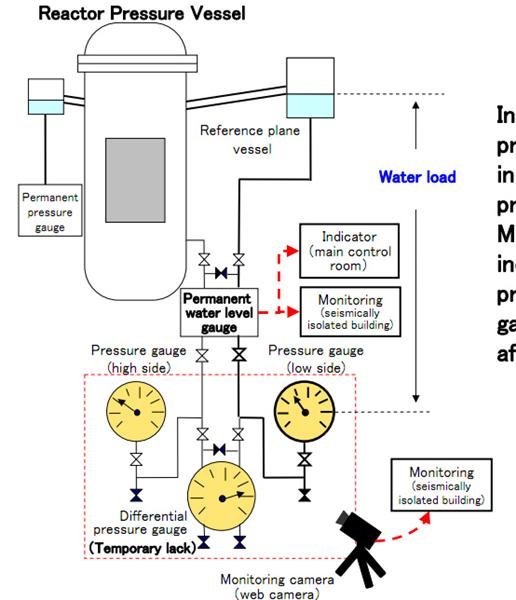
OK what is a seismically isolated building???? www.tepco.co.jp
by elainekirk 6/26/2011 12:23:26 AM www.nrc.gov @ Peter,, this is one document I found which addresses low power operation made by a utility and then resumption at full power... NRC had concerns with it.. before i would say... lower to an amount like 70, 75, 80 etc. we would have to add, and be in compliance with the safety analysis for lower power operation.... the other option is to reduce setpoints like lower the seismic trip point if there is an issue with seismic walkdowns etc and re-run of seismic analysis by independent organizationby dean 6/26/2011 12:24:56 AM
 D'oh it is the quakeproof control room silly meby Elaine Kirk 6/26/2011 12:27:12 AM
- @elaine.. I think that means that they will monitor it at another building.. "SUSPPOSEDLY" seismically qualified..... duh.. I am sure they will wish they didn't put that comment with out more detail..
by dean 6/26/2011 12:30:47 AM  @elainekirk I noticed more than one instance where they are putting a web cam inside the building to watch something. Very good idea on their part, saves adding to a workers dosages just to go peek at something.by lillymunster 6/26/2011 12:33:18 AM
 @all Question: Would there be a reasoning to store unirradiated FAs in the SFP if they weren't mixed oxide?by smoss 6/26/2011 12:33:31 AM
- @ elaine,, at this point a differential pressure gauge isn't much good because it's used as a measurement that is proportional to flow.. they need flow before they can have diff pressure... the other part of the setup .. the high pressure side can be calibrated to also give water level with in that range..by dean 6/26/2011 12:34:25 AM
- @smoss Dean may know more than I do. From what I have read at least related to TEPCO and process standards was that it wouldn't be stored there except briefly to prep it for going in the reactor. MOX was the exception I found where supposedly the water gives some shielding and extra physical security from theft or tampering.by lillymunster 6/26/2011 12:35:33 AM
- @lillymunster TYby smoss 6/26/2011 12:37:04 AM
- @smoss yes it was room I believe they just had no room at all at fuku so stuff went where they could sqeeze itby Elaine Kirk 6/26/2011 12:37:14 AM
- www.blogminster.com
Home / Labour MP Blogs, MP Blogs / Media lies on Fukushima
Media lies on Fukushima
By Paul Flynn (Lab) • on June 25, 2011, 7:58 pm
blummin eck knock me down with a clothes pegby Elaine Kirk 6/26/2011 12:43:55 AM - smoss, from my understanding the new FA's (regular and MOX) arrive at an area that stores new fuel.. then they select a loading to be put in the core and prepare it for installation prior to the outage, after the outage they use the fuel transfer tube to lift the new element up and then put it in the reactor. once the operating cycle is complete about 30% of the fuel in the core goes to the SFP and that would be for regular and MOX eventually..by dean 6/26/2011 12:44:41 AM
 @Dean how about we insert: "……..within four hours. Therefore, the extended loss of AC power seems to have contributed significantly to the rapid unravelling of reactor safety system controls."
We still need a factor for the safety margin. Does 10 suffice?by Peter Melzer 6/26/2011 12:44:46 AM- @elainekirk @dean Thank You!by smoss 6/26/2011 12:47:52 AM
series of you tube videos on the effect of removing the top 2cms of soil/sand from playgrounds as is being done
by Elaine Kirk 6/26/2011 12:50:01 AM- @Peter I think the four hours should be ok or for a time longer than the batteries are needed to keep emergency flow on.. For the safety margin I think we could say the 10%.by dean 6/26/2011 12:50:41 AM
- I wish we had access to some accident analyses for BWR plants and then do word searches in each one for "after the restoration of"... that would link us into every assumption that requires some action to restore normal system operationby dean 6/26/2011 12:54:21 AM
- www.nrc.gov this is a good example of other issues that plants have to understand.. that's spurious instrumentation or equipment actions that take place upon restoration of powerby dean 6/26/2011 12:55:57 AM
- The effect of restoration of power might not be as thoroughly analyzed as the effect of a loss of power. In many plants, safety-related instrumentation is powered from interruptible buses because of the "fail safe" response of the instrument upon the loss of power. However, the response of these instruments to a restoration of power may be undesirable or could lead to risk significant events.by dean 6/26/2011 12:57:45 AM
- @dean do you mean like replacing a blown fuse without knowing why the fuse blew?by Elaine Kirk 6/26/2011 12:58:49 AM
- that's one example elaine,,, utility power companies have a general rule.. if a breaker trips.. one try is all that you can do to restore power, in the case of what I'm talking about is total loss.. then resumption of power which is a very very complex task to fully understand.. it's really complicatedby dean 6/26/2011 1:00:21 AM
- and.. in the event of batteries going lower and lower,, many components that are powered by batteries are power sensitive and may shut off prematurely,, like your lights flickering then going offby dean 6/26/2011 1:01:31 AM
- @dean , perhaps we should write: "……..within four hours. Therefore, the extended loss of AC power, and possibly subsequent attempts of power restoration, seem to have contributed significantly to the unravelling of reactor safety system controls."by Peter Melzer 6/26/2011 1:02:52 AM
- At the plant where I worked I had to know every fail safe function of critical system components, what happened upon restoration of power so the plant could be quickly returned to normal conditions for shutdowns or operationby dean 6/26/2011 1:02:53 AM
- perfect @ Peterby dean 6/26/2011 1:03:10 AM
- www.nrc.gov @ peter I think this one has some assumption on resumption of power time... check it nowby dean 6/26/2011 1:06:54 AM
- www.nucpros.com some things that NRC is suggesting due to fukushima SBOby dean 6/26/2011 1:20:31 AM
- @dean the water cooling systemby Elaine Kirk 6/26/2011 1:36:42 AM
- There is a doc here that shows the closed loop water cooling, how they plan to seal leak in torus etc www.tepco.co.jpby Elaine Kirk 6/26/2011 1:38:53 AM
- @elaine. yes in partby dean 6/26/2011 1:39:00 AM
- that doc is a good find... i would like to see the procedure and radiation levels down there getting ready to put some sort of hole in the torus to pump the groutin ..by dean 6/26/2011 1:40:45 AM
- I know from previous documents that US plants had to strengthen the supports for the torus,,, if japan didn't do it then that grout load would probably be horrendousby dean 6/26/2011 1:41:34 AM
- @dean I am trying to understand it begining to grasp layout nowby Elaine Kirk 6/26/2011 1:44:55 AM
- @elaine.. the cutaway model is a good representation of the area where they would probably place the hole and shows it in respect to the other parts of the plant but it is lowby dean 6/26/2011 1:47:55 AM
- @ elaine.. wait.. maybe what they are saying, as shown by the gray area under the torus, is that the will poke a hole in that area and built a grout support under the torus so it will then hold water and act as a resevoirby dean 6/26/2011 1:49:45 AM
- @dean, in my simple mind I thought that the safety margins are expressed in probabilities of failure. Let us say, the simulation suggests that the average probability of a meltdown owing to an earthquake is 1 x 10e-4, that is once in 10,000 years. The failure rate should correlate with the capacity at which the reactor is run. The question would be at what fraction of maximal power output will I diminish the failure rate by a factor of 10, or to once in 100,000 years. The fraction may be plant specific, depending on design, the components and their age. That is why you cannot demand to reduce the output by a fixed percentage. Each plant may end up at a different one to meet the enhanced failure requirement. But I am not the engineer, ;)by Peter Melzer 6/26/2011 1:51:16 AM
- @dean I don't know they use the word 'plug' don't they ? how do they know where the leak is ? I would agree it is there because it is at the corner that the quake took outby Elaine Kirk 6/26/2011 1:53:48 AM
- @ Peter your right on that and as a general rule I've seen them adjust parameters to achieve different probabilities or, input some initial power level. It is complicated and can vary from plant to plant, In my experience in reactor operations, our analysts and PRA people would come and say.. we have a problem and I would listen to what they had to say.. and would ask.. so, what are the best options to allow continued operations and they would use that same approach and give a power level to use as the MAXIMUM power level for operation.by dean 6/26/2011 2:00:51 AM
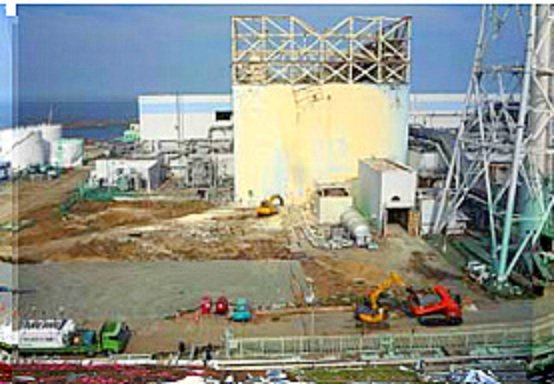
his is the area around unit 1 on June the 9th they have filled in what looks to be an enormous area and laid a road track to get the heavy vehicles up to the unit www.tepco.co.jp it seems iffy around the base of the tower leg too which may explain why people think they can see a tilt to it
by elainekirk 6/26/2011 2:01:08 AM- usually would be something like through a deeper review of some analysis there would be an UNREVIEWED SAFETY QUESTION that would lead to some restriction until resolvedby dean 6/26/2011 2:02:04 AM
- www.nrc.gov here is a pretty good doc on PRA fact sheet.... I didn't perform the specific PRA's nor the analyses but reviewed a ton of them from over all content especially in the initial assumptions and in the levels of actual instrumentation, flow rates, temps etc. .by dean 6/26/2011 2:06:31 AM
- @dean you really must stop dropping search terms into the convo you keep feeding my obsession with googleby elainekirk 6/26/2011 2:07:24 AM
- Peter I hope that helped some,,by dean 6/26/2011 2:10:44 AM
- @elaine I hope eventually they get one of those robots down and crawl around the torus and look for leaks if possibleby dean 6/26/2011 2:11:46 AM
Japan Earthquake | Page 1757
- Who's Blogging
-
 hudebnik
 alblee
 UKVal
UKVal Jonathan Keebler
 Oliver (ScribbleLive)
 kaykodh
 Markfm
 Angie
Angie Mid Valley
 Matt (ScribbleLive)
 George Gibb
- elainekirk
 PKelley
- lillymunster
- dean
 bo
bo Edano
Edano Deb
Deb Pedro Jesus
 IanGoddard