Japan Earthquake | Page 1917
 @lillymunster it's very soluble, since it can react with water to form cesium hydroxide, so I'd think as long as you don't crowd the stuff, and allow for water flow-through, washing would get the great majority of it out. Much as I hate it with water issues being what they are, an extra rinse wouldn't hurt on questionable wash, and a strong surfactant/detergent. Crap. All my good eco habits are being fried by this.
Yes, supplements occupy the potassium needs so the cs isn't absorbed as much. I'd been thinking in terms of high-potassium foods, and the problem with that just struck me. Nuts, for instance, and beans. I need to go find a big bag of last harvest beans.by RadioGuy 7/13/2011 7:15:33 PM- And I just had to swear off California cheese other than aged. Sad.by RadioGuy 7/13/2011 7:17:15 PM
- We need--DESPERATELY need--reliable independent testing.by RadioGuy 7/13/2011 7:18:10 PM
 @RadioGuy LOL. Now added beans to the rice already on my grocery list to stock up on. I was thinking where milk is questionable or not enough testing yet, tetrapack milk with an older production date would be an option until they sort things out for testing/tracking.by lillymunster 7/13/2011 7:19:32 PM
- Yes, and it finally sunk in to me that cheese is concentrated milk.by RadioGuy 7/13/2011 7:20:51 PM
- @RadioGuy no kidding. I have not heard back from the lab I emailed. I would really like to know if our local veggies & dairy are any better than californias right now. We got a huge downpour for weeks around the time the bulk of the radioactivity came across and Omaha had a big spikeby lillymunster 7/13/2011 7:21:25 PM
- @RadioGuy non aged cheeses are pretty easy to make, you just need milk that isn't contaminated.by lillymunster 7/13/2011 7:22:25 PM
- @lillymunster I think there will be a lot of work to be done collating rainfall maps vs jet stream maps for notable emissions from Fuku to find the hotspots, or lots more civilian testers.by RadioGuy 7/13/2011 7:22:55 PM
 "In general, Eudicots, and especially the Caryophyllales, Asterales, and Brassicales, have high (134/137)Cs concentrations, while the Fabales and Magnoliids, in particular Poales, have low (134/137)Cs concentrations." www.ncbi.nlm.nih.govby Bobby1 7/13/2011 7:23:38 PM
- @Bobby1 your comment last night that the BerkeleyNUC "below testable amounts" was often above EPA limits, kinda shot any thought I might have had that they're really reliable, and I'd had my doubts since I saw every single report with that bogus airline flight comparison at the bottom.by RadioGuy 7/13/2011 7:24:53 PM
- @lillymunster The states surrounding Omaha have the highest death rates, not the Pacific coast areas.by Bobby1 7/13/2011 7:25:34 PM
- @Bobby1 Yes, uptake data will become very important too. I can't imagine the Monstanto FDA will be very forthcoming with data about the rad levels of our food.by RadioGuy 7/13/2011 7:26:55 PM
- @Bobby1 Wow.... isn't that odd.by RadioGuy 7/13/2011 7:27:34 PM
- @RadioGuy They may be cherry-picking isotopes and foods to test also, their agenda is "everything is perfectly safe".by Bobby1 7/13/2011 7:27:36 PM
- yepby RadioGuy 7/13/2011 7:27:49 PM
- @RadioGuy The deaths increase as you go east, until you get to the Mississippi.by Bobby1 7/13/2011 7:28:42 PM

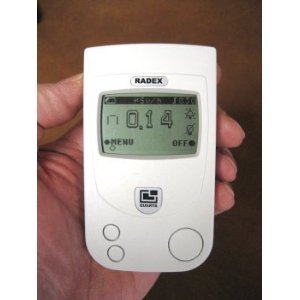
@All A friend here , that have a Japanese restaurant and ask me what kind of a Geiger Counter he should by to protect himself and his Business. We all will end up buying one. Sun or later... I think that is a good idea if the friends here that understand this machines did a kind of review in what is avaliable and we can buy to have home or in the business. ecx.images-amazon.com
by Majj via Ecx.images-amazon 7/13/2011 7:29:58 PM- @Bobby1 highest death rates as in increases over last year or in general. Take a trip to any Walmart out here and it will become obvious why we have a high death rate. :-)by lillymunster 7/13/2011 7:33:19 PM
- @lillymunster No wonder I fell like I'm gonna die every time I have to wait in line at Walmart.by Bobby1 7/13/2011 7:34:23 PM
- @Bobby1 I feel like I am in some soviet era state store when I go in a Walmart.by lillymunster 7/13/2011 7:38:02 PM
- @Bobby1 Is there a shadow behind Central Cali (well, Nevada aside)? I noticed watching the NOAA satellite loops during those first awful days that the wind was sweeping across the Aleutians, coming in hard up over Anchorage, then swept down the coast to Northern California, then swept out and in over San Diego and LA, from where it swept in almost a straight upward line over the US. Then the pattern changed and it got blocked up over Canada, then down over the heartland for all that flooding, where it eddied for a while. Hence the question about the hole. The shadow would probably be Central Cal, Utah and Colorado, maybe.by RadioGuy 7/13/2011 7:38:30 PM
- Has anyone found additional information on brita filters and their ability to filter out contaminants? I remember we found some brief mentions early on that they could filter out iodine and likely filter out cesium. Both that I initially had found were MSM articlesby lillymunster 7/13/2011 7:40:43 PM
- @RadioGuy It's kind of early to detect individual areas like that, but it looks like inland California was less affected than coastal areas. Denver looks pretty bad. Denver-Omaha-Peoria-Michigan looks like the main vector.by Bobby1 7/13/2011 7:43:27 PM
- Iodine is more often a problem as a gas, since it's not very soluble in water. Brita's work on heavy contaminants, but since Cs-137 is almost insanely soluble in water, you almost need an RO of ion exchange filter to get rid of it. That's what I've read. We need sources for all such info.by RadioGuy 7/13/2011 7:43:40 PM
- @Radioguy, on peeling potatoes. The peels are high in potassium but they are in contact with the dirt. So were you saying TO peel them or to NOT peel?by lillymunster 7/13/2011 7:44:15 PM
- @Bobby1 Yes, they suddenly started getting weather just after the storm loop over us broke in late March.by RadioGuy 7/13/2011 7:44:47 PM
- Most of the potassium (and hence Cs) is in the skin. So, unfortunately, are most of the other nutrients as well.by RadioGuy 7/13/2011 7:45:29 PM
- @RadioGuy There were storm systems stalling out in those areas all through April and May.by Bobby1 7/13/2011 7:45:48 PM
- The whole time, all the people around here who think I'm just being paranoid, would laugh when it would rain and I'd chide them to be sure to stay out of the nuclear rain. Sometimes it sucks being right.by RadioGuy 7/13/2011 7:47:43 PM
- @RadioGuy yes. The thing I read early on was vague on cesium. I don't want to suggest brita filters in the article if they don't actually provide any protection. RO seems to be the way to go.
Part of the problem is going to be thinking like a Japanese home,not a US home. They rarely have central forced air. Most homes have heat units or ac units that are just for that room. Homes may have a typical central water in source to put a RO system in. People in apartments won't have a central source and would need to set up RO in both kitchen and bath if they felt the need. Luckily from what I have read people have quite a bit of lattitude with apartments and could install something as long as they put things back when they move outby lillymunster 7/13/2011 7:47:52 PM 
www.ludlums.com Geiger counters are used to detect ionizing radiation, usually beta particles and gamma rays, but certain models can detect alpha particles. An inert gas-filled tube (usually helium, neon or argon with halogens added) briefly conducts electricity when a particle or photon of radiation makes the gas conductive. The tube amplifies this conduction by a cascade effect and outputs a current pulse, which is then often displayed by a needle or lamp and/or audible clicks.
Modern instruments can report radioactivity over several orders of magnitude. Some Geiger counters can be used to detect gamma radiation, though sensitivity can be lower for high energy gamma radiation than with certain other types of detectors. The density of gas in the device is usually low, allowing most high energy gamma photons to pass through undetected. Lower energy photons are easier to detect, and are better absorbed by the detector. Examples of this are the X-ray Pancake Geiger Tube. www.google.comby Majj via Ludlums 7/13/2011 7:50:05 PM- Increasing potassium in soil decreases uptake of cesium-137 pubs.acs.orgby Bobby1 7/13/2011 7:51:59 PM
 @lillymunster hi do you want me to harvest the bird posts? I saw you ask but was only using phone back in nowby elainekirk 7/13/2011 7:52:58 PM
- according to the discussion on Berkeley brita filters will lock up some of the iodine but the efficiency is not known. So I would say they are low on the list. I forgot about distillers. They could be added to the suggestions. www.nuc.berkeley.eduby lillymunster 7/13/2011 7:53:46 PM
- @elainekirk If you could harvest that and email it to me I can plop it into a research post on the group site so people can reference it.by lillymunster 7/13/2011 7:54:16 PM

www.ludlums.com Geiger counters are used to detect ionizing radiation, usually beta particles and gamma rays, but certain models can detect alpha particles.s.
Modern instruments can report radioactivity over several orders of magnitude. Some Geiger counters can be used to detect gamma radiation, though sensitivity can be lower for high energy gamma radiation than with certain other types of detectors. Lower energy photons are easier to detect, and are better absorbed by the detector. Examples of this are the X-ray Pancake Geiger Tube. List of models available on Google : tiny.ccby Majj via Ludlums 7/13/2011 7:54:18 PM- sorry for the double post :-(by Majj 7/13/2011 7:55:36 PM
- @Bobby1 Gardening mitigation tips for the personal and small gardeners is another excellent idea. I see people talking about putting zeolite, bentonite etc in the soil. We need data on what has the best chance of working. Of course, good data on what we're protecting against would be good, too, eh? ;)by RadioGuy 7/13/2011 7:56:46 PM
- @RadioGuy something that involved zeolite, growing sunflowers could help remediate the soil. Would need to then be able to separate out the zeolite later.by lillymunster 7/13/2011 7:57:53 PM
- @RadioGuy Zeolite etc. is also gonna get rid of the good nutritious minerals. We need to build a list of foods with estimated uptake of cesium (and other isotopes).by Bobby1 7/13/2011 7:58:30 PM
- @Bobby1 That high-potassium list has the common ones. It was good to see that legumes, avocados and cereal grains have lower uptake profiles. Growing beans (or even spinach for that matter) with adequate potassium would help make it even lower.by RadioGuy 7/13/2011 8:03:32 PM
- Fukushima cleanup recruits 'nuclear gypsies' from across Japan
Thousands of engineers and labourers have been lured by higher wages and a sense of duty
The sun has only just risen in Iwaki-Yumoto when groups of men in white T-shirts and light blue cargo pants emerge blinking into the sunlight, swapping the comfort of their air-conditioned rooms for the fierce humidity of a Japanese summer.
Four months on from the start of the world's worst nuclear crisis since Chernobyl, this hot-spring resort in north-east Japan has been transformed into a dormitory for 2,000 men who have travelled from across the country to take part in the clean-up effort 30 miles away at the Fukushima Daiichi power plant.
Iwaki-Yumoto has come to resemble corporate Japan in microcosm. Among its newest residents are technicians and engineers with years of experience and, underpinning them all, hundreds of labourers lured from across Japan by the prospect of higher wages. www.guardian.co.ukby Majj 7/13/2011 8:04:03 PM - OK... I have thee bands to mix in the park. I'm off for the day. I'll catch up later.by RadioGuy 7/13/2011 8:04:06 PM
- Fukushima pensioner army waits for call-up to frontline duties
Japanese volunteers knows as the skilled veterans corps offer to replace younger workers in operation to stabilise nuclear plant; So far, about 9,000 workers have been involved in the four-month operation to stabilise the Fukushima Daiichi nuclear power plant, where three of six reactors experienced meltdown in the aftermath of the 11 March tsunami.
If Yasuteru Yamada gets his way, the Fukushima workforce of the future will include a band of fearless pensioners calling themselves the skilled veterans corps. www.guardian.co.ukby Majj 7/13/2011 8:09:15 PM - EEK! "One restaurateur complained of workers returning in the evenings still wearing their uniforms, even down to the boots they wear inside the plant's grounds." From the Guardian article.by lillymunster 7/13/2011 8:11:51 PM

Japan Earthquake | Page 1917
- Who's Blogging
-
 hudebnik
 alblee
 UKVal
UKVal Jonathan Keebler
 Oliver (ScribbleLive)
 kaykodh
 Markfm
 Angie
Angie Mid Valley
 Matt (ScribbleLive)
 George Gibb
- elainekirk
 PKelley
- lillymunster
 dean
dean bo
bo Edano
Edano Deb
Deb Pedro Jesus
 IanGoddard