
@ all,, I need to slip away to a doc appointment then will be back..
by dean 10/3/2011 1:17:54 PM

@Dean, will work on those links when you return
by lillymunster 10/3/2011 1:18:25 PM
@M.I.A. that water hammer could still make an explosive sound like an explosion would?
by lillymunster 10/3/2011 3:06:16 PM

Press Release (Oct 03,2011)
Receipt of an instruction document and an instruction to report with regard to "Policy on the mid and long term security" for the Units 1 to 4 of Fukushima Daiichi Nuclear Power Station
www.tepco.co.jpby elainekirk 10/3/2011 3:23:34 PM
@M.I.A. workers described hearing an explosion underground during the days where things were exploding and melting down.
by lillymunster 10/3/2011 3:30:14 PM
@M.I.A. this might be a stupid question... If they have no power and the RPV is going over pressure would the system automatically blow down into the torus or does it require power or human intervention?
by lillymunster 10/3/2011 3:49:24 PM

the valves are supposed to open automatically at a pressure threshold, but they are known to fail. but not the stack venting valves.
by Edano 10/3/2011 3:57:23 PM
we had that before. i remember they were supposed to open at 470 something kpa because the torus limit was 500 kpa, but the pressure went up to 700 kpa.
by Edano 10/3/2011 4:00:29 PM
for me, such a high pressurre is unimaginable, but i guess the sound would be the same as an explosion.
by Edano 10/3/2011 4:02:13 PM
Labor group Rengo shifts to anti-nuclear power policyTOKYO, Oct. 4, Kyodo
english.kyodonews.jp by Edano 10/3/2011 4:08:31 PM
@M.I.A. looks good to me MIA would you like it cropping to the diagram? is that ok?
by elainekirk 10/3/2011 4:34:50 PM
back
by dean 10/3/2011 4:49:59 PM
@dean hi! Will try those control rod links again..
by lillymunster 10/3/2011 4:54:56 PM
back
by dean 10/3/2011 4:55:17 PM
sounds good lilly
by dean 10/3/2011 4:55:22 PM
by lillymunster 10/3/2011 4:57:09 PM
trying to open now @ lilly
by dean 10/3/2011 4:58:12 PM
reading
by dean 10/3/2011 5:04:51 PM
I have the system set up to document and share findings from the NRC FOIA data dump on Fukushima. If you want to help (we need as many hands as we can get) let me, Dean or Elaine know. Any of us can add you as an editor to the google document. If people can just grab one section and go through it we could get through all the NRC info pretty quick.
It is currently a central google document with instructions how to add an entry at the top of the page.
Google Doc:
docs.google.comby lillymunster 10/3/2011 5:17:40 PM
ok.. @ lilly.. there are lots of things presented in those articles that do need alot of further clarification and detail. I see 4 major areas of questions - 1- what is the reactor shutdown margins (ie capability to shut the reactor down and keep it subcritical in all operating modes), 2- typically the control rods don't have to insert all the way to achieve the maximum shutdown negative reactivity from the poison (ie; lets say the rods are 10 feet in length, usually they calculate the minimum distance they must insert to shut down, 3- need to understand the TSR's for scram from different power levels as well as the details for the SSE -- (the one statement basically led me to believe on the SSE they just want the rods to travel all the way in with no time limit, ,as opposed to a scream requirement to achieve the drop of the safety rods in a specified length of time).... 4 - The control rods typically have a life that is based on what's called 'fluence" or how long they have operated in the reactor and the flux level x time in reactor = fluence... hafnium has a limit, cadmium etc. so they try to stretch it out as far as possible to get the best $ investment out of the material - in addition they would be able to estimate the potential cracking time for the control blades and go 3 sigma from failure (kind of like a safety factor of 3) and change the control blades earlier based on that or if there are operational check out problems
by dean 10/3/2011 5:20:00 PM
@ lilly, does the centralized document contain all of them such that we can do word searches/
by dean 10/3/2011 5:21:02 PM
@dean the centralized document is where we can record what we find. The NRC made a massive complicated mess out of the data dump. All the information is stuffed into a huge amount of individual PDF documents, thus the need to make some sort of index. I don't know if I could merge all the PDFs into one giant document. Let me do some looking on that. It would make random searches easier but wouldn't negate the need to document what ends up being found. The other big issue is nothing is in chronological order.
by lillymunster 10/3/2011 5:25:13 PM
@ lilly... what are the central focus areas that you would like?
by dean 10/3/2011 5:26:21 PM
www.nrc.gov @ lilly this article talks of other issues that control rod problems can cause besides the SSE ones
by dean 10/3/2011 5:28:50 PM
@dean The idea people had was to search the documents for anything of use either technical or that was interesting in relation to how the NRC was able to operate or what actions they took during the events. I noticed a few excerpts from technical manuals and some technical discussions. But also things like the inability of the NRC to get info out of Japan and the channels they ended up using to get info are worth documenting.
by lillymunster 10/3/2011 5:29:43 PM
@all. Do you all think it would be useful to merge the NRC emails into one document? They would still not be in any sort of organized order but would be in one place?
by lillymunster 10/3/2011 5:30:30 PM
@ lilly ,, don't do that if it's alot of work tho
by dean 10/3/2011 5:31:28 PM
@lillymunster sounds an idea I could put them in date order but then you loose the conversations
by elainekirk 10/3/2011 5:36:33 PM
Hang on for a bit on this. I think I might have an idea
by lillymunster 10/3/2011 5:44:54 PM
Found a PDF merge program that will merge them all in a big batch without a ton of work. I can get this done to make one giant central PDF of the entire data dump. It will not take much hands on time but would take the computer a while to process all the data. My office PC isn't doing anything today so I can set it all to download and run on that system while I am doing other things.
So maybe we alter the process to be this.
1. I create the central document (should have it ready by tomorrow)
2. We modify that google document list of what we find to be just the page number, the info you found and your name. Quicker faster easier to understand.
3. We can do page by page searches and also keyword searches on that one PDF of all the data dump.
4. This huge PDF file can reside on the web server so anyone can access it, view it, make a copy etc.
I think this might be more efficient than how I initially had it outlined to gather information. So should I go for it?
by lillymunster 10/3/2011 6:07:03 PM
I vote to go for it
by dean 10/3/2011 6:11:48 PM
@lillymunster great :)
by elainekirk 10/3/2011 6:15:28 PM
 For what it's worth, my personal opinion is that #1 experienced steam condensation phenomenon and that's why it had high pressure and heat first, and melted first (non-condensible steam and nobel gasses make the suppression pool useless). And #2 had water hammer which blew out a spot in the torus.by M.I.A. 10/3/2011 2:40:54 PM
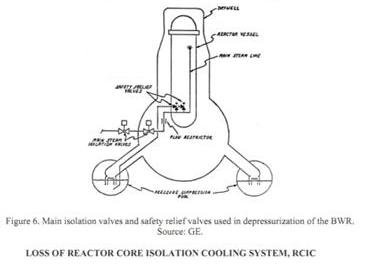 by M.I.A. via I1207.photobucket edited by elainekirk 10/3/2011 4:21:20 PM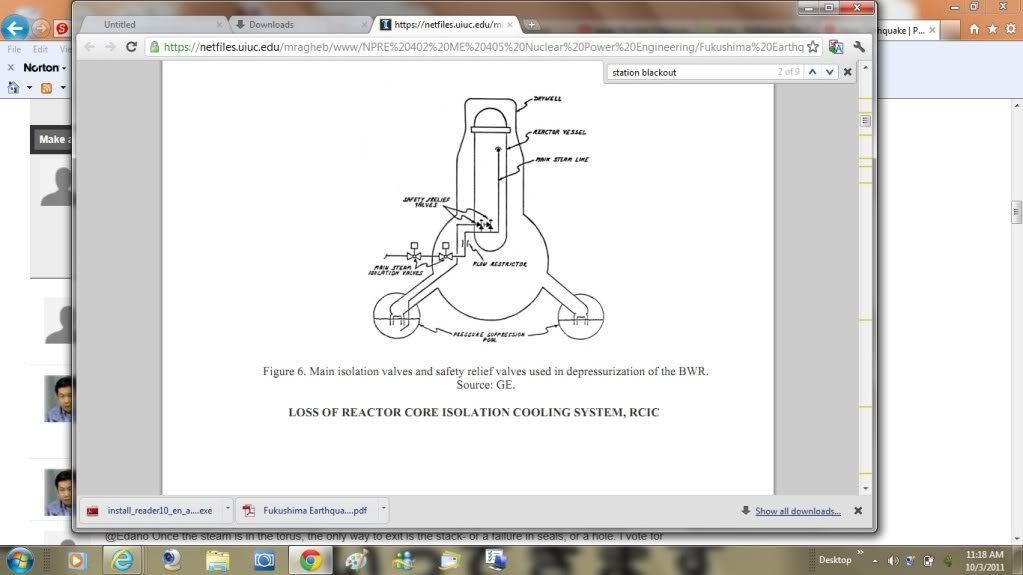
 hudebnik
 alblee
 UKVal
UKVal Oliver (ScribbleLive)
 Jonathan Keebler
 Matt (ScribbleLive)
 kaykodh
 PKelley
 Markfm
 Angie
Angie Deb
Deb Mid Valley
 George Gibb
 bo
bo IanGoddard