Japan Earthquake | Page 2703
 @lillymunster Well, we're going through rough times. I moved to the nicest neighbourhood in town a 1 year and a half ago and from a few weeks ago we had pubs, houses and people on the street robbed almost on a daily basis. It took a joint cooperation from locals and the equivalent to the US FBI or UK Scotland Yard to sort it out. People are desperate and need help.by Pedro Jesus 11/25/2011 3:36:51 AM
- We managed to lock them up tonight. A very smooth operation I should add. They confessed the crimes on the scene.by Pedro Jesus 11/25/2011 3:38:33 AM
 @Pedro Jesus wow that is bad.
I have been looking at houses online. We are considering moving back up to Minneapolis next year. It is really clear who got hurt the worst here when the economy tanked. All the foreclosures are in the more modest neighborhoods.by lillymunster 11/25/2011 3:39:51 AM- @lillymunster We have to be strong and patient. The capitalist world needs serious readjustment. Capitalist ways need to be revised. Modern capitalism has become obsolete.by Pedro Jesus 11/25/2011 3:42:26 AM
- @Pedro Jesus I think there will need to be a major readjustment and it won't happen overnight.by lillymunster 11/25/2011 3:46:12 AM
- @lillymunster It will take time. We're still suffering from the 2008 world recession. It will take maybe another 4 years to get back on track, providing that the powers-that-be realize that there is no other way to support our modern life standards.
I'm still going through the Portuguese news feed about the major strike. It seems it's the biggest strike in our history but preliminary analysis could be wrong (as usual). We hit the news highlights on some international news agencies such as Reuters and others in the USA, UK and Spain.by Pedro Jesus 11/25/2011 3:54:29 AM  @Edano, it's certainly good to see such a level of public concern, not another country asleep.by Ian 11/25/2011 3:54:51 AM
- Emergency condenser at Fukushima plant may not have fully run after tsunamiby lillymunster 11/25/2011 3:59:46 AM
- by lillymunster 11/25/2011 3:59:48 AM
- As to the cause of the suspected malfunctioning, TEPCO suggested that hydrogen generated by damaged nuclear fuel may have gathered in the piping, causing the IC's heat removal efficiency to decline. During the inspection on Oct. 18, the workers found no damage to the IC in the No. 1 reactor.
A high-ranking official of TEPCO said the IC would not have prevented the damage in the reactor even if it had functioned properly.by lillymunster 11/25/2011 4:01:24 AM  @lillymunster, these are cryptic statements. The IC loop through the RPV is supposed to be always filled with water. The valve that must be opened to let the loop run is on the return line. Only one IC was actuated. I suppose that is the emptier one. But is the remaining pipe actually filled with hydrogen? Could not they check? Moreover, if the system is not designed to keep the fuel covered with water, what is it good for? Scary thought that we still have operating reactors in the US relying on this system!by Peter 11/25/2011 4:34:21 AM
- @Peter that was my thought reading it. If the IC is useless what happens if another plant goes into meltdown?by lillymunster 11/25/2011 4:35:25 AM
- @Peter @lillymunster Are there any conclusions as to the source of the radio-iodine detected across Europe?by Pedro Jesus 11/25/2011 4:40:45 AM
- As I see it, the idea is to keep the core covered by means that do not need electrically powered pumps. The IC was supposed to fulfill this function. The logic is also twisted. Had the IC worked, the core would not have been exposed. No hydrogen would have been produced, disabling the IC.by Peter 11/25/2011 4:42:39 AM
- @Pedro Jesus , seems like the source was a research reactor producing medical radionuclides near Budapest.by Peter 11/25/2011 4:43:36 AM
- @Peter good point. If the IC kicked in right away shouldn't it have been able to prevent a hydrogen production situation up until the point it was shut off? In that situation it should have run well, not been fighting hydrogen. Or is there more than the public is being told about the IC systems. Do the RCIC systems have the same flaw? Could the IC system have yet another fatal flaw they didn't mention to the public that was somewhat solved in the changes made to newer designs?by lillymunster 11/25/2011 4:54:50 AM
- @Peter Thanks. I'll inform my Hungarian friend so he can relay the information to his family living in Debrecen.by Pedro Jesus 11/25/2011 4:56:40 AM
- @Pedro Jesus IAEA announced they thought it probably was the isotope reactor in Budapest. The Hungarian authority thought it likely was and the plant operators were denying it. They claimed the leak was low level for a long time and for it to suddenly "show up" meant there was another iodine source added to it. They do have a possible point. In looking at radiation data back to 2008 I found that in 2010 and beyond the radiation station began recording notably different readings.by lillymunster 11/25/2011 4:56:49 AM
- @Pedro Jesus They did shut off the reactor when it became apparent they might be the cause so if they are the cause it has stopped. I should grab new data and see if we see new changes. I will make a note to do that in the morning.by lillymunster 11/25/2011 4:58:41 AM
- @lillymunster Low level has in what level? Is it hazardous for people in Hungary? Thank you for the input.by Pedro Jesus 11/25/2011 4:59:32 AM
- @lillymunster , good questions. I think the weakest points of the RCIC systems are the valves that are supposed to reroute the suction path from the condensate tanks to the suppression pools. Moreover, the off-rpv pipes are not as quake-hardened as the pipes to and from the rpv.by Peter 11/25/2011 5:01:00 AM
- @Pedro Jesus Here is the historical readings I pulled. The more current ones are between 100-180 nSv/h. Some of the older ones fit that range but if you look the waves are less dense. I am not totally sure what that means but there is a visual difference as you go back in time. www.simplyinfo.orgby lillymunster 11/25/2011 5:10:03 AM
- @Peter right. After reading those TEPCO comments it makes me wonder if there was a larger known issue with the IC system or maybe he is referring to these known weak spots as you mentioned. That does seem to be a constant is the design of the Mark 1. It is almost a Maginot line design style. One part is hardened or well thought out and another part of the exact same system is really weak and practically ignored.by lillymunster 11/25/2011 5:12:29 AM
 On that #1 isolation condensor, seems that it is designed to evaporate the coolant, so that if there were no pumps to replenish the coolant, then it should have bled off heat and returned water to the RPV until the coolant was used up. That there was a lot of capacity left indicates that they didn't operate for very long, and that they had little effect, I would suspect because the pipes sending the cooled water back into the RPV may have been broken. Anybody else got ideas about this line of analysis? Normally steam goes to the turbine building and bypasses the turbines into the shoreside condesnsors during a normal shutdown. When the "isolation" valves are shut after a quake, isn't the IC the only way to cool the fuel? Why would the temperature fall even faster than normal and cause the operators to shut down the only operating cooling system?by artnuke 11/25/2011 5:13:12 AM
- I hate to duck out but I need to go sleep. Will be around tomorrow AMby lillymunster 11/25/2011 5:13:46 AM
 New Greenpeace report analyzes radiation amounts from Japan’s nuclear crisis www.greenpeace.orgby Mid Valley 11/25/2011 5:51:06 AM
- The team reviewed the Oyster Creek design and performance capability of the isolation condenser (IC) system and selected interfacing and supporting systems. Using risk insights derived from the NRC "Risk Informed Inspection Notebook for Oyster Creek Generation," the inspectors focused on the IC system capability to remove decay heat from the reactor coolant system in response to a postulated reactor trip and loss of the normal power conversion system. The likelihood of the initiating event of a plant transient is one in ten years. The team focused on components and procedures that would mitigate the consequences of a transient without the plant power conversion system. Systems interfacing with the IC during this accident sequence are: the AC motor-operated isolation valves, the DC motor-operated isolation valves, the shell-side vent lines, the control rod drive (CRD) pumps, IC make-up, and the diesel fire pumps.
www.nuclear.comby M.I.A. 11/25/2011 6:28:46 AM - The inspectors confirmed the IC system consists of two redundant heat exchangers, or ICs. The shell side of each IC is filled with water to a level that covers the tube bundles and provides a minimum inventory for boil-off. The shell side is vented to the atmosphere. The IC tubes are connected to the reactor vessel steam dome. During normal power operation, the tube inlet headers are steam filled, but the submerged tube bundles themselves are filled with reactor coolant water, called condensate, at normal pressure and temperature. The tube bundle outlet headers return to the reactor vessel via normally closed power operated condensate return valves, such that the IC tube bundles form a closed loop with the reactor coolant system. The system automatically initiates on a high reactor coolant system pressure or low reactor vessel level signal by opening the normally closed condensate return valves. Reactor coolant flows through the IC tube bundles by natural circulation. The ICs cool the reactor coolant (and remove decay heat) by boiling the shell side water inventory and venting the steam to the atmosphere. Operators can also manually initiate flow through the IC.by M.I.A. 11/25/2011 7:03:15 AM
- bumpby M.I.A. 11/25/2011 8:47:16 AM
 bumpby Edano 11/25/2011 11:36:13 AM
- Gov't to study buying up radioactive land lots
TOKYO, Nov. 25, Kyodo
Prime Minister Yoshihiko Noda said Friday the government will study buying up highly radioactive private lands in evacuation zones near the crisis-hit Fukushima Daiichi nuclear power plant.
At the plenary session of the House of Councillors, Noda said while the government has continued efforts to decontaminate the areas, some residents may not be able to return to their homes in several zones.
''We will work with local governments to compile mid- and long-term measures, including buying (the contaminated) lands,'' he said. english.kyodonews.jpby Edano 11/25/2011 11:39:22 AM - Stress tests on nuclear power facilities to be expanded
TOKYO, Nov. 25, Kyodo
The government will subject nuclear fuel reprocessing and storage facilities to its safety checks introduced in the wake of the Fukushima nuclear crisis, in addition to nuclear reactors now undergoing the so-called stress tests, industry minister Yukio Edano said Friday.
The government's nuclear safety agency will instruct the operators of nuclear fuel cycle facilities to report their safety evaluation results for the facilities by the end of next April.
The Nuclear and Industrial Safety Agency, under the wing of the industry ministry, required electric utilities in Japan to conduct the safety checks on their nuclear reactors in July. english.kyodonews.jpby Edano 11/25/2011 11:40:03 AM - Defense force troops to be sent to Fukushima for decontamination work
TOKYO, Nov. 25, Kyodo
Defense Minister Yasuo Ichikawa said Friday that the government will send Ground Self-Defense Force troops to four municipalities near the crippled Fukushima Daiichi nuclear power plant, possibly in early December, to clean up municipal buildings so that they can be used as bases for a full-fledged decontamination operation from January.
Ichikawa told a news conference that he instructed Self-Defense Forces Chief of Staff Gen. Ryoichi Oriki on Thursday to prepare for decontamination work at the municipal buildings in the towns of Namie, Tomioka and Naraha as well as the village of Iitate in Fukushima Prefecture.
The government envisions sending roughly 100 troops to each of the four locations, government officials said. english.kyodonews.jpby Edano 11/25/2011 11:41:09 AM - municipal buildings ?by Edano 11/25/2011 11:41:52 AM
- by Edano 11/25/2011 11:42:37 AM
- Cesium from nuke plant spread along mountains
An aerial survey has shown that radioactive cesium from the Fukushima nuclear disaster has accumulated along the mountains of eastern Japan.
Japan's science ministry released on Friday the results of the helicopter survey, covering 22 prefectures in eastern and central Japan.
The results are indicated in a colored map showing varying levels of cesium in soil. The radioactive substance has a long half-life, and is likely to affect the environment for decades.
Areas immediately northwest and south of the nuclear plant are indicated in red and yellow. This shows they have the highest concentrations of cesium, at above one-million becquerels per square meter.
Areas in blue, with concentrations of 30,000 becquerels or more, are seen spreading out toward Miyagi Prefecture -- about 60 kilometers to the north, and to Gunma Prefecture -- about 200 kilometers southwest.
The pattern appears to correspond to the location of mountain ranges in the region.
In one of the routes of contamination, clouds carrying the radioactive substance apparently hit a mountain range northeast of the plant, before being carried by the wind to peaks far north of Tokyo.
The science ministry says the mountains could have blocked the radioactive fallout from spreading further.
The ministry plans to expand its aerial survey early next year, focusing on western Japan and the northernmost prefecture of Hokkaido.
Friday, November 25, 2011 18:58 +0900 (JST)
www3.nhk.or.jpby Edano 11/25/2011 11:45:15 AM - EU gives no safety assessments on nuclear plants
The European Union has released an interim report on its stress tests for the bloc's nuclear reactors, but gave no safety evaluations.
In response to the Fukushima nuclear accident in March, the EU has been conducting stress tests since June on all 143 reactors in 14 of its member nations.
The tests check whether the reactors can withstand the effects of a major earthquake, tsunami, or other natural disasters, as well as possible accidents, such as a plane crash.
The EU unveiled its preliminary report on Thursday after compiling accounts from member countries that were created based on self-assessments by nuclear plant operators.
The report concludes that no nuclear plants in the EU need to be closed immediately. But the EU gives no safety assessments as the format and content of the national accounts vary substantially.
The EU plans to draw up a final report by next June, after a peer review by member states' nuclear regulators.
Friday, November 25, 2011 02:24 +0900 (JST)
www3.nhk.or.jpby Edano 11/25/2011 11:47:57 AM - if you make a stress test on a large number of plants, and you find no failures, then the test is obviously wrong !by Edano 11/25/2011 11:49:35 AM
- then you have to raise the test conditions step by step until the first nuke fails. that's the only way for a reliable stress test. it is the same principle as a cardio bike. paddle until you fail, it makes no sense to stop before.by Edano 11/25/2011 11:55:44 AM

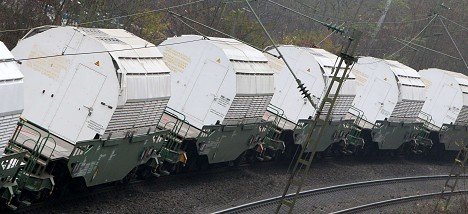
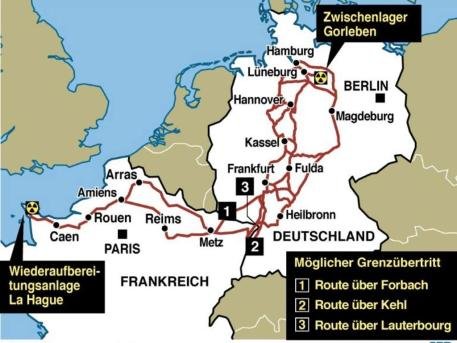
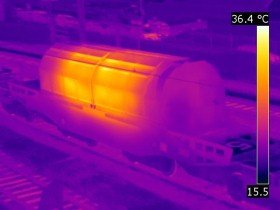
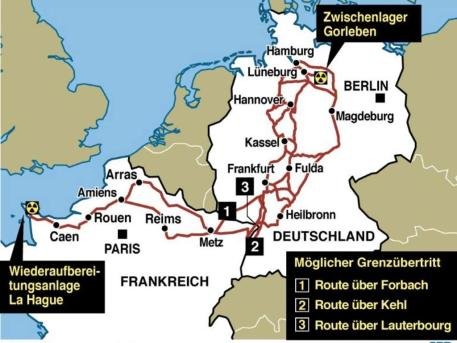
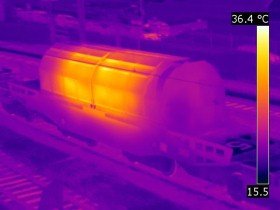
www.abendblatt.de the castor has now reached germany.
by Edano via Abendblatt.de 11/25/2011 11:57:32 AM- by Edano 11/25/2011 11:59:01 AM
 by Edano via Bc01.rp-online.de 11/25/2011 12:07:01 PM
 by Edano via Bilder.bild.de 11/25/2011 12:18:35 PM
 by Edano via N24.de 11/25/2011 12:19:19 PM
- Morning!
(afternoon-evening)by lillymunster 11/25/2011 2:18:47 PM


Japan Earthquake | Page 2703
- Who's Blogging
-
 hudebnik
 alblee
 UKVal
UKVal Oliver (ScribbleLive)
 Jonathan Keebler
 kaykodh
 PKelley
 Markfm
 Angie
Angie Deb
Deb- Mid Valley
- Pedro Jesus
 Matt (ScribbleLive)
 George Gibb
 elainekirk
- lillymunster
 dean
dean bo
bo- Edano
 IanGoddard