Japan Earthquake | Page 821
 Concrete is really not that durable anyway...plus this concrete is already 40+ years old.by Sinthia Domina 4/23/2011 7:13:42 PM
 If, as is likely, reactor #3's rubble is highly irradiated, the onset of typhoon season would be a high risk of further atmospheric release, not only of iodine and cesium, but a host of other more dangerous isotopes.by Bobby1 4/23/2011 7:16:50 PM
 @Edano Don't want to sound ugly, but how do you propose to "shut'em down"? Am I missing something in all of this discussion?by James Ward 4/23/2011 7:17:21 PM
- TEPCO says the workers were exposed to 3.17 millisieverts of radiation during the clean-up and the concrete block has been stored safely in a container with other debris.
The utility believes the contaminated fragment could be part of debris scattered across the compound as a result of a hydrogen explosion at the Number 3 reactor.
Sunday, April 24, 2011 00:23 +0900 (JST) www3.nhk.or.jp Think about this also....where the hell are they storing all this debris? They have had to use remote controlled equipment to clean up debris ( huge fragments of exploded concrete fragments, metal etc......and in the video I saw they were putting it in a dump truck. So where is it going?by Sinthia Domina 4/23/2011 7:17:33 PM  @Bobby1 Put it through a high speed moving car wash. Might lower the levels at the plant. Too bad for anyone else in the typhoon path.by Nancy 4/23/2011 7:17:45 PM
 @James Ward : not fuku, i mean the other 500 !by Edano 4/23/2011 7:18:09 PM
- @Sinthia Domina They were putting things into dumpsters with lids. No clue if they are lead or concrete lined and all they said was they were "safely" storing them for disposal. So they are probably just putting them over in their debris area off by 5 & 6.by Nancy 4/23/2011 7:19:26 PM
 Sinthia.. the fuel elements where I worked are much smaller in size but, if an operator pulled one out of the core at outage conditions it would read somewhere in the neighbor hood of 1,000,000 REM... so they haven't probed deep enough into the facility to find the extreme rad levelsby dean 4/23/2011 7:20:06 PM
- @Nancy sisiphus indeed.by Sinthia Domina 4/23/2011 7:20:25 PM
 @Nancy so the centre of gravity is wrong ? so that shows that the work wasnt done , another one that may not be as easy to solve is roof brackets many moons ago it was found that roof brackets needed installing if I can find a diagram would you be able to say if there was evidence of them?by elainekirk 4/23/2011 7:21:45 PM
- @dean Yes, I know...they still can't get close enough to the reactors themselves to remove debris, even with the remote controlled machinery....gonna need to conscript some Liquidators.by Sinthia Domina 4/23/2011 7:22:06 PM
- And....another big EQ and resulting tsunami could happen at any time....which would remove the debris....bad,bad,bad.by Sinthia Domina 4/23/2011 7:24:06 PM
- This appears to be the mins of *** govt meeting to determine how to deal with info concerning Fukishima. It's through google translate and I wondered what someone else 's take is? If you search through this site there appears to be some very interesting articles from the *** govt. News 政策について
Policy 白書・統計・出版物
Statistics Publications White Papers 申請・手続き
Getting the application process 文部科学省について
About the Ministry of Education 教育
Education 科学技術・学術
Science and Technology スポーツ
Sports 文化
Culture 現在位置 Current position トップ > 政策について > 審議会情報 > 調査研究協力者会議等(科学技術・学術政策) > 原子力安全規制等懇談会 > 原子力防災検討会 > 原子力防災検討会(第8回) 議事要旨 Home > Policy > Council Information > Research and Cooperation Conference (Science and Technology Policy) > Nuclear Safety Council Regulation > Nuclear Emergency Preparedness Study Group > Nuclear Emergency Preparedness Study Group (8th) Summary of Minutes
www.mext.go.jpby ch 4/23/2011 7:28:15 PM - I think if another big EQ were to occur those huge masses that are damaged in the buildings and surrounded by air would have a much greater likelyhood of swaying and moving which could fail the structure and change the configuration, lets assume.. if.. they had water around them that would dampen the affects from the ground motion affect of the EQ ..by dean 4/23/2011 7:29:22 PM
- just thinking is allby dean 4/23/2011 7:30:16 PM
- @elainekirk yes, if you can find something about roof brackets that would help and images/drawings would be good too. There are some big beams in 4 that I initially thought were the overhead crane but the overhead crane is down by the SFP and fuel crane. So they could be some sort of reinforcing beams. We learned much about shaking tests in some engineering classes I had in school and how the whole load and center of gravity works. The other reactor design you posted has additional outer walls and frame work compared to the design at Fukushima. They are skinny, offset, slightly top heavy and have a narrower base. They were built in the 60's and 70's and I don't think the level of earthquake standards came about until maybe the 80's and 90's when they knew more.by Nancy 4/23/2011 7:30:59 PM
- I was looking around and found these abstracts posting them because Daiichi #3 was used sciencelinks.jp and in accident conditions
sciencelinks.jpby elainekirk 4/23/2011 7:31:44 PM - @dean It will either dampen it or amplify it. Like swinging a bucket full of water vs. an empty one. The full one is harder to stop.by Nancy 4/23/2011 7:31:51 PM
- Every time they have aftershocks those thousands of tons of water sloshes around and puts further stress on the concrete.by Sinthia Domina 4/23/2011 7:34:10 PM
- @Nancy what interests me is that #1 + #2 at Hamaoko are comparable to Daichi but they are decommissioning them as the cost of meeting quake safety measures as a result of the findings from the seismology , geological research that gop ordered each plant to do in '06 and strengthened in '07 after the quake was not cost viable and yet daiichi dont meet chubu standards but claim they met the criteriaby elainekirk 4/23/2011 7:36:42 PM
- @elainekirk Interesting bit on one of those. Says fuel swelling contributed to the cladding destruction. Would be interesting to know if the parameters they used compare to what they think is going on in the reactors.
by Nancy 4/23/2011 7:36:55 PM - @Nancy @dean may be able to helpby elainekirk 4/23/2011 7:38:03 PM
- @elainekirk was that in Chubu's article or the science abstracts?by Nancy 4/23/2011 7:38:17 PM
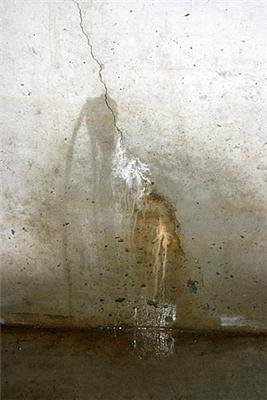
Concrete durability has been defined by the American Concrete Institute as its resistance to weathering action, chemical attack, abrasion and other degradation processes.
(USA) -- Durability is the ability to last a long time without significant deterioration. A durable material helps the environment by conserving resources and reducing wastes and the environmental impacts of repair and replacement. Construction and demolition waste contribute to solid waste going to landfills. The production of new building materials depletes natural resources and can produce air and water pollution The design service life of most buildings is often 30 years, although buildings often last 50 to 100 years or longer. Most concrete and masonry buildings are demolished due to obsolescence rather than deterioration. A concrete shell can be left in place if a building use or function changes or when a building interior is renovated. Concrete, as a structural material and as the building exterior skin, has the ability to withstand nature’s normal deteriorating mechanisms as well as natural disasters.
Durability of concrete may be defined as the ability of concrete to resist weathering action, chemical attack, and abrasion while maintaining its desired engineering properties. Different concretes require different degrees of durability depending on the exposure environment and properties desired. For example, concrete exposed to tidal seawater will have different requirements than an indoor concrete floor. Concrete ingredients, their proportioning, interactions between them, placing and curing practices, and the service environment determine the ultimate durability and life of concrete. www.aggregateresearch.com www.aggregateresearch.com Lots more info at the link.by Sinthia Domina via Aggregateresearch 4/23/2011 7:39:20 PM- @ Dean, does the info in these abstracts make sense to you vs. what they know or assume at Fukushima? I don't have the technical understanding to make a comparison. sciencelinks.jp sciencelinks.jpby Nancy 4/23/2011 7:39:30 PM
- @Nancy chubu have an article I will find itby elainekirk 4/23/2011 7:39:52 PM
- elaine that's like saying they don't meet the requirements but the meet the intent of the requirements and that flies in some things..by dean 4/23/2011 7:39:55 PM
- good link Sinthiaby dean 4/23/2011 7:41:24 PM
- @dean The reactor structures (columns, beams, supports, floors) weren't designed to hold that much additional weight in the form of water. Additionally, the center of gravity will move upwards with the addition of tons of extra water. That will accelerate any swaying of the building by the sloshing of the water inside the structure which will result in tipping to the point of material failure. That was a little something we had to study in Navy Officers Candidate School about taking on water or ensuring that fuel was properly balanced within the compartments of a ship's hull.by James Ward 4/23/2011 7:41:44 PM
- Seawater Exposure: Concrete has been used in seawater exposures for decades with excellent performance. However, special care in mix design and material selection is necessary for these severe environments. A structure exposed to seawater or seawater spray is most vulnerable in the tidal or splash zone where there are repeated cycles of wetting and drying and/or freezing and thawing. Sulfates and chlorides in seawater require the use of low permeability concrete to minimize steel corrosion and sulfate attack. A cement resistant to sulfate exposure is helpful. Proper concrete cover over reinforcing steel must be provided, and the water-cementitious ratio should not exceed 0.40.
Chloride Resistance and Steel Corrosion: Chloride present in plain concrete that does not contain steel is generally not a durability concern. Concrete protects embedded steel from corrosion through its highly alkaline nature. The high pH environment in concrete (usually greater than 12.5) causes a passive and noncorroding protective oxide film to form on steel. However, the presence of chloride ions from deicers or seawater can destroy or penetrate the film. Once the chloride corrosion threshold is reached, an electric cell is formed along the steel or between steel bars and the electrochemical process of carrions begins. www.aggregateresearch.comby Sinthia Domina 4/23/2011 7:42:51 PM - @Nancy Chubu's press release www.chuden.co.jpby elainekirk 4/23/2011 7:43:09 PM
- We have a bunch of concrete structures in town that were built in the 60's that are failing and need to be torn down. Two that come to mind are these seating structures, one at a football stadium and the other at the fairgrounds. They are massively degraded. They keep adding metal reinforcements and rods to stabilize. They are not exposed to salt water but do get the freeze and thaw issues. My point being that seeing concrete that old fall apart is pretty common. The containment is really thick and full of rebar but that may not save anything if the concrete itself is ruptured or just falling apart.
by Nancy 4/23/2011 7:45:14 PM - From post-test examinations of the failed fuel, it was found that the crack in the BWR cladding progressed in a manner different from the one in PWR cladding failed in earlier tests, owing to its more randomly oriented hydride distribution. Because of theses differences, the BWR fuel was judged to have failed at hydrogen contents lower than those of the PWR fuel. Comparison of the test results with code calculations revealed that the PCMI failure was caused by thermal expansion of pellets, rather than by the fission gas expansion in the pellets. The gas expansion, however, was found to cause large cladding hoop deformation later after the cladding temperature escalated.by dean 4/23/2011 7:47:23 PM
- @Nancy : think of chernobyl. only 20 years to wear out.by Edano 4/23/2011 7:47:54 PM
- 25by Edano 4/23/2011 7:48:05 PM
- @Edano how fast does radiation degrade concrete, is it fast or a gradual? Does the level of radiation matter?by Nancy 4/23/2011 7:48:41 PM
- @Nancy : no (educated guess)by Edano 4/23/2011 7:49:24 PM
- @dean curious if the point where the fuel swells was met in the reactors at Fukushima at some point. If they melted I am guessing beyond that? :-)by Nancy 4/23/2011 7:49:28 PM
- Nancy.. first off.. pwr versus bwr with different operating parameters and fabrication of fuel pellets... in a cold startup reactivity accident the fission process has not progressed long enough to have built up internal pressures acting on the cladding to have caused failure,,, however, the temperature affects have from the reactivity accident pulse which fails the cladding .by dean 4/23/2011 7:49:50 PM
- i think the worst thing for concrete is water + temp changes. this cracks it.by Edano 4/23/2011 7:51:17 PM
- as time goes on in operation the fission gasses build with-in the pellet cladding and act on the walls to cause failure/cracking to relieve pressureby dean 4/23/2011 7:51:19 PM
- james... would you say that is true for completely filling every room , every space including the main building, in the containmet, torus.. I mean every space so that there is no pressure difference from space to space other that that created by the heat from the core which would be covered.. then.. as shock waves traveled and acted upon the walls of the building.. which are partly underground , wouldn't that enegy be dampened by the volume of water acting against the wallsby dean 4/23/2011 7:54:59 PM
- This may be me showing my ignorance but near the bottom of column 1 'a high active waste silo' the description of the concrete block flying....... books.google.co.uk not only is it similar to #3 but there will be seawater in the underground storage at daichi?
by elainekirk 4/23/2011 7:55:23 PM - I understand what your talking about on the naval vesselsby dean 4/23/2011 7:55:50 PM
- it's like having a huge body of water housed with concrete.... with the enclosure empty an EQ occurs and there would be nothing to counter the ground motion affects acting on the concrete wallls.. now.. fill it with water seems to me the damage would be less ... if there were structure above grade like the buildings we all see topple.. then they may fall ... but in fukushima .. didn't the walls in all but 2 crash down from the explosions.. .by dean 4/23/2011 7:58:53 PM
Japan Earthquake | Page 821
- Who's Blogging
-
 hudebnik
 alblee
 UKVal
UKVal Jonathan Keebler
 Oliver (ScribbleLive)
 kaykodh
 Markfm
 Angie
Angie Mid Valley
 Matt (ScribbleLive)
 George Gibb
- elainekirk
 PKelley
 lillymunster
 dean
dean bo
bo Edano
Edano Deb
Deb- Pedro Jesus
 IanGoddard