Japan Earthquake | Page 1014
 Today's atomicpowerreview.blogspot.com Chubu Electric / Hamaoka detailsby radioguy 5/7/2011 4:34:19 AM
- Nothing new, just a reminder of the resource more than anything.by radioguy 5/7/2011 4:35:10 AM
 Gundersen posted and update wherein he makes an excellent point favoring a criticality at #3: How would fuel in the pools be blown upwards if the U3 blast was only an explosion of gases that collected above the pools? Seems like a veritable proof, since the force vector upon the fuel would be only downward given a blast from above. www.youtube.comby Ian 5/7/2011 5:05:48 AM
 Tippycam in the thick of the fog againby bo 5/7/2011 5:13:35 AM
 @Ian Good video, and Gundersen makes some good points. But he says that the containment is still holding in #3, but this cannot be. The SL-1 accident in Idaho that he referred to released little tellurium, while #3 released a huge amount of it, along with barium and lanthanum. This could only have happened if corium reacted with concrete. The explosion would have blown a hole in the containment. I don't believe Tepco's data.by Bobby1 5/7/2011 5:26:31 AM
 by Ralph Unger 5/7/2011 5:27:25 AM
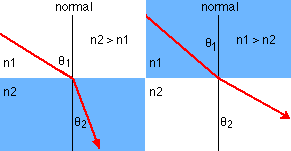 by Jim via Astrosurf 5/7/2011 5:44:59 AM
- Bobby, yes, he's taking Tepco on their word wrt their data. If you google "Statement by Scientists and Engineers Concerning Fukushima Daiichi Nuclear Power Plant" you'll find an article from March 23 where experts deduce from reported emissions that they "must have come from within the reactor" of Unit 3. And that slab of concrete reported with near-lethal levels of radiation, how does that happen? Sounds like it commingled with corium.by Ian 5/7/2011 5:45:35 AM
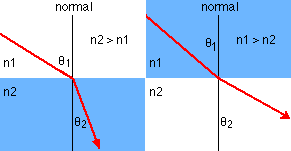
- I think we might be looking at the second case. But I'm sure, I'm weak in optics. But I'm almost sure that it is an aberration. Because the building is farther away at a different elevation and viewed oblique. Or something close to that, but not exactly. But it is an illusion.by Jim 5/7/2011 5:50:10 AM
- @Ian My only question is whether the breach occurred before the explosion, or as a result of it. An analysis of the slab would settle that question.by Bobby1 5/7/2011 5:51:12 AM
- @Ian I remember that one. I think it was the union of concerned scientists (UCS).by Jim 5/7/2011 5:51:34 AM
- by Ralph Unger 5/7/2011 5:52:09 AM
- The line below should read "I'm not sure"by Jim 5/7/2011 5:52:35 AM

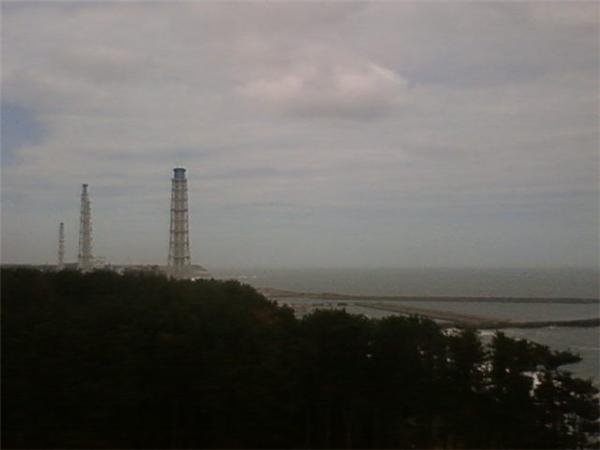
pointscope01.jp
TeppityTippitycam 2011/05/07 14:01 JSTby alblee via Pointscope01.jp 5/7/2011 5:59:20 AM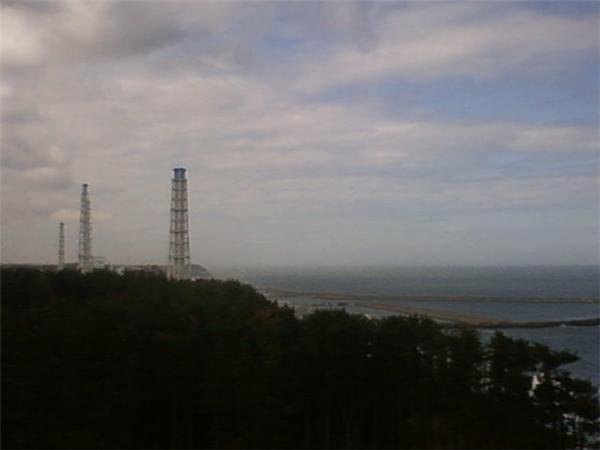
pointscope01.jp
And here's the 15:01 JST oneby alblee via Pointscope01.jp 5/7/2011 6:02:52 AM Greenpeace welcomes move to shut down Japanese nuclear plant; will US nuclear regulators learn from Japan?
www.greenpeace.org
“Fukushima has provided a stark reminder of the consequences of nuclear power, and there are many other dangerous reactors still online. The government must continue to close and decommission existing plants, cancel all new reactor builds and put Japan on a course for a future powered by renewable sources of energy. Only then can the Japanese people feel their government is truly putting their safety first.”by Reed 5/7/2011 6:05:35 AM @Nancy Following up with the link, just in case my brain dead self messed up the embed. Again, link to prior vid of Reactor #4 building. www.youtube.comby smoss edited by elainekirk 5/7/2011 6:05:50 AM
- Cleared @smoss just now off the mod queue...by alblee 5/7/2011 6:06:19 AM
- Reactors, residents and risk
A world population analysis reveals the locations that could put the most people in danger should a nuclear accident occur.
In the aftermath of the Fukushima nuclear accident, people everywhere are asking: could a similar disaster strike closer to home?
For much of the world's population, distance offers no comfort. An analysis carried out by Nature and Columbia University, New York, shows that two-thirds of the world's 211 power plants have more people living within a 30-kilometre radius than the 172,000 people living within 30 kilometres of the Fukushima Daiichi plant, who have been forced or advised to leave. Some 21 plants have populations larger than 1 million within that radius, and six have populations larger than 3 million.
www.nature.comby Reed 5/7/2011 6:11:30 AM - "Greenpeace starts testing near Fukushima" www.news.com.auby Ralph Unger 5/7/2011 6:14:27 AM
- Read between the lines pls, why does not Japan let them test within their territorial waters?by Ralph Unger 5/7/2011 6:17:27 AM
- "The samples will be collected outside Japan's 12-mile territorial waters in line with government rules, Greenpeace said, adding that it would continue to press Tokyo for permission to study water within 12 miles of shore.
Read more: www.news.com.auby Ralph Unger 5/7/2011 6:18:36 AM - Fukushima reactors did not restart after initial shutdown, study suggests -
blogs.nature.com
"The latest work is from Tetsuo Matsui, a physicist at the University of Tokyo who seems to specialize in high-energy physics and nuclear theory. Matsui has looked at two much-discussed (and much recorded) isotopes from the accident: Iodine-131 and Caesium-137.
Rather than just plotting the radiation levels, Matsui takes the ratio of I-131 to Cs-137. Because I-131's half-life is so much shorter than Cs-137, the ratio should look like a typical half-life graph: an asymptotic slope on a normal graph (top) or a straight line on a log plot (bottom). The advantage of doing a ratio is that any errors (and there have been many) in either measurement will be effectively cancelled out, assuming they were made with the same piece of equipment. Based on what we've seen, that is likely in most cases."by Reed 5/7/2011 6:22:35 AM - 【3-1】(33kmNorth/West) Soma county Iitate village Nagadoro 5/2 10:59 I-131=9,700 Cs-134=58,000 Cs=137=71,000 mSv=12.6
5/5 10:36 I131=15,000 Cs-134=120,000 Cs137= 140,000 mSv=15.4 Huh? I wanht to see his data.by Ralph Unger 5/7/2011 6:27:12 AM - by Ralph Unger 5/7/2011 6:27:39 AM
- Where the Worst Could Happen
www.nature.com
Map showing the population size living within 75 kilometres of each of the world's nuclear power plants. Population increases with circle size and with colour, from green (< 0.5 million) to red (> 20 million). You need to download the Google Earth plug-in to view this graphic. See 'How population sizes were estimated' for an explanation of how the analysis was carried out.by Reed 5/7/2011 6:33:26 AM - Do the math, if the I-131 is now at 15,000 then it must have been at 900,000+ after the first release. it was measured at only 200,000.by Ralph Unger 5/7/2011 6:33:26 AM
- So they messed up the measurements or more I-131 has been produced.by Ralph Unger 5/7/2011 6:34:49 AM
- by Ralph Unger 5/7/2011 6:48:18 AM
- Threat by Land and Sea
Dozens of nuclear reactors operate in earthquake-prone regions around the world. Among them, least 34 are in high-hazard areas; 17 of those are within a mile of a coastline.
Interactive map of reactors around the world : online.wsj.comby Reed 5/7/2011 6:48:52 AM - Chubu Electric Puts Off Decision On Nuke Plant Suspension-
"Chubu Electric Power Co. held an inconclusive board meeting Saturday over whether to suspend the Hamaoka nuclear power plant in Shizuoka Prefecture as requested by Prime Minister Naoto Kan for safety reasons, participants said."
e.nikkei.comby Reed 5/7/2011 6:57:47 AM - Paper warning of Fukushima nuke plant risks draws attention on Net
mdn.mainichi.jp
A short paper penned 16 years ago by an anti-nuclear scientist is drawing attention on the Internet for having warned about the dangers posed by the Fukushima Daiichi Nuclear Power Station, which was crippled by the March 11 earthquake and tsunami, and other old atomic plants.
Jinzaburo Takagi, the former director of the Citizens' Nuclear Information Center who died in 2000, also cautioned the government and utilities about their stance of not assessing safety risks for nuclear power stations beyond assumed scenarios.
The four-page paper in Japanese, entitled "Nuclear Facilities and Emergencies -- with Focus on Measures against Earthquakes," appeared in the October 1995 issue of the Physical Society of Japan, the journal of a physicists' group, after the Great Hanshin Earthquake hit the city of Kobe and its vicinity in January that year.
Based on data from the Kobe quake and other sources, Takagi, a former associate professor at Tokyo Metropolitan University, addressed in the paper issues related to anti-quake designs and the obsolescence of nuclear power plants as well as quake fault lines.
Takagi blasted the government and power companies for "refusing to consider emergency measures in the event of an earthquake because they assume nuclear power plants will not break down in an earthquake and have stopped taking further steps at all."by Reed 5/7/2011 7:06:26 AM 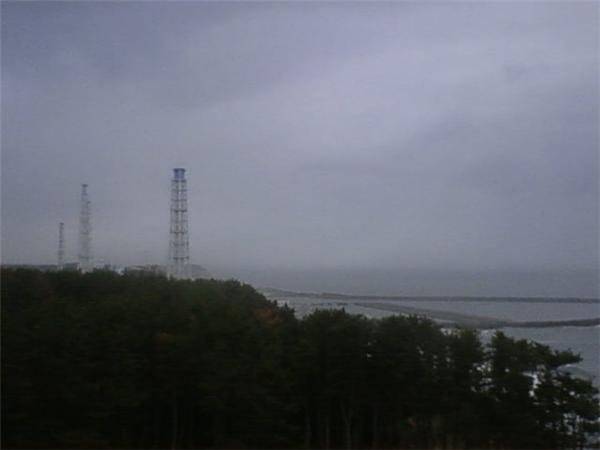
pointscope01.jp
TippytiTeppytoocam 2011/05/07 16:01 JSTby alblee via Pointscope01.jp 5/7/2011 7:10:17 AM- Very heavy rain in Hiroshima right nowby bo 5/7/2011 7:49:48 AM
 by hudebnik 5/7/2011 7:58:30 AM
- Tornado-hit Alabama nuclear plant opened to media
(sorry the curse of enter)by hudebnik 5/7/2011 7:59:12 AM 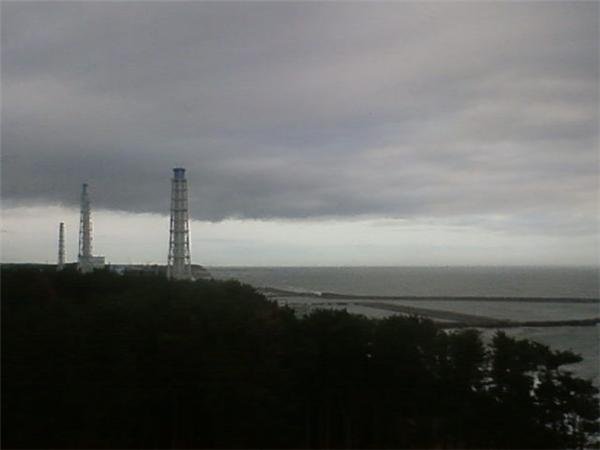
pointscope01.jp
Teppycam 2011/05/07 17:01 JSTby alblee via Pointscope01.jp 5/7/2011 8:31:32 AM @bo
@bo
Hiroshima wet
Time tells us to not forget
Grass breaks through the stoneby Rob in SF 5/7/2011 8:55:01 AM Wow, haiku... @Rob_in_SFby ALBLEE 5/7/2011 9:01:50 AM
- Logging off for a few hours... Thanks.by ALBLEE 5/7/2011 9:02:08 AM
- @Rob in SF niceby bo 5/7/2011 9:19:40 AM
 @smos. That military video appears to be taken from the same place as the live cam. Live cam zoomed in, but buildings and towers are lined up the same.by Cat 5/7/2011 9:42:51 AM
- @bo Thanks. Submitted it: form.mainichi.jpby Rob in SF 5/7/2011 9:45:00 AM

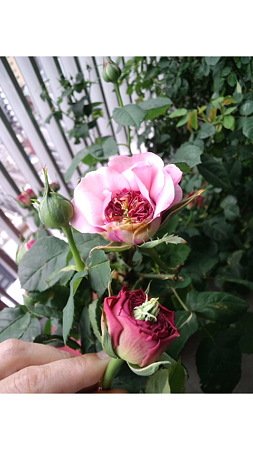
art21.photozou.jp
malformed roses bloom this year ... but this thing has grown more than ten years is the first rose (>_<)
tweeter twitter.com!/har216by elainekirk via Art21.photozou.jp 5/7/2011 9:49:17 AM- Anybody know what this is saying ?
www.yomiuri.co.jpby elainekirk 5/7/2011 10:00:45 AM


Japan Earthquake | Page 1014
- Who's Blogging
-
 hudebnik
- alblee
 UKVal
UKVal Jonathan Keebler
 Oliver (ScribbleLive)
 kaykodh
 Markfm
 Angie
Angie Mid Valley
 Matt (ScribbleLive)
 George Gibb
- elainekirk
 PKelley
 lillymunster
 dean
dean bo
bo Edano
Edano Deb
Deb- Pedro Jesus
 IanGoddard