Japan Earthquake | Page 1408
 Fukushima Pref. teachers get dosimeters
FUKUSHIMA--Teachers were given dosimeters Friday to measure radiation at kindergartens and schools throughout Fukushima Prefecture as the crippled Fukushima No. 1 nuclear power plant continues to release radioactive substances.
The dosimeters were handed to representatives of 1,169 kindergartens, primary, middle, high and other schools during morning and afternoon meetings in a culture center in Tamura in the prefecture on Friday.
At the morning session, an education ministry official showed about 500 representatives how to use the devices.
Teachers carrying the devices will take radiation measurements on their arrival and departure from their schools. Data will be reported to the ministry once a month or so via the prefectural board of education.
"We're learning about the amount of radiation people are exposed to at school. This is part of our efforts to help make children and their parents feel safe and secure," a prefectural board of education official said.
(May. 28, 2011)by Veenie 5/28/2011 5:27:41 AM- ONCE A MONTH...what a Joke ((by Veenie 5/28/2011 5:28:35 AM
 @Veen - sickening feeling welling in my stomach. TY for that post.by Lethbridgean 5/28/2011 5:30:37 AM
 @Veenie And @Leth........yep it is a joke.....as a mother Ihave no idea how parents are sending thier children to school............by Angie 5/28/2011 5:33:13 AM
- The wording....to make them feel secure..........oh so the readings are guaranteed to show low levels ?by Veenie 5/28/2011 5:33:37 AM
 TEPCO: Tainted water disposal may cost $650mln
The operator of the Fukushima Daiichi nuclear power plant says it will cost at least 53 billion yen, or 650 million dollars, to decontaminate highly radioactive water that leaked from reactors.
The contaminated water is hampering efforts to stabilize the stricken reactors at the plant.
Tokyo Electric Power Company estimates about 84,700 tons of cooling water have leaked into basements and other areas of the 4 reactor buildings.
TEPCO is using US and French technologies to build a treatment facility to eliminate radioactive materials. After the facility starts operating in June, the decontaminated water will be stored in a tank and then used to cool reactors.
TEPCO says the estimated cost for the water treatment is expected to rise, as it does not include the cost of disposal of lower level radioactive water.
Saturday, May 28, 2011 08:58 +0900 (JST)
www3.nhk.or.jpby estacion 5/28/2011 5:34:23 AM @dh Is the NIRS doing the 30 year study, is that why their logo is present in the video?by smoss 5/28/2011 5:35:56 AM
- Japan's flip-flopping government shoots self in foot with contradictory statements about Fukushima nuclear plant. bit.lyby Veenie 5/28/2011 5:41:47 AM
- @smoss: Yes the video on contamination was just that. Samples taken by Ministry of ... Science and Technology showed 320Bc. or 200x the reading in 2009 30kilm offshore. It is asking for the Safety Comm. to respond.by dh 5/28/2011 5:51:32 AM
- @smoss: The 30 year study was initiated by the Fukushima Prefectural goverment, which is asking scientists from the Nuclear Medicine Research Lab in Chiba Pref. to lend their expertise. Not the NIRS.by dh 5/28/2011 5:53:34 AM
- @dh Thank you again! Really appreciate the clarification!by smoss 5/28/2011 5:58:31 AM
- @all Bye for nowby smoss 5/28/2011 6:09:13 AM
- @smoss Bye!by Angie 5/28/2011 6:15:22 AM
- SDF constantly on call for worst at N-plant
Hidemichi Katsumata / Yomiuri Shimbun Senior Writer
More than 70 days have passed since the Great East Japan Earthquake on March 11, but the seesaw battle continues for control of the Fukushima No. 1 nuclear power plant operated by Tokyo Electric Power Co.
What is not generally known, however, is that a Ground Self-Defense Force unit is on call around the clock to respond to a worst-case scenario.
"A serious accident has occurred at a reactor building [of the Fukushima No. 1 power plant]. Many workers appear to have been injured."
Immediately after receiving this mock emergency report during a training session, members of the GSDF Central Readiness Force (CRF) stationed at the Iwaki Seaside Nature Center in Iwaki, Fukushima Prefecture, launch an exercise. They use a convoy of eight Type 96 armored personnel carriers (APCs) to protect themselves from radioactive substances.
"The CRF personnel have traveled the route to the nuclear power plant a number of times, so they'll be able to reach it regardless of such conditions as darkness or bad weather," a senior GSDF officer said.
They have also conducted rescue exercises at a facility at the seaside nature center in which CRF personnel measure the radiation dosage levels of workers who have collapsed after being exposed and convey them to the APCs.
About 120 CRF personnel are stationed at the seaside nature center. The CRF is under the direct control of the defense minister and is designed, among other things, to enable a quick response to such contingencies as attacks by guerrillas and special operation forces in Japan.
Separately from the land route, the GSDF's 1st Helicopter Brigade, which is under the command of the CRF, has two CH-47 transport helicopters on standby at Camp Kasuminome in Sendai and Camp Kisarazu in Chiba Prefecture.
The helicopters can take off within 15 minutes of receiving an emergency mobilization order. They have been modified to carry stretchers for 24 people, and their interiors are covered in sheets of the same material used in radiation protection suits.
The CRF commanding general, Lt. Gen. Toshinobu Miyajima, directs the air and land rescue operations.
"A rescue can be completed in two hours after we receive an emergency call. However, we can't predict how much the rescue site will be contaminated by radiation at that time," Miyajima said.
===
Mission with fatal risk
Since the first nuclear disaster dispatch order in history based on the Self-Defense Forces Law was issued after the Great East Japan Earthquake, the SDF has prepared for a worst-case scenario at the Fukushima No. 1 plant.
On the morning of March 17, two CH-47 helicopters belonging to the 1st Helicopter Brigade sprayed seawater from above the plant onto the No. 3 reactor. Later, a high-pressure water cannon unit of the SDF sprayed 336 tons of water to cool the reactor over four days.
However, the helicopter crew were given another order to prepare to mobilize during that time, even after their water spraying mission was completed. The order was "Prepare to drop boric acid directly onto the temporary storage pool for spent nuclear fuel rods" to prevent the fuel from entering re-criticality, which would mean losing control of the plant.
The helicopter unit practiced simulated drops of five tons of boric acid from the end of an about 20-meter-long rope onto a mock spent fuel storage pool. Helicopters approached a square target measuring 20 meters by 20 meters, presumed to be a reactor building, at an altitude of about 30 meters and hovered about it.
Twenty tons of boric acid, or four drops, would have been necessary to prevent re-criticality.
"No matter how much the chopper crew protected themselves, they would have been exposed to an abnormal amount of radiation if they hovered just above the reactor," Miyajima said. "If the mission had been carried out, it might have killed them."
Miyajima mentioned the possibility because with the 1986 Chernobyl nuclear accident in the former Soviet Union, many helicopter crew members died within several years of dropping sand over the plant.
Fortunately, the Fukushima No. 1 plant has apparently made it through the worst period of the crisis. The preparatory order for dropping boric acid was rescinded, and the fire engine unit's water spraying mission ended in early May.
At present the CRF personnel at Iwaki are the only unit kept in readiness for an emergency situation, prepared at all times to rescue nuclear plant workers by air and land.
"It's our duty to always prepare for the worst situation," Miyajima said.
That is the key to crisis management. However, it has come to light that many of the responses to the crisis at the Fukushima No. 1 plant have been inappropriate, including a delay in venting operations to prevent pressure from rising inside the reactor containment vessel and the suspension of the injection of seawater into the No. 1 reactor, a necessary step to cool the reactor.
(May. 27, 2011)by Veenie 5/28/2011 6:23:39 AM - NPR talked about the evacuation of Iiate today www.npr.orgby inCalifornia 5/28/2011 6:38:02 AM
- WOW, USGS doesn't show the New Zealand Quake and this just in
M 5.0, Loyalty Islandsby Veenie 5/28/2011 7:01:59 AM - This one is nowhere found
05.2011 08:40:16 4.6 Pacific Ocean New Zealand Woodville County Manapouri VulkĂĄn 0 There are airport(s) nearby the epicenter. VulkĂĄn 0 GEONETby Veenie 5/28/2011 7:04:01 AM 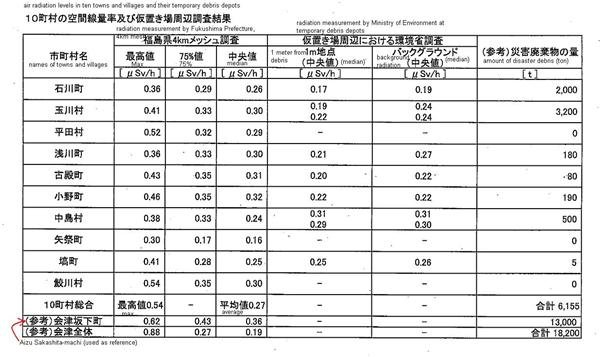
Fukushima #Radioactive Debris to Be Disposed of As Regular Debris
Radioactive sewage sludge sold as cement, radioactive teas sold unchecked. Now radioactive debris in the middle section of Fukushima Prefecture to be burned and buried like normal debris, because the radiation level is "low", according to the Ministry of Environment.
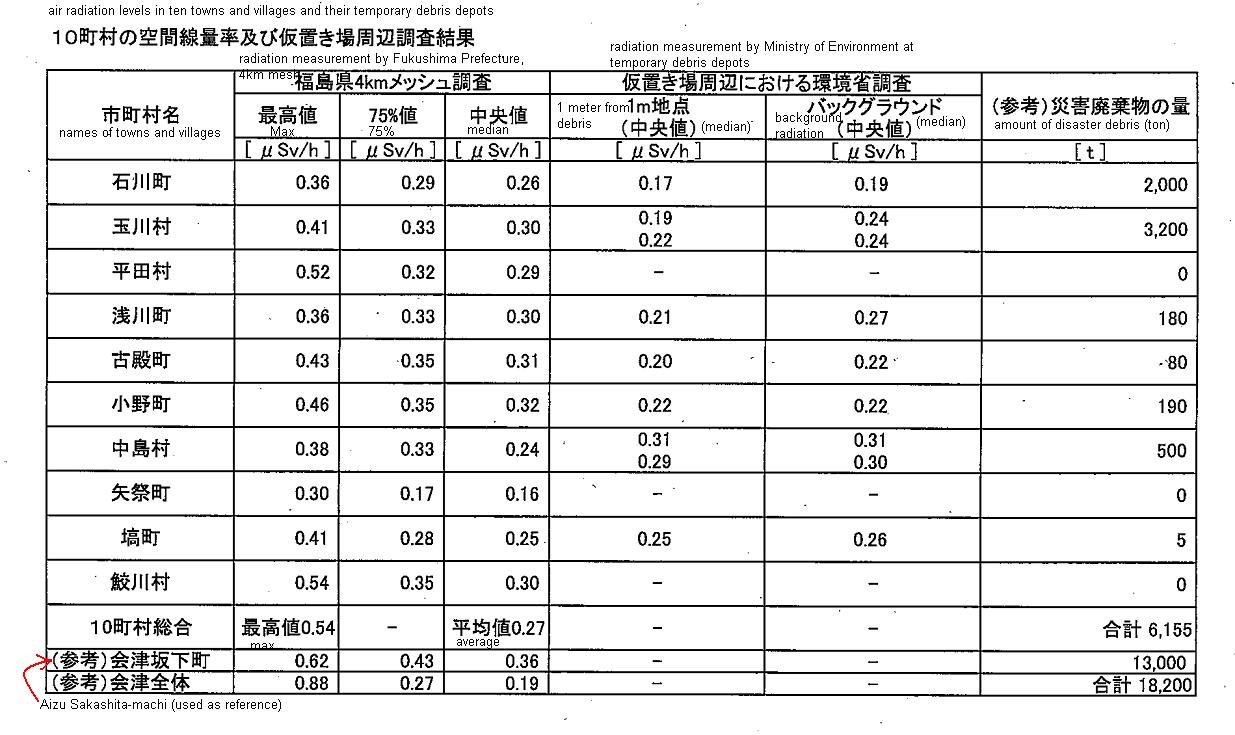
The Ministry of Environment has just given an OK sign to 10 towns and villages in the middle section of Fukushima Prefecture called "Naka-dori" region to burn, bury, or recycle the debris from the disaster (earthquake/tsunami) contaminated with radioactive materials, because the air radiation levels in these cities and villages were less than that of the city in the "Aizu" region (western third of Fukushima) with the highest level of air radiation.
Does that make sense? I don't know any more, but that's what the Ministry is saying in its press release (original in Japanese). To roughly summarize:
1. Debris from the earthquake/tsunami in Fukushima's "Hama-dori" (ocean 1/3) and "Naka-dori" (middle 1/3) have been stored in temporary storage depots, but now in ten towns and villages [they are all in the south-eastern corner of "Naka-dori", the middle 1/3 of Fukushima, adjacent to "Hama-dori", the ocean 1/3] they can be processed as regular debris.
However, just in case, they are to be processed within Fukushima Prefecture for the time being. As for shipping them and processing outside Fukushima, it is to be decided after the experts discuss in the meeting.
2. The reasons for resuming the processing in these 10 towns and villages:
1) These towns and villages have their air radiation levels less than that of "Aizu" region [western 1/3 of Fukushima Prefecture], considered least affected by the Fukushima I Nuke Plant accident in terms of radiation contamination. Specifically, their air radiation levels are the same as or less than that of Sakashita-machi in the Aizu region that has the highest air radiation level in Aizu and also has a large amount of the disaster debris.
2) Air radiation levels at the debris depots were not much different from the background air radiation. In some cases, the air radiation level at the depot was lower than the level in the town.
These 10 towns and villages have total of 6,155 tons of debris, which they can now burn, bury, or recycle.
The page 5 of the Ministry of Environment release shows the air radiation levels in those cities (I added the labels in English):
At the highest depot, the air radiation level at a distance of 1 meter from the debris was 0.31 microsievert/hour. That would be 2.7 millisieverts per year.
In a post-nuke disaster Japan, that is totally OK and acceptable.
The Ministry's release does mention the "clearance level" in passing (in page 2), which is one-hundredth of the annual allowable radiation dosage of 1 millisievert. The clearance level therefore is 10 microsieverts per year, or 0.001 microsievert/hour. Debris at the depots in these towns and villages, needless to say, exceeds this clearance level by a big fat margin.
My questions:
1. Why does the Ministry ignore the clearance level, which is specified by law? The debris exceed the clearance level.
I guess I know the answer to my own question. The Ministry of Education did it, and upped the radiation for kids to 20 millisieverts per year because "this is an emergency", with a promise to keep the actual exposure as low as possible without saying how. If the Ministry of Education can do it, so can the Ministry of Environment! Everybody's doing it!
(Hey that's like the "foreclosuregate" in the US! All the banks do it - robo-signing, foreclosing without the clear title, issuing mortgage-backed securities without any mortgage in the pool - so what's the big deal?)
2. How is it possible that the depots that have piles of debris with radioactive materials test lower in air radiation than background radiation? It just defies the common sense. You put the radioactive debris in one place, and the radiation measures lower?
3. Why is a town in Aizu region with the HIGHEST air radiation level chosen as a reference, instead of picking a town with the LOWEST radiation level, if the Ministry wants to ensure safety?
I think I know the answer to my own question No.3. If the Ministry had picked the town with the lowest radiation level in Aizu, none of the debris in the "Naka-dori" region could be burned, buried, or recycled.
4. What is the point of deciding by the air radiation level at the debris depot, to begin with?
These are some numbers from TEPCO's latest contamination map of Fukushima I Nuke Plant. Notice that the air radiation level is much lower than the radiation on the debris themselves:
Water transfer pipe: surface 130 millisieverts/hr, airborne 25 millisieverts/h
Dropped rubble: surface 160 millisieverts/hr, airborne 40 millisieverts/hr
So these debris in these towns and villages could have much higher radiation if the radiation were measured on the surface.
But now the Ministry of Environment has given the permission for the debris to be burned without special filters or system to capture the radioactive materials, buried without consideration for groundwater or soil contamination, or recycled. Soon, the Ministry will allow the debris to be shipped outside Fukushima to be burned, buried, and recycled.
Share the pain. Share the radioactivity. Let everyone suffer the consequence of TEPCO's and the government's mismanagement and pollute the entire country. That seems to be the Japanese way.
3.bp.blogspot.comby Veenie via 3.bp.blogspot 5/28/2011 7:17:58 AM @veenie OMG that reminds me of something i saw yesterday...by elainekirk 5/28/2011 7:22:03 AM
- @Veenie thank you so much for the fab job gathering news!by Angie 5/28/2011 7:22:13 AM
- Morning Elaine! Did you sleep well?by Angie 5/28/2011 7:23:26 AM
- @angie I did thanky has it been quiet?by elainekirk 5/28/2011 7:24:16 AM
- @elainekirk Yes this page has been............by Angie 5/28/2011 7:25:28 AM
- But you have to look back at what @smoss and @dh were talking about. @smoss found some vids and @dh translated them!by Angie 5/28/2011 7:26:50 AM
- U.S. court victories show how to get rid of nuclear plants search.japantimes.co.jpby Ralph Unger 5/28/2011 7:48:19 AM
 Morning @allby hudebnik 5/28/2011 7:50:59 AM
- Shared liability, if things go wrong the taxpayers all pay the price, but if everything is OK then a few people make huge profits.by Ralph Unger 5/28/2011 7:51:28 AM
- @Ralph Unger @hudebnik hello!by Angie 5/28/2011 7:52:01 AM
- Hi Angie."TEPCO: Tainted water disposal may cost $650mln www3.nhk.or.jpby Ralph Unger 5/28/2011 7:54:05 AM
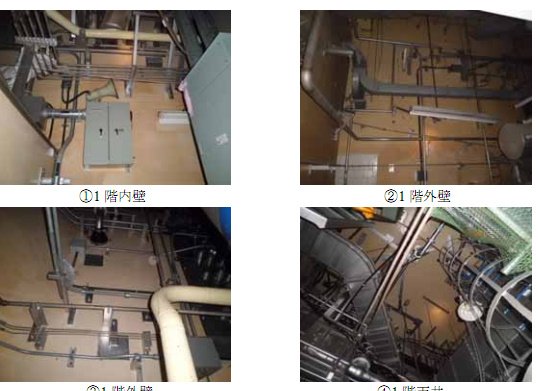
from Tepco it is #1 & #4 quake test results www.tepco.co.jp www.tepco.co.jp This from the English site says the English version will take a month to prepare www.tepco.co.jp
by elainekirk 5/28/2011 7:54:15 AM- Well, it's goodnight for me, the other baord is still neing held hostage. I leave you with this
M 4.2, Greece-Albania Border Regionby Veenie 5/28/2011 7:54:40 AM - @veenie sleep welllby elainekirk 5/28/2011 7:55:05 AM
- @Veenie Night honey! I have tried a couple of times today.........Maybe Elaine can say something?by Angie 5/28/2011 7:55:35 AM
- IAEA sucks bigtime. Sorry for the profanity, but it is the truth.by Ralph Unger 5/28/2011 7:56:10 AM
- Nah, he just doesn't get it.goodnight you two )by Veenie 5/28/2011 7:56:27 AM
- Cheers @veenieby hudebnik 5/28/2011 7:57:16 AM
- To promote and regulate is impossible. You have to do one or the other.by Ralph Unger 5/28/2011 7:57:42 AM
- @Ralph it has an English 'expert ' running the show that is 'stinks'n'sucks' any government 'expert' appointed between 1997-2010 is.....by elainekirk 5/28/2011 7:58:03 AM
- The French are behind it they have a huge stake in the nuke industry,by Ralph Unger 5/28/2011 7:59:04 AM
- @elainekirk Maybe if we ask @dh nicely he may translate it for us???by Angie 5/28/2011 7:59:31 AM
- @Ralph - well you can guarantee that the French and Brits won't be able to agree then. At least a Brit is leading the delegation.by hudebnik 5/28/2011 8:00:02 AM
- Areva is behind the MOX and pushing nuke in general, If I was in their shoes I would do the same.by Ralph Unger 5/28/2011 8:01:39 AM
- "Well they would say that, wouldn't they"!by hudebnik 5/28/2011 8:02:16 AM
- @angie good idea g'morning @Ralph @hudebnik @allby elainekirk 5/28/2011 8:03:20 AM
- Just as i am about to close the lid.
M 4.8, Near East Coast of Honshu, Japanby Veenie 5/28/2011 8:03:23 AM
Japan Earthquake | Page 1408
- Who's Blogging
-
 hudebnik
 alblee
 UKVal
UKVal Jonathan Keebler
 Oliver (ScribbleLive)
 kaykodh
 Markfm
- Angie
 Mid Valley
 Matt (ScribbleLive)
 George Gibb
- elainekirk
 PKelley
 lillymunster
 dean
dean bo
bo Edano
Edano Deb
Deb- Pedro Jesus
 IanGoddard