Japan Earthquake | Page 2473
 @Edano So ultrasound would be the most likely diagnostic tool along with blood tests?by lillymunster 10/8/2011 2:28:08 PM
 @lillymunster , in adults scintigraphy with [Tc-99m]pertechnetate is common practice.by Peter 10/8/2011 2:30:06 PM
 @lillymunster yes, but also a gamma counter if you refer to i-131. but hashimoto is auto-immune, so you would additionally find specific autoantibodies. i think you should be able to distinguish hashimoto from radiation induced tumors. but i am not sure if i understand you correctly and what exactly you aim at.by Edano 10/8/2011 2:31:34 PM
- Looking at images of 3 has me thinking. If the fuel gate was a weak spot as mentioned in the NRC manual I read. If the containment cap bolts stretched and the gasket failed, large amounts of the explosion would have gone out that path. The refueling crane is nowhere to be found and the fuel pool was obviously damaged by something. Maybe the blast focused a large part out that path damaging the pool and sending that crane skyward. It could have been one of the big objects in the falling debris. This would explain why the overhead crane landed neatly on top of the reactor well. The refueling crane could be the object that went through the turbine building roof.by lillymunster 10/8/2011 2:32:54 PM
 @lillymunster OT how do we show b*sb* sites owned by him he is trying to distance himself from pillsby elainekirk 10/8/2011 2:33:12 PM
- @Edano you had it correct what I was thinking. So a tumor is a tumor but the condition in the body can be determined by other tests to differentiate between an auto-immune created tumor vs. a radiation created tumor based on antibodies or if there was radiation found?by lillymunster 10/8/2011 2:34:22 PM
- @lillymunster , failure of the primary containment was at the essence of yesterday's NRC meeting. That is why it is so important to determine the exact course of events.by Peter 10/8/2011 2:36:27 PM
- @elainekirk all of his sites (those he claims and those he is trying to distance from) have different administrators and addresses. None show as owned by him specifically. It is like he has farmed them all out to various people in a chaotic way. He IS listed as the sole person and director of that childrens charity thing. Maybe he is just trying to backpeddle after getting some hostile responses?by lillymunster 10/8/2011 2:37:14 PM
 will be back later... off to gymby dean 10/8/2011 2:37:48 PM
- @lillymunster generally, yes. but not always. sometimes you can't find a cause. in theory it's easy, but in practice ....by Edano 10/8/2011 2:38:09 PM
- In the meantime I believe the hardened vent problem is a sideshow, granted the vents did not work as they should have, the safety philosophy has been that the bulb contains everything.by Peter 10/8/2011 2:38:45 PM
- @Peter that manual mentioned both the containment cap design and the fuel gate as weak spots. Peach Bottom has the same cap as Fuku. Don't know what other BWR units have this set up. I need some good images of the fuel gate with the containment bolt lip shown.
The bulb can't contain everything. In the concrete/steel style containment is has holes all over the base of it (torus vents) that lead out to uncontained areas of the building. The suppression pools have no hardened containment around them in the Fuku style BWR.
The BWR units with steel only containment bulb and use the outer building as the concrete portion of containment house the torus inside hardened concrete but then the entire inside of the building becomes off limits in an accident. It drives me crazy, a 3rd grader could see the design flaws in these units.by lillymunster 10/8/2011 2:41:55 PM - @Peter The NRC admitted the containment doesn't work and put the vents in as a solution for a failed design. That really was the root of all the arguments, the containment system doesn't work and everyone knows it.by lillymunster 10/8/2011 2:43:04 PM
- @Edano this could be a problem for compensation later on since lots of thyroid issues don't show a direct cause.by lillymunster 10/8/2011 2:44:37 PM
- lilly, carcinogens cause neoplastic growth in common, ubiquitous fashion. Many cancer tissues share the same malfunctioning genes. Thus it is difficult to show that a particular tumor is caused by a specific carcinogen.by Peter 10/8/2011 2:44:42 PM
- @Peter isn't that the problem with all the radiation exposure research? The inability to isolate out other possible cancer causes?by lillymunster 10/8/2011 2:46:37 PM
- I have been following the various animal rescue groups. There has been a large amount of animals coming out of the zone with horrible skin problems that require hospitalization. Trying to determine if it has an exposure connection.by lillymunster 10/8/2011 2:52:27 PM
- @lillymunster , lilly, it will be. Remember fitter mentioning how difficult it was to get asbestosis accepted for workman's compensation? For that there is clinical evidence of the effects of asbestos on lung tissue, and even with that it took decades to find acceptance. The radiation effects will be more difficult to prove.by Peter 10/8/2011 2:52:37 PM
- @lillymunster that only works with radworkers, where every exposure and movement is recorded, so they have a chance to get recognized victims. sadly, the compensation funds will set up high hurdles, and since the people cannot prove their individual exposure, they will not be able to prove the cause. only a statistical significance is not sufficient, no matter how evident it seems.by Edano 10/8/2011 2:52:41 PM
- @lillymunster , as to the PCVs, check out Oyster Creek and Dresden 2, they should be similar to unit 1. Perhaps, for BWR-4, Quad Cities is a good example.by Peter 10/8/2011 2:55:34 PM
- @Peter german radar workers fight for compensation de.wikipedia.orgby Edano 10/8/2011 2:59:28 PM
- @Peter Oyster creek uses a different bolting system, Peach Bottom is identical to the photos of the caps and bolts at Fuku. Photos or blueprint drawings of those other units would help identify how many have that flaw. On all though the gasket will fail at pretty low challenges and the fuel gate would be the same for all. It seems like a difference between failure and epic failure. :-)by lillymunster 10/8/2011 3:02:30 PM
- There was a chernobyl worker interviewed early on this spring who said she worked on site for weeks during the worst of it, she was a nuke engineer of some variety. She developed thyroid cancer and had a laundry list of other health problems. The compensation fund said she couldn't prove her Chernobyl exposure caused her illness and denied her. This tactic seems to be old hat and is leaving lots of people unable to work to support themselves and with ongoing health issues.by lillymunster 10/8/2011 3:04:38 PM
- @lillymunster , if I remember correctly the other units at Chernobyl were operated past the millenium. Operators were working near the sarcophagus for decades. There must be many more cases like that.by Peter 10/8/2011 3:10:04 PM
- @lillymunster , how about Pilgrim? That is an old design as well.by Peter 10/8/2011 3:10:49 PM
- @Peter there is a chernobyl victims non profit that has been collecting all these stories and has been trying to get real compensation for these people. Workers at fuku seem oblivious to what happened or don't think it will happen to them.
I think Pilgrim is around the same vintage. I will see if Nuclear Tourist has some photos of these other units that would help pin down containment cap issues. The containment cap, fuel gate and suppression chamber melt through issues are the three I am going to try to support as concerns in my letter to the NRC as public input for yesterday's meeting.by lillymunster 10/8/2011 3:13:14 PM - There is a news article about Jazko on Organize. He thinks fuku will never happen here and everything is fine.by lillymunster 10/8/2011 3:14:13 PM
- @Edano , radio technicians in this country developed cataracts from peeping into the hollow conductors of UHF transmitters to check for dust during maintenance work. An example for health hazards from high energy non-ionizing radiation. That also took years to be recognized.by Peter 10/8/2011 3:15:30 PM
- @lillymunster , the Japanese regulatory agency thought that, too, before the disaster. Never say never (an American saying).by Peter 10/8/2011 3:17:24 PM
- @Peter the behavior I have seen out of various NRC staff related to the BWR issue is just unacceptable. There seems to be an attitude that they don't need to address this issue or any of the changes being requested. I really think states are going to have to attempt ballot initiatives to get changes made at the state level.by lillymunster 10/8/2011 3:22:26 PM
 Tokyo Metropolitan Government Measures Soil Contamination in Shinjuku
And it is higher, much higher than the Ministry of Education's aerial survey indicates. ex-skf.blogspot.comby Majj 10/8/2011 3:33:56 PM- TEPCO starts to eject dense hydrogen from Fukushima reactor pipe
TOKYO, Oct. 8, Kyodo
Tokyo Electric Power Co., the operator of the crisis-hit Fukushima Daiichi nuclear plant, said Saturday it has started to discharge hydrogen with high concentration levels from a pipe connected to a reactor containment vessel at the plant, as a measure to prevent an explosion.
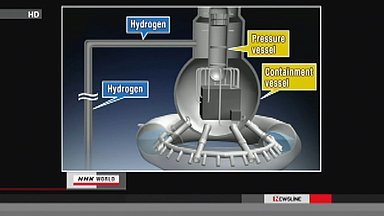
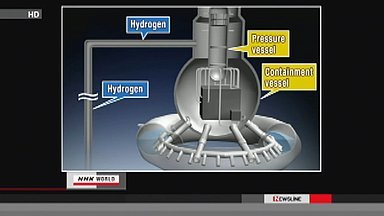
The utility said it has injected nitrogen into the pipe for the No. 1 reactor vessel to eject hydrogen found with high density of over 60 percent. The hydrogen has been generated by radiation that dissolved water.
TEPCO said it will make sure that the concentration level of hydrogen is lowered to less than 1 percent before removing the pipe and going ahead with a plan to connect a system to clean up radioactive materials in the vessel. english.kyodonews.jpby Edano 10/8/2011 3:53:24 PM - 5 big tsunamis may have hit nuclear plant village in past 1,000 years
TOKYO, Oct. 8, Kyodo english.kyodonews.jpby Edano 10/8/2011 3:54:40 PM - @Majj I think we are going to see a flood of those kinds of reports. MEXT is releasing that more and more areas have contamination then other reports come out doing soil or ground level tests showing it is worse.by lillymunster 10/8/2011 3:55:37 PM
www3.nhk.or.jp
Removal of hydrogen starts at Fukushima plant
The operator of the troubled Fukushima Daiichi nuclear power plant on Saturday afternoon began to remove hydrogen that has built up in pipes connected to the No.1 reactor.
Tokyo Electric Power Company, or TEPCO, last month found that the level of hydrogen inside pipes connected to the No.1 reactor containment vessel accounted for between 61 and 63 percent of the total gas present.
TEPCO says an explosion is unlikely as there is no oxygen in the pipes now.
It adds that Saturday's work will not pose any risk of explosion as nitrogen is to be injected into the pipes to lower hydrogen levels.
TEPCO explains that it will use special hoses that do not generate static electricity to prevent an explosion while releasing hydrogen outside the reactor building.
Following a government instruction, TEPCO is planning to check the level of hydrogen in pipes linked to the No.2 and No.3 reactors.
Saturday, October 08, 2011 13:22 +0900 (JST)
www3.nhk.or.jpby Edano via Www3.nhk.or.jp 10/8/2011 3:57:43 PM- New safety rules for outdoor nuclear workers
Japan's health ministry will introduce safety guidelines to protect workers who clean up radioactive substances around the disabled Fukushima Daiichi nuclear power plant.
Existing guidelines target only those working indoors at the plant.
Citizens groups had complained that the ministry was not doing enough to minimize the exposure of workers who engage in decontamination outdoors.
The new guidelines will require outdoor clean-up workers to wear protective masks and carry dosimeters to monitor radiation.
The ministry says it will work to ensure that the rules are upheld, as efforts to decontaminate farmland and residential areas near the Daiichi plant will soon begin in earnest.
Friday, October 07, 2011 16:45 +0900 (JST)
www3.nhk.or.jpby Edano 10/8/2011 3:58:39 PM 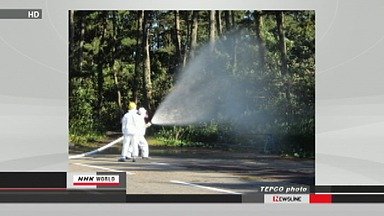
www3.nhk.or.jp
TEPCO starts sprinkling decontaminated water
The Tokyo Electric Power Company, or TEPCO, has started sprinkling decontaminated water on the premises of the Fukushima nuclear power plant.
TEPCO on Friday began spraying the water onto trees cut down and piled on the plant's compound. The utility says dry trees could catch fire spontaneously.
The water was taken from facilities for temporary storage of water with low levels of radioactivity that had accumulated in the basements of 2 reactor turbine buildings. The buildings did not incur major damage in the March disaster.
The facilities contain about 17,000 tons of such water, and are filled to nearly 90 percent of their capacity.
TEPCO removed salt and radioactive substances from the water before the sprinkling process, and says levels of cesium and other radioactive substances in the water are below government standards for public beaches.
The company also says local communities and fishery associations approved the operation.
TEPCO plans to release 100 tons of decontaminated water daily on about 1.2 million square meters of land in the compound.
Friday, October 07, 2011 18:15 +0900 (JST)
www3.nhk.or.jpby Edano via Www3.nhk.or.jp 10/8/2011 4:00:05 PM- US eases travel alert around Fukushima N-plant
The United States has eased its evacuation advisory for US citizens in Japan regarding the troubled Fukushima Daiichi nuclear power plant.
The State Department advised US citizens on Friday to stay more than 20 kilometers from the plant -- in line with a no-entry zone set by the Japanese government.
The previous US advisory recommended avoiding areas within 80 kilometers of the plant.
But the State Department warned pregnant women, children, and older people not to stay within 30 kilometers of the plant.
The US alert also includes some areas and spots outside the 20-kilometer no-entry zone, as the Japanese government has advised residents there to evacuate.
The State Department says it updated the advisory based on additional data released by the Japanese government.
Japan last week lifted an evacuation advisory for municipalities mainly located in a ring between 20 and 30 kilometers from the plant.
Saturday, October 08, 2011 12:04 +0900 (JST)
www3.nhk.or.jpby Edano 10/8/2011 4:01:04 PM - @Edano someone posted the full advisory earlier and I think it reads like a very carefully worded stay out of 80km but we just making it look as though we are relaxing our adviceby elainekirk 10/8/2011 4:13:53 PM
- @elainekirk yes, it still sounds very ugly.by Edano 10/8/2011 4:51:04 PM
- 4.8 earthquake, near the east coast of Honshu, Japan. Oct 9 1:08am at epicenter (31m ago, 50km ENE of TOKYO, depth 69km). j.mpby M.I.A. 10/8/2011 4:55:46 PM
- @M.I.A. pretty closeby elainekirk 10/8/2011 4:58:31 PM
- @Edano can you put this video up? www.tepco.co.jpby elainekirk 10/8/2011 5:00:40 PM
- @elainekirk hmmm no. is it new ?by Edano 10/8/2011 5:05:43 PM
Fukushima Disaster Video Disposing of Decontaminated Water from Reactor Units 7 Oct. 11
by Edano 10/8/2011 5:06:35 PM
Japan Earthquake | Page 2473
- Who's Blogging
-
 hudebnik
 alblee
 UKVal
UKVal Oliver (ScribbleLive)
 Jonathan Keebler
 kaykodh
 PKelley
 Markfm
 Angie
Angie Deb
Deb Mid Valley
- Pedro Jesus
 Matt (ScribbleLive)
 George Gibb
- elainekirk
- lillymunster
- dean
 bo
bo- Edano
 IanGoddard