Japan Earthquake | Page 2723
 @lillymunster Good luck! :) All the nuclear experts in the entire world do not have a complete understanding of the power of nuclear energy.by MaryW 11/30/2011 5:08:36 PM
- Maybe they should climb in there and do a visual...and then submit a findings reportby MaryW 11/30/2011 5:13:57 PM
 @MaryW LOL I can provide a list of candidates to make the excursion. Start with the "nuclear risk is all in people's heads" crew then work your way down to TEPCO's execs. :-)by lillymunster 11/30/2011 5:29:24 PM
- @lillymunster I know I'm getting a bit too punchy here :) I'll tone it down...:)by MaryW 11/30/2011 5:31:37 PM
- @MaryW sarcasm keeps you sane. :-)by lillymunster 11/30/2011 5:44:25 PM
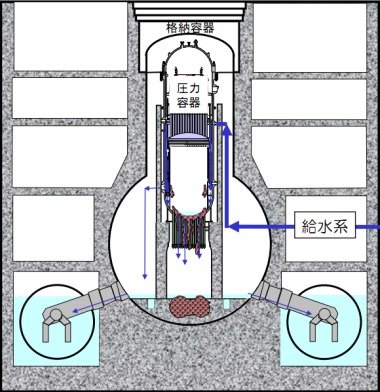
#1
World Nuclear News has more details on the TEPCO meltdown claims
www.world-nuclear-news.org
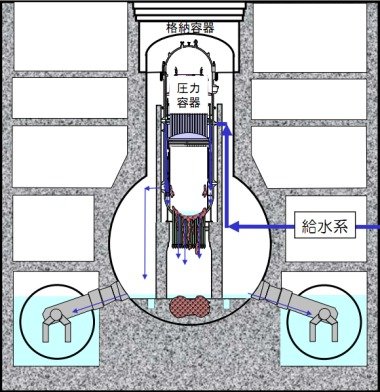
The bulk of unit 1's nuclear fuel went through the bottom of the reactor vessel as well as about 70 centimetres of the drywell concrete below, according to the analysis released today. However, the corium did not breach the steel containment vessel 1.9 metres further down within the concrete, or the boundary of secondary containment some 7.6 metres further still.
www.world-nuclear-news.org
Of the 10.2 metres of solid concrete that makes up the floor of the reactor building, the corium is thought to have melted and mixed with the first 70 centimetres only.by lillymunster via World-nuclear-news.org edited by Edano 11/30/2011 6:02:35 PM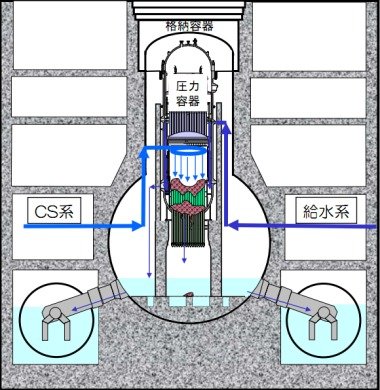
#2 & #3
by lillymunster via World-nuclear-news.org edited by Edano 11/30/2011 6:02:50 PM- "My understanding is the government of Japan has monitored over 300,000 individuals at this point. Is that, would you be comfortable describing your understanding of kind of the health effects that's going on on the ground right now?" (Comissioner Suinicki). "I'm afraid this is beyond my---thats something I can't comment on today". (Neil Wilmshurst) Page 28. "We did recommend that the site specific information be brought to bear to identify all the populations that could be at risk...we assume now in Fukushima, its been valided, that the EPA protective action guide recommendations were exceeded 30 or 40 miles away from the site...there are a lot of questions around protection of ingestion pathways and things like that, subsequent to the release". Page 37. October 11.2011 Transcript excepts, Briefing on the Japan Near Term Task Force Report- U.S.NRC Commission Meetings www.nrc.govby MaryW 11/30/2011 7:02:18 PM
 well, damn, nobody is able to calculate an erosion depth of 65 cm. this is pure guessing. we should not believe a single word. the rest distance of 37 cm is fantasy as well, the same with the estimation that the steel lining is not damaged. i think it is complete nonsense. the only interesting fact is that tepco admitted a burn into the containment, and that means that the situation will be even worse than they admit now. we had the same numbers magic before, when they speculated about the molten percentage and the diameters of the holes in the rpv. all nonsense.by Edano 11/30/2011 7:31:26 PM
- in fact, we know better than tepco, we always did.by Edano 11/30/2011 7:33:09 PM
- "The fast erosion phase of the concrete basemat lasts for about an hour and progresses into about one meter depth, then slows to several centimeters per hour, and stops completely when the melt cools below the decomposition temperature of concrete (about 1100 °C). Complete melt-through can occur in several days even through several meters of concrete; the corium then penetrates several meters into the underlying soil, spreads around, cools and solidifies."
en.wikipedia.orgby Edano 11/30/2011 7:43:52 PM - @Edano And this (wikipedia) would apply to any and all models or types of reactors??by MaryW 11/30/2011 7:50:28 PM
- @MaryW the basic chemistry, yes. it's just about corium and concrete.by Edano 11/30/2011 7:51:52 PM
- @Edano would fission be occurring at this stage?by MaryW 11/30/2011 7:56:21 PM
- @MaryW yes, it can, but not necessarily.by Edano 11/30/2011 8:00:47 PM
- I don't remember reactor was producing the fission about a month ago or soby MaryW 11/30/2011 8:02:22 PM
- @MaryW #2 was it.by Edano 11/30/2011 8:02:59 PM
- ...which reactor...by MaryW 11/30/2011 8:03:00 PM
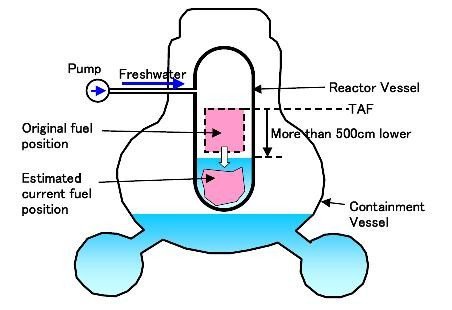
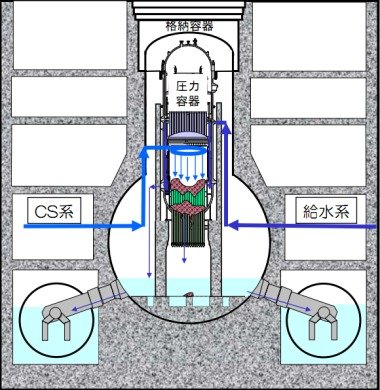
Analyses suggest most of the fuel in unit 1 is now the bottom of the reactor vessel (Image: Tepco)
www.world-nuclear-news.org
let us not forget what tepco admitted in may: www.world-nuclear-news.org not a single word about a possible meltthru. that was a clear lie. and now ?by Edano via World-nuclear-news.org 11/30/2011 8:19:28 PM- be back laterby MaryW 11/30/2011 8:23:01 PM
- @Edano Oooh, good one. lol Btw, organize needs a bump and I'm in modby M.I.A. 11/30/2011 8:23:12 PM
- @M.I.A. restartedby Edano 11/30/2011 8:31:37 PM
- @Edano Cool. TYby M.I.A. 11/30/2011 8:33:38 PM
- Report: Mysterious blast in Iran's Isfahan damaged key nuclear site
London Times quotes Israel intelligence officials as saying that satellite images show this week's reported blast in Isfahan was 'no accident.' A mysterious blast which reportedly rocked Isfahan in western Iran on Monday damaged a key nuclear facility in the city, the Times of London reported on Wednesday. www.haaretz.comby M.I.A. 11/30/2011 8:36:21 PM - Nobel winner, 9 others picked for nuclear crisis panel
TOKYO, Nov. 30, Kyodo
Nobel chemistry laureate Koichi Tanaka and nine others were selected Wednesday as members of a special parliamentary committee to investigate the causes behind the ongoing nuclear crisis at the Fukushima Daiichi power plant, lawmakers said.
In a unanimous decision, Kiyoshi Kurokawa, 75, former president of the Science Council of Japan, was picked to head the 10-member panel by senior members of the rules and administration committees of both houses at a meeting of their joint consultative panel on the matter.
Formal appointments by the heads of the House of Representatives and the House of Councillors are likely to be made next week at the earliest, after expected approval at plenary sessions of each chamber on Friday, they said.
The special investigative committee is likely to start work in earnest in mid-December or later, with plans to produce a report around next June.
The parliamentary panel will function separately from a panel of third-party experts set up by the government to determine the causes of the nuclear crisis.
==Kyodo english.kyodonews.jpby Edano 11/30/2011 9:27:31 PM - UPDATE3: Japan's nuclear accords with 4 countries due to clear parliament
TOKYO, Nov. 30, Kyodo
Japan's bilateral civil nuclear cooperation accords with Jordan, Russia, South Korea and Vietnam could take effect in December, with Diet deliberations on them beginning Wednesday despite public concerns about exporting atomic technology in the wake of the Fukushima disaster.
The accords, which will lay the legal foundations for Japanese companies to supply nuclear equipment and technology to other countries, are expected to be approved by the House of Representatives on Dec. 2, lawmakers said.
If all goes smoothly, they will come into force next year after also being approved by the House of Councillors during the current parliament session, which ends Dec. 9 unless extended.
On Wednesday the Liberal Democratic Party, which controls the House of Councillors with smaller opposition parties, basically agreed to support enactment of the pacts.
Japan signed the pacts with the respective countries before the world's worst nuclear accident in 25 years occurred at the Fukushima Daiichi power plant, following the March 11 earthquake and tsunami.
Diet deliberations on the nuclear cooperation agreements had stalled after the accident. But the government and the LDP later decided to take the stance that such accords before the March disaster should become effective to prevent diplomatic relations from being damaged, and as long as other countries still wanted Japan's cooperation.
Necessary domestic procedures for the accords in the four countries have already been completed and they are only awaiting approval by the Japanese Diet, according to government officials.
Foreign Minister Koichiro Gemba told a House of Representatives committee that Japan will ''do whatever is possible to ensure safety,'' when referring to the country's policy of not completely abandoning its nuclear exports.
Gemba told the lower house panel on foreign affairs he is also hoping to conclude a bilateral accord on cooperation in the peaceful use of nuclear energy with five countries -- Brazil, India, South Africa, Turkey and the United Arab Emirates -- on which Japan began negotiations prior to the Fukushima disaster.
In Jordan, a consortium of Mitsubishi Heavy Industries Ltd. and French nuclear power company Areva is competing with Russian and Canadian companies for nuclear power contracts.
Jordan has urged Japan to ratify a bilateral nuclear cooperation accord by the year-end, cautioning that without it, the Japan-French consortium will lose its chance of winning a bid to build a nuclear power plant there, according to diplomatic sources.
In a related development, government representatives and engineers from six Asian countries that plan to build atomic power plants, including Vietnam and Turkey, visited Tokyo Electric Power Co.'s Kashiwazaki-Kariwa plant in Niigata Prefecture to inspect its safety equipment and other features.
The Japan Nuclear Energy Safety Organization, which organized the visit, said the group spent about three-and-a-half hours touring the plant, inspecting areas such as the central control room of the No. 6 reactor which is currently operating and listening to explanations by a TEPCO official about countermeasures against tsunami.
A Malaysian representative said that although some people in his country are worried about having a nuclear power plant following the Fukushima nuclear crisis, he said he believes construction of such a plant in Malaysia will eventually be realized.
Other countries that took part in the tour are Indonesia, Jordan and Kazakhstan.
==Kyodo english.kyodonews.jpby Edano 11/30/2011 9:29:27 PM - Gov't to aid infrastructure building in areas near Fukushima plant
TOKYO, Dec. 1, Kyodo
The central government plans to carry out infrastructure projects, such as road and embankment improvement, on behalf of local governments in areas where voluntary evacuation advisories arising from the Fukushima nuclear crisis have been lifted, government sources said Wednesday.
According to an outline of planned legislation to facilitate reconstruction work after the nuclear accident, the national government would also provide the areas with reconstruction measures more favorable than those for other affected areas, such as free provision of land lots for industrial use and greater tax breaks.
The planned bill, which the government intends to present to the ordinary Diet session to be convened in January, is aimed at providing all-out government support for people gravely affected by radiation leaks from the Fukushima Daiichi nuclear plant crippled by the March 11 earthquake and tsunami.
Infrastructure improvements and other projects after the removal of evacuation directives would be carried out based on a rehabilitation plan to be worked out by the prime minister through consultations with Cabinet ministers and local government chiefs.
The Fukushima prefectural government would prepare a set of measures to promote local products, such as reduction or exemption of registration fees for products adopting Fukushima brand names.
To support the creation of environmental and other new businesses, the prefectural government would also prepare other programs, including simplified procedures for approving geothermal development projects.
Among other measures envisioned by the planned legislation, health surveys would be carried out throughout the prefecture, and the prefectural government would use basic resident registers, managed by municipal governments, to confirm information about residents.
==Kyodo english.kyodonews.jpby Edano 11/30/2011 9:32:00 PM - Japanese astronaut Satoshi Furukawa who recently returned from the International Space Station spoke Wednesday night of his observation from space of ongoing reconstruction efforts in the disaster-hit northeastern Japan.
''Light was gradually increasing and I felt the warmth of human activities,'' Furukawa, 47, told reporters via a televised conference from Houston, Texas. english.kyodonews.jpby Edano 11/30/2011 9:35:13 PM - aha.by Edano 11/30/2011 9:35:53 PM
- finally back in. Brief errand turned into lots of errands. :-)
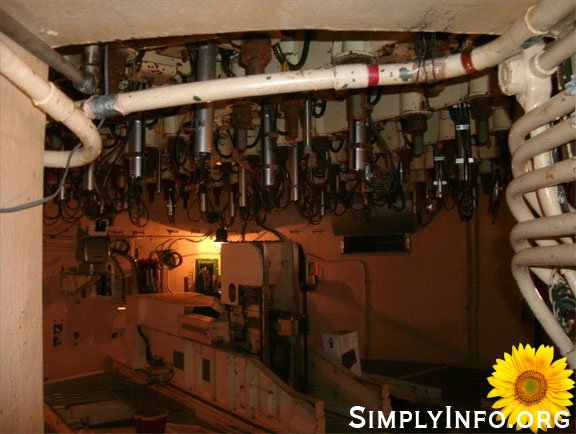
On the melt through claim by TEPCO. They don't seem to know and are guessing. This guess only assumes straight down burn through. If unit 1 ejected the entire core there is plenty of fuel to move laterally. They say nothing at least from what we can get from the press conference that they made any consideration for lateral movement. The elevation drawing of unit 1 shows only a small sump under the pedestal. We know that isn't a heavily detailed drawing, TEPCO's illustration may not be literal either. Knowing the pedestal area of unit 5 there is a big piece of equipment under the RPV. Could that have directed corium somewhat to either side like a wedge? It would obviously melt as things progressed but it adds to what is under the RPV and could be enough to change their assumption. Off to see if I can find the pedestal picture.by lillymunster 11/30/2011 11:42:00 PM 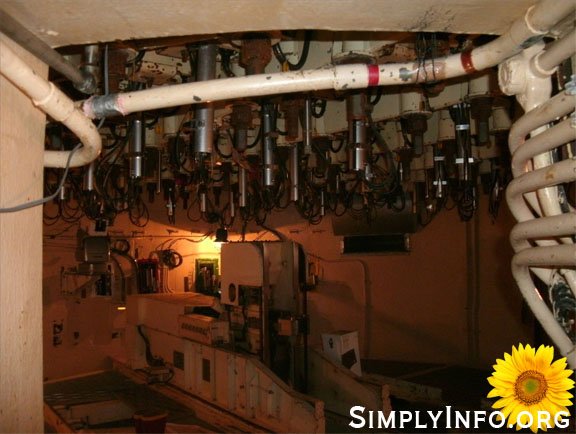
Under the pedestal at unit 5 houseoffoust.com
by lillymunster via Houseoffoust 11/30/2011 11:44:30 PM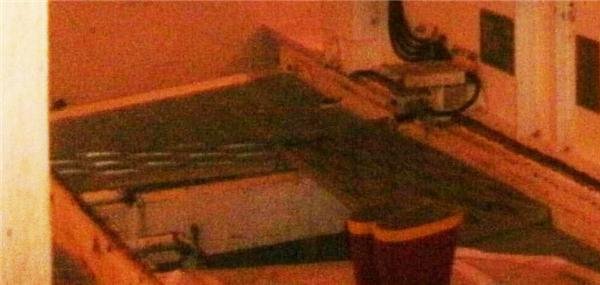
pedestal floor. Looks like sump w/ expanded steel grate
by lillymunster 11/30/2011 11:57:18 PM- Of the 10.2 metres of solid concrete that makes up the floor of the reactor building, the corium is thought to have melted and mixed with the first 70 centimetres only... Whew, and I thought it might be REALLY bad.... I'd like to see them clean that up in 30 years.by artnuke 12/1/2011 12:04:52 AM
- Tokyo and Osaka doing dual no nukes referendums kokumintohyo.comby lillymunster 12/1/2011 12:05:08 AM
- the earth is flat and corium is still in containment.by Edano 12/1/2011 12:06:39 AM
- I just realized what this is likely really about. Cold shutdown target is end of the year. AKA 30 days from tomorrow.by lillymunster 12/1/2011 12:24:17 AM
- So...hypothetically speaking, if the worse possible scenario happens at one of the reactors in the future, what are the possible consequences to expect?...or is that unknown.by MaryW 12/1/2011 12:24:22 AM
- They likely have to submit a report to someone at that date. This would also explain them now ordering cameras to inspect inside with.by lillymunster 12/1/2011 12:24:58 AM
- @lillymunster But all we are hearing, is a delay to the cold shutdownby MaryW 12/1/2011 12:25:20 AM
- @MaryW www.economic-undertow.com ?by Edano 12/1/2011 12:25:39 AM
- @MaryW Some have hypothesized a massive explosion due to either hitting groundwater or a criticality.
by lillymunster 12/1/2011 12:26:10 AM - Another simulation on the structure released by the government-funded Japan Nuclear Energy Safety Organization, or JNES, said the erosion of the concrete could be deeper and the possibility of structural damage to the reactor's foundation needs to be studied.
www.wdtn.comby lillymunster 12/1/2011 12:27:54 AM - Some experts have raised questions about achieving the "cold shutdown," which means bringing the temperature of the pressure vessel containing healthy fuel rods to way below the benchmark 100 Celsius (212 Fahrenheit). They say the fuel is no longer there and measuring the temperature of empty cores is meaningless, while nobody knows where and how hot the melted fuel really is.
Kiyoharu Abe, a nuclear expert at JNES, said it's too early to make a conclusion and more simulations should be done to get accurate estimates.
"I don't think the simulation today was wrong, but we should look at this from various viewpoints rather than making a conclusion from one simulation," Abe said. "It's just the beginning of a long process."by lillymunster 12/1/2011 12:29:24 AM - The analysis done by the Institute of Applied Energy commissioned by the national government, 85% of fuel dropped to the Containment Vessel in Reactor 1, and 70% of fuel dropped to the Containment Vessels in Reactors 2 and 3. The researchers at the Institute pointed out the possibility of the damage to the stainless-steel shroud that surrounds the fuel core, and of the corium having eaten away the concrete floor of the Containment Vessel up to 2 meters deep. Because of that, they also said it was possible that the RPV got tilted. ex-skf.blogspot.comby lillymunster 12/1/2011 12:31:04 AM
- they all contradict tepco. even ines.by Edano 12/1/2011 12:32:38 AM

Japan Earthquake | Page 2723
- Who's Blogging
-
 hudebnik
 alblee
 UKVal
UKVal Oliver (ScribbleLive)
 Jonathan Keebler
 Matt (ScribbleLive)
 kaykodh
 PKelley
 Markfm
 dean
dean Angie
Angie- Edano
 Deb
Deb Mid Valley
- Pedro Jesus
 George Gibb
 elainekirk
- lillymunster
 bo
bo IanGoddard