Japan Earthquake | Page 2754

english.kyodonews.jp
GSDF troops begin cleanup at Fukushima municipal gov't offices
FUKUSHIMA, Japan, Dec. 7, Kyodo
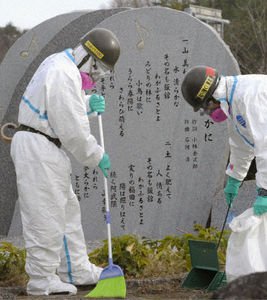
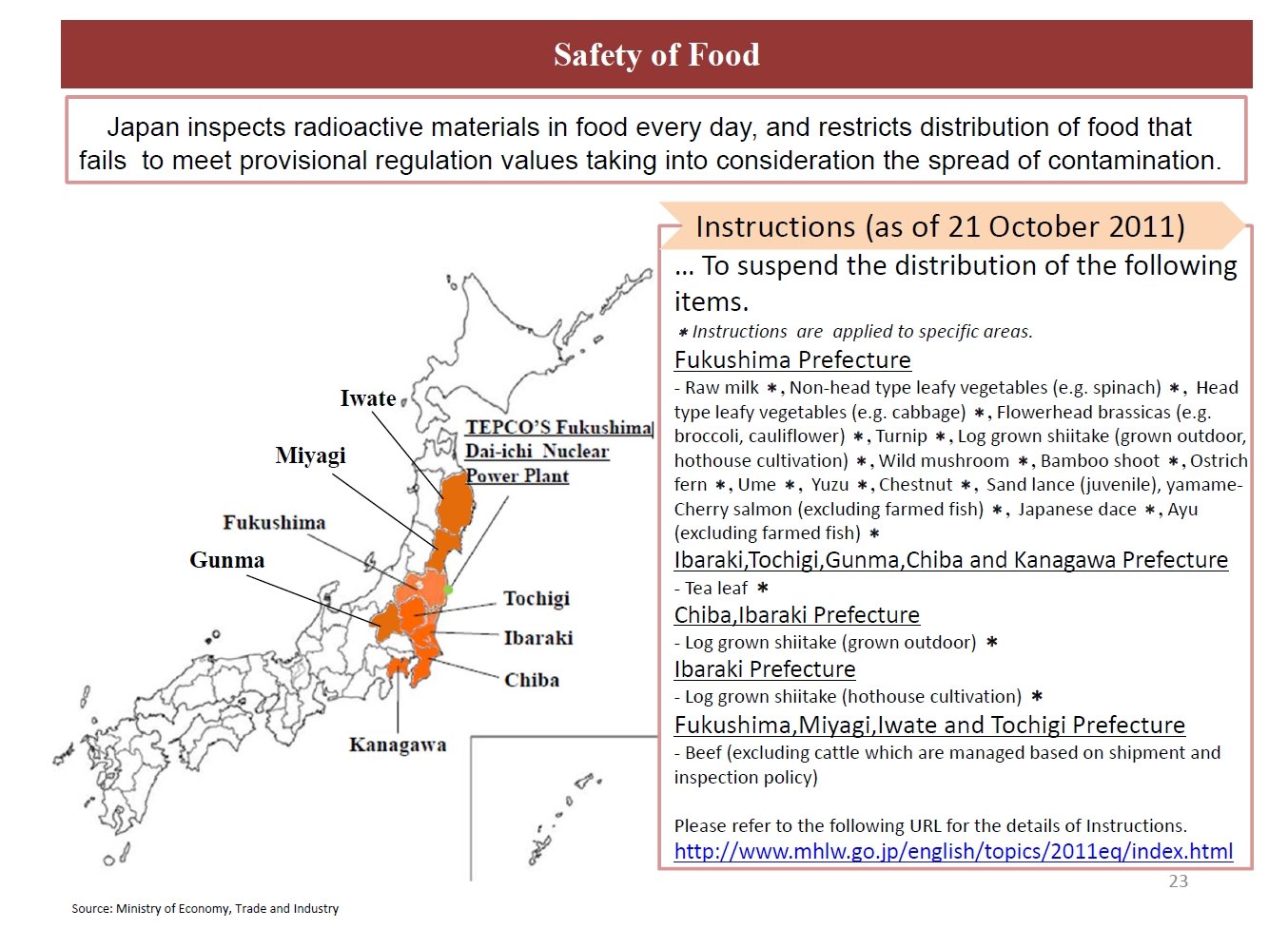
About 900 Ground Self-Defense Force troops began decontaminating local government buildings on Wednesday in areas around the disaster-hit Fukushima Daiichi nuclear power plant in Fukushima Prefecture.
The cleanup operation at municipal office buildings in the towns of Naraha, Tomioka and Namie, and the village of Iitate is set to last two weeks. The work is to prepare operational bases for full-fledged cleanup that will start next year as a nuclear decontamination law goes into effect in January.
The 900 troops consist of members stationed at camps in the prefecture and those trained to deal with radiation. Of the total, 300 were each assigned to Tomioka and Iitate, while 150 were each sent to Naraha and Namie.
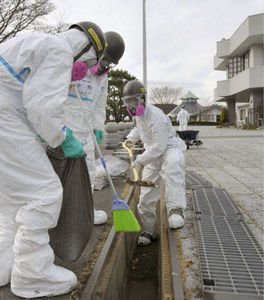
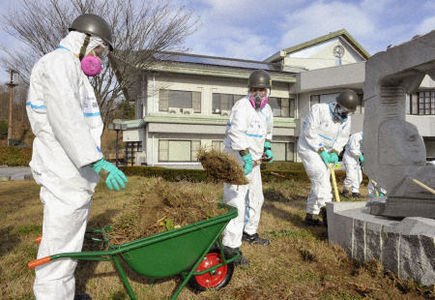
They will clean up the buildings with high-pressure water sprayers and metal brushes, while monitoring radiation levels. They will also scrape off the top soil with heavy machinery and shovels, according to the GSDF.
Contaminated water and soil collected in the cleanup operation will be kept on the premises of the municipal office buildings temporarily.
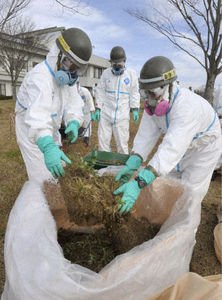
At the municipal office in Iitate on Wednesday, GSDF members wearing protective gear, including goggles and masks, removed mud from ditches and lawns on the office premises to lay the groundwork for future cleanup efforts.
==Kyodo english.kyodonews.jp<bby Edano via English.kyodonews.jp 12/8/2011 6:56:58 PM- this one is even better ! :)by Edano 12/8/2011 6:57:11 PM
 by Edano via English.kyodonews.jp 12/8/2011 7:00:18 PM
 by Edano via English.kyodonews.jp 12/8/2011 7:01:00 PM
 Atomic gardeningby lillymunster 12/8/2011 7:01:03 PM
 by Edano via English.kyodonews.jp 12/8/2011 7:01:42 PM
 Alert Map: Nuclear Event. St Lucie Nuclear Power Plant. Dec 08. This appears to be an update? on the August 22. 2011 plant shutdown due to jelly fish. hisz.rsoe.huby MaryW 12/8/2011 8:13:13 PM
- @MaryW Angry Atomic Activst Jellyfish strike again!by lillymunster 12/8/2011 8:19:33 PM
- Interesting site, in German: tec-sim.de A report therefrom on SFP failures: tec-sim.deby Ian 12/8/2011 8:31:10 PM
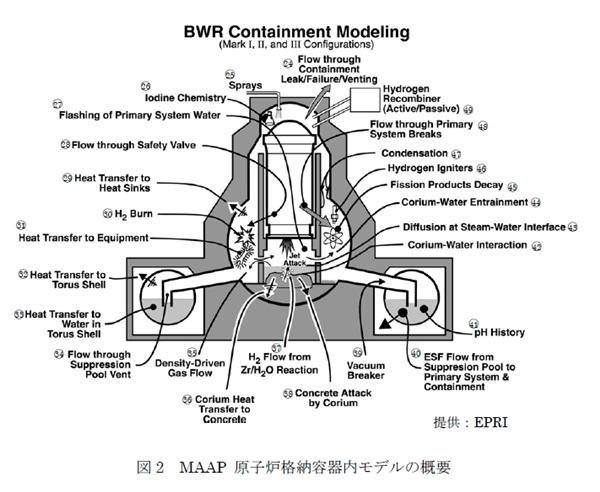
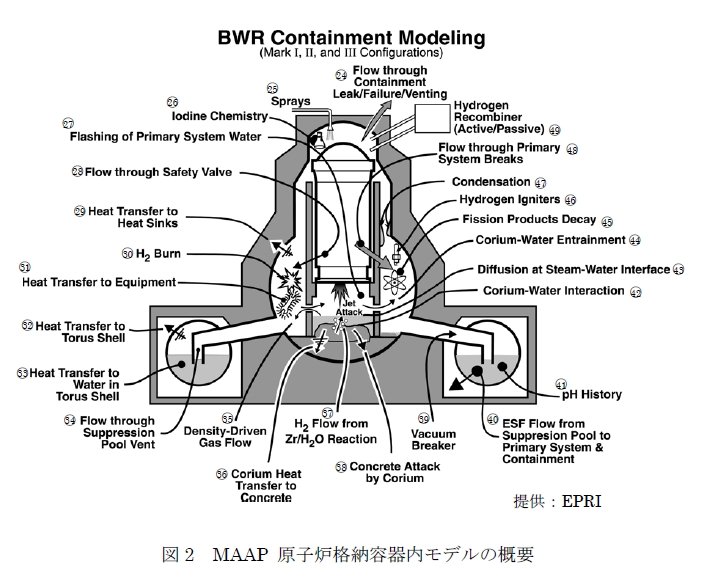
tec-sim.de illusttration from ian's link.
by Edano via Tec-sim.de 12/8/2011 9:13:31 PM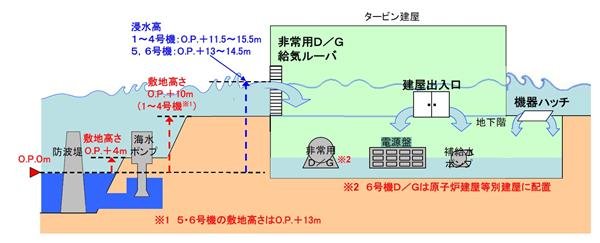
tec-sim.de same source
by Edano via Tec-sim.de 12/8/2011 9:15:11 PM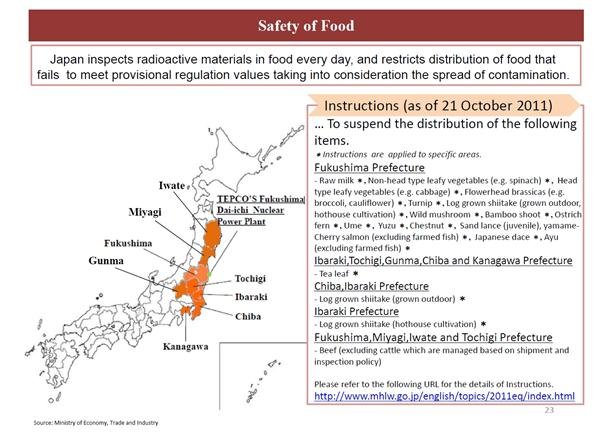 by Edano via Tec-sim.de 12/8/2011 9:16:25 PM
 by Edano via Tec-sim.de 12/8/2011 9:18:15 PM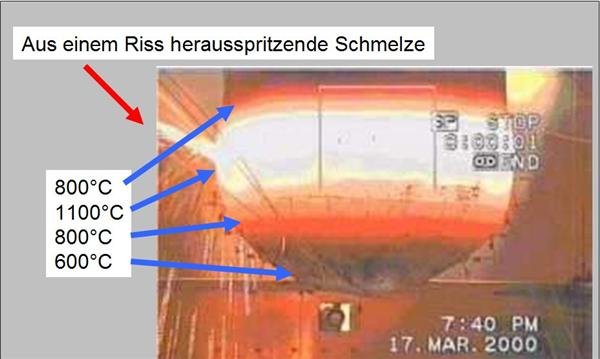
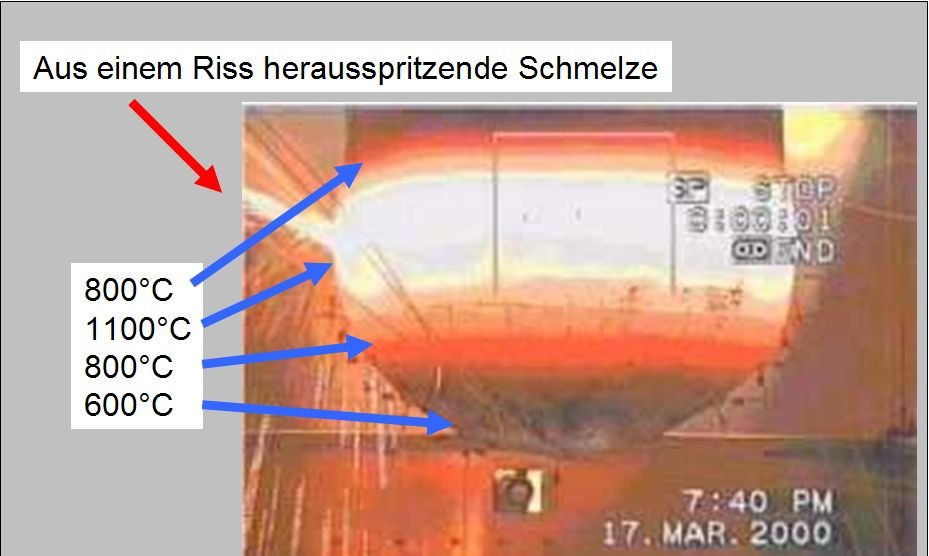
tec-sim.de experimental leaking rpv bottom head
by Edano via Tec-sim.de 12/8/2011 9:22:02 PM- does it say where the image is from?by lillymunster 12/8/2011 9:48:55 PM
- @lillymunster noby Edano 12/8/2011 9:51:15 PM
- it wants to say that the hottest spot is not at the bottom of the vessel, but at the lower wall, and there is a certain chance that the entire bottom head falls down.by Edano 12/8/2011 9:55:04 PM
- then we would not expect a "core dripping".by Edano 12/8/2011 9:57:06 PM
- @All Hi, friends. Just got this in my email from Beyond Nuclear: C webcast of public meeting on Beyond Nuclear North Anna Emergency Enforcement Action
On Monday, December 12, 2011 from 2:30 to 4:30 PM EST, NRC is meeting with Beyond Nuclear and joint petitioners who have called for emergency enforcement action for full public hearings rights on license changes to Virginia’s North Anna nuclear power plant following the August 23, 2011 earthquake. The meeting will be webcast and a telephone bridge line is being provided for up to 100 toll free lines for the public to listen in. Details for linking to webcast and toll free telephone bridge line can be viewed by clicking on December 12 in NRC homepage calendar for public meetings.
NRC to webcast Beyond Nuclear presentation to Commission on status of fire protection at reactors
On Tuesday, December 13, 2011, beginning at 9 AM EST, Beyond Nuclear Director of Reactor Oversight, Paul Gunter, will be testifying before the Chairman and Commissioners of the US NRC on what we believe to significant decades old fire protection risks at US reactors. These same risks potentially threaten control room operations for safe shutdown and cooling of reactors similar to the failure that led to the explosions and meltdowns at Fukushima. Go to this NRC link to view the webcast and Beyond Nuclear at the meeting.
Senate Committee webcast of hearing with NRC Commissioners on Fukushima and US reactors
We hear that the Senate Environment and Public Works Committee will be meeting with the Chairman and the Commissioners of the US Nuclear Regulatory Commission on Thursday, December 15, 2011 to discuss the Fukushima nuclear catastrophe and implications for US reactors. Click on this link at EPW to watch for information on the time to link up with the live webcast from Capitol Hill.by M.I.A. 12/8/2011 10:17:50 PM - @Edano That is what raised my curiosity. It isn't the center bottom of the RPV that is hottest. It is hard to tell if this test RPV has graphite plugs for the control rod holes? Looking at how hot the walls are though makes me wonder if the control rod holes play less of a role in the total failure. As in they will be the first spots to leak but may not drain the RPV fast enough and that hot spot would still cause the entire bottom head to drop off. That photo reminds me of the French corium experiment video. I wonder if more of that research would be available online? No clue what country did the RPV experiment...by lillymunster 12/8/2011 10:41:38 PM
- Chinese PWR corium experiment scitation.aip.org
Creep-tests of French & German RPV steel www.iasmirt.orgby lillymunster 12/8/2011 10:44:02 PM - google: experimental RPV failure BwR - all sorts of studies come upby lillymunster 12/8/2011 10:47:44 PM
- @lillymunster if the analysis is correct, then the rpv can have two possible scenarios:
1. complete loss of rpv bottom (#1 reactor) with complete fuel loss
2. burnthru holes in the lower wall section. this scenario could explain why tepco insists that there is still corium in the rpv (#2 and 3). corium jets out of or drips thru the holes in the rpv wall, but a big part of it stays in the bottom calotte.by Edano 12/8/2011 11:06:45 PM - @Edano It would still have some melt through the bottom via the graphite plugs. They have such a low destruction temp. If it was cooled a certain way it could stop it. I'm hoping they get those cameras soon and NISA makes them publish what they find.by lillymunster 12/8/2011 11:09:36 PM
- if there is really only 600° at the bottom, and not 1100°, the penetration holes could eventually hold it.by Edano 12/8/2011 11:11:58 PM
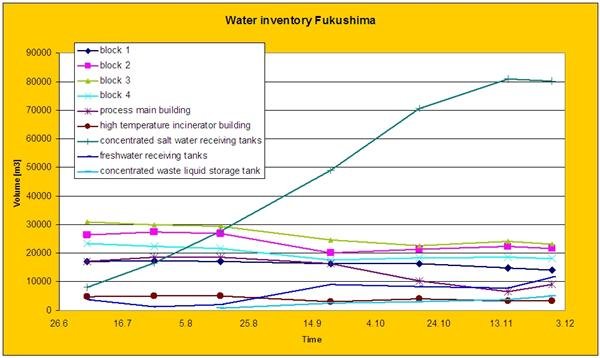
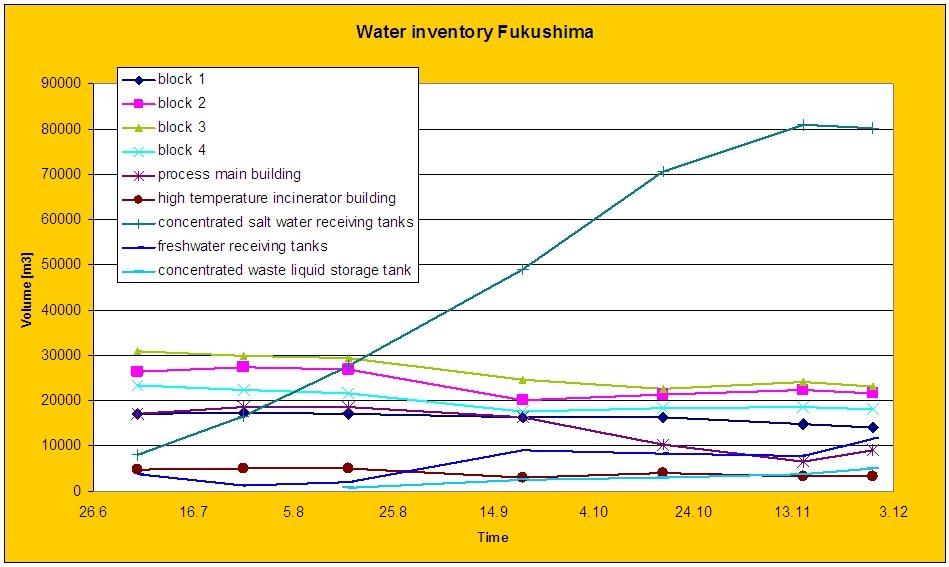
- Increasing treated water becomes another headache
Rising amounts of water which has low-levels of radioactivity is starting to be a burden for the operator of the crippled Fukushima Daiichi power plant.
The utility was considering releasing the water into the sea but it postponed the decision due to strong protests from the fishery industry.
The liquid builds up as the Fukushima Daiichi plant decontaminates and reuses water to cool the reactor.
Despite the reuse, the volume of treated water is expanding. Underground water has also penetrated into the facilities' basements, contaminating it.
The utility says storage tanks that have capacity of 160,000 tons will be full by March.
Tokyo Electric is planning to discharge the treated water into the sea after decontaminating it further to the level below the government limit.
But it failed to include the plan in its 3-year schedule of plant management that was submitted Thursday to the government nuclear safety agency.
This was because of strong opposition from a national association of fisheries cooperatives that fears consumers will stop buying fish.
The utility says it will listen to various opinions but must decide soon.
Friday, December 09, 2011 05:32 +0900 (JST)
www3.nhk.or.jpby Edano 12/8/2011 11:27:08 PM - @Edano ah! Your right. So either holes in that hot zone or total bottom head failure. Plop!by lillymunster 12/8/2011 11:28:51 PM
- Diet panel launched to probe nuke accident
Japan's Diet has launched a panel of experts to investigate the cause of the nuclear accident at the Fukushima Daiichi power plant.
The 10 members of the panel, which is independent of the government, received letters of appointment on Thursday.
They include a former chairman of the Science Council of Japan, Kiyoshi Kurokawa, who was named the chair, and Nobel chemistry laureate Koichi Tanaka.
Kurokawa later told a joint council of the upper and lower houses that his panel will try to conduct a thorough investigation for the public.
Unlike a separate government panel investigating the same accident, the Diet panel will basically open its meetings to the public.
It can demand the right to investigate state affairs, summon officials from the government and Tokyo Electric Power Company and compel them to submit data.
The panel plans to hold its first meeting soon. It is to submit its results to the chairs of the two Diet chambers around June.
Thursday, December 08, 2011 19:22 +0900 (JST)
www3.nhk.or.jpby Edano 12/8/2011 11:30:37 PM - Rice output down due to March disaster
The March 11th disaster has led to slumping rice harvests in northeastern Japan. Fukushima is especially hard hit.
The agriculture ministry says nationwide rice output for this year, excluding rice for processing use, was 8.13 million tons. This is down 1.3 percent from last year for the 3rd straight year of decline.
But the Tohoku region, which is a major rice producing area, saw a bigger drop of 6.3 percent after many rice fields were inundated by the tsunami.
In Fukushima Prefecture, where rice planting was banned on farmland contaminated with radioactive fallout from the crippled Fukushima Daiichi nuclear plant, output dropped nearly 20 percent.
But overall output still exceeds the nation's demand for rice, which is estimated at 8.05 million tons for the year, in a continued trend of oversupply.
The agriculture ministry says it will work to decontaminate farmland in Fukushima prefecture where radioactive cesium beyond the government's safety level has been detected in rice produced in the area.
Thursday, December 08, 2011 11:45 +0900 (JST)
www3.nhk.or.jpby Edano 12/8/2011 11:33:01 PM - "Even though they "declare" the cold shutdown, no risk of hydrogen explosion, massive decreases of radiation, nobody can actually measure the temperature of dropped nuclear fuel, and hydrogen level is not stable. Radiation is still eit by 60 million Bq/h, sea contamination is ongoing". Actual Fukushima worker "Mr Happy" confesses what is in his mind, more honestly than ever. Everything is Out of Control. Dec 08.2011 fukushima-diary.comby MaryW 12/8/2011 11:57:36 PM
- @MaryW holy cats! The cows are migrating...
I bet the 12.21 big project is the cameras from sweden...
Mary's post is worth the read. I hadn't seen Happy's posts recentlyby lillymunster 12/9/2011 12:23:28 AM - Tepco still hasn’t paid their sub-contract companies or makers for the past / current construction cost.by lillymunster 12/9/2011 12:25:52 AM
- I hope this is a translation oddity:
Thank you for your help very much. Was finally released now than previously planned. It really is like the capacity of the tank is full. @ ookawauoten: @ My name Okawa fish shop and sunnysunnynismo. Jobs are as tired. Today, the Tokyo Electric Power contaminated water into the sea
Sounds like possibly already running out of water space?by lillymunster 12/9/2011 12:32:32 AM - @lillymunster No, its holy cow :) poor domestic animals have now had to learn how to survive.by MaryW 12/9/2011 12:33:23 AM
- @MaryW yes and yet another unintended consequence, migrating radioactive cows. Like the worker mentioned, they will keep going and eventually be out of the zone. Then they will be a safety hazard plus they will need to determine what to do with them to assure they don't end up in the food supply. They can't just pawn them off on a nearby farmer. BTW, the ostriches are still running wild around Okuma. The govt won't let the rescuers bring them out because they are not "pets".by lillymunster 12/9/2011 12:40:22 AM
- U.S. Official: Fukushima Fuel Worries Were Justified. Dec 08.2011 You don't even have to read between the lines, article states, 'plant workers reported high levels of radiation on debris in-between the Unit 3 and Unit 4 reactor buildings...(US) team thought those readings could indicate that damage nuclear fuel had spread on the site'. www.foxnews.comby MaryW edited by lillymunster 12/9/2011 12:44:23 AM
- I would call this more than minor. Limerick RCIC and IC valve inoperable for a month.
NRC CITES LIMERICK UNIT 2 NUCLEAR PLANT FOR INSPECTION FINDING
OF LOW TO MODERATE SAFETY SIGNIFICANCE
The Limerick Unit 2 nuclear power plant will receive additional oversight from the Nuclear Regulatory Commission following the finalization of a “White” (low to moderate safety significance) inspection finding for the facility, which is located in Limerick, Pa., and operated
by Exelon Generation Co., LLC.
The inspection finding involves inadequate procedures related to the operation of two main feedwater system valves. During a Limerick Unit 2 start-up on April 22, 2011, the valves failed to fully close, resulting in one of the plant’s safety systems, known as the Reactor Core Isolation Cooling (RCIC) system, being inoperable from April 23 to May 23, 2011. Specifically,
the partially open valves created a flow path that would have prevented the majority of water flow from the RCIC system from reaching the reactor during an accident and thereby helping to mitigate the event. Because nuclear power plants are equipped with multiple safety systems, the reactor still could have been cooled and the plant safely shut down despite the condition. However, the unavailability of the RCIC system would represent a reduction in the plant’s safety margins.
In addition to the impacts on the RCIC system, the partially open valves also rendered a Primary Containment Isolation Valve inoperable during the same period. Such valves would be used during an accident to close off the plant’s containment building during a significant event in order to prevent the release of radioactivity to the environment. The plant’s other containment isolation valves remained available to perform their function. Once the problem was identified by plant operators, they fully closed the valves and restored the operability of the RCIC system and the Primary Containment Isolation Valve.
“Because the valves in question failed to fully shut, the majority of the cooling water from one of the plant’s safety systems would have diverted to the condenser rather than flow to the reactor,” NRC Region I Administrator Bill Dean said. “While other systems would help ensure safe shutdown of the reactor during an emergency, the NRC considers any degradation ofby lillymunster 12/9/2011 12:51:13 AM - @lillymunster Can you please clean up my mess here! Please insert the last foxnews, which is corrected link, to the article I posted? I feel this is an important read. thanksby MaryW 12/9/2011 12:53:37 AM
- @MaryW fixed! :-)by lillymunster 12/9/2011 12:57:40 AM
- @lillymunster big TY to the magic poster :)by MaryW 12/9/2011 12:59:41 AM
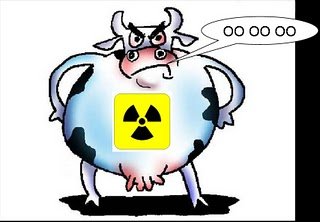
- @lillymunster I just hope these cows do not end up in the local food chain. When a stray cow is outside the hot zone, how will they know it is from the Fukushima zone?by MaryW 12/9/2011 1:04:01 AM
- @MaryW someone needs to go paint cows.... seriously.by lillymunster 12/9/2011 1:11:05 AM
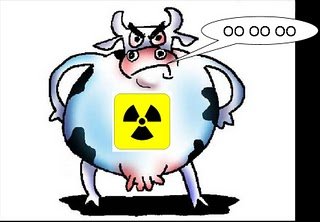 by lillymunster via 1.bp.blogspot 12/9/2011 1:12:41 AM
- Maybe the cows are headed to TEPCO's corp office to protest...by lillymunster 12/9/2011 1:13:01 AM
- @lillymunster I'm wondering if maybe these animals should be euthanized. Poor things will suffer health-related radiation conditions, even cancers.by MaryW 12/9/2011 1:13:48 AM


Japan Earthquake | Page 2754
- Who's Blogging
-
 hudebnik
 alblee
 UKVal
UKVal Oliver (ScribbleLive)
 Jonathan Keebler
 kaykodh
 PKelley
 Markfm
 Angie
Angie Deb
Deb Mid Valley
- Pedro Jesus
 Matt (ScribbleLive)
 George Gibb
 elainekirk
- lillymunster
 dean
dean bo
bo- Edano
 IanGoddard