Japan Earthquake | Page 2756
 @Edano Bill Gates profits nothing from Bill & Melinda Gates Foundation. This foundation alone is one of the biggest contributors to life-saving initiatives around the world (including Government budgets). You don't have a clue what your saying.by Pedro Jesus 12/9/2011 10:22:39 AM
- "Glaciers in retreat around the world" www.independent.co.ukby Pedro Jesus 12/9/2011 10:23:07 AM
 @Pedro Jesus your admiration for the world's richest man is heart breaking. i am quite sure his engagement in china for a super nuke reactor is purely altruistic. i cannot hold back the tears.by Edano 12/9/2011 11:55:29 AM
- @Edano You're definitely not speaking about Bill Gates are you? You should at least research a bit before spreading unfounded claims. Let's not make this website a sparring ground. Please, keep it clean. If you'd like to exchange information or discuss controversial matters, please use my personal e-mail. (jesustiger@gmail.com)by Pedro Jesus 12/9/2011 12:00:46 PM
- TEPCO to depend on foreign companies for Fukushima plant insurance
TOKYO, Dec. 9, Kyodo
Tokyo Electric Power Co. plans to seek insurance from foreign companies for its Fukushima Daiichi nuclear plant as Japanese insurers have refused to renew coverage expiring in January, industry sources said Friday.
Japanese nuclear plant operators are required to have insurance contracts with the government for accidents caused by natural disasters such as earthquakes and tsunami waves, and with private-sector insurers for other accidents. Without insurance, they would have to give the government massive deposits.
A consortium of 23 Japanese property and casualty insurers have decided not to renew their contract with TEPCO for the plant crippled by the March 11 earthquake and tsunami, prompting the utility to look for other insurers or make deposits.
If TEPCO failed to obtain insurance and to provide deposits, such operations as the extraction of nuclear fuel rods from the damaged reactors could be deemed illegal.
==Kyodo english.kyodonews.jpby Edano 12/9/2011 12:09:44 PM - Japan's reactor capacity utilization rate rebounds to 20.1% in Nov.
TOKYO, Dec. 9, Kyodo
The utilization ratio of Japan's 54 commercial nuclear reactors came to 20.1 percent in November, rebounding for the first time since the March 11 disaster crippled the Fukushima Daiichi nuclear power plant, with 10 in operation as of the end of the month, the Japan Atomic Industrial Forum said.
After falling to a record low 18.5 percent in October, the utilization ratio turned upward in November as Kyushu Electric Power Co. restarted the No. 4 reactor at the Genkai power plant in Saga Prefecture, which had been suspended in October due to a malfunction.
Equivalent data is available going back to April 1977.
The improvement is bound to be temporary, as operation of two reactors has already been suspended in December, one because for a periodic checkup and another because of mechanical trouble -- and two others are scheduled to go offline later this month for checkups.
As no reactor is expected to restart operations this month, the number of operational reactors will slide to six by the end of December, thereby pushing down the overall utilization ratio again, the organization said.
The latest data still incorporates four damaged reactors at the Fukushima plant operated by the Tokyo Electric Power Co., as their legally mandated decommissioning has not begun.
==Kyodo english.kyodonews.jpby Edano 12/9/2011 12:12:51 PM - i am sure if they find a consortium willing to insure fuku, it will be a mysterious french one. or maybe bill gates.by Edano 12/9/2011 12:14:44 PM
- TEPCO to cut costs by extra 100 bil. yen, mull sales of power plants
TOKYO, Dec. 9, Kyodo
Tokyo Electric Power Co. said Friday it has revised its cost reduction target to 2.65 trillion yen through fiscal 2020, 100 billion yen more than its initial plan, to secure funds for massive compensation payments related to the nuclear crisis at its Fukushima Daiichi power plant.
Under a so-called ''action plan'' to streamline its operations, the utility known as TEPCO will also start considering selling existing power generation facilities, although a TEPCO official said the company has not yet decided what kind of power plants would be subject to being put on sale.
An official of a state-backed entity, which is providing funds to the beleaguered utility and is involved in the creation of the action plan, said that thermal power plants may be seen as a likely option, but legal and technical issues should be cleared before doing so.
Another official of the Nuclear Damage Liability Facilitation Fund said, meanwhile, ''There are energy-related companies that are showing interest (in buying such facilities).''
The action plan put flesh on TEPCO's special business plan, in which it promised to cut more than 2.55 trillion yen in costs over 10 years by cutting corporate pension payments and other means.
In return for such pledges, the government has decided to provide to the utility about 891 billion yen from the funding entity so that the company can secure funds to deal with the compensation payments.
TEPCO said the upward revision of the cost-cutting target came after further reviewing maintenance and personnel expenses.
==Kyodo english.kyodonews.jpby Edano 12/9/2011 12:16:07 PM - UPDATE1: TEPCO to cut costs by extra 103 bil. yen, mull sales of power plants
TOKYO, Dec. 9, Kyodo
Tokyo Electric Power Co. said Friday it has revised its cost reduction target to 2.65 trillion yen through fiscal 2020, 103.3 billion yen more than its initial plan, to secure funds for massive compensation payments related to the nuclear crisis at its Fukushima Daiichi power plant.
Under its ''action plan'' to streamline operations, unveiled the same day, the utility known as TEPCO will also start considering selling existing power generation facilities, although a TEPCO official said the company has not yet decided what kind of power plants would be put on sale.
An official of a state-backed entity, which is providing funds to the beleaguered utility and was involved in the compilation of the action plan, said that thermal power plants were a likely option but legal and technical issues need to be cleared first.
Another official of the Nuclear Damage Liability Facilitation Fund said, meanwhile, ''There are energy-related companies that are showing interest (in buying such facilities).''
Selling power generation facilities is seen as a measure to help the company more efficiently implement capital investment. TEPCO would also seek to more actively buy electricity generated by other companies, such as from wholesale suppliers called Independent Power Producers.
The action plan put flesh on TEPCO's special business plan, in which it promised to reduce more than 2.55 trillion yen in costs over 10 years by cutting corporate pension payments and other means.
In return for such pledges, the government has decided to provide to the utility around 891 billion yen from the funding entity so that the company can secure funds to deal with the compensation payments.
TEPCO said the upward revision of its cost-cutting target came after further reviewing maintenance and personnel expenses. It will also seek to review its retirement benefit system during fiscal 2012 from next April.
==Kyodo english.kyodonews.jpby Edano 12/9/2011 12:16:51 PM - Nuclear agency OKs TEPCO's mid-term Fukushima plant management plan
TOKYO, Dec. 9, Kyodo
The government's nuclear safety agency determined Friday that Tokyo Electric Power Co.'s medium-term facility management plan for the crippled Fukushima Daiichi nuclear power plant is appropriate.
The Nuclear and Industrial Safety Agency plans to submit the evaluation on the management plan for the next three years or so to the Nuclear Safety Commission of Japan soon.
With the positive evaluation, the government is expected to decide that the plant has been brought under control by achieving a stable state called ''cold shutdown'' on Dec. 16 and have the utility move forward to the next stage of tackling medium-term challenges.
The utility's plan includes measures on how to inject water into reactors to maintain the plant's cold shutdown situation, as well as those to prevent a hydrogen explosion.
The agency saw the plan as appropriate for ensuring the safety of the public as well as plant workers.
Realizing a cold shutdown is the key goal of the ''step 2'' phase of the road map for bringing the nuclear crisis triggered by the March earthquake and tsunami under control. The ''step 1'' phase of stably cooling the reactors was achieved in July.
Cold shutdown is defined as a situation in which the bottom part of a reactor pressure vessel at a plant is kept below around 100 C and radiation exposure from the release of radioactive substances is significantly held down.
==Kyodo english.kyodonews.jpby Edano 12/9/2011 12:18:11 PM 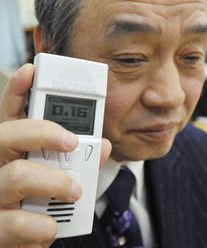
english.kyodonews.jp
Radiation detector for blind developed in Fukushima
FUKUSHIMA, Japan, Dec. 9, Kyodo
An association representing visually impaired people in Fukushima Prefecture said Friday it has developed a radiation detector that reads out results in the wake of the nuclear crisis at the Fukushima Daiichi power plant.
Measuring 12.5 centimeters long, 5.5 cm wide and 2.5 cm thick, the detector, jointly developed with a local lighting equipment maker and a sales company for radiation-related devices, can measure up to 443 microsieverts per hour, the association based in the city of Fukushima said.
The association will accept orders for the 50,000 yen detectors starting Jan. 5.
==Kyodo english.kyodonews.jpby Edano via English.kyodonews.jp 12/9/2011 12:20:56 PM- UPDATE1: Meiji ignored info on cesium-tainted baby food for 2 weeks
TOKYO, Dec. 9, Kyodo
Food maker Meiji Co. received information on three occasions in mid-November about radioactive cesium in its baby food but paid no heed to the leads for about two weeks until it finally looked into the matter when approached by Kyodo News and a citizens' group earlier this month, Kyodo learned Friday.
Meiji, which subsequently found up to 30.8 becquerels per kilogram in its Meiji Step milk powder, said it had initially concluded that ''further investigation was unnecessary'' because, of the three occasions, one was an anonymous call and the two others cited Internet information that the company was unable to confirm.
''We would like to respond with better sensitivity from now on,'' a Meiji spokesperson said.
An anonymous caller provided Meiji's customer service with information on Nov. 14 that a citizen's group in Fukushima Prefecture had detected cesium in the milk formula in late October, according to sources familiar with the matter.
On the same day, two consumers contacted Meiji saying they saw information about the suspected contamination on the Internet. They were told by the customer service that there was no problem with the product as the company conducts monthly checks, the sources said.
Meanwhile, in light of the cesium-tainted milk powder, Japanese health minister Yoko Komiyama said Friday her ministry will regularly test baby food products in connection with the Fukushima Daiichi nuclear plant crisis.
The tests will be conducted every three months or more frequently, she told a press conference.
The radioactive contamination of the Meiji product was the first found in baby food since the March 11 disaster and has attracted attention even though its level was far less than the government-set limit of 200 becquerels, amid concerns that babies are more susceptible to the harmful effects of radioactive materials than adults.
''As mothers and other consumers are very concerned (about radiation), we want to carry out regular tests,'' Komiyama said.
The ministry found no radioactive cesium when it tested 25 baby products in July and August after the earthquake and tsunami in northeastern Japan triggered the nuclear crisis.
==Kyodo english.kyodonews.jpby Edano 12/9/2011 12:22:17 PM 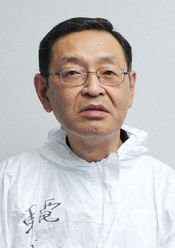
english.kyodonews.jp
Ex-Fukushima Daiichi plant chief Yoshida suffering from esophageal cancer
TOKYO, Dec. 9, Kyodo
The former chief of the troubled Fukushima Daiichi nuclear power plant, Masao Yoshida, has been diagnosed with esophageal cancer, the plant's operator Tokyo Electric Power Co. said Friday.
Tokyo Electric, known as TEPCO, also said Yoshida, 56, had been exposed to around 70 millisieverts of radiation since the start of the crisis at the plant triggered by the March 11 earthquake and tsunami, and it is unlikely his radiation exposure was responsible for his illness.
On Friday, Yoshida, who was relieved of his post on Dec. 1 for medical treatment, visited the power plant and revealed the diagnosis to its workers, TEPCO said.
Denying Yoshida's illness was related to radiation exposure, TEPCO said the latency period for esophageal cancer is at least five years.
Yoshida drew media attention following his decision to continue injecting seawater into one of the troubled reactors at the nuclear complex as an emergency step in the early days of the nuclear crisis, despite the utility's decision to suspend seawater injection.
In November, Yoshida said that after the start of the crisis he thought several times a week that he would die.
==Kyodo english.kyodonews.jpby Edano via English.kyodonews.jp 12/9/2011 12:25:36 PM- hmmm....by Edano 12/9/2011 12:27:09 PM
- esophageal cancer is usually related to excessive drinking and smoking, if you want to deny internal exposure to radiation.by Edano 12/9/2011 12:29:17 PM
- Japan gov't to regularly test baby food products for radiation
TOKYO, Dec. 9, Kyodo
Japanese health minister Yoko Komiyama said Friday her ministry will regularly test baby food products in connection with the Fukushima Daiichi nuclear plant crisis after food maker Meiji Co. detected radioactive cesium in its baby formula.
The tests will be conducted every three months or more frequently, she told a press conference.
The radioactive cesium level in Meiji's baby formula was limited to 30.8 becquerels per kilogram, far less than the allowable ceiling of 200 becquerels as set by the government provisionally.
''As mothers and other consumers are very concerned (about radiation), we want to carry out regular tests,'' Komiyama said.
The ministry found no radioactive cesium when it tested 25 baby products in July and August after the March 11 earthquake and tsunami in northeastern Japan triggered the nuclear crisis.
==Kyodo english.kyodonews.jpby Edano 12/9/2011 12:30:42 PM - UPDATE1: Japan's parliament OKs nuclear accords with 4 countries
TOKYO, Dec. 9, Kyodo
Japan's parliament approved on Friday bilateral civilian nuclear cooperation accords signed with Jordan, Russia, South Korea and Vietnam before the Fukushima disaster.
Approval by the opposition-controlled House of Councillors, with 183 votes in favor in the 242-seat chamber, paves the way for Japan to export its nuclear technology to the four countries.
The accords will take effect as early as next month because the necessary domestic procedures for them in the four countries have already been completed.
There have been persistent concerns about the safety of atomic energy in the wake of the nuclear accident at the Fukushima Daiichi power plant in the immediate aftermath of the March 11 earthquake and tsunami. Some ruling party lawmakers abstained from voting.
Lawmakers put parliamentary deliberations on the four nuclear accords on hold after the accident. But Prime Minister Yoshihiko Noda, who came to office in September, and other senior government officials said the accords should become effective as long as the four countries still want Japan's cooperation.
Noda also said Japan should avoid damaging diplomatic ties with the four countries as they have been waiting for the Diet to approve the agreements.
Japanese companies hope to export nuclear power plants to Jordan and Vietnam, and reactor parts to South Korea. Russia could give Japan access to a stable supply of nuclear reactor fuel.
Japan concluded bilateral nuclear accords with seven countries -- Australia, Britain, Canada, China, France, Kazakhstan and the United States -- and the European Atomic Energy Community.
Before the nuclear accident, the worst since Chernobyl, the government led by the Democratic Party of Japan regarded exporting the country's nuclear technology, especially to fast-growing economies, as one of the most promising ways to generate economic growth.
Foreign Minister Koichiro Gemba said Japan is still hoping to conclude a bilateral pact on peaceful nuclear energy cooperation with countries that the government began talks with before the Fukushima disaster, including Brazil, India and Turkey.
==Kyodo english.kyodonews.jpby Edano 12/9/2011 12:31:37 PM - Some Fukushima residents exposed to up to 37 millisieverts of radiation
FUKUSHIMA, Japan, Dec. 9, Kyodo
Residents in three municipalities near the crisis-hit Fukushima Daiichi nuclear power plant have been exposed to up to some 37 millisieverts of radiation during the four months after the powerful earthquake and tsunami on March 11 crippled the plant, Fukushima prefectural government officials said Friday.
The local government worked out the estimated dose of exposure after conducting health checks on about 1,730 of the 29,000 residents in the towns of Namie and Kawamata and the village of Iitate in Fukushima Prefecture, who filed their behavioral records during the four months. The average dose is estimated at just above 1 millisievert.
It calculated the radiation dose for residents, based on levels in the air measured by the Ministry of Education, Culture, Sports, Science and Technology and by the ministry's radiation projection system, called the system for predicting environmental emergency dose information, or SPEEDI, which is operated by the Tokyo-based Nuclear Safety Technology Center.
The Fukushima Medical University said about half the 1,730 residents have been exposed to less than 1 millisievert, the maximum limit of radiation exposure per year in normal times, during the four months.
The remaining half has been exposed to more than 1 millisievert. Of those, some 40 people were exposed to 5 to 10 millisieverts. Nearly a dozen people were exposed to more than 10 millisieverts and the highest level was about 37 millisieverts.
The doses do not include natural radiation or from internal exposure.
Those who were exposed to high levels of radiation included people who worked at the Fukushima Daiichi power plant to contain the crisis.
None of the residents have been exposed to more than 100 millisieverts -- a level that poses high health risks, they said.
The Fukushima prefectural government conducted health checks on some 29,000 residents in the three municipalities, which are close to the nuclear power plant and are designated as evacuation zones.
The local government is continuing to conduct health checks on all the residents in Fukushima Prefecture, a population of some 2 million.
It is also using whole body counters and conducting urine tests to measure internal radiation exposure on people who spend long hours outdoor, such as farmers and construction workers, as well as on children and mothers who were evacuated from the no-entry zone in the 20-kilometer radius from the crippled power plant.
==Kyodo english.kyodonews.jpby Edano 12/9/2011 12:32:59 PM - @Edano I would say, dismissing the fact that it is biologically unlikely Mr Yoshida's cancer is related to exposure since the March 2011 accident doesn't necessarily dismisses the possibility that it might have been caused by exposure sustained from previous Fukushima-Daiichi emissions that haven't been made public throughout the years. But it's easier to blaim the sake.by Pedro Jesus 12/9/2011 12:36:29 PM
- "Those who were exposed to high levels of radiation included people who worked at the Fukushima Daiichi power plant to contain the crisis."
this "study" is quite odd, isn't it ? it does not seem plausible.by Edano 12/9/2011 12:37:45 PM - @Edano I
would emphasize the """study""" bit. I don't buy it either.by Pedro Jesus 12/9/2011 12:39:30 PM - @Pedro Jesus if he is not a heavy drinker and smoker, what we don't know, then they would have to find a plausible cause for his type of cancer. anyway, it is a typical type from internal exposure.by Edano 12/9/2011 12:39:57 PM
- @Edano I totally agree with your analysis.by Pedro Jesus 12/9/2011 12:41:14 PM
 With all of the sudden onset cancers going on it is a bit concerning. Yes, normal latency is years. But there have been 2 publicized cases of acute leukemia in older men and lots of mentions of others or similar sudden illness. So either lots of Japanese adults have had brewing health problems suddenly catch up to them or there is the potential of seeing something new going on. Is there a way the exposures could set an existing problem into high gear?by lillymunster 12/9/2011 12:42:07 PM
- kyodo is quite busy lately.by Edano 12/9/2011 12:42:13 PM
- @lillymunster as pedro says, there were other incidents before fukushima. maybe this guy was in charge of tokai mura at that time. who knows.by Edano 12/9/2011 12:44:19 PM
- It sounds like he worked at Fuku for a while. Likely a career nuke worker if he is director of the plant. Fuku has the worst exposure rates of any Japanese nuke plant.by lillymunster 12/9/2011 12:47:02 PM
- Up to 1 million people could get compensation ajw.asahi.comby lillymunster 12/9/2011 12:49:48 PM
- i don't think the 5 years latency is correct. if he is in a very beginning stage, it can be much shorter.by Edano 12/9/2011 12:50:44 PM
- usually the diagnosis comes very late, but as a rad worker, it may have been found quite early.by Edano 12/9/2011 12:52:46 PM
- @Edano I am at a loss for a factor that could cause sudden onsets or to accelerate cancer. They see pretty short latency in rats but I don't know how those rates are vs human incubation. The US tests on MOX didn't indicate any difference in rates vs. uranium or plutonium alone. The only unique factors is Fuku itself vs Chernobyl as the next closest accident.by lillymunster 12/9/2011 12:54:32 PM
- @Edano Indeed, from what I've read, early prognosis can be made as early as a couple of years after the onset of that type of cancer.by Pedro Jesus 12/9/2011 12:54:50 PM
- Could hydrazine add to the health problems?by lillymunster 12/9/2011 12:56:34 PM
- @lillymunster Well, there is a lot of controversy around that matter. For example, (forgive me, Edano, for mentioning this) the controversial hormetic principle has been directly observed in lab rats experiments but never in humans.by Pedro Jesus 12/9/2011 12:57:26 PM
- @lillymunster there is definitely a lack of knowledge. there are not many human cases, and the animal experiments are not sufficient.by Edano 12/9/2011 12:57:43 PM
- UPDATE2: Japan whale research group seeks court order against Sea Shepherd
TOKYO, Dec. 9, Kyodo
A Japanese whale research group filed a lawsuit with a U.S. federal court on Thursday against the Sea Shepherd Conservation Society and its founder Paul Watson, demanding they be ordered to cease disrupting its whaling activities.
The Institute of Cetacean Research and another plaintiff, Kyodo Senpaku Kaisha Ltd., are seeking a court order to prevent Sea Shepherd and Watson from ''engaging in activities at sea that could cause injuries to the crews and damage to the vessels,'' the research group said in a statement.
Japan's whaling missions, conducted by the institute as part of what it calls research whaling, have often been obstructed by the U.S.-based conservation group, including a high-profile collision in Antarctic waters in January 2010 between the society's speedboat and a Japanese whaling fleet.
Kyodo Senpaku is commissioned to operate the Japanese government's whaling fleet and owns the whaling ships.
The suit, filed together with a request for a provisional injunction at the U.S. District Court in Seattle, also demands that the protesters' ships be kept at a certain distance from the whaling fleet, the research group said. Sea Shepherd is based in the state of Washington.
Criticizing the sabotage activities as ''dangerous'' and ''life threatening,'' the plaintiffs allege that the conservation group's actions violate international laws on maritime safety.
Watson's response suggested the group will continue its activities, by saying the allegations were ''frivolous.''
''I don't think they have any credibility when they get into a U.S. court on this,'' Watson said in a telephone interview with Kyodo News.
''We're not really worried about the lawsuit. What I'm focused on is going down and making sure they don't kill any whales down in the Southern Ocean.''
In the joint statement, the plaintiffs also said the obstruction activities ''not only put at risk the safety of the research vessels at sea, but are also affecting the scientific achievement'' of Japan's ''legitimate'' whale research program in the Antarctic.
Sea Shepherd's protests have escalated in recent years and included pointing laser beams at the fleet's crew, hurling bottles containing butyric acid at the Japanese vessels, and intentionally closing in on the fleet with its ships.
''I will watch over how things will develop,'' Forestry and Fisheries Minister Michihiko Kano told a news conference. ''I'm hoping that they will stop the sabotage activities.''
Japan halted commercial whaling in 1986 in line with an international moratorium, but has hunted whales since 1987 for what it calls scientific research purposes. Environmentalists have condemned the activity as a cover for commercial whaling.
Japan placed Watson on an international wanted list through the Lyon-based Interpol in June last year.
==Kyodo english.kyodonews.jpby Edano 12/9/2011 12:59:04 PM - The MOX tests in rats and beagles didn't show a difference in the combination but the over exposed group had higher mortality. They accidentally dosed one group of rats more than they should have been. That group had rapid problems . Will dig up the study again in a minute.by lillymunster 12/9/2011 12:59:24 PM
english.kyodonews.jp
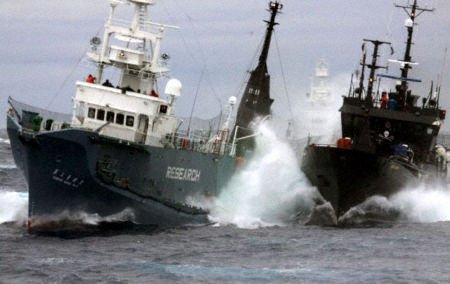
Sea Shepherd vessel in Antarctic Sea
Supplied file photo shows Sea Shepherd Conservation Society ship Bob Barker (R) colliding with the Yushin Maru No. 3, a Japanese whaling ship, in Antarctic waters in February 2010 to obstruct so-called scientific research whaling by a Japanese fleet. The Institute of Cetacean Research and Kyodo Senpaku Kaisha Ltd., which is commissioned to operate the Japanese government's whaling fleet and owns the whaling ships, announced Dec. 9, 2011, that they have filed a lawsuit with the U.S. District Court in Seattle against Sea Shepherd and its founder Paul Watson seeking a court order to cease disrupting Japanese whaling activities. (Photo courtesy of the Institute of Cetacean Research)(PHOTO NOT FOR SALE)(Kyodo) english.kyodonews.jpby Edano via English.kyodonews.jp 12/9/2011 1:01:58 PM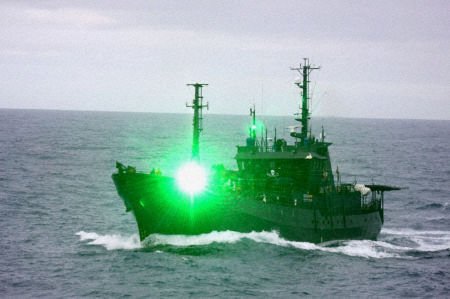
english.kyodonews.jp
Sea Shepherd vessel in Antarctic Sea
Supplied file photo shows a vessel of the Sea Shepherd Conservation Society beaming laser light toward the Japanese ship Nisshin Maru in Antarctic waters in February 2010 to obstruct so-called scientific research whaling by a Japanese fleet. The Institute of Cetacean Research and Kyodo Senpaku Kaisha Ltd., which is commissioned to operate the Japanese government's whaling fleet and owns the whaling ships, announced Dec. 9, 2011, that they have filed a lawsuit with the U.S. District Court in Seattle against Sea Shepherd and its founder Paul Watson seeking a court order to cease disrupting Japanese whaling activities. (Photo courtesy of the Institute of Cetacean Research)(PHOTO NOT FOR SALE)(Kyodo) english.kyodonews.jpby Edano via English.kyodonews.jp 12/9/2011 1:02:50 PM- very good, very creative.by Edano 12/9/2011 1:03:29 PM
- Also experiment results can vary with the kind of rats used in the lab. There is at least one species of albino rat that is immune to ionizing radiation up to a certain level of exposure. It never develops any type of cancer.by Pedro Jesus 12/9/2011 1:05:33 PM
- oooh nhk has the same bunch of news today....by Edano 12/9/2011 1:06:43 PM
- Ex-Fukushima plant chief has esophageal cancer
Tokyo Electric Power Company says the former head of the disaster-stricken Fukushima nuclear power plant has been diagnosed with esophageal cancer. The company quotes his doctor as saying it is very unlikely that his disease was caused by radiation exposure.
Masao Yoshida had led the efforts to stabilize the plant after the severe accident triggered by the March 11th earthquake and tsunami. The company relieved him from his post of plant chief on Thursday last week, one week after he was admitted to hospital.
On Monday last week, the firm announced his hospitalization but did not reveal his disease or how much radiation he had been exposed to while he was in charge of the operation to bring the plant under control. The company cited the 56-year-old former plant chief's need for privacy.
On Friday, Tokyo Electric announced that it had obtained Yoshida's consent to disclose that he has esophageal cancer.
It said he had been exposed to accumulated radiation doses of about 70 millisieverts. The upper limit for plant workers during any emergency is 100 millisieverts.
Quoting experts' views, the utility said it takes at least 5 years for people to develop this type of cancer and the chances are slim that Yoshida's disease is linked to his exposure to radioactive fallout from the nuclear accident.
Yoshida reportedly visited the Fukushima plant on Friday to explain his illness to the workers there.
Friday, December 09, 2011 13:25 +0900 (JST)
www3.nhk.or.jpby Edano 12/9/2011 1:07:18 PM - TMI disaster could help Fukushima mdn.mainichi.jpby lillymunster 12/9/2011 1:10:11 PM
- Panel to study easing US beef import restrictions
Japan's health ministry says it will ask a government panel to study easing restrictions on US beef imports. The restrictions were imposed as a precaution against BSE, or mad cow disease.
Japan limits imports of US beef to meat from cattle aged 20 months or younger that have had their brains and spinal cords removed. Pathogens that cause BSE are known to accumulate in these body parts.
The health ministry is considering raising the age limit to 30 months or younger, in line with international standards. It decided on Friday to ask the Food Safety Commission to study how far the restrictions can be eased without risking safety.
Japan banned imports of all US beef in 2003 following a case of BSE in the US.
In 2005 Japan started beef imports from cattle aged 20 months or younger from the US.
There have been no reported cases of BSE in the US over the past 4 years, and incidences of the disease have also plunged worldwide.
The health ministry says it is also planning to ease restrictions on beef imports from Canada, the Netherlands and France.
The Food Safety Commission is expected to report its findings as early as the middle of 2012.
The commission will also study relaxing beef inspection standards for local governments in Japan. No case of BSE has been confirmed in the country since early 2009.
Friday, December 09, 2011 19:11 +0900 (JST)
www3.nhk.or.jpby Edano 12/9/2011 1:11:48 PM


Japan Earthquake | Page 2756
- Who's Blogging
-
 hudebnik
 alblee
 UKVal
UKVal Oliver (ScribbleLive)
 Jonathan Keebler
 Matt (ScribbleLive)
 kaykodh
 PKelley
 Markfm
 dean
dean Angie
Angie- Edano
 Deb
Deb Mid Valley
 Pedro Jesus
 George Gibb
 elainekirk
- lillymunster
 bo
bo IanGoddard