Japan Earthquake | Page 757
 Added all to the wiki for now fukushimafaq.wikispaces.comby Nancy 4/19/2011 1:49:41 AM
 @Nancy Well I have one on egnyte besides this domain server. I'm going to link them together. But it's only a day old and I need to do some work and shake off some rust. I used to know how to do all this but for some reason, I don't retain it very well. My brother said it's because I probably don't really like it:( My brother, I swear)by Jim Carver 4/19/2011 1:50:39 AM
- @Jim Carver LOL. If you get stuck on something let me know. I might have an answer. I just made a folder on my web space with godaddy for fukushima stuff and dump it in there. I really need to do some organizing and an interface for it.by Nancy 4/19/2011 1:51:53 AM
 Japan Nuclear Agency: Reactor Building No. 4's Basement Filled With Five Meters Of WaterTOKYO -The water in the basement of the No. 4 reactor building at the Fukushima Daiichi nuclear power plant is now five meters deep following frequent water-spraying with outside equipment to cool its spent fuel pool, the Japan Nuclear and Industrial Agency said Monday.The No. 4 reactor was not operating at the time of the March 11 earthquake and tsunami and there were no fuel rods in use, therefore there is no risk of overheating, unlike units Nos. 1-3. "Removing water from the No. 4 reactor building is not high on our priority list," said Hidehiko Nishiyama, spokesman and deputy director general of the agency. However the spent fuel rods being held in a pool near the top of the unit has been an ongoing concern, prompting officials to pour water through the damaged roof into the pool in order to avoid overheating. The roof was damaged by a hydrogen explosion.
It was the first time that the agency released the extent of flooding in any of the reactor buildings. The flooding situation in the Nos. 1-3 reactor buildings is not known, Nishiyama said. The agency previously disclosed that there is about a meter of water in the basements of reactor Nos. 1-3's turbine buildings. Nishiyama also said the basement of the turbine building of the No. 4 reactor also has about a meter of water.
www.foxbusiness.comby Sinthia Domina 4/19/2011 1:52:13 AM- I thought about trying to clean up that drawing but anything I would do to the lines and text would also make the smudges worse.by Nancy 4/19/2011 1:56:32 AM
Japan bars officials from utility jobs
By Michiyo Nakamoto in Tokyo
Published: April 18 2011 13:20 | Last updated: April 18 2011 13:20
Japan will restrict senior industry regulators from taking jobs at power companies, in response to criticism that the practice compromised safety and contributed to the country’s worst ever nuclear accident.
Yukio Edano, chief cabinet secretary, said the government would ask senior bureaucrats at the ministry of economy, trade and industry, which regulates the electricity sector, to temporarily refrain from taking posts at power companies “in order not to raise the public’s suspicions”.Please respect FT.com's ts&cs and copyright policy which allow you to: share links; copy content for personal use; & redistribute limited extracts. Email ftsales.support@ft.com to buy additional rights or use this link to reference the article - www.ft.com
The decision follows widespread public criticism that the regulator’s close ties with Tokyo Electric Power prevented it from properly regulating the operator of the Fukushima Daiichi nuclear power plant, which was crippled by the March 11 earthquake and tsunami and has leaked radioactive material into the atmosphere and sea.
Although it is only a request, the government expects the officials to avoid a practice that is known in other countries as the “revolving-door”, with senior officials leaving government to take up better-paid jobs in the industry they have previously regulated.
The government said that once the situation at Fukushima Daiichi was under control, it would launch a more exhaustive review of Japan’s nuclear power industry and how it is monitored. But to restore public confidence, Mr Edano said it was essential to immediately put a block on senior bureaucrats from taking jobs at electric power companies.Please respect FT.com's ts&cs and copyright policy which allow you to: share links; copy content for personal use; & redistribute limited extracts. Email ftsales.support@ft.com to buy additional rights or use this link to reference the article - www.ft.com
“Regarding the fact that Tokyo Electric Power has employed [senior officials] from Meti [in the past], we will ask senior bureaucrats at Meti, including those from the nuclear industry safety agency and the energy and natural resources agency, to refrain from taking on jobs at power companies in order not to raise the public’s suspicions,” Mr Edano said.
Meti said it was not aware of how many former staff had joined electric power companies after retiring but Tetsu Ishida, a former head of the energy and natural resources agency, triggered controversy when he became an adviser to Tepco earlier this year. www.ft.comby Sinthia Domina 4/19/2011 2:02:06 AM- U.S. Embassy stops distributing iodide pills to citizens in Japan
Stars and Stripes
Published: April 18, 2011
CAMP FOSTER, Okinawa — The U.S. Embassy in Tokyo is no longer supplying potassium iodide to U.S. citizens as a precautionary measure in the wake of Japan’s nuclear crisis.
The embassy had offered the tablets, used to treat radiation poisoning, to Americans who were worried and could not get doses from employers or elsewhere. But it had warned against taking the medicine because of health risks and stopped providing the pills on Friday because there is no significant danger of radiation outside a 50-mile radius of the crippled Fukushima Dai-ichi nuclear reactors, according to the embassy.
“We do not recommend that anyone should take [potassium iodide] at this time. There are [health] risks associated with taking (the tablets),””the embassy said in an announcement on its website. “It should only be taken on the advice of emergency management officials, public health officials or your doctor.”
The medicine can damage the thyroid gland, especially in newborn infants, and produce side effects that include an upset stomach, severe allergic reactions, rashes, and inflammation of the salivary glands, according to the Centers for Disease Control and Prevention.
From staff reports www.stripes.comby Sinthia Domina 4/19/2011 2:09:45 AM - Nuclear Equipment Heading To Japan
By Noel Brown
Updated: 7 hours ago
AUGUSTA, Ga. —
Workers at the Savannah River Site near Augusta are preparing to send equipment to Japan that could help stabilize the country’s tsnumai-damaged nuclear reactors. The shipment will include materials for treating radioactive water.
Thousands of dollars of nuclear equipment at the Savannah River Site near Augusta is nearly ready for shipment to Japan.
Officials with the U.S. Department of Energy say it will help the country deal with radiation leaking from its tsunami-damaged Fukushima Nuclear Plant.
The shipment includes stainless steel tanks that can store thousands of gallons of radioactive liquid. Another item is a mobile lab fitted with sensors that test water for contamination says SRS spokesman Jim Giusti. "The equipment is used to monitor water or any type of liquid to be able to determine what contaminants are in it," says Giusti. "We’re shipping that to Japan so that they can use it any way they need to in the recovery of the reactor or the site around the reactor."Giusti says the equipment will likely be making a one-way trip.
"It’s surplus to the site [and] we don’t need it for our operations so we’re going to give it to the Japanese with the assumption that it would not come back to us, " says Giusti.
The transfer is a diplomatic exchange between governments.
No definite schedule has been set for the shipment. www.gpb.orgby Sinthia Domina 4/19/2011 2:13:34 AM - That revolving door between METI and TEPCO is interesting, also the note about it being related to TEPCO's failings.by Nancy 4/19/2011 2:17:52 AM
 @Sinthia Domina There's corium sitting on the drywell of at least one reactor, and they stopped giving potassium iodide?by Bobby1 4/19/2011 2:28:23 AM
 To review: NISA and Japan's Nuclear Safety Commission (NSC) estimate that 370,000 - 630,000 terabecquerels of radioactive materials have been released from Units 1, 2 and 3. One terabecquerel equals one trillion becquerels.
www.indybay.orgby Rob in SF 4/19/2011 2:41:41 AM- TEPCO aims to bring the crippled reactors to a stable condition known as a "cold shutdown"--a situation in which water temperatures inside the reactors are stabilized below 100 C--within six to nine months.
It will take this amount of time to achieve cold shutdown because the reactors, fuel rods and containment vessels are all in terrible conditions, experts said.
Under the timetable, the water-filling operation for the Nos. 1 and 3 reactors requires three months for completion. As for the No. 2 reactor, TEPCO is aiming to finish related work within six to nine months because it is also necessary to repair the damaged pressure suppression chamber.
Each containment vessel has a water capacity of about 6,000 to 7,400 tons. Experts have pointed out risks such as the vessels breaking down after being loaded with such an enormous amount of water or being unable to withstand a series of aftershocks.
www.yomiuri.co.jpby Rob in SF 4/19/2011 2:48:17 AM - Evacuation subsidy limited / System's narrow scope penalizes families by separating them
I find the Daily Yomiuri is providing some of the best domestic journalism. (As far as what I can read...) www.yomiuri.co.jpby Rob in SF 4/19/2011 3:09:03 AM - Hoya sea squirt and coho salmon farms in the Sanriku region of Iwate and Miyagi prefectures, which account for more than 95 percent of their respective markets in this country, were destroyed by the colossal tsunami that followed the Great East Japan Earthquake. www.yomiuri.co.jpby Rob in SF 4/19/2011 3:14:02 AM
- N-policy to be verified
When asked what specific issues were to be verified, Kan said, "The issue of the spent fuels being stored as they were [in the pool inside the reactor building], without there being a proper, systematic framework in place with regard to such issues as the nuclear fuel cycle and final disposal site." www.yomiuri.co.jpby Rob in SF 4/19/2011 3:22:25 AM - Seawater radiation checks off N-plant to be widened
Seawater checks near the coastline have proved insufficient, TEPCO said. The company has been checking seawater at 10 checking points, with six located about 15 kilometers off the coast. The other four are located very close to shore, including one near the plant's south drain outlet. The Education, Culture, Sports, Science and Technology Ministry is also checking seawater, but at about 30 kilometers off the coast. www.yomiuri.co.jpby Rob in SF 4/19/2011 3:28:31 AM - Japan Poll: 41% want nuclear power generation reduced or stopped www.asahi.comby Rob in SF 4/19/2011 3:50:20 AM
- According to TEPCO, the No. 4 reactor's fuel storage pool is vulnerable to earthquakes because of damage to the lower sections of the walls of the reactor building that support the pool.
In the first step, concrete supports will be installed at the bottom of the storage pool to bolster its anti-quake strength. The cracks in the lower parts of the walls will also be sealed.
TEPCO said it cannot yet tell when work can begin on anti-quake reinforcements.
In the road map's second step, a circulating cooling system will be restored while water trucks are deployed to pour water into the pool.
Over the midterm, TEPCO hopes to remove fuel rods from the pool, but specific methods to safely remove and store the damaged fuel rods have yet to be worked out.
The road map also aims to contain the release of radioactive materials into the atmosphere and the ocean.
In the first step, tanks and other facilities will be installed to store highly radioactive water found in the basements of the turbine buildings and outdoor trenches.
In the second step, the reactor buildings will be covered with special sheets. www.asahi.comby Rob in SF 4/19/2011 4:07:56 AM  www.meti.go.jp pretty diagrams on page 3 concerning transfer of highly radioactive water.by gabe 4/19/2011 4:28:23 AM
- www.meti.go.jp R! looking much better, but R2 and 3 temps are up a bit each day.by gabe 4/19/2011 4:30:28 AM
- www.yomiuri.co.jp The workers need water too?by gabe 4/19/2011 4:32:02 AM
 @Rob in SF So isn't this the one they just filled with 5m of water? Damage to the lower walls???
Jeeze. When TEPPYCO does joke day they really run with it.by radioguy 4/19/2011 4:32:08 AM To @Nancy, @Jim Carver, @Markfm et al, I'm not surprised we each have our own Fukushima dossiers of news/tech text, pdf, jpgs and such residing on each our own online/offline storage.
Might it be wise to start this early on a document management initiative, with help from an information architect or library science type, to try and collate all these stuff in one coherent freeform (preferably online) database, ala an askSAM-like or some such database animal, in the interest of sane information retrieval purposes for everybody? We could probably devise a system of "shoveling" stuff to our designated knowledgebase maintainer. If needed, perhaps we could all coordinate to contribute materially toward this initiative. Me thinks @Jim_Carver's 10GB is a good start, but we'pdfs\filename.pdf (for the file name) if you go to that link then it will open or
> ask to download the pdf. You don't need to make an html page to link to it.
.by ALBLEE edited by alblee 4/19/2011 4:35:09 AM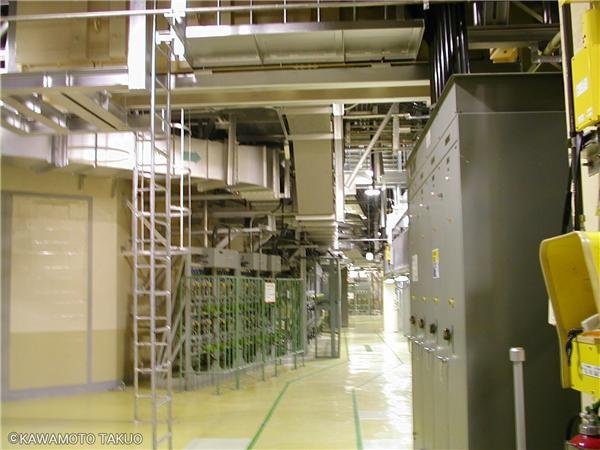
farm6.static.flickr.com @radioguy Imagine the mess down there...
by Rob in SF via Farm6.static.flickr 4/19/2011 4:38:44 AM Old pics but some are new to me.I Know new angles might be helpful- please edit if already noted. www.dailymail.co.ukby ch 4/19/2011 4:39:13 AM
- There's a new Gundersen video. www.fairewinds.comby Scilla. 4/19/2011 5:03:19 AM
 @Scilla. Thanks for the Fairwinds update. The discussion about Bq levels in the SFP at #4 and the TEPCo explanation vs. the self-sustained criticality explanation was enlightening.by Reed 4/19/2011 5:21:45 AM
 @Scilla. @Reed Jow's this for nerve= I emailed him what I think is hapening in Unit 1. A LOCA steam condensation phenomena....yikes! I wish I could call it backby marie rich 4/19/2011 5:45:01 AM
 @Marie You go girl! He's using the graphs from the physics forum, so you never know. I disagree with his assessment of #3, and I'm surprised he hasn't noticed the nearly identical correlation of #2's readings with #3's. Beginning before the explosions and continuing. If #3 were intact, it would show positive pressure from water+fuel rods=steam=pressure: IF the RPV and CV are intact.by Bev 4/19/2011 5:52:16 AM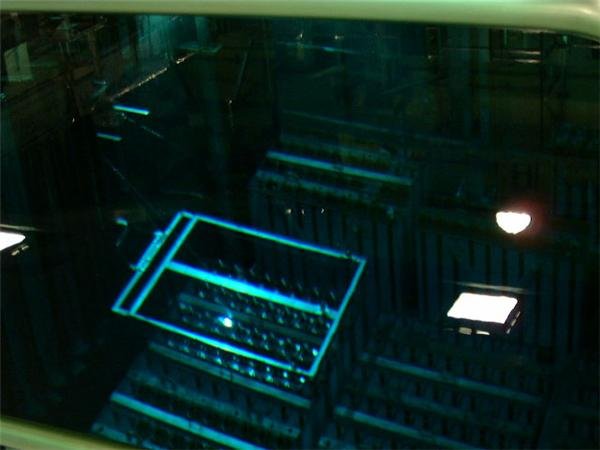
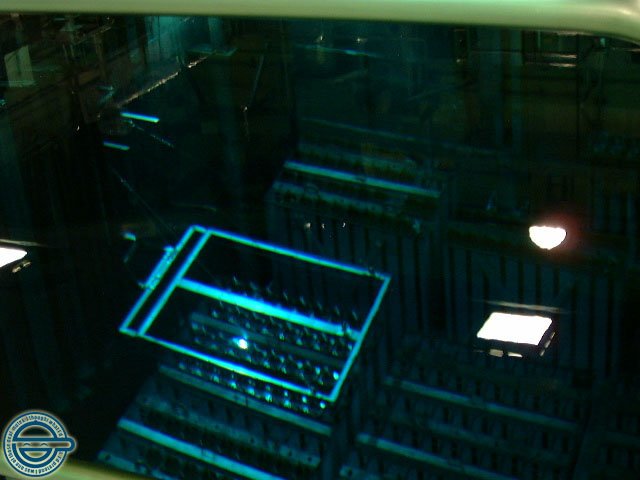
2 layers of fuel, noe great idea... www.houseoffoust.com
by xxx via Houseoffoust 4/19/2011 6:14:05 AM- Gunderson really tore at Tepco. He used their own arguments against them. Also suggests that if we use common sense we can really decipher that all TEPCO is saying is BS :)by Optim 4/19/2011 6:30:14 AM
Unit 4 from the 4/15 flyby for nostalgia...
by Rob in SF 4/19/2011 6:32:37 AM Gunderson really nails it when he points out the roof was on #4 for a substantial period of time after the explosions at 1-3. There is one point he missed, however. Even if TEPCO were correct about rain deposition of gaseous iodine in the SPF of #4, there's been a constant drainage of water from that pool other than boiling off (deduced by the fact its water level fell far faster than would be expected by heating alone). This means that, if anything, the water has become diluted since it was contaminated. Therefore, the current measurements likely underestimate the previous level of contamination.by Hank Scorpio 4/19/2011 6:47:29 AM
- The part that doesn't make any sense is that the cesium levels were on par with the iodine levels. The only way that's possible is if the reaction were recent. One would rationally expect that since cesium has a far longer half life, it wouldn't have broken down at nearly the same rate as iodine. IIRC, we find the opposite. My recollection is the numbers indicate iodine in a greater or equal quantity to cesium. The only way such numbers are possible is if there's been a recent criticality.by Hank Scorpio 4/19/2011 6:53:42 AM
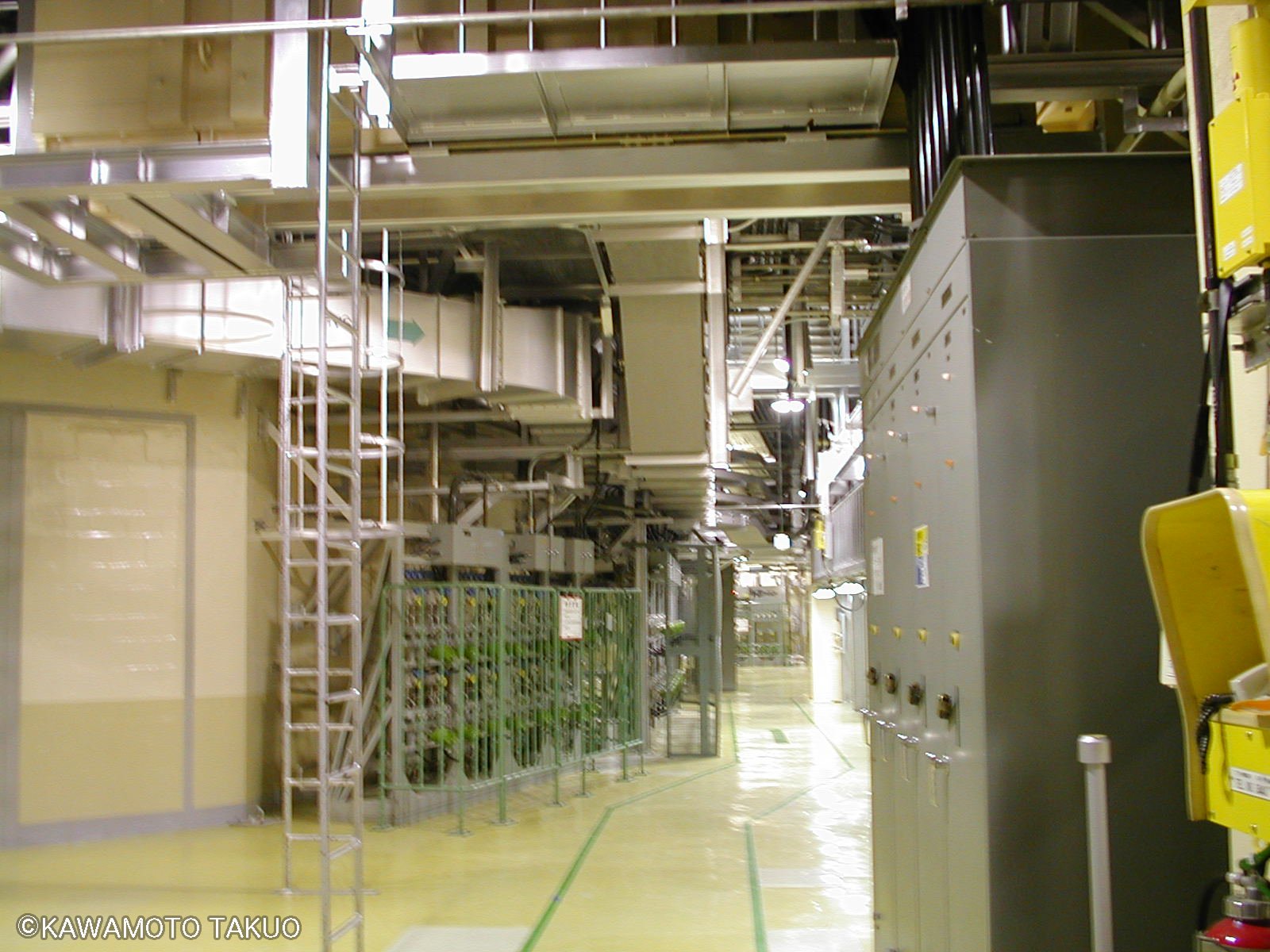
- New photos of the interiors of R1 - 3 via robot. www3.nhk.or.jpby gabe 4/19/2011 6:54:21 AM
- I still can't believe that TEPCO hasn't figured out there is something really wrong with the containment's in the reactor yet. Despite all the tones of water that they are pouring in those things they have yet to fill them up, in fact the water levels have mostly stayed the same, in the minus levels, for weeks now.by wtm 4/19/2011 6:56:20 AM
- According to TEPCO, radioactive iodine-131 amounting to 220 becquerels per cubic centimeter, cesium-134 of 88 becquerels and cesium-137 of 93 becquerels were detected in the pool water. - My take: The fission has to be recent for that ratio of I-131 to C-137. If the reaction that caused this contamination happened a month ago, the iodine levels would be below the cesium levels.by Hank Scorpio 4/19/2011 7:02:31 AM
- @Hank Scorpio Good you are still around, no one here would be happy unless there is a full catastrophic meltdown so we can all have a round of self-congratulatory pats on the back...You were one of the first to realize this early on. P.S. you are likely correct about the recent fuel damage.by gabe 4/19/2011 7:04:42 AM
- Just looked at the #1 readings again, notice that the PV and the drywell are both the exact same pressure readings, and have held steady that way for a while. They are breached !!!by wtm 4/19/2011 7:05:34 AM
- @wtm - I could be wrong, but I don't believe it's possible for the pressure of the RPV to get as high as #1's is unless there's full containment.by Hank Scorpio 4/19/2011 7:07:16 AM
- @wtm #1 is holding pressure, which has been on the rise the past week or so.by gabe 4/19/2011 7:07:31 AM
- @Gabe, Hank, The RPV maybe holding pressure, but both the CV and Drywell are the exact same pressures, and they have been that way for awhile, only way to have that stay constant is for a breach between the two. The Drywell might still be holding pressure to the outside, and the RPV is still holding. My bet is that it is either damage from the hydrogen explosion, or quake damage.by wtm 4/19/2011 7:11:31 AM
- @wtm - Looking at fukushimadatapage.com the history shows both wetwell and drywell pressures relatively corresponding to eachother regardless of when they were high or low.by Hank Scorpio 4/19/2011 7:13:36 AM
- @Hank, that is why I am saying they are breached to each other.by wtm 4/19/2011 7:14:18 AM
- @wtm - I suppose that's a possibility since I admittedly am not an expert on what they should be under normal conditions. That being said, there's a big difference between that and an overall containment breach. I wouldn't consider it a very serious problem, and certainly not moreso than the rising pressure of the RPV.by Hank Scorpio 4/19/2011 7:16:04 AM
Japan Earthquake | Page 757
- Who's Blogging
-
 hudebnik
 alblee
 UKVal
UKVal Oliver (ScribbleLive)
 Jonathan Keebler
 kaykodh
 PKelley
 Markfm
 Angie
Angie Deb
Deb Mid Valley
- Pedro Jesus
 Matt (ScribbleLive)
 George Gibb
 elainekirk
 lillymunster
 dean
dean bo
bo Edano
Edano IanGoddard