Japan Earthquake | Page 837
 Philanthropist Turns Energy Activist
Under Mr. Son’s plan, the foundation will seek advice from the world’s top 100 scientists, passing on suggestions to the government on natural energy sources such as solar, wind and geothermal power. Mr. Son also unveiled a project to develop a so-called “Eastern Japan Solar Belt” that would double up as a reconstruction scheme for the tsunami-stricken areas. According to Mr. Son, power plants using natural energy sources, if built on the devastated areas, would create more jobs and boost the community.
blogs.wsj.comby Rob in SF 4/25/2011 9:08:50 AM- Heat exchanger for No1 reactor
To avoid the risk of further damage from possible aftershocks TEPCO is favoring the water system.
It says the pipes which connect the containment vessel and the heat exchanger must be quake protected. In addition, radioactive substances must be removed before pouring contaminated water into the heat exchanger.
These tasks should be done inside the nuclear reactor building but as the level of radioactivity is too high for human entry, many problems remain before the heat exchanger can be set up.
www3.nhk.or.jpby Rob in SF 4/25/2011 9:14:24 AM - Tokyo Electric Power Company, or TEPCO, says it will inject 210 tons of water into the pool on Monday, after finding on Sunday evening that the temperature in the pool had risen to 81 degrees Celsius.
On Friday, TEPCO found that the pool's temperature had reached 91 degrees, so it began injecting 2 to 3 times the amount of water.
The operator says the water level in the pool was 2.5 meters lower than normal after 165 tons of water were injected on Sunday. It is carefully monitoring the water level and temperature to avoid further troubles. www3.nhk.or.jpby Rob in SF 4/25/2011 9:17:50 AM  I have posted the TEPCO road maps to the news Wiki pages at fukushimafaq.wikispaces.comby hudebnik 4/25/2011 9:18:30 AM
- Tokyo Electric Power Company is rewiring the power grid at its Fukushima Daiichi nuclear plant to secure the electricity supply in case of another strong quake.
The plant's 6 reactors are now connected in pairs to external power sources. TEPCO began connecting the cables for the No.1 and No.2 reactors with the grid for the No.5 and No.6 reactors on Monday.
This is to ensure that if any one of the 3 outside sources is cut off, the others can be used to cool the reactors. www3.nhk.or.jpby Rob in SF 4/25/2011 9:19:03 AM  @talisker I agree, and I'm actually somewhat surprised TEPCO have thrown us as many scraps as they have. It's a good question - would we have gotten more timely and more accurate info from anyone else? The worry is that the US in particular have shown themselves to be extremely quick to classify and restrict nasty news of dangerous and emergency situations, in the name of 'protecting' their public.by es 4/25/2011 9:28:34 AM
Toying with Cherenkov...
The Engineers at the Nuclear Engineering Teaching Lab (NETL) at UT Austin demonstrate a reactor pulse.
All the Control Rods are removed simultaneously allowing the nuclear reaction to proceed un-dampened, bringing the energy output of the reactor to 680 Megawatts in 50 milliseconds.by Rob in SF 4/25/2011 9:39:19 AM by Tenzing 4/25/2011 9:50:53 AM
- by Rob in SF 4/25/2011 9:54:26 AM
- Kids and their reactors...by Rob in SF 4/25/2011 9:54:42 AM
 @Tenzing Ominous video.by Debra Beckham 4/25/2011 9:55:39 AM
- @Rob in SF @Debra Beckham: Just a thought - do you think its possible that the shroud replacement in #3 somehow failed to maintain its integrity during the last explosion and was at least partially ejected which may account for some of the large debris in the RAW black & white video of explosion) and maybe the huge metal object on the roof of #4 that I seem to be OCD about?by Tenzing 4/25/2011 10:03:00 AM
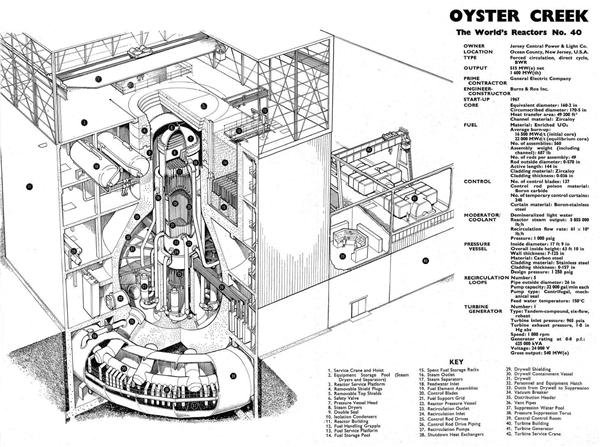
@Tenzing Seems like the #9 double seal and the #4 removable shield plugs may have blown away with the #5 removable top shields. Seems like the whole thing is ballistically inclined, but to eject the shroud might be odd...
www.appsmini.comby Rob in SF via Appsmini 4/25/2011 10:08:33 AM- by Tenzing 4/25/2011 10:10:59 AM
- @Tenzing IMO, looking at the explosion and images of the damage, I don't understand how anything survived.by Debra Beckham 4/25/2011 10:14:29 AM
- @Debra Beckham Me too. watch the video I just posted, this guy makes sense to be and gives an interesting perspective on why we've seen so much 'Rust' at Fukushima, let me know what you think OKby Tenzing 4/25/2011 10:17:09 AM
 @alblee, I hope you read this on return. As to the triage who were asking for at 2:52 ET. I once worked as a first responder. Rule of thumb when you entered the site of an accident was to look for the quietest person because they are the most likely to need urgent medical attention. Therefore, my guess is that #1 is the most endangered and will need the greatest attention. It is the oldest.by Peter Melzer 4/25/2011 10:26:52 AM
- @Peter Melzer @Debra Beckham @Rob in SF: would like your thoughts on 4:14 to 6:16 (Rusting on Steroids) In the video The Truth About Fukushima DAi-ichi 16.03.11by Tenzing 4/25/2011 10:30:07 AM
- @Tenzing The second they started pouring salt water on the reactors, I knew they were going to be doomed by the rust and corrosion it would cause. He makes some good points about the heat & air oxidizing fuel rods.by Debra Beckham 4/25/2011 10:30:54 AM
- @Tenzing Sent you an email with my phone number, let's meet this week :)by Debra Beckham 4/25/2011 10:32:20 AM
- @Debra Beckham Yes, I'll send you an email today :)by Tenzing 4/25/2011 10:33:31 AM
- by Tenzing 4/25/2011 10:39:06 AM
- @Tenzing That's the million dollar question...why can't they be honest with us? IMO it is because the world couldn't bare the truth, and the horror of it, would cause a complete and utter breakdown of what little "humanity & civilization" there is left on this world.by Debra Beckham 4/25/2011 11:14:38 AM
 @talisker @es Exactly which "scraps" of information from TEPCO and the GoJ do both of you believe to be true and not either completely false or totally misleading from the very beginning? Instead of being completely transparent, TEPCO has chosen to delay and heavily edit whatever information we've actually received. And yes, talisker, I read your comments three times...carefully...to attempt to understand exactly what you were posting. In my opinion, there is such a thing as being conservative to the point of denial, or being deliberately argumentative just to stir the pot. There are quite a few technical people who post regularly on this board who have taken quite some time to reach the conclusion that Reactor #3 suffered an actual nuclear blast as opposed to an ignition of built-up hydrogen gas. What other explanation do you have for the highly radioactive piece of concrete found on the ground outside the reactor structure? What other explanation do you have for severity of the explosion of the structure of Reactor #3?by James Ward 4/25/2011 11:27:54 AM
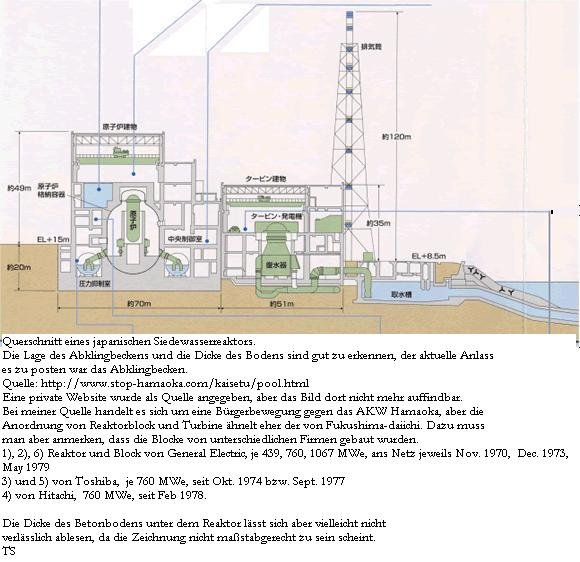 by Edano via Languagefactory.de 4/25/2011 11:38:12 AM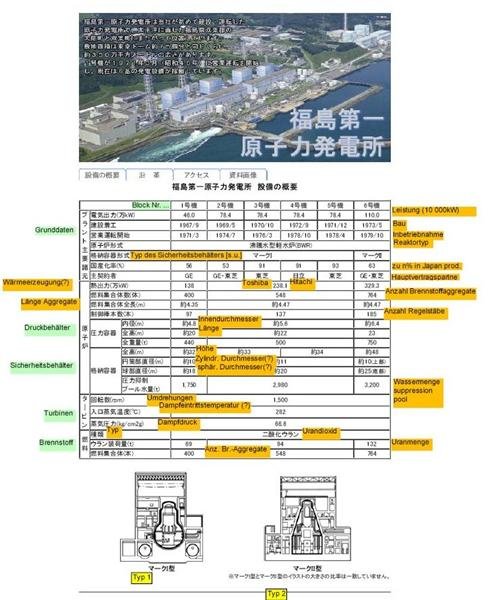
i think i found some gems: www.languagefactory.de www.languagefactory.de www.languagefactory.de
by Edano via Languagefactory.de 4/25/2011 11:38:15 AM- by Edano 4/25/2011 11:45:05 AM
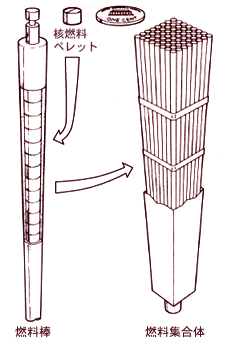
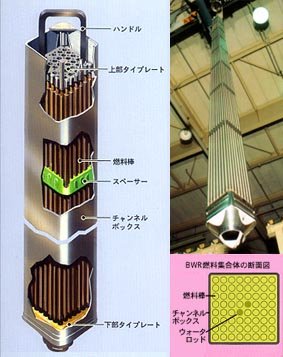
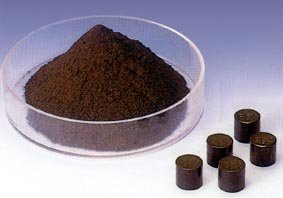
- www.gns.ne.jp fuel rods and pelletsby Edano 4/25/2011 11:46:54 AM
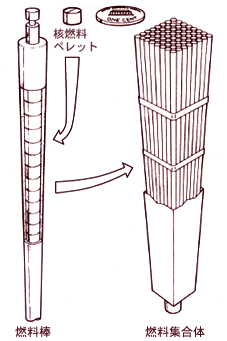
www.gns.ne.jp www.gns.ne.jp and this
by Edano via Gns.ne.jp 4/25/2011 11:48:02 AM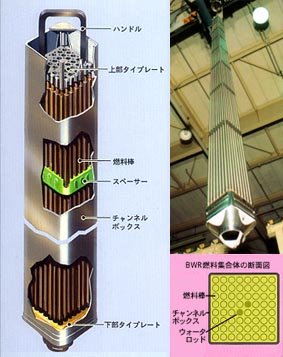
www.gns.ne.jp www.gns.ne.jp and this
by Edano via Gns.ne.jp 4/25/2011 11:48:02 AM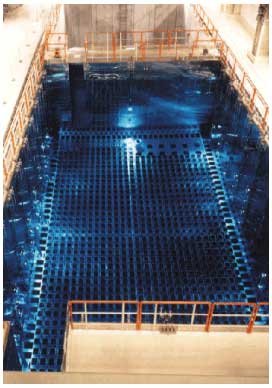 by Edano via Stop-hamaoka 4/25/2011 11:49:17 AM
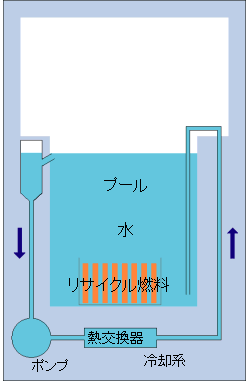 by Edano via Stop-hamaoka 4/25/2011 11:49:30 AM
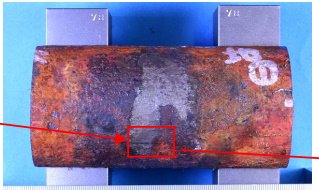
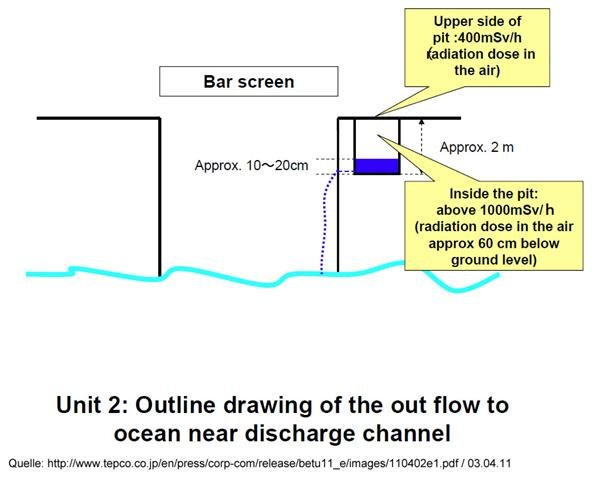
Tepco's Daiichi leaky pipes 2009 style
by elainekirk 4/25/2011 11:55:21 AM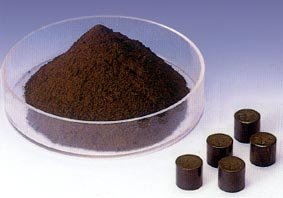 by Edano via Gns.ne.jp 4/25/2011 12:00:39 PM
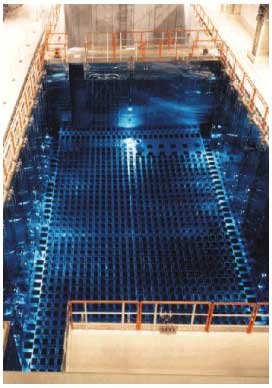
- uranium and pelletsby Edano 4/25/2011 12:00:56 PM
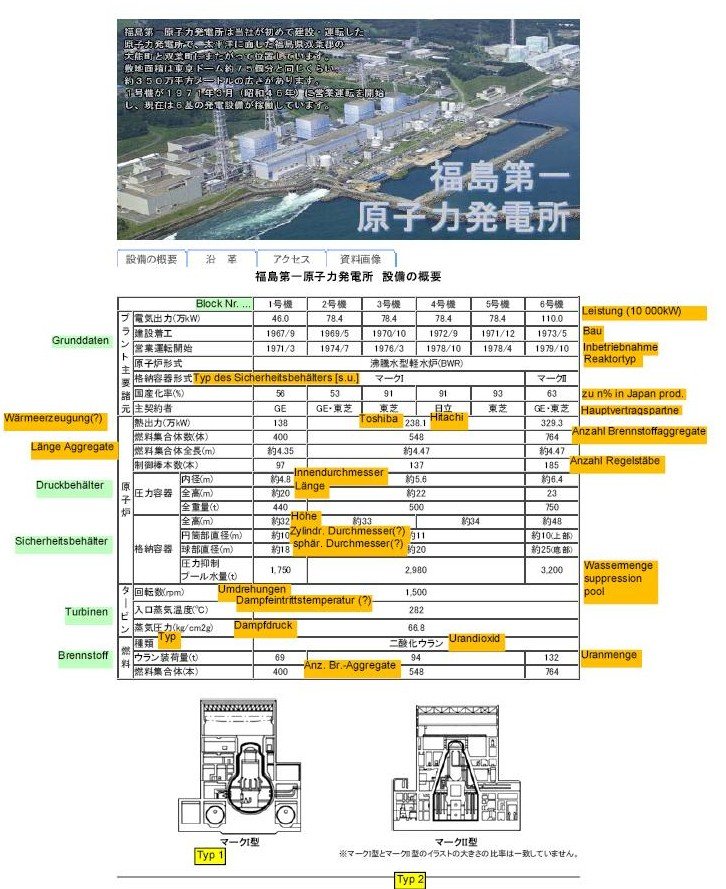
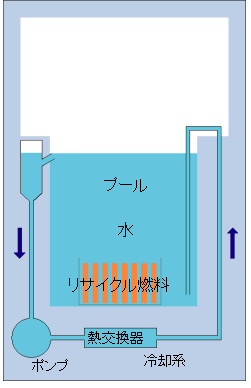
 by Edano via Uwa.physik.uni-oldenburg.de 4/25/2011 12:08:52 PM
- @James Ward It's true, it's exceedingly difficult (and increasingly so) to find and sift out useful information coming from TEPCO and the GoJ. Essentially we have teppy cam, which may or may not be doctored, and up until recently we've had live daily press briefings directly from TEPCO officials. I followed many of these with the aim of gleaning what information I could, both in terms of what they were saying and how they were saying it. It's not easy to lie consistently, real-time. There's no denying they're obfuscators, and this signals to me the intense involvement of lawyers. They're still releasing some reactor and radiation data which we need to examine carefully for patterns and inconsistencies, and the same goes for the scant but sometimes telling images they release - all of which we can continue to investigate and analyse for truths.by es 4/25/2011 12:14:47 PM
- @Tenzing, I viewed the clip. The man is correct. Seawater is aggravating oxidation (rust). Think of bikes on the beach. The rust does not need to be brown. Dean pointed out the rod assemblies should turn white. Seawater contains sulphuric acid, a means of oxidation (think Chinese drywall).by Peter Melzer 4/25/2011 12:24:48 PM
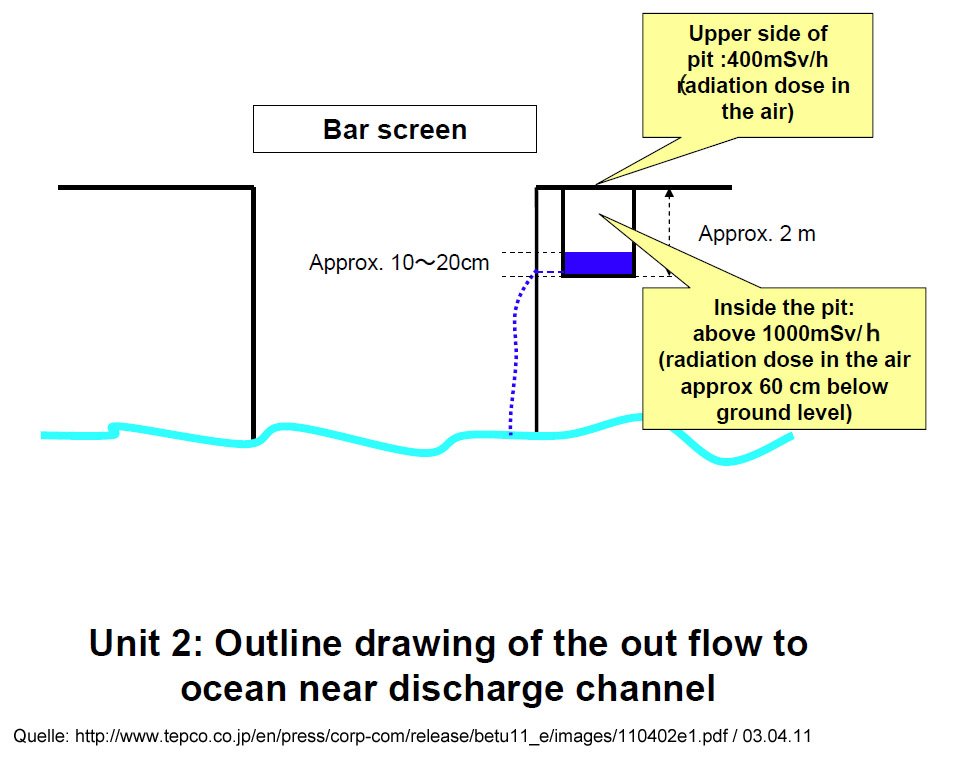
- lh4.ggpht.com Overview of Major Countermeasures in the Power Station www.tepco.co.jpby Edano 4/25/2011 12:32:56 PM
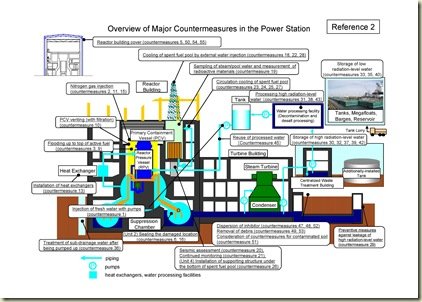 by Edano via Lh4.ggpht 4/25/2011 12:33:36 PM
- Hi-res photographic proof reactor core exploded at unit 3
This comment was left by a reader Stuart Davies, "Today I had another look at the diagram, and noticed something else quite significant that I had missed before. I realized that the top of the primary containment vessel was flush with the floor level of the 4th floor, and that the top of the reactor itself was in the space between the 3rd and 4th floors, partially surrounded by the spent fuel pool.
Look at those photos again, cryptome.org particularly the 5th shot. At the top of the photo you see the skeletal remnants of the wall of the 3rd and 4th floors. It is easy to see the floor level of the third floor - there are two massive steam pipes running behind and below the building...the lower edge of the lower pipe is almost perfectly aligned with the floor level of the 3rd floor. Follow the floor line of the third floor down down from that back wall along the right side of the building, then across the front side of the building near the bottom of the photo. That shows you the floor level of the 3rd floor very clearly, right? There is nothing but air remaining above that level, except for a bit of roof debris which you can see through. The top of the primary containment vessel, as well as the top of the reactor itself, is simply GONE. Even to a layperson, it is obvious that this means that the huge hydrogen explosion at unit 3 must have occurred in the reactor itself, and that the entire top of the reactor containment vessel was obliterated, ejecting the contents of the core - as well as the spent fuel pool- into the atmosphere.
This means, obviously, that significant quantities of plutonium were released, and that the release of radiation from unit 3 alone must be many times higher than has been admitted for the entire
complex - Chernobyl pales in comparison.
It is apparent that Tepco, the NRC, and the Japanese and American government officials, among others, are participating in a coverup of the extent and severity of this disaster. This almost certainly applies to the blandly misleading assurances about the harmlessness of the fallout on US soil. The whistle must be blown, loud and clear." www.lucaswhitefieldhixson.comby Tenzing 4/25/2011 12:42:20 PM - Enformable Survival Network
The United States and Japanese governments have failed to perform their expected duty to protect the citizens of Earth.
The EPA, FDA, and other organizations all seem to be lying to us -- demonstrating their lack of concern for human well-being. We have the data, and lack of it, to prove the negligence.
Therefore, we must establish an independent survival network to measure and report up-to-date environmental conditions across the entire planet. www.lucaswhitefieldhixson.comby Tenzing 4/25/2011 12:46:50 PM
URGENT: Japan now admits Fukushima at 154 trillion Bq’s/Day and West coast Radiation forecastby Tenzing 4/25/2011 12:50:12 PM- FUKUSHIMA = 2,000 Atomic Bombs
April 22, 2011 posted by Bob Nichols · 97 Comments
Killer Contamination Spreads Worldwide Without Opposition (San Francisco) – Radioactive contamination equivalent to the Fukushima, Japan disaster in terms of the hated “Mushroom Cloud” Atomic Bombs is two thousand (2,000) 500 Kiloton Atomic Bombs.* Each 500kt Atomic Bomb is 33 times bigger than the American Bomb that destroyed Hiroshima on August 6, 1945.
Beautiful, eh? France detonated this nuke in the South Pacific 7-3-70 Scientific American Sygma
President G. Bush often referred to the well known “mushroom cloud” as a terrorist signature. Nope, just standard operating procedure (SOP) in the stationary nuclear weapons biz-ness, otherwise known worldwide as “Nuclear Power Reactors.” Except, in the Fukushima Daiichi Nuclear Weapons, the biggest ever, the “mushroom” portion is invisible and has engulfed the whole world with 70 Billion Radioactive Lethal Doses* – so far. There’s more on the way.
Truly, it is as if the entire world is At War! The dreaded all-out nuclear war that would happen if Russia or the United Stated accidentally “Pressed The Button” is going on right now; it is a done deal. Imagine that! The same thing as detonating 2,000 big Atomic Bombs and not even one “BOOM!” Not a shot fired, yet we could all die!
No giant forest fires, no burning cities creating their own hellish, uncompromising firestorms. None of that; but, every bit of the radioactive contamination such an Atomic World War would create; and probably more. For unbelievably, there are more Japanese reactors about to blow. It’s a chain reaction. www.veteranstoday.comby Tenzing 4/25/2011 1:00:15 PM - From Hiroshima to Fukushima, 1945-2011: A Nuclear Narrative of Hubris and Tragedy
by Anthony J. Hall, Professor of Globalization Studies University of Lethbridge
(28 March, 2011, Version 2, Running Draft) The tight juxtaposition of many installations for generating nuclear power, processing nuclear waste, and storing nuclear waste within the narrow confines of the one-and-a half square mile site of the maimed Fukushima plant epitomizes the irresponsibility of a troubled industry. The depth of the problem is confirmed by the failure of nuclear regulators to explain clearly in the course of the current crisis the immensity of problems generated by the need to isolate vast quantities of toxic nuclear material from any exposure whatsoever to air, to water, and to all living organisms over hundreds of thousands of years. In speculating that the Fukushima disaster could fast be approaching its “Chernobyl Moment,” Mike Whitney has cautioned that much of the mainstream media’s goal has been “to conceal the scale of the catastrophe in order to protect the nuclear industry.”v
One of the great tragedies of the Fukushima nuclear disaster is that, as with Hiroshima and Nagasaki, the episode is already giving rise to a huge case study on the uncertain effects of what happens to all living beings, including humans, when they are exposed to such large-scale releases of highly toxic radionucludes, including, for starters, Cesium-137, Strontium-90, Iodine-129, and Plutonium-239. What are the effects on public health when our life support systems of food, air and water are exposed to so many radioactive elements rushing simultaneously into sea, river, land, and air at extremely quick rates and in very large quantities? The confusion and subterfuge in the early stages of this giant science experiment on human subjects was suggested on March 27 when officials first reported that water leaking from Fukushima #1’s Reactor #2 was about 10 million times more radioactive than normal. By the end of the day Sakae Muto, Vice-President of the Tokyo Power Company that runs the crippled plant, revised the original estimate down to 100 thousand times normal levels. In at least one account of Muto’s comments, he is reported to have “ruled out having an independent monitor to oversee the various checks despite the errors.”vi
The Fukushima disaster provides a text book example of the huge dangers inherent in literally stacking up, one on top of the other, so many of the most dangerous industrial processes known to humankind.vii A single breakdown in one industrial cycle can spread to neighboring industrial operations creating a series of proliferating chain reactions. This outcome reflects the reality that chain reactions are the atomic essence of nuclear energy. The release of great amounts of radioactivity into the air system and water systems of the crippled nuclear plant is making periodic evacuations of the crippled control room necessary, removing human agency from the chain reaction of mounting breakdowns, as one disaster begets another, and as a local emergency moves closer and closer to the threshold of a global catastrophe. www.veteranstoday.comby Tenzing 4/25/2011 1:14:45 PM




Japan Earthquake | Page 837
- Who's Blogging
-
 hudebnik
 alblee
 UKVal
UKVal Oliver (ScribbleLive)
 Jonathan Keebler
 kaykodh
 PKelley
 Markfm
 Angie
Angie Deb
Deb Mid Valley
 Pedro Jesus
 Matt (ScribbleLive)
 George Gibb
- elainekirk
 lillymunster
 dean
dean bo
bo Edano
Edano IanGoddard