Japan Earthquake | Page 853
 they are still images frame by frame of the blastby Nancy 4/26/2011 3:48:35 PM
 Thanks, @Nancy. I was kinda issuing a renewed call for submissions, in case there might be lurkers out there with stuff, heh heh. I've seen those in your site and they're awesome, to say the least, knowing how little or limited material you had to work with.by ALBLEE 4/26/2011 3:49:55 PM
- @radioguy what I noticed on 3 was similar. The typical outward fireball and then about a second or two later the big upward burst. I had a video sent to me that shows the building actually sucking in before the first blast. I need to go see if I can verify that for myself and have not yet. If it did indeed suck in the building first I think that is a sign of something rapidly eating oxygen first. I am not sure what kind of smaller fire or incident would rapidly suck up oxygen first but I have to wonder if that kicked off everything else. Or did the hydrogen rapidly eat the oxygen before it hit a point it could become a fireball?by Nancy 4/26/2011 3:51:53 PM
 fyi - In reading some of the older US papers and some accident modeling papers, it seems that:
1) There is a risk of re-criticality in BWRs when water without boron is flooded on a degraded core (melted control rods, some intact fuel)
2) The risks involve rapid hydrogen generation
3) The trigger scenarios include what appears to have happened at Fukushima: station blackout (loss of power) & failure of cooling systems.
4) The expected results vary with the models.
-One proposes that a degraded BWR core will reach recriticality if "at least a length of one meter of fuel is intact and "the coolant void fraction in the core is below 0.6."
- One result is a melt pool in the core; another is the formation of a rubble bed. In the rubble bed, one possibility is the fuel may be "in a fuel geometry".
5) A concern is the "super prompt-critical excursion" event which includes a large pressure pulse which could damage the RPV, but that is viewed as unlikely (but possible).by Deirdre 4/26/2011 3:51:53 PM- @ALBLEE Ah, LOL. yes if someone has new info that would be good. There seems to be a bunch of different videos of 3 blowing up so people might find new info reviewing other ones.by Nancy 4/26/2011 3:52:33 PM
 How does a 'criticality nuclear explosion' differ from a nuclear bomb explosion?by jay 4/26/2011 3:55:40 PM
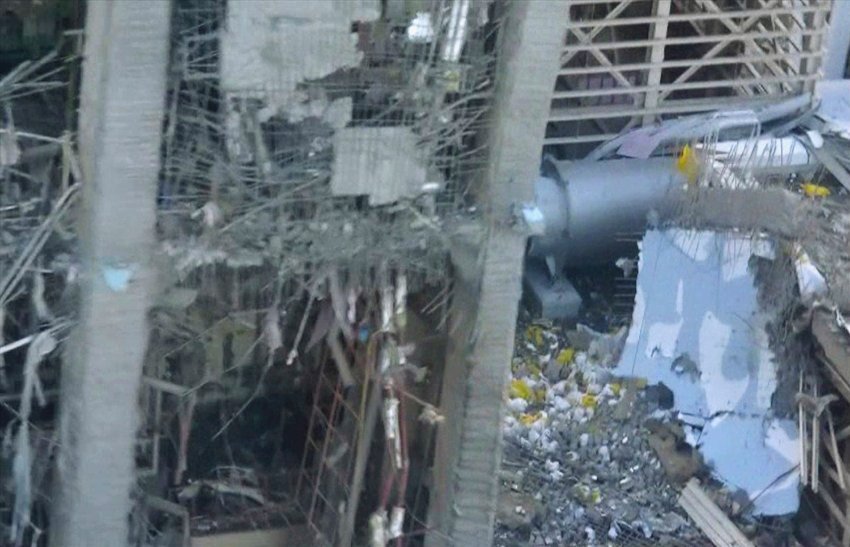
- another thing I wondered on 3. There is a pipe that comes out of the RPV top for the venting according to some diagrams I have seen. If that pipe was leaking it could have been leaking hydrogen into the containment as well as the work area. Could the fireball on the work deck also then reached into containment for a 2nd explosion that blasted that straight up due to the shape of the containment? We have found yellow shards around 3 but can not tell if they are containment cap or something else.by Nancy 4/26/2011 3:55:43 PM
- Yes, @Nancy. It would certainly be an edifying thing to see new stuff (images, text) relating to the March 14 blast(s) at Fukushima Daiichi Reactor #3.by ALBLEE 4/26/2011 3:56:16 PM
 @Nancy Radiolysis of H2O would yield separated hydrogen and oxygen which could account for separate explosions.by Bobby1 4/26/2011 3:57:09 PM
 nancy on smaller research reactors they use that valve to vent while they are lowering the water level to do tank work inside the vessel.. with out taking the dome offby dean 4/26/2011 4:04:36 PM
 @jay Sophisticated shaping and explosive recompression from a secondary explosive force mostly. (Like a hyrdogen explosion?)by radioguy 4/26/2011 4:04:41 PM
- very good Deirdre on that informationby dean 4/26/2011 4:06:35 PM
 Tomorrow at 7pm EST Arnie Gundersen Gundersen explores "the mysterious circumstances surrounding the powerful explosion that rocked Fukushima Daiichi reactor building 3.
The force of this exlosion was unlike the others and cannot be explained by a simple hydrogen build-up." (From today's Fairewinds update email).by hudebnik 4/26/2011 4:10:52 PM- time for training.. be back laterby dean 4/26/2011 4:15:18 PM
- Past midnight my time (GMT+8). Gotta get some sleep now. Thanks, all. Bye.by ALBLEE 4/26/2011 4:15:58 PM
 Hey Dean wait a minute - here's a link to the Blog my local community here in Southern Oregon has started - its a beginning proactiveprotection.blogspot.comby Tenzing 4/26/2011 4:17:10 PM
- Radionuclide analysis of the water in turbine building #3 docs.google.com indicated large amounts of Cobalt-60, which was re-evaluated to undetectable. Neutron activation of concrete would yield large amounts of Co-60 and Eu-152. docs.google.comby Bobby1 4/26/2011 4:17:37 PM
- @ALBLEE Night Alblee!by Nancy 4/26/2011 4:20:28 PM
- @Bobby1 do you have the original URL you found those documents at? I want to save them for the archive but it helps to document the original location. Adds to the credibility when we can document that.by Nancy 4/26/2011 4:23:16 PM
- @Nancy I can'pdfs\t seem to get rid of google docs. A google search of 110420e11.pdf and "NEUTRON ACTIVATION MEASUREMENTS IN RESEARCH REACTOR CONCRETE SHIELD" would get them. If anyone could tell me how to remove google docs, I would appreciate it. It's on all my browsers.by Bobby1 4/26/2011 4:25:52 PM
- @Bobby1 I will do that. Everyone's research really matters. The media is starting to take notice. Thanks for keeping on the reasearch path.by Nancy 4/26/2011 4:28:20 PM
- @Nancy Somehow the amount of Co-60 which was 60,000 times the amount I-131 was changed to nothing.by Bobby1 4/26/2011 4:33:19 PM
- back... I will check it out Tenzing.. and also post a few videosby dean 4/26/2011 4:35:50 PM
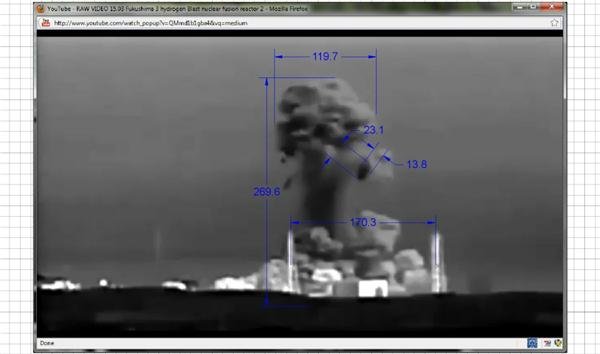 by Tenzing via I1211.photobucket 4/26/2011 4:36:27 PM
- good web link Tenzingby dean 4/26/2011 4:37:43 PM
reactor 1
by dean 4/26/2011 4:38:33 PMNancy:
by Tenzing 4/26/2011 4:39:24 PMreactor #3
by dean 4/26/2011 4:39:48 PM @radioguy Not the same doc, I don't think, but here is more radionuclide results direct url www.nisa.meti.go.jpby marie rich 4/26/2011 4:39:54 PM
- comments from the video below Reactor 3 explosion at Fukushima Daiichi ...
Whether a cloud is mushroom-shaped has nothing to do with what caused it.
boguspurr 2 weeks ago
@boguspurr different explosive materials produce different cloud types
jeebug 2 weeks ago
@jeebug Another non-nuclear mushroom cloud: the train explosion on 22 august 2008, Oklahoma. There is a good compilation video of that showing what it looked like. Much more flame than this Fukushima blast but about the same height. The difference is that hydrogen doesn't produce much visible flame when it burns.
Fukushima was a typical gas-combustion explosion.
boguspurr 2 weeks ago
@boguspurr no different type of explosion no ring (very different)... also different than the two others on the site... i just read the rods in 3 cooling bath are missing... did they get blown out?
jeebug 1 week ago
@boguspurr scientists are now investigating whether or not not reactor 3 was an fission critical explosion (nuclear type) .... “I believe that the explosion of the No 3 reactor may have also involved criticality but this must await the release of data on measurements of the Xenon isotope ratios,” he writes in a statement on Fukushima and Chernobyl emailed to Infowars.com.
jeebug 1 week ago
nice work hombre, you capture the true cataclysm, not many realise this.....yet
4billions 2 weeks ago
@4billions ty, the reason the mushroom cloud is not so prominent is because of three blasts --- if there was only one you would see a defined mushroom cloud --- but even if there was a prominent mushroom cloud people would still deny it --- i have a whole wealth of information on this diaster but chose not to publicize it because it would disturb a lot of people --- let us just say we are dealing with some very stupid people or people who are trying to save butt
jeebug 2 weeks agoby Tenzing 4/26/2011 4:42:11 PM - All RADnet Cobalt-60 measurements contain a blank in the amount field.by Bobby1 4/26/2011 4:42:32 PM
- @Bobby1 more documenting oddities...by Nancy 4/26/2011 4:44:05 PM
would hate to have been in the control room of 3... dang.. that's close to the hole in the roof
by dean 4/26/2011 4:46:18 PM- Nancy or Dean are you here?by Tenzing 4/26/2011 4:51:02 PM
 @dean : is it correct that the control room is in the turbine building ? i saw it before within the reactor building.by Edano 4/26/2011 4:51:10 PM
- Tepco Wants to Reopen World Largest Nuclear Plant — Shutdown Following ’07 Earthquake Damage, 8 Fires, Discharges and Scandal hawaiinewsdaily.com "In 2002 a TEPCO scandal at the Kashiwazaki Kariwa facility caused all four remaining reactors to be shut down one by one after the discovery of deliberate falsification of data by company officials."by Bobby1 4/26/2011 4:51:11 PM
- @dean : wow, a very nice video. thx.by Edano 4/26/2011 4:53:14 PM
- www.nisa.meti.go.jp
2) As for the 7 people working at the time of explosion at around the Unit 3 of Fukushima Dai-ichi NPS who were injured and conscious, 6 out of 7 people were decontaminated by an industrial doctor of the clinic in Fukushima Dai-ni NPS, and confirmed to have no risk. The other one is having a medical treatment at the clinic after decontaminatedby marie rich 4/26/2011 4:56:10 PM - @dean : but the persons are out of scale, and the control room is not that big. so i don't know if this is all correct.by Edano 4/26/2011 4:58:46 PM
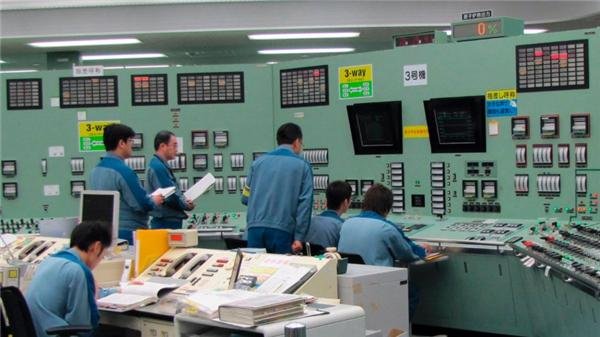
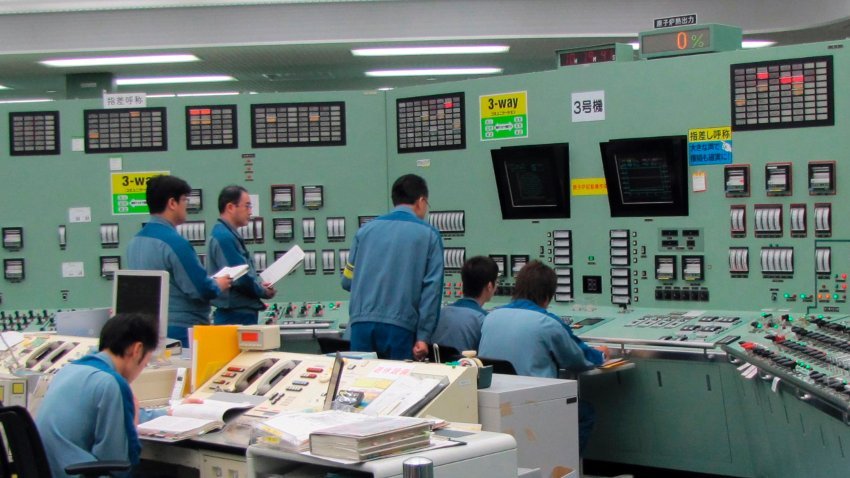
The control room for the plant's number 3 reactor is seen in a September 2010 photo www.spiegel.de
by Edano via Spiegel.de 4/26/2011 5:09:36 PMRadioguy: heres the RAW Black and White video of #3 explosion
by Tenzing 4/26/2011 5:12:27 PM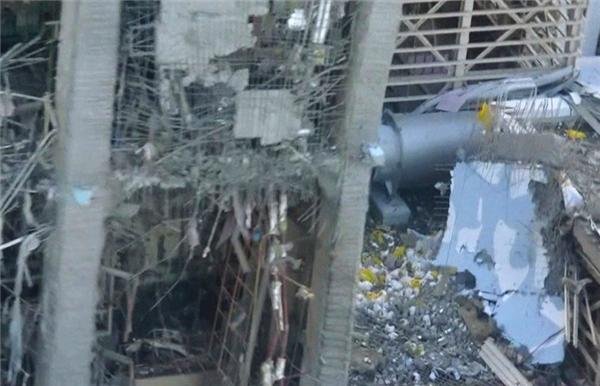
www.spiegel.de containment cap debris ?
by Edano via Spiegel.de 4/26/2011 5:16:12 PM- GREAT SITE ! (thx dean) www.stockaninews.comby Edano 4/26/2011 5:29:01 PM
 Map details radiation at N-plant site www.yomiuri.co.jpby Markfm 4/26/2011 5:31:27 PM
- Radioactive water carried from No.2 reactor www3.nhk.or.jpby Markfm 4/26/2011 5:32:43 PM

Japan Earthquake | Page 853
- Who's Blogging
-
 hudebnik
 alblee
 UKVal
UKVal Oliver (ScribbleLive)
 Jonathan Keebler
 kaykodh
 PKelley
- Markfm
 Angie
Angie Deb
Deb Mid Valley
- Pedro Jesus
 Matt (ScribbleLive)
 George Gibb
 elainekirk
 lillymunster
 dean
dean bo
bo Edano
Edano IanGoddard