Japan Earthquake | Page 1338
 Radioactive spills and breakdown revealed at British nuclear plantsLeaked report details incidents at three plants during February that were serious enough to be reported to ministers www.guardian.co.ukby UKVal 5/23/2011 8:18:19 PM
- The scale of safety problems inside Britain's nuclear power stations has been revealed for the first time in a secret report obtained by the Observer that shows more than 1,750 leaks, breakdowns or other "events" over the past seven years. www.guardian.co.ukby UKVal 5/23/2011 8:20:00 PM
 Rob.. I will be taking notes on that THORIUM..by dean 5/23/2011 8:21:19 PM
 by Rob in SF via Energyfromthorium 5/23/2011 8:22:44 PM
 @Nancy Don't confuse me with Beaner... It's not!by RBeaner 5/23/2011 8:23:54 PM
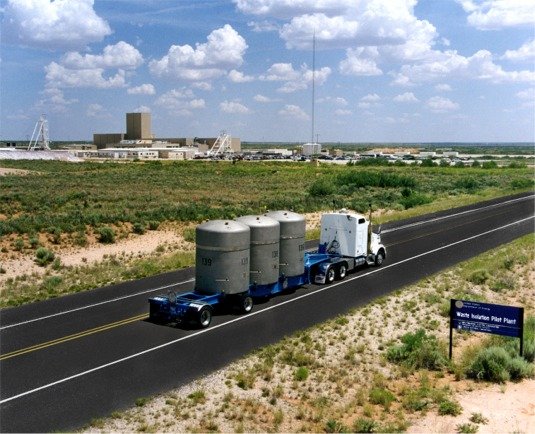 by Rob in SF via Ustransportcouncil.org 5/23/2011 8:24:36 PM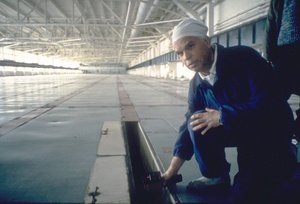
Position paper
Perspectives on the handling of spent nuclear fuel in Russia
www.bellona.org
bellona.orgby Rob in SF via Bellona.org 5/23/2011 8:26:14 PM- www.theiet.org/factfiles/energy/nucwaste.cfm?type=pdf - transporting nuke waste in UKby UKVal 5/23/2011 8:27:39 PM
- www.theiet.org/factfiles/energy/nucwaste.cfm?by UKVal 5/23/2011 8:28:08 PM
- oh I can't get this to work!by UKVal 5/23/2011 8:28:20 PM
- www.theiet.org/factfiles/energy/nucwaste.cfmby UKVal 5/23/2011 8:28:40 PM
Is Spent Nuclear Fuel a Waste or a Resource?
A new report argues that the world has plenty of uranium but needs to make wise choices about what to do with it once its been depleted in a nuclear reactor
By David Biello | September 18, 2010
www.scientificamerican.com
www.scientificamerican.comby Rob in SF via Scientificamerican 5/23/2011 8:29:24 PM- www.theiet.org/factfiles/energy/nucwasteby UKVal 5/23/2011 8:29:51 PM
- by UKVal 5/23/2011 8:30:29 PM
- Mod please dlete all the other attempts belowby UKVal 5/23/2011 8:31:17 PM
- SciAm 60 Second Science podcast on Nuclear Energy: podcast.sciam.comby Rob in SF 5/23/2011 8:31:41 PM
- Box 5 The Sellafield reprocessing facility (THORP) openlearn.open.ac.ukby UKVal 5/23/2011 8:32:57 PM
Radioactive Waste Management
(Updated April 2011)
• Nuclear power is the only large-scale energy-producing technology which takes full responsibility for all its wastes and fully costs this into the product.
• The amount of radioactive wastes is very small relative to wastes produced by fossil fuel electricity generation.
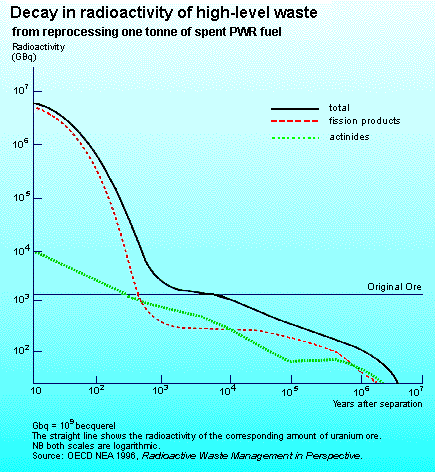
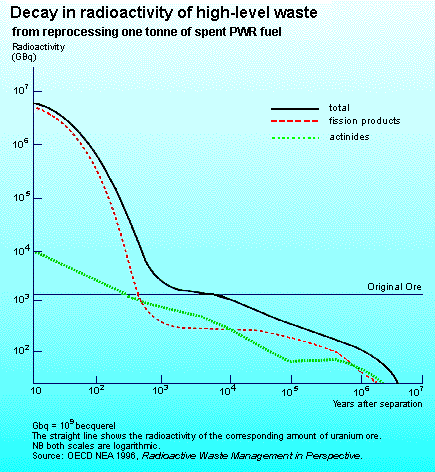
• Used nuclear fuel may be treated as a resource or simply as a waste.
• Safe methods for the final disposal of high-level radioactive waste are technically proven; the international consensus is that this should be deep geological disposal.
(more) http://www.world-nuclear.org/info/inf04.html
www.world-nuclear.orgby Rob in SF via World-nuclear.org 5/23/2011 8:35:12 PM- Why reprocess nuclear fuel ? www.n-base.org.ukby UKVal 5/23/2011 8:35:28 PM
 by Rob in SF via World-nuclear.org 5/23/2011 8:35:40 PM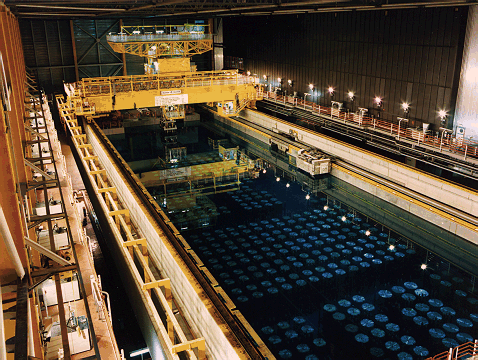
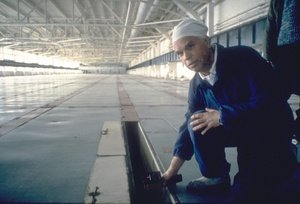
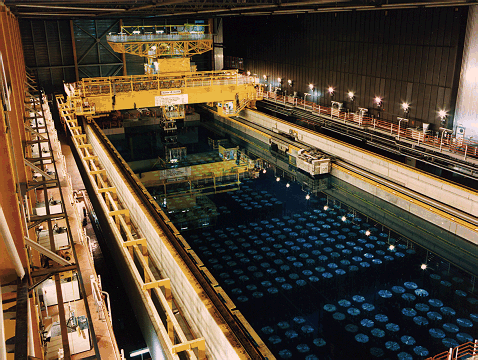
Storage pond for used fuel at the Thermal Oxide Reprocessing Plant at the UK's Sellafield site
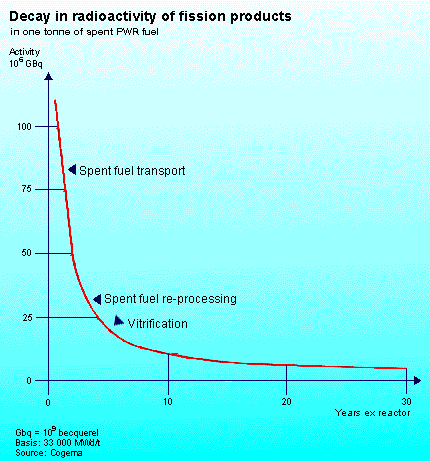
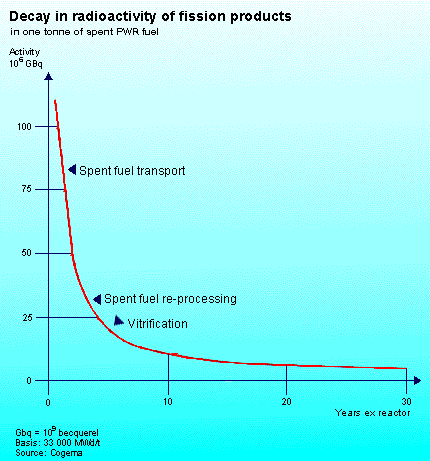
www.world-nuclear.orgby Rob in SF via World-nuclear.org 5/23/2011 8:36:19 PM- • Vitrified waste (high-level waste that is concentrated by evaporation and
mixed with molten glass) is returned by rail and sea to the country it came
from. In France, Cogema subcontracts to PNTL for shipments from the
Cherbourg marine terminal near La Hague to Japan. Like used fuel, we load
vitrified waste into flasks and transport it safely in the same speciallydesigned
ships. We began doing this in 1995 when the first shipment from
Cherbourg arrived safely in Japan - from sellafield promotional material - www.sellafieldsites.comby UKVal 5/23/2011 8:38:00 PM - This is past its sell by date but still interesting........'Concerned Russians are appealing for international signatures against the dumping of 1,000 spent nuclear fuel rods from Germany in a part of their country that is already the most radioactively contaminated in the world.' www.indymedia.org.ukby UKVal 5/23/2011 8:40:35 PM
 @UKVal that gives me an idea. We keep a running tally of all the obnoxious loathesome things each country in the world does. The one with the worst track record has to keep everyone's spent fuel for the year. Motivation to cease acting like trouble making wankers. (Tongue firmly in cheek) :-)by Nancy 5/23/2011 8:42:39 PM
- hey look at this webiste which explains it is 'A network of individuals, independent and alternative media activists and organisations, offering grassroots, non-corporate, non-commercial coverage of important social and political issues' www.indymedia.org.ukby UKVal 5/23/2011 8:43:08 PM
- see.. this is what I love about this room... you say lets do something on spent fuel and POW instantly inforamation pours in .. love you allby dean 5/23/2011 8:43:19 PM
- @Nancy lol -great idea though -can we get the UN to adopt it?by UKVal 5/23/2011 8:43:59 PM
- nancy.. ha.. I'm not telling you where they wanted to consider putting the international fuel respository. he heby dean 5/23/2011 8:44:48 PM
- @dean The power of the net! they can't keep us down any longer!by UKVal 5/23/2011 8:45:02 PM
- no they can't UKby dean 5/23/2011 8:45:17 PM
- << thinking outside the box.. HOW about we design a orbital launcher,, which would contain and then collimate the energy to launch vehicles into space... all you do is go up.. slip a few million dollars in the vending machine and say.. the moon please.. a nice voice would say.. that will be 1 million dollars please for 40 spent fuel elements.,. they KER PLOP goes in the fuel and POWWWWWWWWWW. goes you to the moonby dean 5/23/2011 8:47:15 PM
- @dean There were rumors of one in the Homestake Mine in SD at one point...by Nancy 5/23/2011 8:47:20 PM
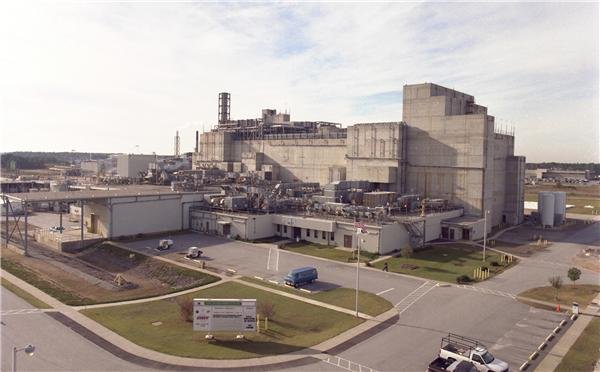
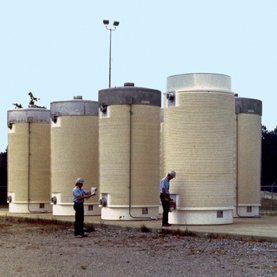
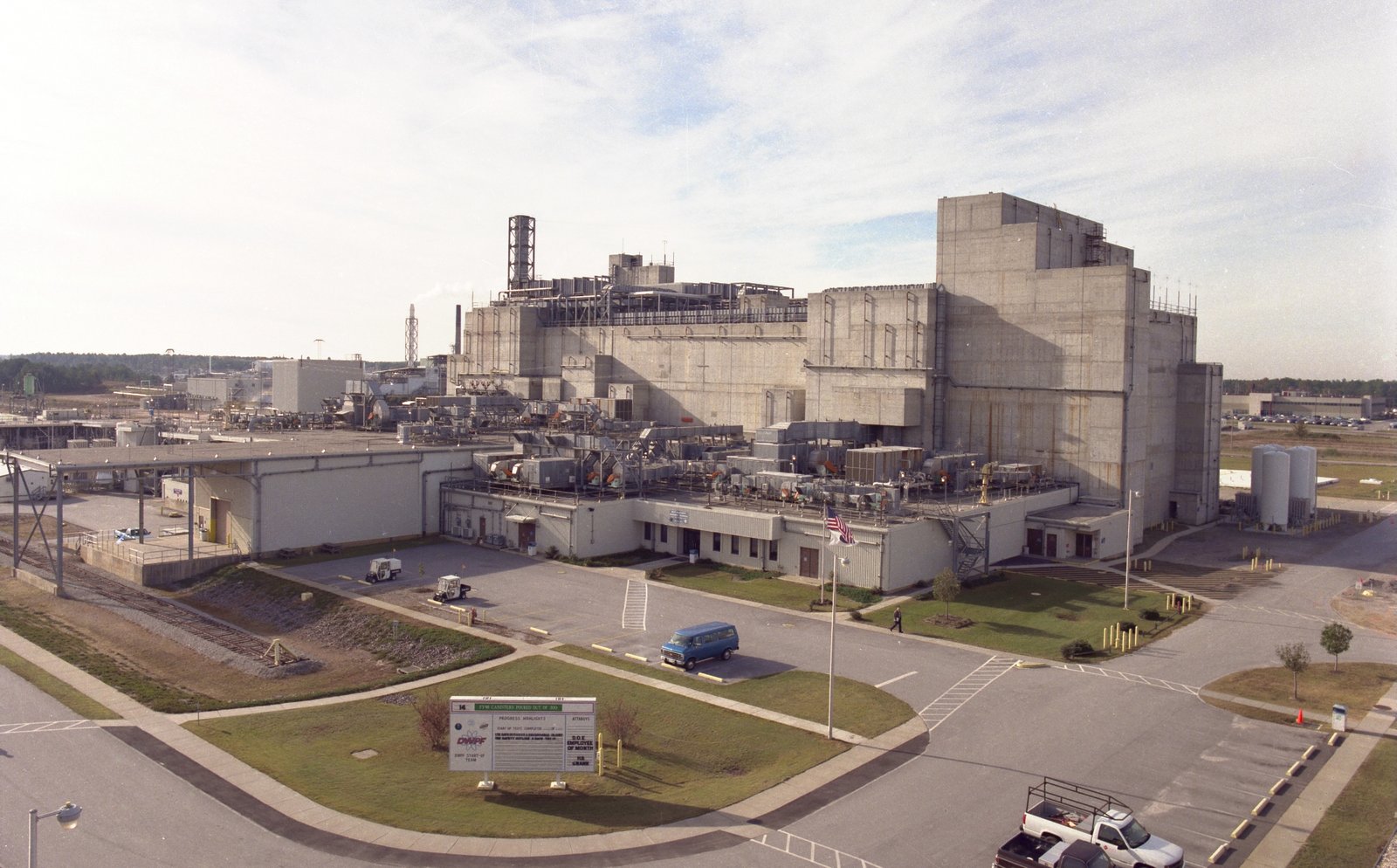
Defense Waste Processing Facility (DWPF)
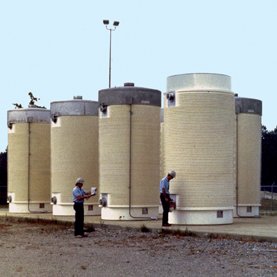
DWPF treats the highly radioactive material by mixing a sand-like borosilicate glass (called "frit") with the waste. The waste/frit mixture is then sent to the plant’s 65-ton steel and ceramic melter. In the melter, electricity is used to heat the mixture to nearly 2,100 degrees Fahrenheit until molten. This molten glass-waste mixture is poured into stainless steel canisters to cool and harden.
Each canister is 10 feet tall and 2 feet in diameter; it takes approximately 24 hours to fill one canister. A filled DWPF canister weighs about 5,000 pounds. The exterior of each canister is blasted with frit to remove contamination, then welded shut using a current of 250,000 amps applied for 1.5 seconds, while 80,000 pounds of force simultaneously rams a plug into place. The resulting weld is as strong as the three-eighths-inch thick stainless steel canister itself.
Scientists have long considered the glassification process, called "vitrification," as the preferred option for immobilizing high-level radioactive liquids into a more stable, manageable form until a federal repository is ready.
www.srs.gov
www.srs.govby Rob in SF via Srs.gov 5/23/2011 8:47:32 PM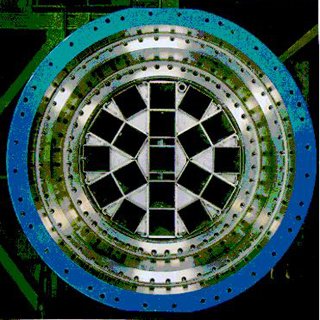
Spent Nuclear Fuel: A Trash Heap Deadly for 250,000 Years or a Renewable Energy Source?
Nuclear waste is either a millennia's worth of lethal garbage or the fuel of future nuclear reactors--or both
www.scientificamerican.com
www.scientificamerican.comby Rob in SF via Scientificamerican 5/23/2011 8:48:25 PM- @dean After seeing how #3 went up they probably could use spent MOX rods to fuel a rocket ship. :-)by Nancy 5/23/2011 8:48:35 PM
- @dean I'll dig out my collection box now & go stand in the town centreby UKVal 5/23/2011 8:48:47 PM
 US and Japan have deal with Mongolia they are building Mongolia an npp and mongolia is letting them dump their waste fuel inside a mountain there
by elainekirk 5/23/2011 8:49:19 PM- ELAINE you cheated.. ha ha .. that's what I heard .. .by dean 5/23/2011 8:49:54 PM
 @UKVal Indymedia is all over the world and is very grass roots.by bo 5/23/2011 8:50:28 PM
- we are really missing a deal.. the spent fuel pool cooling system has to remove probably about a total of 3 MW worth of energy.. why not use the spent fuel pools to generate electricity with a small scale generation plant..by dean 5/23/2011 8:51:00 PM
- 3 MW of indefinate energy.. more than 3 wind mills.by dean 5/23/2011 8:51:21 PM
- Spent Nuclear Fuel – the Poisoned Chalice A paper for the Nuclear Consultation Group www.nuclearconsult.com this 1 looks usefulby UKVal 5/23/2011 8:51:43 PM
- @dean Would there be a way to do it in a passive way so it didn't have to be run like a typical reactor?by Nancy 5/23/2011 8:51:55 PM
- << outside the box.. spent fuel for border control.. or shoot.. drop on taliban .. I"ll stop.. you shouldn't get me startedby dean 5/23/2011 8:52:25 PM
- @dean " I'm not telling you where they wanted to consider putting the international fuel respository." If not Yucca, Florida aquifers?by Rob in SF 5/23/2011 8:52:47 PM

Japan Earthquake | Page 1338
- Who's Blogging
-
 hudebnik
 alblee
 UKVal
UKVal Jonathan Keebler
 Oliver (ScribbleLive)
 kaykodh
 Markfm
 Angie
Angie Mid Valley
 Matt (ScribbleLive)
 George Gibb
- elainekirk
 PKelley
 lillymunster
- dean
 bo
bo Edano
Edano Deb
Deb Pedro Jesus
 IanGoddard