Japan Earthquake | Page 1390
 @hudebnik so grey or black smoke eh? and could they tell us why they would expect to observe steam or smoke at Daini???? I guessed as much it is a 'lets fool the public they will all assume Fukushima NPP = the 'leaking' NPP, nobody will ever realise that we went nowhere near the 'leaking fukushima NPP'by elainekirk 5/26/2011 5:42:31 PM
 Fukushima Burning: Anatomy of a Nuclear Disaster May. 22, 2011 - Nov. 30, -0001
The May/June edition of Australian magazine Physician Life features a lengthy report on the Fukushima crisis by Melbourne-based nuclear radiologist Dr. Peter Karamoskos. What happens when a nuclear reactor overheats?
When nuclear cores overheat due to a lack of water coolant, they ultimately melt. Remaining water quickly turns to steam preventing replenishment of the water and endangering the integrity of the pressure vessel. Furthermore, the reactor pressure vessel may also melt leaking the melted fuel which may escape into the environment if the primary and secondary containment structures (concrete) have been damaged. Spent fuel is kept at around 25 degrees in cooling ponds for a few decades. The water must be continually replenished to maintain this temperature. If there is a loss of water or a failure of replenishment, the spent fuel will overheat and catch fire, releasing its radiotoxic contents. Note that the longer fuel is irradiated in the reactor core, the more radioactive it becomes due to the build-up of fission by-products which also contaminate the fuel limiting its usable life. Only about 1-2% of the uranium in fuel rods is actually used up in a reactor. It is these fission by-products that pose the greatest immediate danger if released into the environment. Radioactive fallout and its health effects the greatest health threat are Cesium-137 (half-life 30 years) and Iodine-131 (half- life 8 days). Iodine-131 is a beta emitter and is absorbed into the blood stream through inhalation and ingestion and concentrated by the thyroid gland where it is highly carcinogenic, predominantly in young people under 18 years of age. Cesium is a gamma and beta emitter. It is also absorbed by the body through the respiratory and gastrointestinal tracts and subsequently into the bloodstream and deposited throughout the body. Cesium takes between 10 days and 100 days for half of it to be excreted from the body so there is significant hazard once it is absorbed. Unlike I-131 therefore which loses most of its potential for harm in a few months, cesium remains hazardous in the environment for several hundred years. How long will it take to resolve the crisis? If the plant is able to be brought under control, it will take more than 30 years to decommission the reactors and decontaminate the site and will cost “more than 12 billion dollars.” Of course, that is not the upper limit of liability for the beleaguered Japanese taxpayer Bank of America-Merrill Lynch has estimated an upper bound of $130bn for the Fukushima disaster alone in liabilities and economic losses. The decommissioning effort alone will likely bankrupt the operator TEPCO resulting in a knock-on massive liability for Japanese taxpayers. Unlike the case with all nuclear power generated around the world, where operators refuse to generate electricity unless most of their liabilities are capped in the event of a major accident, the 1961 Act on Compensation for Nuclear Damage places no cap on damages. However, if the company is bankrupted, this liability transfers to the taxpayers. After this disaster, the Japanese tax-payers will realise that it is they, not the nuclear power companies, who need protection. japanfocus.orgby Tenzing 5/26/2011 5:46:00 PM @elaine - spot on!by hudebnik 5/26/2011 5:46:42 PM
- Observations of Fallout from the Fukushima Reactor Accident in San Francisco Bay Area Rainwater
Eric B. Norman, Christopher T. Angell and Perry A. Chodash
Department of Nuclear Engineering University of California Berkeley, CA 94720, USA
Abstract
We have observed fallout from the recent Fukushima Dai-ichi reactor accident in
samples of rainwater collected in the San Francisco Bay area. Gamma ray spectra
measured from these samples show clear evidence of fission products – 131,132I,
132Te, and 134,137Cs. The activity levels we have measured for these isotopes are
very low and pose no health risk to the public.
We have observed fallout from the recent Fukushima Dai-ichi reactor accident in samples of rainwater collected in the San Francisco Bay area. Gamma ray spectra measured from these samples show clear evidence of fission products - 131,132I, 132Te, and 134,137Cs. The activity levels we have measured for these isotopes are very low and pose no health risk to the public. The rainwater spectrum shown in Figure 1(a) clearly shows the presence of 131,132I, 132Te, and 134,137Cs. These are relatively volatile fission fragments produced with large ***ulative yields from the fission of 235U and 239Pu (3). The half-lives (2) of 132Te (3.26 days) and 131I (8.04 days) are sufficiently short in order for them to present now, that they must have been released from the reactor core(s) rather than from spent fuel repositories. arxiv.orgby Tenzing 5/26/2011 6:02:41 PM  @Tenzing "This work was supported in part by the US Dept. of Homeland Security and by a Nuclear Non-Proliferation International Safeguards Graduate Fellowship (PAC) from the US Dept. of Energy." hmmmm...by Bobby1 5/26/2011 6:08:15 PM
- MAY 25, 2011 All Things Nuclear Insights on Science and Security
Fukushima Dai-Ichi Unit 3: The First 80 Minutes Fukushima Dai-Ichi Unit 2: The First 60 Minutes Fukushima Dai-Ichi Unit 1: The First 30 Minutes allthingsnuclear.orgby Tenzing 5/26/2011 6:08:35 PM - ALL BRAWM and NO BRAINS: The University of California, Berkeley Nuclear Engineering Department. pissinontheroses.blogspot.comby Bobby1 5/26/2011 6:09:27 PM
- Hi Bobby1 Yes, a good amount of salt is required when drinking this kool-aid, my interest is in the statement they make that the fission products must have leaked from the reactor core not the SFP which begs the question WHICH REACTOR CORE 1 - 2 - 3 or 4?by Tenzing 5/26/2011 6:12:22 PM
- @Tenzing Take your pick, any or all of them. Even #4, we don't really know for sure about the reactor there.by Bobby1 5/26/2011 6:16:00 PM
- Fukushima Dai-Ichi Unit 3: The First 80 Minutes David Lochbaum Director, Nuclear Safety Project Key aspects from the first 80 minutes on Unit 3 are detailed below. www.ucsusa.orgby Tenzing 5/26/2011 6:17:05 PM
 Greenpeace slams Japanese operator over Fukushima disaster
www.dw-world.de
"The excuses and cover-ups by TEPCO and the repeated downplaying of the incident by international agencies have only one goal: To make people believe that nuclear energy is – despite accidents like Fukushima - still controllable. But this is the biggest error you could make."by Reed 5/26/2011 6:37:38 PM- This is a map of radiation levels determined by hand held dosimeters in Ibaraki Prefecture on May 11. www.pref.ibaraki.jp
The following are measurements of radiation levels at points around the US. radiationreadings.tumblr.com
Medford, Oregon 0.1166 uSv/hr
Brookings, Oregon 0.08 uSv/hr
Kentucky 0.2033 µSv/hr
Chicago, Illinois 0.11 uSv/hr
Pacific City, Oregon 0.1262 uSv/hr
Michigan .2266 uSv/hr
Westminster, Colorado 0.143 µSv/hr
As you can see, the US readings are comparable to those in Ibaraki Prefecture, which is immediately south of Fukushima Prefecture, along the coast.by Bobby1 5/26/2011 6:39:41 PM - Tepco's handling of Japan's nuclear crisis under severe scrutiny
www.csmonitor.comby Reed 5/26/2011 6:43:28 PM  Looking at the current reactor stats, if TEPCO can continue to hold things together there for another month, they will probably get past this crisis. By then all the corium will have melted, the radioactivity will have been washed out of the Drywell's, and they will be left with empty reactor's, which will start cooling off. The damage has been done to the environment. Basically TEPCO has dropped 4 atomic bombs on it's homeland, and the GoJ is telling the Japanese people to ignore that fact !!!!by wtm 5/26/2011 6:45:22 PM
- Fukushima radiation monitoring map to be made
www3.nhk.or.jp
Japan's science ministry has decided to draw up a map showing radiation levels in soil of Fukushima Prefecture, following the disasters at the Fukushima Daiichi nuclear power plant.
The ministry is to start surveying radiation levels at more than 2,200 locations across the prefecture at the beginning of June.
The ministry plans to survey every 4 square kilometers within 80 kilometers of the plant, and every 100 square kilometers elsewhere.
25 universities and research institutions across the country are to take part in the survey.
The participants are to collect soil samples 5 centimeters below the surface and submit results to the ministry.
The ministry plans to release the map by the end of August.
NHKby Reed 5/26/2011 6:56:07 PM - @wtm Any local temporary criticalities will heat the corium up again. This is probably happening occasionally.by Bobby1 5/26/2011 6:57:05 PM
 New tourist attraction, unnatural hot springs?by Markfm 5/26/2011 7:02:29 PM
- @mark roflby elainekirk 5/26/2011 7:06:34 PM
- @dean @fitter the pipes are modifications
It is worth noting that the elbow joint that failed was not part of the original design. The pipe had been remodeled - according to Chubu Electric this had been done in order to prevent a nearby valve from leaking. Identical remodeling had been carried out at Onagawa 1 (2000), Fukushima I-3 (1991), Fukushima I-5 (1994) and Kashiwazaki-kariwa 1 (1996). All of these reactors are in the list of 14 reactors whose piping is to be checked.
www.klimaat
Fukushima 1 unit 3 & unit 5 have this modification
keuze.nlby elainekirk 5/26/2011 7:09:49 PM - New TEPCO analysis shows 94% of nuclear fuel melted in Reactor No. 3
www.world-nuclear-news.orgby Reed 5/26/2011 7:14:10 PM - @Reed, you make my point, on my previous point !!by wtm 5/26/2011 7:16:43 PM
 Leaving for the weekend. Take care all.by Shadow 5/26/2011 7:22:40 PM
- @Shadow, have a good time !by wtm 5/26/2011 7:23:45 PM
- @wtm Yes, I agree with the 4 bomb comparison, but I don't believe that the corium will travel through the concrete.by Reed 5/26/2011 7:24:13 PM
- The Art of Full Meltdown: Fukushima Daiichi
www.dailykos.comby Reed 5/26/2011 7:26:09 PM - @Reed, No you are correct, unless it melts through ? But at some point, it may slow/stop it's melting and cool off ? However, all the radioactivity in the reactor will slowly be washed out by all the water that they are injecting, and which is constantly leaking into parts unknown ?? The CAMS stats show that the readings are slowly coming down in there. Most of the rods will have melted off, and through, leaving nothing to go critical inside the units.by wtm 5/26/2011 7:29:04 PM
- @wtm Let us hope that the chemistry and thermal physics of the situation just make the corium pool/mass upon the floor like it did in the corium photographs of Chernobyl.
I suspect that there's an overabundance of fear here that there'll be a melt through the base mat for which I've seen no evidence of such a probability.by Reed 5/26/2011 7:36:09 PM  West LA live radiation monitor. Just watched him calibrate, now they are measuring air, They put a note up saying St Louis, MO - 62xbackground (this was probably the hail Dutch measured) www.ustream.tvby deb 5/26/2011 7:39:47 PM
 OK, I figured this code out. Just one done... the formatting gets tricky on the more complicated ones, but check this: houseoffoust.com
Note the embedded current stats in the page.by radioguy 5/26/2011 7:47:42 PM- here...use this...I posted it. houseoffoust.comby radioguy 5/26/2011 7:50:34 PM
 Unit-3-explosion videos are getting flagged down for copyright violation by Fukushima Central Television in the last few days. At least these www.youtube.com
www.youtube.com
www.youtube.com
www.youtube.com
www.youtube.com
www.youtube.com
www.youtube.comby Ian 5/26/2011 7:53:18 PM- @Ian The clamps tighten...by radioguy 5/26/2011 7:58:25 PM
 @Ian ridiculous. Absolutely ridiculous. Like closing the barn door after the horse ran out.by Panserbjorne9 5/26/2011 7:59:00 PM
- @Ian have you seen the IAEA front page www.iaea.org they don't use the word Daichi so your man in the street outside Japan is unlikely to realise that the fukushima daini plant they visited is not the fukushima plant that is spewing radiationby elainekirk 5/26/2011 7:59:05 PM
- @elainekirk Did you notice that the current IAEA International Fact-Finding Mission is being led the UK's chief nuclear inspector - Mike Weightman - author of that thoroughly erroneous and misleading interim ONS report published last week? Oh dear.by es 5/26/2011 8:07:56 PM
- UK's Office for Nuclear Regulation Interim report on the Japanese earthquake and tsunami: Implications for the UK nuclear industry: www.hse.gov.ukby es 5/26/2011 8:10:54 PM
- @es that'll be the chappie who said the radiation would never spread further than 30km isn't it?by elainekirk 5/26/2011 8:12:35 PM
 Hi. Came home from the store to dead internet and a toasted eathernet driver. Laptop won't modem via the phone so I am probably offline for a few hoursby lillymunster 5/26/2011 8:13:52 PM
- Please make sure to save copies of those videos. Majjham made copies of a bunch of vids check to see what he hasby lillymunster 5/26/2011 8:15:34 PM
- @Lilly are you gone ? @radioguy the website do you think there is room for this anywhere it is a great work I wonder if these people did a fuku prediction www.stop-hamaoka.com
by elainekirk 5/26/2011 8:18:09 PM 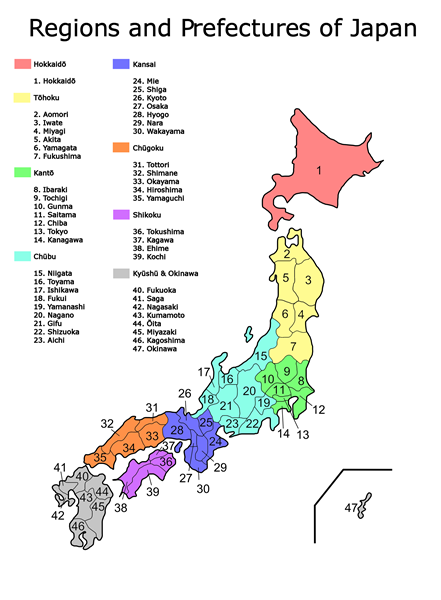
I tried to get a better context of the US radiation data in radiationreadings.tumblr.com
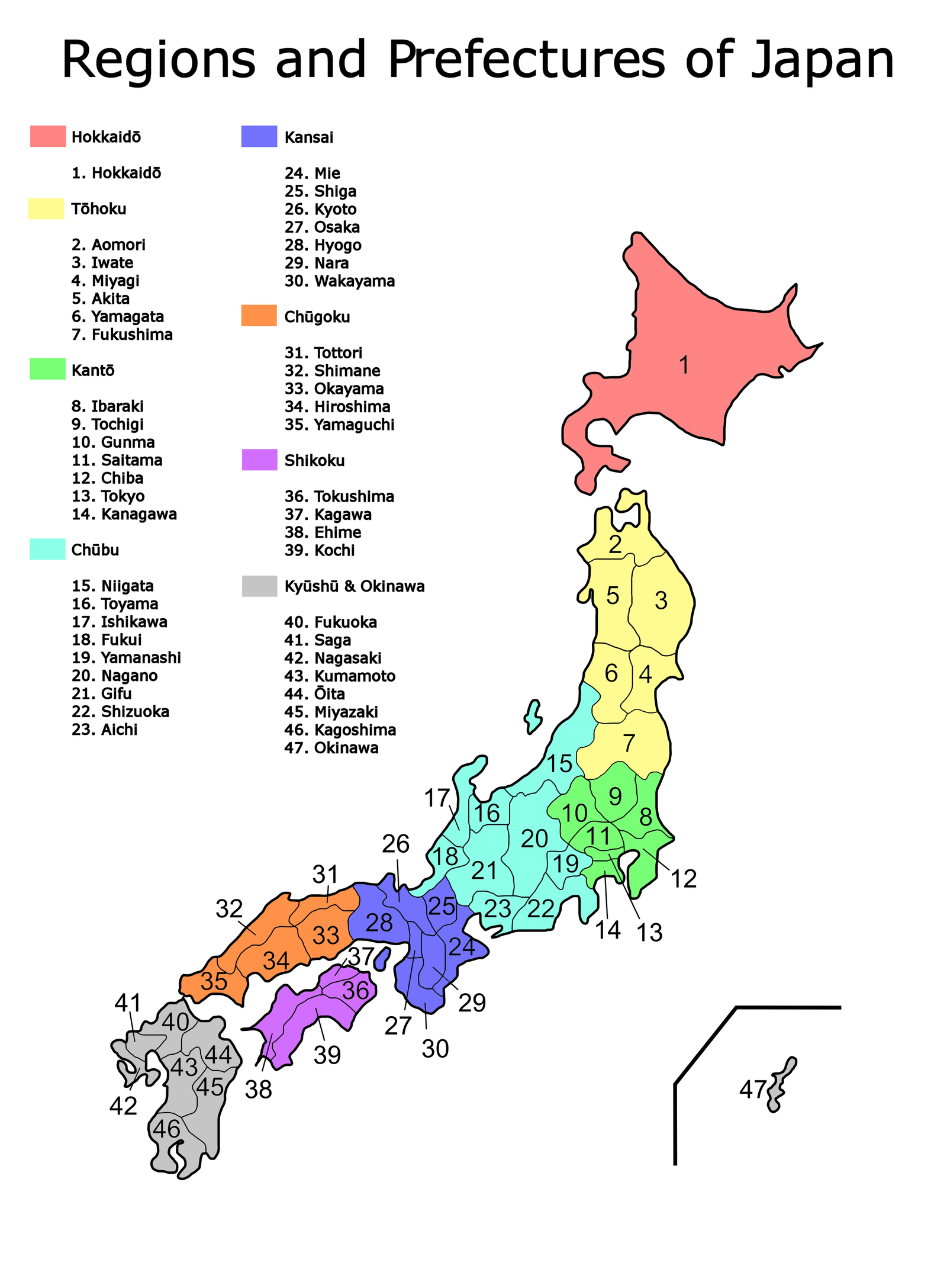
Here is a map of Japanese prefectures www.world-geographics.com
I tried to compare apples to apples, with handheld geiger counters, rather than fixed locations high on roofs.
Radiation levels in descending order:
1. Fukushima Prefecture
2. Tochigi Prefecture
3. Chiba Prefecture
4. Gunma Prefecture
5. Ibaraki Prefectureby Bobby1 via World-geographics 5/26/2011 8:21:12 PM- Reading a bit on my phone. Stop hamaoka. Th ey updated their site. They are all over fuku. I want to make contact with them if we canby lillymunster 5/26/2011 8:21:32 PM
- 6. United States
7. Saitama Prefecture
8. Tokyo
9. Kanagawa Prefectureby Bobby1 5/26/2011 8:22:13 PM - @elainekirk I'll work on it. I've been working out latest readings on the Reactor pages. Onlt 5 and 6 done, as they were the simplest. Check them out: houseoffoust.comby radioguy 5/26/2011 8:24:15 PM
- But I'm out for a bit now.by radioguy 5/26/2011 8:24:23 PM
Japan Earthquake | Page 1390
- Who's Blogging
-
 hudebnik
 alblee
 UKVal
UKVal Jonathan Keebler
 Oliver (ScribbleLive)
 kaykodh
 Markfm
 Angie
Angie Mid Valley
 Matt (ScribbleLive)
 George Gibb
- elainekirk
 PKelley
- lillymunster
 dean
dean bo
bo Edano
Edano Deb
Deb- Pedro Jesus
 IanGoddard