Japan Earthquake | Page 2061
 i am astonished of the high lung cancer rate in japan. i have never heard that japan is a smokers' country...by Edano 8/1/2011 9:20:45 PM
 These are Readings at Reading Points out of 20 km Zone of TEPCO Fukushima Dai-ichi NPP] for the 1stt August 2011 at 18:00hrs
www.mext.go.jpby elainekirk 8/1/2011 9:21:58 PM- "The health and welfare ministry has no plans to offer free cancer screening to the second generation, citing a lack of evidence linking older family members' radiation exposure and the emergence of diseases in their children." if you do not look for it, you will not find it. sundaytimes.lkby Edano 8/1/2011 9:29:15 PM
- United States of America
Life expectancy at birth (women and men, years) 2005-2010 81.4/76.9
.
Japan
Life expectancy at birth (women and men, years) 2005-2010 86.2/79.0by elainekirk 8/1/2011 9:30:30 PM - The Radiation Effects Research Foundation, run by both Japan and the United States, will launch a clinical survey later this month targetting some 12,000 children of atomic bomb survivors in the two cities.
“We have decided to begin the survey as the second generation reaches the age where they are more susceptible to such diseases,” said foundation director Takanobu Teramoto. The foundation will continue the survey permanently.
While welcoming the upcoming medical check-up, the children of the hibakusha are calling on the government to expand medical support for them, including free cancer screening tests which are otherwise costly.
“I would like them to begin cancer screening for us as quickly as possible as we are getting older now,” said Nobuhito Hirano, another second generation “hibakusha” in Nagasaki. “Our fear will never be erased.”
sundaytimes.lk
in all the years, it seems nobody cared about the posibility of second generation cancer ...by Edano 8/1/2011 9:32:14 PM  Hmm I just assumed with national health care it would be covered.by lillymunster 8/1/2011 9:33:33 PM
- @Edano very strange I think they feel that nobody will wonder why , is it so they can come up with 'evidence' that tepco victims won't need screening?
@Lilly the accident where the two men died and thousands exposed they got two months free health screening from the date of the accident, there was 3 months allowed in certain circumstancesby elainekirk 8/1/2011 9:36:09 PM - Smoking rates in Japan. They seem to be following the declines seen in the US around the same time. en.wikipedia.orgby lillymunster 8/1/2011 9:37:20 PM
- @lillymunster the hibakusha first generation (240,000 people) have free health care,but not the second.
"Around 240,000 people are officially recognised as hibakusha and are granted free medical treatment, but many more in the two cities suffering from illnesses they say are related to the attacks are seeking the recognition." health.yahoo.netby Edano 8/1/2011 9:37:52 PM - ikrockhopper itsumi Kakefuda
The quake epicenter last night was close to the Hamaoka plant, which PM Kan stopped after 3.11. Many tweets appreciated his decision.by elainekirk 8/1/2011 9:38:03 PM - @Edano are Japan funding that health care or is it an international commitment?by elainekirk 8/1/2011 9:40:21 PM
- @Edano I assumed their national health system was similar to the UK or France. Maybe it is different...by lillymunster 8/1/2011 9:40:56 PM
- i don't know nothing about the system.by Edano 8/1/2011 9:41:31 PM
- Found the basic outline: The health care system in Japan provides healthcare services, including screening examinations, prenatal care and infectious disease control, with the patient accepting responsibility for 30% of these costs while the government pays the remaining 70%. Payment for personal medical services is offered through a universal health care insurance system that provides relative equality of access, with fees set by a government committee. People without insurance through employers can participate in a national health insurance programme administered by local governments. Patients are free to select physicians or facilities of their choice and cannot be denied coverage. Hospitals, by law, must be run as non-profit and be managed by physicians. For-profit corporations are not allowed to own or operate hospitals. Clinics must be owned and operated by physicians. en.wikipedia.orgby lillymunster 8/1/2011 9:44:55 PM
- I wonder how much the real cost of all of this will end up being. Testing and medical treatment, displaced residents, business losses for businesses that can't go back, decontamination etc. The price of nuclear power is suddenly becoming really expensive.by lillymunster 8/1/2011 9:48:14 PM
 @Edano , Japanese men smoke.by Peter Melzer 8/1/2011 9:48:16 PM
- @Peter Melzer : all ? ;)by Edano 8/1/2011 9:48:58 PM
- @lillymunster , if your parents lived downwind from the Nevada bomb test site, would you be eligible for free cancer screening as a preventive measure today?by Peter Melzer 8/1/2011 9:50:15 PM
- @Edano , you know what I mean. My experience with visitors over here is that smoking among Japanese males is as prevalent as it was among Germans around 1980.by Peter Melzer 8/1/2011 9:53:27 PM
- GENETIC EFFECTS
Radiation exposure to the reproductive cells can alter the genetic code, resulting in damaged or defective genes that can be passed on to future generations. It has been known since 1927 that radiation can cause genetic defects in the descendants of insects. Experiments with other animals have shown similar results. These studies demonstrated that radiation does not increase the types of mutations seen in nature, only the frequency.
Genetic mutations, however, have not been demonstrated in human populations exposed to radiation. For example, studies of the children of the A-bomb survivors in Japan have not detected any more genetic defects than expected. It is very difficult to determine if a person has a particular genetic defect. Usually there are no easily detectable signs and several generations and large populations may be necessary before the mutation becomes visible. Most effects will probably be seen in subsequent generations as minor impairments that lead to higher spontaneous abortions, shorter life spans, increases in diseases, and ill health. Serious genetic defects usually do not manifest themselves because the person does not survive to reproduce.
Based on the irradiation of animals, the following inferences can be made regarding genetic effects in humans:
1. Radiation is a powerful mutagenic agent and any amount of radiation can potentially damage a reproductive cell.
2. The vast majority of genetic mutations are recessive. Both a male and female must possess the same genetic alteration in their chromosomes in order for the mutation to be expressed.
3. Most genetic mutations are harmful and decrease the overall biological fitness of a species.
Because genetic mutations are usually undesirable, the level of genetic defects in the population should be kept as low as possible. This can be accomplished by avoiding any unnecessary radiation exposure.
1. Increased incidences of cancer have been noted among several groups of radiation workers exposed to high doses. Among these were the early radiologists, uranium miners, and radium watch dial painters. The early radiologists were often exposed to large doses of radiation without the benefit of protective devices. Many developed cancerous skin lesions on the hands and suffered from radiation burns. Higher incidences of leukemia were also demonstrated in this group. In the early 1900's, 50% of the uranium miners in some European mines died from lung cancer. Radium-dial painters at the beginning of this century, hand painted the luminous numerals on watches and clocks with a paint containing radium. The workers would put the brush on their lips to draw the bristles to a fine point. Increased incidences of bone cancer and other malignancies were seen in these workers.
6. The strongest evidence for radiation induced carcinogenesis in humans has come from studies of the Japanese A-bomb survivors. These data have suggested that radiation may be a general carcinogenic agent capable of inducing all types of cancers. Increased incidences of leukemia, cancer of the breast, respiratory organs, digestive organs, and urinary organs have been reported. In addition, the data has demonstrated a linear relationship between dose and radiation induced leukemia.
www.radford.eduby Edano 8/1/2011 9:59:27 PM - hmmm i give it up. there are no studies about cancer in the next generation. they generally believe it to be unlikely. of course, this would be hard to study over the decades ...by Edano 8/1/2011 10:01:40 PM
- on the other hand we know that cancer in the family is always an additional cancer risk.by Edano 8/1/2011 10:04:08 PM
- @lillymunster , as to the training, I am sure that those twenty odd institutes in Tokyo could train enough people how to use such machines. My impression is that the Japanese government still is in denial about the scope of this crisis. I think the Professor is quite correct in pointing out differences among the a-bombs, Tchernobyl and this disaster. With the bombs and Tchernobyl, radioactivity was released in a pulse, whereas at Fukushima radioactivity has been released in high amounts continuously in a time course more like a steep rising hill with a very gentle slope on the other side. In the end, who knows, more Cs may be released than in Tchernobyl, and the contamination rises to hazardous levels in odd places. Indications are this is already happening. Hence, the measures that must be taken cannot exhaust themselves in temporary evacuations of a few rather deliberately designated zones.by Peter Melzer 8/1/2011 10:08:58 PM
- @Edano , I guess the hibakusha are asking for more extensive preventive care for their children. You try convince any health insurance administrator to pay for services without compelling evidence that you actually need them. Think Kostendaempfung!by Peter Melzer 8/1/2011 10:17:12 PM
- @Edano @Peter Melzer
readings outside the 20km zone 48hrs apart the fluctuations show that an area can be safe one day (air) and loaded another
www.mext.go.jp
www.mext.go.jpby elainekirk 8/1/2011 10:30:09 PM  @Majj The 10 sieverts/hour report is shocking. I have just seen it on Asahi. And they say it is probably higher inside the pipe. What about the 3 people that Asahi says took the measurement I wonder. Also I assume if this radiation is outside the pipe then it can be blown by the wind.by Will 8/1/2011 10:33:05 PM
- @Will : i really hope every worker that passed the leak had a geiger counter !by Edano 8/1/2011 10:34:27 PM
- @elainekirk , so the zoning becomes more arbitrary.by Peter Melzer 8/1/2011 10:34:52 PM
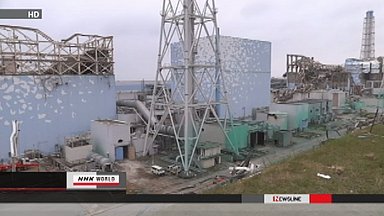
www3.nhk.or.jp
ah, nhk woke up and comes with a video : www3.nhk.or.jp
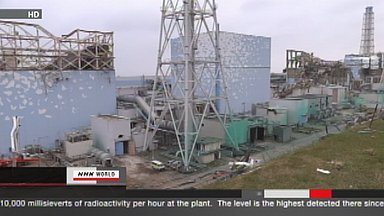
Highest radioactivity level detected at nuke plant
The operator of the Fukushima Daiichi nuclear power plant says it has detected 10,000 millisieverts of radioactivity per hour at the plant. The level is the highest detected there since the nuclear accident in March.
Workers of Tokyo Electric Power Company, or TEPCO, on Monday measured the extremely high level of radioactivity near pipes at the bottom of a duct between the No.1 and neighboring No.2 reactor buildings.
According to the science ministry's brochure, if a human received 10,000 millisieverts, they would likely die within a week or two.
TEPCO has restricted access to the site and the surrounding area.
The utility says the workers taking measurements on Monday were exposed to up to 4 millisieverts.
The utility says the high level of radioactivity was detected because the pipes were used to vent air containing radioactive substances from the crippled No.1 reactor on March 12th.
The utility had detected a maximum of 1,000 millisieverts per hour outdoors in debris, and also found a maximum of 4,000 millisieverts per hour indoors in one of the reactor buildings.
Tuesday, August 02, 2011 06:33 +0900 (JST)by Edano via Www3.nhk.or.jp 8/1/2011 10:37:59 PM- @Edano Yes, and I guess the question is how long has leak been there undetected. Four and a half months into this and the readings are the highest yet. Thanks for putting up the NHK link. My Japanese relatives have just been on the phone about the 10 sieverts and it seems most people are aware of this particular story.by Will 8/1/2011 10:40:40 PM
- @Will the leak appears to be caused by the 6.4 quake on sunday. something from inside of the pipe fell down.by Edano 8/1/2011 10:42:22 PM
- No-entry decontamination to start next month
Japan's minister in charge of the nuclear crisis says full-scale decontamination measures will begin next month for the 20-kilometer evacuation zone around the Fukushima Daiichi nuclear plant.
Goshi Hosono made the remark on a commercial TV channel on Monday.
Hosono said the government will begin decontamination on a large scale and continue monitoring radiation levels. He said the government is aiming for a complete cleanup of the evacuation zone.
The minister added that radioactive materials must be removed from the zone so that residents can return home by early next year. January will mark the end of the second stage of a plan to achieve a cold shutdown of the damaged nuclear reactors.
Tuesday, August 02, 2011 06:33 +0900 (JST)
www3.nhk.or.jpby Edano 8/1/2011 10:43:08 PM - makes no sense while the reactors still leak.by Edano 8/1/2011 10:44:26 PM
- @Edano @Will makes no sense whatsoeverby elainekirk 8/1/2011 10:47:08 PM
- @elainekirk @Edano Makes as much sense as hanging clothes out to dry during a torrential downpour.by Will 8/1/2011 10:52:30 PM
 @Will Well put. They've really become delusional, haven't they? They're beginning to think even the simplest comprehensions are beyond the poor peons. "Hmm... look at all that steam coming from those three melted-through reactors. Think there's radiation there?"by RadioGuy 8/1/2011 10:56:52 PM
- removing snow during a snow storm.by Edano 8/1/2011 11:01:18 PM
- @Edano An old USA saying seems apropos: They're closing the barn door after the horses escape. The 'decontamination' is theater- Kabuki?
by M.I.A. 8/1/2011 11:04:57 PM - We just finished Budget Kabuki in the US, so why not?by RadioGuy 8/1/2011 11:06:59 PM
- @RadioGuy how did they deceive the tea party ?by Edano 8/1/2011 11:07:55 PM
- The two-phase testing of rice is a good step though, unless that somehow gets turned into a gesture.by RadioGuy 8/1/2011 11:08:16 PM
- @Edano Oh, it hasn't PASSED yet. Everyone has just been told its a done dael, and direconsquencesdireconsequences if eeeeevrybody doesn't vote for itby RadioGuy 8/1/2011 11:09:15 PM
- @RadioGuy : they only test samples that they bring them voluntarily ...by Edano 8/1/2011 11:09:15 PM
- @Edano oh...haqhahahby RadioGuy 8/1/2011 11:09:33 PM
- @RadioGuy They still have to vote, eh? Let's hope they don't let the default happen. With the executive orders that have been passed in the last decade or so, O'bama (heh) may declare a 'financial catastrophe' and suspend the Constitution. (Yes, that and much worse is now within the power of the President) That's the dire consequences I fear the most.... :((by M.I.A. 8/1/2011 11:10:35 PM
Japan Earthquake | Page 2061
- Who's Blogging
-
 hudebnik
 alblee
 UKVal
UKVal Oliver (ScribbleLive)
 Jonathan Keebler
 kaykodh
 PKelley
 Markfm
 Angie
Angie Deb
Deb Mid Valley
- Pedro Jesus
 Matt (ScribbleLive)
 George Gibb
- elainekirk
- lillymunster
 dean
dean bo
bo- Edano
 IanGoddard