Japan Earthquake | Page 2352
 @Peter I wondered why they waited so long also. I am trying to find the document from the other day where TEPCO mentions watering changes to closer access the corium, this sounded in addition to the core spray change and they stated they didn't know where the corium was. They seem suddenly much more interested in the goings on at the bottom of the containment buildings.by lillymunster 9/16/2011 2:22:12 PM
 Weird, I got a warning when coming here today via my Flock browser, I'm not sure the source of the warning and reloading it didn't come back. This is what it said: Warning: Visiting this site may harm your computer!
The website at www.scribblelive.com contains elements from the site ad.bannerconnect.net, which appears to host malware – software that can hurt your computer or otherwise operate without your consent. Just visiting a site that contains malware can infect your computer.by Ian 9/16/2011 2:26:10 PM @lillymunster , the fact that they measure high radiation levels in the torus of unit 2 may mean that some corium lurks in it. Considering the various flow paths found under the Chernobyl reactor, this seems entirely possible.by Peter 9/16/2011 2:26:49 PM
- Professional wrestler gives 500 radiation detectors to kindergartners search.japantimes.co.jp
Forestry service testing forests trying to figure how to decontaminate
mdn.mainichi.jp
Tsunami victim washes up onshore 6 months later
mdn.mainichi.jpby lillymunster 9/16/2011 2:28:46 PM - I have had ads that appear on the side that automatically start audio output. Before I realized it was via scribble I was confounded about how to stop audio ads that would suddenly emerge from my computer. That's rare, but perhaps that's the "operate without your consent" the warning refers to.by Ian 9/16/2011 2:29:11 PM
 in my mind I try to visualize a heap of tons of corium perhaps in multiple places but centrally more dense. Then the introduction of water from the feed water system attempting to cool the mass from outside in. Then as identified, they decide lets put water through the reactor spray and they see some paramater changes. That tells me something about how sensitive the corium mass is to different cooling paths and temperature of the cooling water. They typically pre-heat the water before it goes back in the reactor when operating but in this condition the temp of water could be real low. The spray and feed water flow rates in GPM is low.. as I calculate (need a check from one of you)...by dean 9/16/2011 2:29:20 PM
- @Peter I wasn't aware the corum at Chernobyl had paths. I thought the elephant foot was all of what was left. But I have not studied Chernobyl much at all.by lillymunster 9/16/2011 2:31:05 PM
- @Ian those obnoxious auto play ads will show up as being malware. I wish scribble would stop using those. The image ads are understandable. But I have always had an aversion to animated and autoplay video ads. I think they are annoying and tend to do more to damage a brand than advertise it.by lillymunster 9/16/2011 2:32:33 PM
- flow rates through the spray were 3 m3/hr = 13 gpm.... and feed water 4 m3/hr = 18 gpm... .this is a total of about31 gpm........ pretty small... I looked up what a standard garden hose 3/4 in puts out and it's about 10 gpm.... if these figures are correct, the water spray volume would be very small... not sure how to interpret the data... would some one please check the math?by dean 9/16/2011 2:33:29 PM
- The low-pressure core spray system is designed to suppress steam generated by a major contingency. As such, it prevents reactor vessel pressure from going above the point where LPCI and LPCS would be ineffective, which is above 32 atm (3200 kPa, 465 psi). It activates below that level, and delivers approximately 48,000 L/min (12,500 US gal/min) of water in a deluge from the top of the core.
Versioning note: In ABWRs and (E)SBWRs, there are additional water spray systems to cool the drywell and the suppression pool.by dean 9/16/2011 2:35:17 PM - The low-pressure coolant injection system, the "heavy artillery" in the ECCS, can be operated at reactor vessel pressures below 465 psi. The LPCI consists of 4 pumps driven by diesel engines, and is capable of injecting a mammoth 150,000 L/min (40,000 US gal/min) of water into the core . Combined with the CS to keep steam pressure low, the LPCI is designed to suppress contingencies by rapidly and completely flooding the core with coolantby dean 9/16/2011 2:35:42 PM
- I am not sure which system they are using to feed water to the two injection points.. feed water and spray..by dean 9/16/2011 2:36:15 PM
- @ lilly, the corium at chernobyl flowed out several paths the majority of which was out that bottom head area where we've seen those elephant foot photosby dean 9/16/2011 2:38:13 PM
- @Dean, the BWR units do not have a way to cool the supression chamber?by lillymunster 9/16/2011 2:40:08 PM
- Did Chernobyl attempt water spraying for a time before they started dumping in sand?by lillymunster 9/16/2011 2:42:19 PM
- @ lilly.. the suppression chamber has cooling but I would have to look it up to see if it's an auxilliary system or part of the water inlet spray to that area so condensing can take placeby dean 9/16/2011 2:44:06 PM
- @All This is a very detailed analysis of TMI, an article more than a formal paper with diagrams and timelines. It takes a bit to download, but is really good (18 pgs). library.lanl.govby M.I.A. 9/16/2011 2:45:20 PM
 #2 suppression chamber is badly holed iircby elainekirk 9/16/2011 2:46:12 PM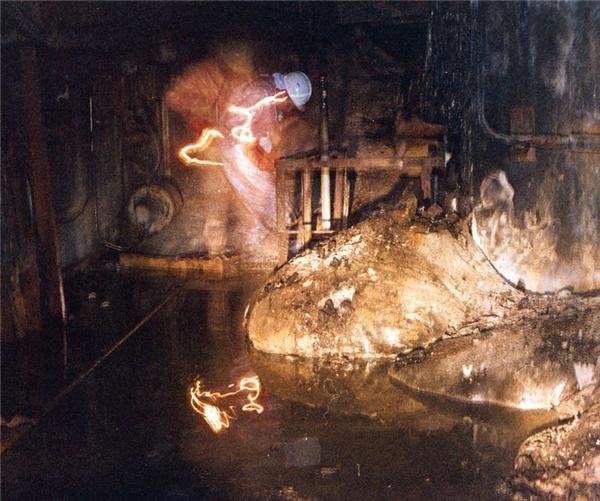
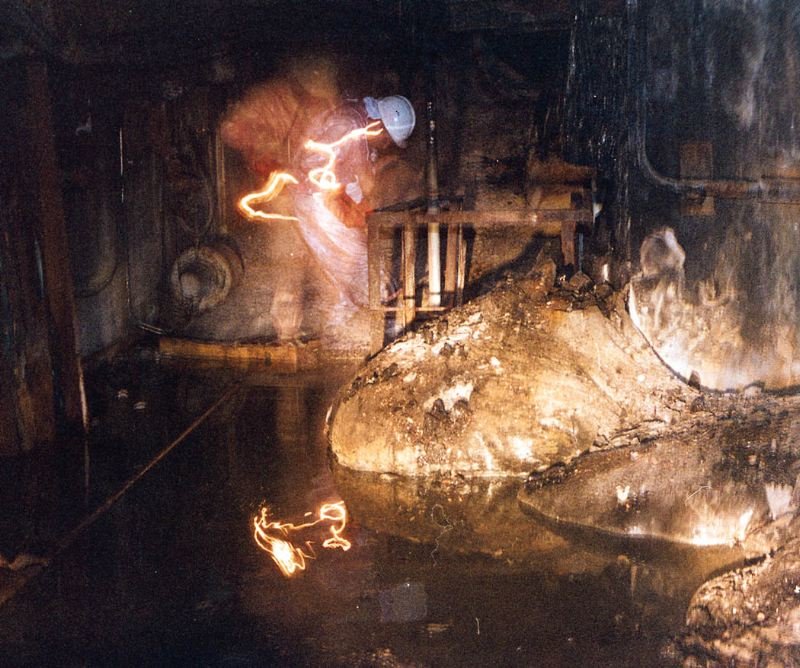
Ran across this interesting image of corium at Chernobyl from 96. Notice the guy not wearing any face mask. smbhax.com
by lillymunster via Smbhax 9/16/2011 2:46:29 PM- @elainekirk yes, size of a motor cycle, downgraded from size of a house. :-)by lillymunster 9/16/2011 2:46:49 PM
- @ lilly.. there are other photos of corium flowing our of areas around that elephant footby dean 9/16/2011 2:46:57 PM
- @dean I found a DOE library of images, going through them now.by lillymunster 9/16/2011 2:47:20 PM
- Bummer, their file server isn't working. insp.pnnl.govby lillymunster 9/16/2011 2:52:55 PM
- as for the article on trying to determine the status on the control rods. I looked at the diagram with the probe and can see how they expect things to work. At this point I wonder why it's so critical to determine the condition of the control rods as operating them, if they are operable, would upset the debris in the core.by dean 9/16/2011 2:54:00 PM
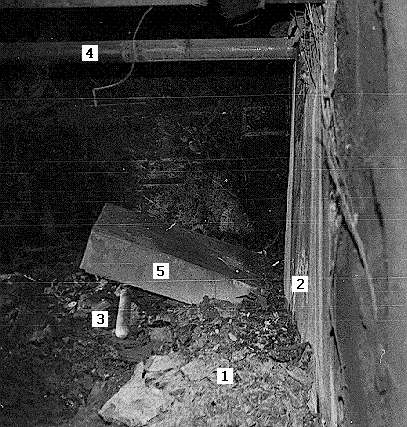
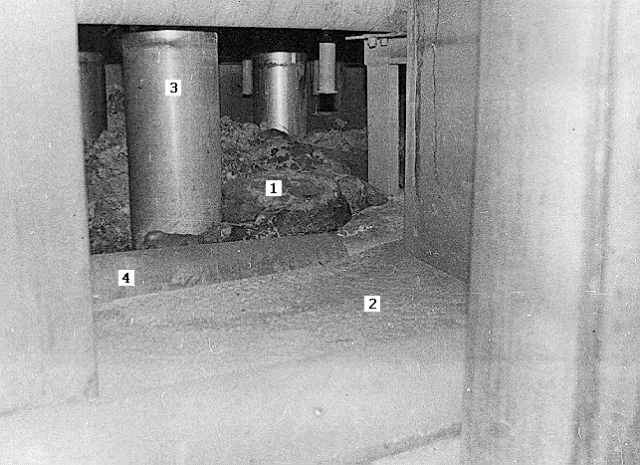
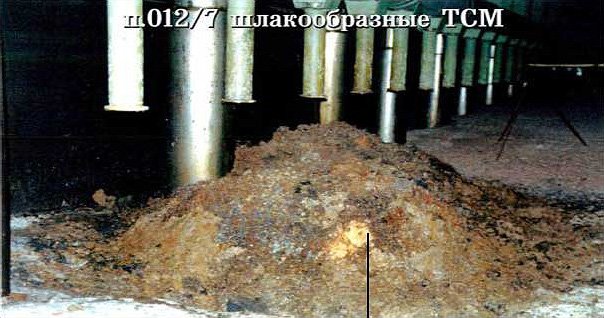
- The molten reactor core accumulated in the room 305/2, until it reached the edges of the steam relief valves; then it migrated downward to the Steam Distribution Corridor. It also broke or burned through into the room 304/3.[31] The corium flowed from the reactor in three streams. Stream 1 was composed of brown lava and molten steel; steel formed a layer on the floor of the Steam Distribution Corridor, on the Level +6, with brown corium on its top. From this area, brown corium flowed through the Steam Distribution Channels into the Pressure Suppression Pools on the Level +3 and Level 0, forming porous and slag-like formations there. Stream 2 was composed of black lava, and entered the other side of the Steam Distribution Corridor. Stream 3, also composed of black lavas, flown to other areas under the reactor. The well-known "Elephant's Foot" structure is composed of two metric tons of black lava,[18] forming a multilayered structure similar to tree bark. It is said to be melted 2 meters deep into the concrete. As the material was dangerously radioactive and hard and strong, and using remote controlled systems was not possible due to high radiation interfering with electronics,[35] shooting at it from an AK-47 was used to split off chunks for analysis.[36][37][38]by dean 9/16/2011 2:55:18 PM
- that was in chernobyl @ lillyby dean 9/16/2011 2:55:34 PM
- en.wikipedia.org article on corium at chernobyl with good information on what it consisted of.. this may be used to compare what the samples from FUKU would shoby dean 9/16/2011 2:56:38 PM
- @lillymunster, at least the auto-play ads are rare. They are annoying and force me to close the tab with the scribble feed. If that's not an example of a bad advertising policy, what is?!by Ian 9/16/2011 2:57:16 PM
 Fukushima Evacuees to Return to Exclusion Zone to Check Property
news.businessweek.comby Panserbjorne9 9/16/2011 2:57:36 PM- probably already know this, but: Most Core Detectors Found Damaged At Fukushima No. 1 Reactorby Panserbjorne9 9/16/2011 2:59:10 PM
- link for that: www.foxbusiness.comby Panserbjorne9 9/16/2011 2:59:21 PM
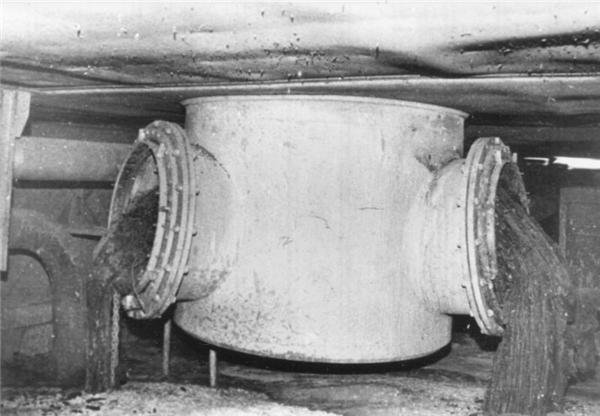 by dean 9/16/2011 3:00:07 PM
- @dean, one difference with Chernobyl corium I leaned about the other day was that it mixed with sand and formed a composite amalgam. The program stating this seemed to imply this happenstance mixture helped to contain the corium. The sand filled a space around the core and was a shielding mechanism. I'll try to dig up the video of the program covering this. It was the best program I've seen on Chernobyl.by Ian 9/16/2011 3:01:17 PM
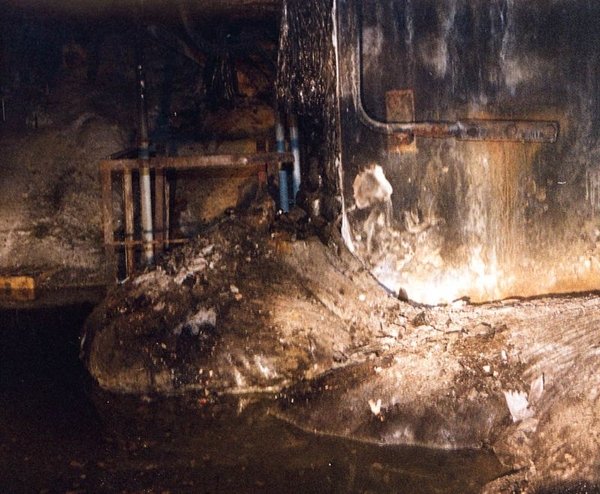
Some more corium flow images a1.img.mobypicture.com
by lillymunster via A1.img.mobypicture 9/16/2011 3:04:16 PM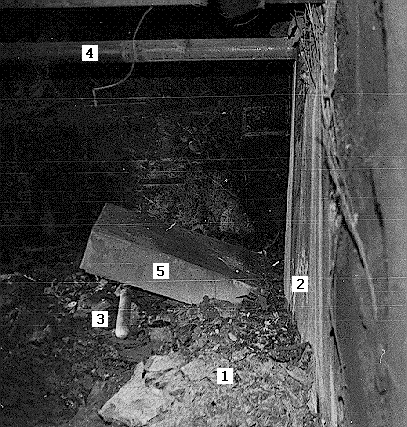
A control cabinet, possibly graphite and corium www.spaceman.ca
by lillymunster via Spaceman.ca 9/16/2011 3:05:11 PM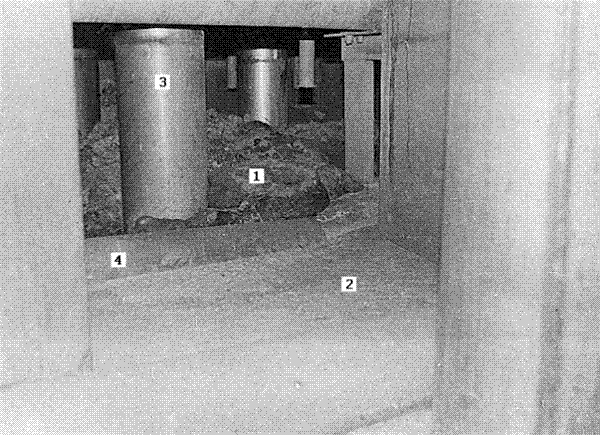
This one doesn't say location www.spaceman.ca
by lillymunster via Spaceman.ca 9/16/2011 3:05:32 PM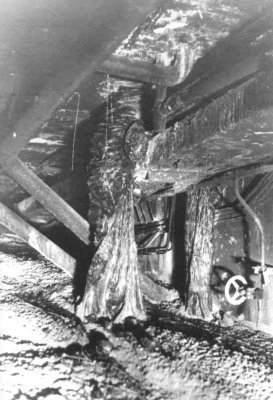 by lillymunster via 2.bp.blogspot 9/16/2011 3:05:55 PM
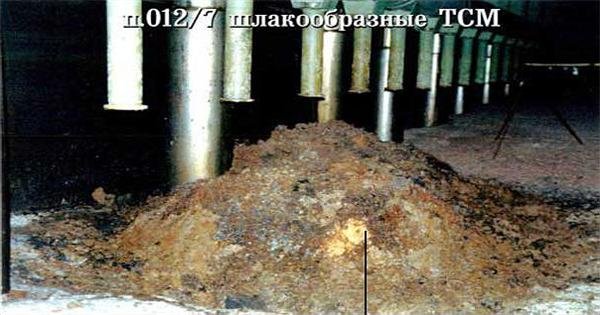 by lillymunster via 4.bp.blogspot 9/16/2011 3:06:35 PM
- good ones @ lillyby dean 9/16/2011 3:06:59 PM
- strange how there is this well documented photo collection of corium stretching back decades to the very beginings of digital technology and yet fuku want us to believe they don't even know where theirs is despite the numerous camera's etc that are built in to containments etcby elainekirk 9/16/2011 3:10:01 PM
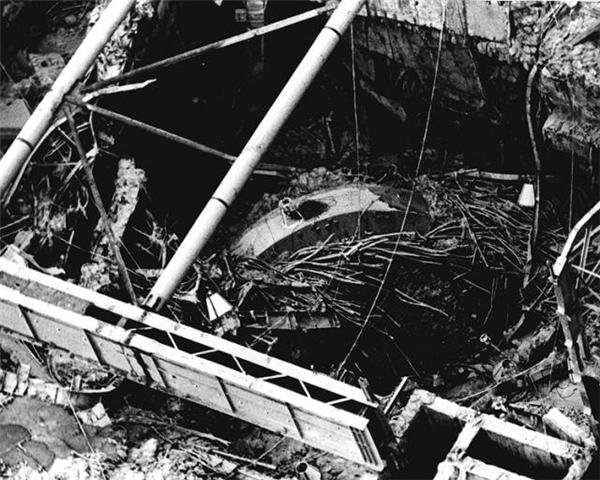
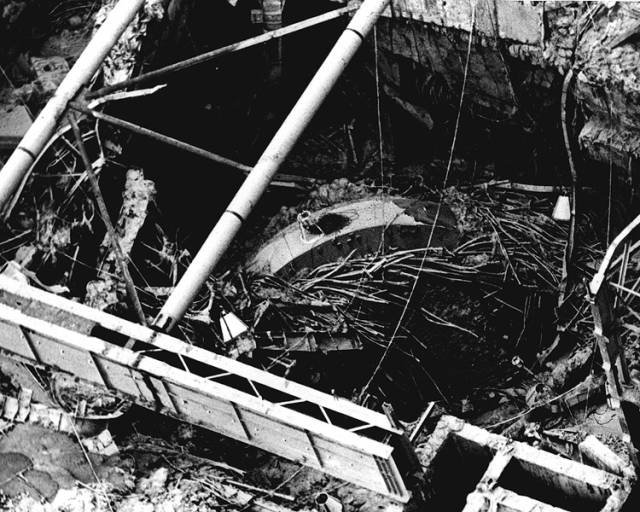
Found this one, not corium. The sideways lighter pieces is the reactor cap, said to be as heavy as 6 locomotive engines. Was flipped in the blast. www.roundtree7.com
by lillymunster via Roundtree7 9/16/2011 3:10:18 PM- gallery.spaceman.ca @ lilly check out the photos on this link alsoby dean 9/16/2011 3:11:11 PM
- The chernobyl images were many taken 10 years later. Said they had issues getting robotic equipment in there due to the radiation,by lillymunster 9/16/2011 3:11:31 PM
- true @ elaineby dean 9/16/2011 3:11:39 PM
- @ lilly.. that link I found is the best I have seen on chernobyl with good photo's and some graphicsby dean 9/16/2011 3:13:56 PM



Japan Earthquake | Page 2352
- Who's Blogging
-
 hudebnik
 alblee
 UKVal
UKVal Oliver (ScribbleLive)
 Jonathan Keebler
 Matt (ScribbleLive)
 kaykodh
 PKelley
 Markfm
- dean
 Angie
Angie Edano
Edano Deb
Deb Mid Valley
- Pedro Jesus
 George Gibb
- elainekirk
- lillymunster
 bo
bo IanGoddard