Japan Earthquake | Page 2404
 @elainekirk i thought about that in the fuku case. i think tepco was heavily unprepared for a meltdown and loca scenario. they did not even know how to manually vent. but the situation must have been like close to hell. no electricity, no lights, no communication, a tsunami, heat, three explosions and no data, 9 reactors and 10 spent fuel pools out of control. how can you ever try to train such an emergency ?by Edano 9/25/2011 11:32:02 AM
 @Edano you can't but I think if they had had an in house workforce it may have improved outcomes, a transient workforce does not have the cohesion to respond to situations in a unified wayby elainekirk 9/25/2011 11:34:49 AM
- rockhopper says sarry? has been down since last night but kurion working isnt kurion the desalination though?by elainekirk 9/25/2011 11:36:09 AM
- @elainekirk no, kurion is the zeolithe mashine, the desalination thing by areva is down, too.by Edano 9/25/2011 11:37:20 AM
- @Edano ah me getting them confusedby elainekirk 9/25/2011 11:40:22 AM
- ... "Supression chamber temperature rising in Unit 2
There is something else going on at Unit 2 and perhaps Unit 3. Namely, the temperatures in the suppression chamber (S/C) are rising. If nothing else this discussion shows how ridiculous it is to consider the reactors are in "cold shutdown" when there are holes in the reactors (RPVs), the drywells (D/Ws) and in the torus in Unit 2 (S/C) at least. The nuclear fuel is being washed about within all these parts of Unit 1, 2 and 3 by the water injection system. No one really knows how much of the fuel is in any of these locations. The Sv/hr radioactivity measurements discussed in these comments are a rough way of estimating where the fuel might actually be.
Note the radioactivity sensor in Unit 1 is broken, so those measurements are not valid. Indeed, as the comments reflect, the validity of the measurements of any of the sensors (for pressure, radioactivity, water levels, temperatures) in the reactors are questionable due the heat, water and shocks from the explosions and the difficulty of getting workers near the reactors to check the equipment.
Here are parts of the on-going discussions at Physics Forum.
I've noted the comment number so you scroll through the various comments on the forum page and find the reference comment.
Comment #11259
Well I've been looking at the data. Suppression Chamber temperatures stopped declining, and started to slowly rise, around August 31st. This was just a few days after the sudden leap in recorded RPV Bellows temperature, which was mentioned on this thread, with an official explanation that it was probably an instrument malfunction.
The pace of the suppression chamber temperature rise appears to have increased as September has gone on, with quicker climbs in recent days. Reactor Suppression Chamber Gas temperatures have also gone up a few degrees in recent days.
And then I looked at the CAMS data for the first time in months. Drywell CAMS A has been falling more quickly in recent days, and both S/C CAMS A and CAMS B have risen. In the case of the B readings, its risen by almost 1 Sv/h in the last 6 days.
I need to look at slightly older data and do some graphs in order to firm up my impression of the data, but I find this stuff interesting.
comment #11263
[...] If the S/C temp goes up, it would suggest one of two things to me:
1) More radio-nuclides were washed out from the RPV by the added core spray water flow and that water somehow drained into the S/C at the bottom, increasing decay heat output there.
2) The added core spray resulted in more steam production (instead of conduction via the hot RPV metal), more steam condensation in the dry well and a larger flow of still hot condensate from there down into the S/C.
[...] If that data is reliable and D/W radioactivity decreases while S/C radioactivity goes up, perhaps it means that fission products are getting flushed into the S/C, as per the first of my 2 theories.
In unit 2 the S/C is supposed to have ruptured. If radioactivity gets washed into the S/C from the RPV or D/W there's a good chance it will leak from there into the basements. In the best case it will eventually end up in the cesium sludge filters of the Areva/Kurion and SARRY plants. In the worst case it will end up in the soil or ocean.
comment #11276
Cheers for this response, these were the kinds of things I was wondering about.
Given that the change in temperature trends that I commented on started well before alternative spraying started at reactor 2, I have been looking for other possibilities. I note that they have sometimes had to adjust the water flow rate in recent month or so, because its fallen lower than they intended, so I suppose its possible that fluctuations in this could lead to a similar disturbance & relocation of material or changes in water/steam flows.Or perhaps some other thing else caused some kind of change around the end of August, perhaps an earthquake or some other work. I suppose I should also consider whether the nature of the water being injected has changed, e.g. is it warmer than it used to be, but in that case I would expect to see similar trends at the other reactors.
My main reason for interest in this stuff is that since reactor 2 was blamed for around 90% of the total radioactive release, it is of most interest to me. Given the likely location of the explosion there, and a report that suggested that some corium that escaped the reactor vessel could well find its way down to the basement that the suppression chamber lives in, Im interested in whats going on down there. And since I haven't seen similar temperature trends before (most rises being of the spike variety rather than a gradual climb), I thought I may as well draw attention to it.
I should probably also consider the possibility that the data we have about the suppression chamber may actually reflect changes to the conditions in the basement rather than the suppression chamber directly. e.g. If more core entered the basement, we would expect suppression chamber to be affected?
comment #11278
Perhaps I should think more about the possibility that the water being injected is now following a path that means some of it is picking up more heat before ending up draining down into the suppression chamber, so warmer water is entering the suppression chamber, rather than being warmed more once it reaches that location?
There are very tentative signs that suppression chamber temps at reactor 3 might just have started to nudge up, but its many days too soon to make this claim seriously, and all of the rises I have been talking about are small, so I don't want to overstate my point.
Anyway as regards reactor 3 the other temperatures are surely more interesting right now, seeing what they are able to achieve with really quite high rates of water injection via the CS system at the moment. Its made quite a large difference so far, and recently they are placing even more emphasis on the pseudo-'cold shutdown' achievement that they always harp on about. So they would probably like to be able to have this flow rate on a sustained basis in order to produce numbers that look comfortably below 100 degrees C, but with the water treatment facilities as trouble-prone as they are, its likely not the easiest of balancing acts to get right.
Contamination
63,000 Bq/Kg of Radioactive Cesium from Rooftop of Apartment Bldg in Yokohama City
It made the national news ONE MONTH AFTER a private citizen measured the air radiation level on his own and had the dirt tested with his own money.
According to TV Asahi's "Morning Bird" news variety show on September 19, 63,000 becquerels/kg of radioactive cesium was detected from the dirt sediment on the rooftop of a 5-story apartment building in Kohoku-ku in Yokohama City. It is the same Kohoku-ku where 42,000 becquerels/kg of radioactive cesium was found near the side drain on the road." ......
www.pacificfreepress.comby Edano 9/25/2011 11:49:50 AM - @Edano no immediate threat to human health
then ^I^by elainekirk 9/25/2011 12:00:55 PM  good morning to allby dean 9/25/2011 12:23:32 PM
- morning deanby elainekirk 9/25/2011 12:26:08 PM
- @dean have you seen calhoun they and state ask for emergency practice cancelled because they can't do it in an emergency !?!? do they not see how bad that sounds?by elainekirk 9/25/2011 12:27:38 PM
- good morning @ elaine.. yeh it's all smoke and mojo excuses,,,, BOGUSby dean 9/25/2011 12:29:36 PM
- @dean how do you think they will be coping at fuku with sarry down?by elainekirk 9/25/2011 12:30:42 PM
- Calhoun also said that the facility was safe and they could weather through things,, besides they certainly could support a table top discussion and exercise... simply excuses to buy time and forego the inevitableby dean 9/25/2011 12:30:46 PM
- @dean they have asked for a change in something..oh drat I need to go find itby elainekirk 9/25/2011 12:32:48 PM
- @dean it was this pbadupws.nrc.gov are they wanting to change parameters ?by elainekirk 9/25/2011 12:34:44 PM
- @ elaine, in my opinion we knew the sarry would become so highly radioactive that work on it would be extremely hard if not, as now impossible due to the rad levels... I think the units made if from Aug 18 to 28 or something like that.. which, isn't much of a record. Back to the drawing boards to determine how to decontaminate the internal piping and hoses then try again.... I would think they should be able to remotely replace the sections of pipinng etc that become hottest and have them behind shield walls. .
by dean 9/25/2011 12:35:05 PM - reading the requests nowby dean 9/25/2011 12:36:54 PM
- @dean yup they are really flying in the dark they should be looking outside the industry for more innovative solutionsby elainekirk 9/25/2011 12:41:41 PM
- SARRY line A was used for the first time on 23 September:
9 / 23 16:53 We activated second cesium adsorption facility (System A and System B). At 17:03, the flow rate achieved steady state (approx. 40 m³)
www.tepco.co.jp
Then on 24 September:
*At approx. 8:30 pm on September 24, the second Cesium adsorption facility
of water treatment facility has automatically shut down. Investigations
are now underway. Water treatment by Cesium adsorption facility is
continuing. As there are sufficient treated water stored in the tank,
there is no impact on the water injection into the reactors.
www.tepco.co.jp
So it seems that both lines A and B of SARRY are down. The Kurion system is running. The status of the Areva system is unclear.
www.physicsforums.comby Edano 9/25/2011 12:46:50 PM - @ elaine, bascially the LCO's at a plant are limiting conditions for operation and are what a NPP sets as limits to allow operation with restrictions, typically time restrictions that then order the plant to go to a lower power level or shut down such that the safety margins of the plant are maintained. they call it.. "entering an LCO", some LCO involve lowering power until the condition is cleared or it may involve actions like increased surveillances etc. Calhoun is suggesting they remove the LCO for the loss of the ULTIMATE HEAT SINK which is the river since it is the ultimate source of cooling to the reactor auxilliary systems which in turn cool the reactor. In addition, they suggest that they revise a scram point which is directly tied into the river level but the NRC is telling them then their instrumenation "uncertainty" is not good enough to support their request. I expect Calhoun wants to keep the money flowing in for as long as possible even in flood stages...by dean 9/25/2011 12:47:32 PM
- @ Edano I was reading an earlier post which was probably on another unit? TEPCO announced on August 22 that a high radiation of about 3 sieverts/hour was detected at Toshiba’s SARRY which was recently introduced as part of the contaminated water treatment system at Fukushima I Nuclear Power Plant. Due to the high radiation, TEPCO could not exchange parts [cesium towers], and the water processing [using SARRY?] had to be stopped.by dean 9/25/2011 12:50:44 PM
- SARRY started the full operation on August 18. According to TEPCO, workers were exchanging the parts that absorb cesium for the first time in the morning of August 22, when they found a spot with high radiation on a pipe in the system. Unless the radiation level gets lower, the workers cannot exchange the parts. TEPCO is trying to flush out the radioactive materials in the pipe with water.by dean 9/25/2011 12:51:14 PM
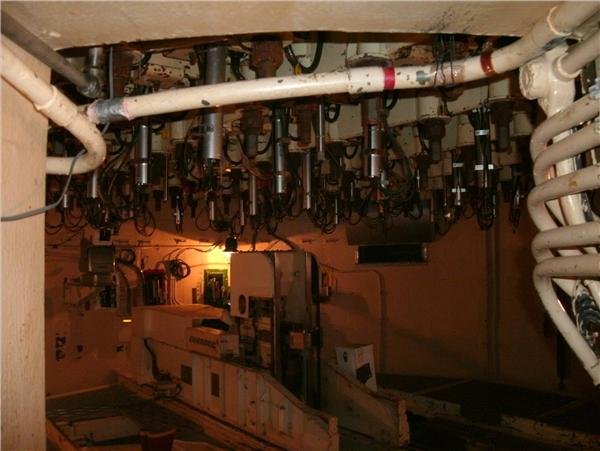
www.tepco.co.jp
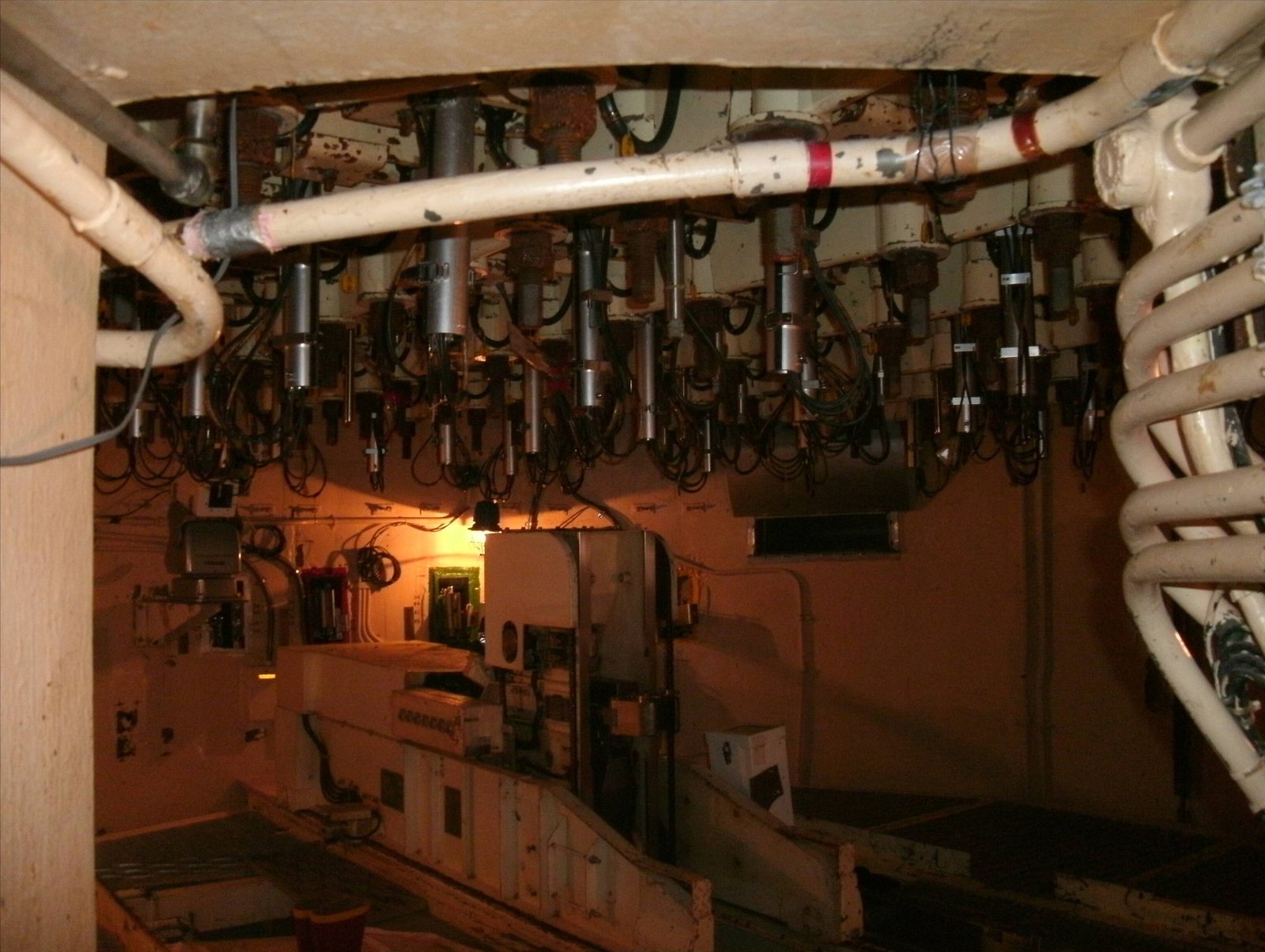
reactor pedestal and control rod actuators
yes, that is a pipe hung from the doorjamb with baling wire and kitty tapeby Edano via Tepco.co.jp 9/25/2011 12:51:24 PM- I haven't been following the treatment of water much ... so Edano has much better infoby dean 9/25/2011 12:51:52 PM
- @dean @Edano phew do these power comps not realise that the money stops comping if they wipe out their costomer base, they all sit there thinking 'it won't hapen to us' just like tepco did on march 10thby elainekirk 9/25/2011 12:52:37 PM
- @dean both sources are from tepco .....by Edano 9/25/2011 12:52:49 PM
- @Edano.. bailing wire is right and the nuclear grade duct tape.. geeeeeezeby dean 9/25/2011 12:53:10 PM
- @Edano which unit is that?by elainekirk 9/25/2011 12:53:46 PM
- @ elaine.. if you search for how much a NPP company looses in lost revenue during outages you would find that is why the term SCHEDULE OVER SAFETY evolved... they will spend millions of dollars to get NPP's back on line if they fall behind schedule..by dean 9/25/2011 12:54:40 PM
 Morning! (afternoon-evening)by lillymunster 9/25/2011 12:54:46 PM
- @Edano, I didn't notice the duct tape on the pipe before.
BTW, I did notice all the new images are highly edited for contentby lillymunster 9/25/2011 12:56:29 PM - it's unit #5 www.tepco.co.jp www.tepco.co.jpby Edano 9/25/2011 12:57:07 PM
- enformable.com Japans new super grid for direct current power proposed by president of Japan sunby dean 9/25/2011 12:58:18 PM
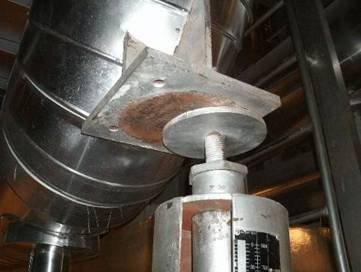
www.tepco.co.jp
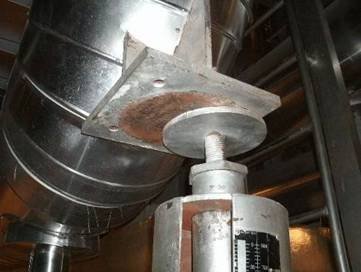
this is interesting as well: Unit 5 Moisture separator drain pipe support(Turbine building B1F)
(pictured on Aug 23, 2011)by Edano via Tepco.co.jp 9/25/2011 12:59:22 PM- quake effect ?by Edano 9/25/2011 12:59:37 PM
- enformable.com situate of top of reactor 2 containment sept 17by dean 9/25/2011 1:00:54 PM
- Trying to catch up on the calhoun posts. I grabbed the NRC doc Elaine posted. What are they asking for now?by lillymunster 9/25/2011 1:00:55 PM
- situation*by dean 9/25/2011 1:01:05 PM
- @ elaine.. I need some help.. can I give you a link or two and see if you can get these excellent videos in here...by dean 9/25/2011 1:02:08 PM
- definately @ Edanoby dean 9/25/2011 1:02:35 PM
- @ all.. that last link I posted has some video links on the side which shows inside units 2 and 3 upper parts,,, steam still showingby dean 9/25/2011 1:03:42 PM
- @dean just lookingby elainekirk 9/25/2011 1:04:48 PM
- @dean Saw those yesterday. The reactor well at unit 2, they have the barrier up around the reactor well with a red covering over it. I thought they took that down when they were operating with everything closed up?by lillymunster 9/25/2011 1:07:02 PM
- it was #2 where the crane operator died wasnt it?by elainekirk 9/25/2011 1:07:51 PM
- @dean edano is yr video man but I can tryby elainekirk 9/25/2011 1:09:00 PM
Japan Earthquake | Page 2404
- Who's Blogging
-
 hudebnik
 alblee
 UKVal
UKVal Oliver (ScribbleLive)
 Jonathan Keebler
 Matt (ScribbleLive)
 kaykodh
 PKelley
 Markfm
- dean
 Angie
Angie- Edano
 Deb
Deb Mid Valley
 Pedro Jesus
 George Gibb
- elainekirk
- lillymunster
 bo
bo IanGoddard