Japan Earthquake | Page 2418
 @Edano , Dean raised a good point. But science always falls short of its promises. I bet the alchemists in the tower in days once upon the time did not busy themselves with making gold from feces, if it were not for their lords' bidding (recall the tale of Rumpelstilzchen). As to eliminating calcium, I believe, the problem is that we carry around a large amount in our bones, according to that wiki I cite about a kilo for adults, and the turnover is very slow, in contrast to the iodine problem.by Peter 9/28/2011 12:41:16 PM
- @lillymunster , dean is right, the operators seem to treat the plants like investors in junk bonds. The greater the risk, the higher the returns. There are so many similarities, guess who paid for the bail out after the financial crisis where investments into risky cdos went awry galore?by Peter 9/28/2011 12:45:52 PM
 @LILLY, I wouldn't be surprised to see some form of litigation brought to courts to block reactor startups until certain deficiencies are repairedby dean 9/28/2011 12:52:14 PM
- I believe the NRC should make public a list of all degraded condition reports, agreed on graded approach schedules to repairs, unresolved safety questions etc on the plants... a complete list and then the document from NRC stating it's ok to continue to operate.by dean 9/28/2011 12:53:48 PM
- That would make a good congressional oversight hearing for NRC and utilities CEO's to answer and justifyby dean 9/28/2011 12:54:45 PM
 These NRC emails are crazy. NISA told them unit 4's pool fire was some spilled oil that caught fire....by lillymunster 9/28/2011 12:59:02 PM
- off to the meeting.. will returnby dean 9/28/2011 1:03:05 PM
- You always find someone for anything: "This (an, del.) important milestone, shows Vietnam's determination to develop nuclear power plants, especially in the face of global economic difficulties and after the incident at Japan's Fukushima plant," ... online.wsj.comby Peter 9/28/2011 2:01:34 PM
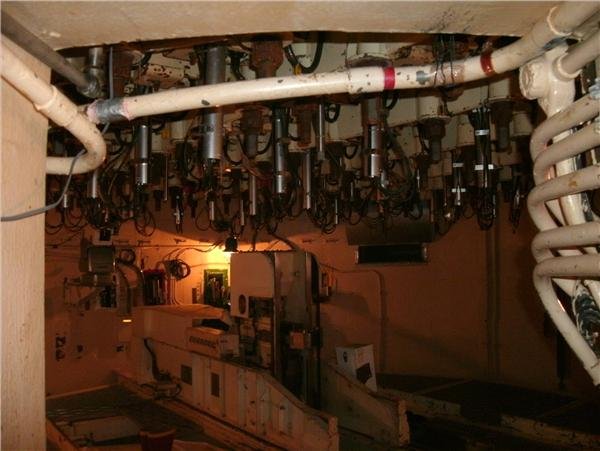
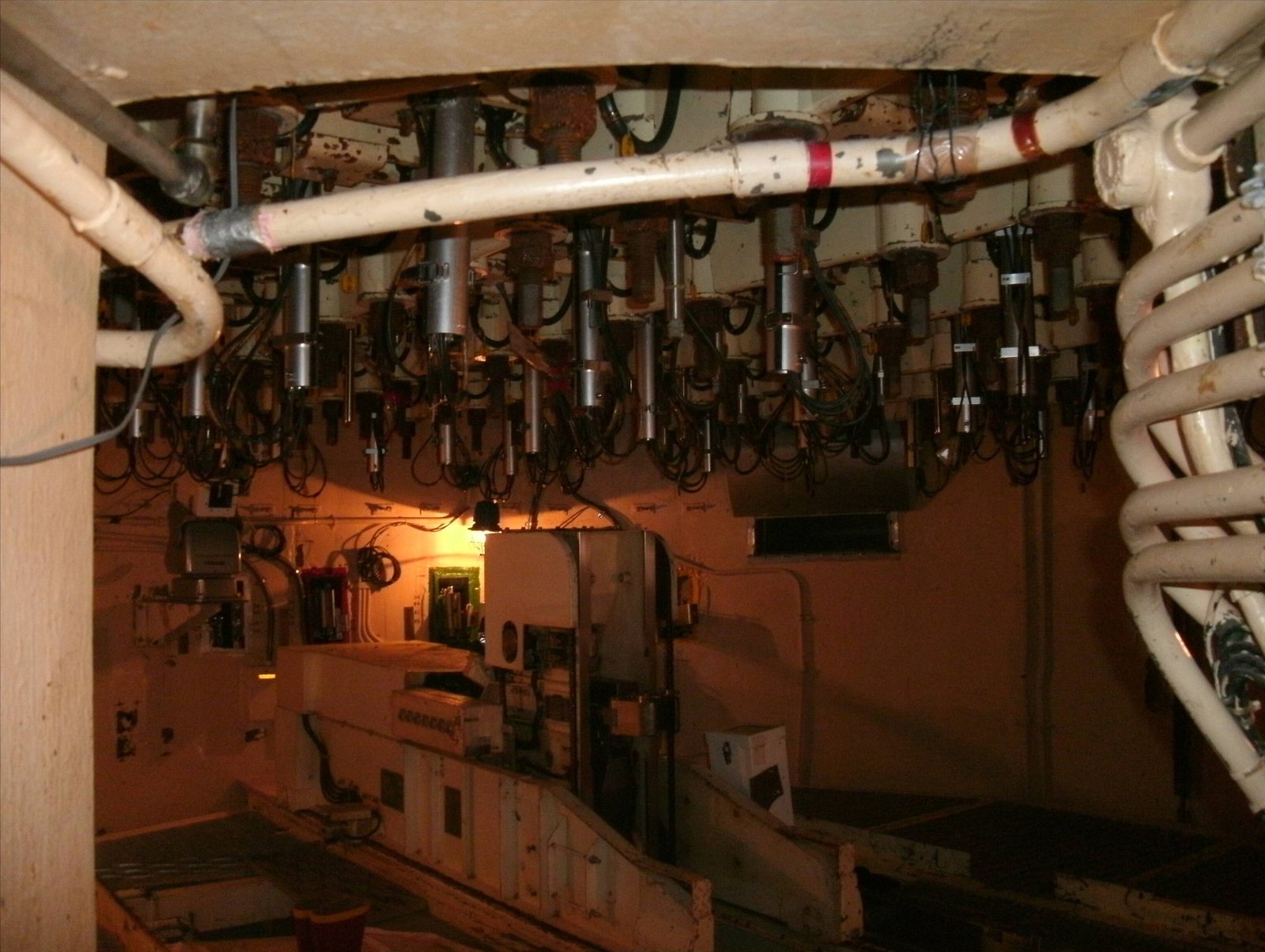
I was making close up images of the control rod photo Elaine found the other day. I found another pay of orphaned shoes. :-) www.tepco.co.jp
by lillymunster via Tepco.co.jp 9/28/2011 2:12:22 PM
boots in the pedestal
by lillymunster 9/28/2011 2:13:14 PM- Cesium readings in Gunma (250km) away are above Chernobyl evacuation zone levels ajw.asahi.comby lillymunster 9/28/2011 2:53:54 PM
 really? Is this because there's nothing left in them? "All reactors at Japan's Fukushima plant below 100C threshold-TEPCO" www.reuters.comby Panserbjorne9 9/28/2011 2:57:03 PM
- backby dean 9/28/2011 2:59:19 PM
- @ lilly the presentation was more to a general audience, I did ask the questions but I could tell that the answers weren't in detail that I wanted.. I waited and talked after the meeting and exchanged cards and gave him the web site for a visit. He is traveling to Japan tomorrow and hopefully have more details. I know that you, Peter, Edano, elaine etc could have presented the details that would have had them all amazed... will return after my work..by dean 9/28/2011 3:01:59 PM
- @Panserbjorne9 I had hoped Reuters would have allowed comments on the articleby lillymunster 9/28/2011 3:06:29 PM
 Some inside insights into Kan and Tepco : www.youtube.comby Ian 9/28/2011 3:25:08 PM
- Hi@all, could this be the reason Dr. Busby uses calcium in his pills?
“Dr. J.Y. Reginster (2002), one of the principal strontium researchers, cautions that co-administration of strontium with calcium appears to impair strontium absorption….”
www.vrp.comby Liz 9/28/2011 3:37:14 PM - @Liz, essentially yes. Strontium 'seeks' bone as they say more so because bones seek calcium and strontium 'looks' like calcium to bone-building cells. So the idea is if you don't have much blood calcium and have Sr90 in your blood, it will be readily incorporated into bone. But if you up the level of calcium on your blood, it will displace at least some of the Sr90 uptake.by Ian 9/28/2011 3:42:47 PM
- I'm unsure how much Sr90 has been released from Fukushima. But if I lived in Japan I'd err on the side of protecting against it. Our uncertainly about Sr90 levels may have more to do with it not being tested for nearly as much as Cs137 is tested for, not that they test for it and don't find it. I know there have been at least a few reports of Sr90 having been found in Japan from FukuFallout.by Ian 9/28/2011 3:47:24 PM
- @Ian stronium and plutonium have been found in land and sea testing. It isn't being tested for very often. It makes me really worried what people are not being told. Or the lack of testing being a form of govt. denial.by lillymunster 9/28/2011 3:53:54 PM
- @Ian,
“First-rate peer-reviewed research has
revealed that strontium is incorporated
into new bone, but does not make its way
into older bone.”
www.emineral.info
Sounds like children are at much higher risk than humans that have passed growing stage.by Liz 9/28/2011 4:00:35 PM  3 Fukushima reactors cooled below 100 degrees
The temperature of another troubled reactor at the Fukushima Daiichi nuclear power plant has fallen below 100 degrees Celsius for the first time since the nuclear disaster in March.
Tokyo Electric Power Company or TEPCO says the temperature in the lower area of the Number 2 reactor stood at 99.4 degrees at 5 PM on Wednesday.
Temperatures at the Number 1 and 3 reactors have been maintained below 100 degrees Celsius since August.
The utility says its cooling efforts have achieved results although it is too early to say that it has attained a state of cold shutdown for all 3 troubled reactors.
Cold shutdown is a state where temperatures below 100 Celsius are sustained and the situation remains stable.
The utility now says it is important to ensure a reliable cooling system to achieve cold shutdown.
Wednesday, September 28, 2011 20:23 +0900 (JST)
www3.nhk.or.jpby Edano 9/28/2011 4:30:26 PM- Diet to set up panel on Fukushima accident
Japan's governing and opposition parties have agreed to set up an investigative panel on the accident at the Fukushima Daiichi nuclear power plant.
The opposition Liberal Democratic Party, the New Komeito Party and the Sunrise Party of Japan submitted to the Lower House a bill to launch the panel of experts.
The 3 parties plus the Communist Party and the main governing Democratic Party agreed on Wednesday to set up a 10-member body in the Diet with the authority to summon witnesses and to demand the submission of documents.
The bill to set up the panel will come to a vote at the plenary session of the Lower House on Thursday and is expected to be enacted during the current session.
Wednesday, September 28, 2011 19:06 +0900 (JST)
www3.nhk.or.jpby Edano 9/28/2011 4:32:11 PM - Fukushima nuclear plant moves closer to 'cold shutdown'
TOKYO, Sept. 28, Kyodo
Tokyo Electric Power Co. said Wednesday all three crippled reactors at its Fukushima Daiichi nuclear power plant have met a key condition in achieving a stable state known as ''cold shutdown.''
The utility made the announcement after the temperature reading at the base of the No. 2 reactor pressure vessel at the plant, which has been crippled since the March 11 earthquake and tsunami, fell below 100 C.
Bringing the temperature at the base of each vessel to below 100 C is a key condition for achieving a cold shutdown of the plant. The Nos. 1 and 3 reactor vessels are already below 80 C.
english.kyodonews.jp
[now, this is nonsense, only #1 is nearly below 80.]by Edano 9/28/2011 4:37:48 PM  @Liz @lillymunster IIRC, the operative word in the strontium-calcium interaction is "preferential". Strontium is preferentially incorporated into bone material, so as long as the bones are finished growing and healthy (not trying to recover from osteoporosis) calcium is not attaching in high amounts, so neither will strontium. Otherwise, the body will preferentially choose the available strontium atom over the available calcium atom.by RadioGuy 9/28/2011 5:00:31 PM
- (The biochemical interaction will favor strontium over calcium.)by RadioGuy 9/28/2011 5:02:58 PM
- @lillymunster Isn't that rule 3 or 4 in the TEPCO Disaster Management playbook?
If we don't look for it, we can't find it.by RadioGuy 9/28/2011 5:13:09 PM  @RadioGuy I think 3by elainekirk 9/28/2011 5:15:53 PM
- video inside unit 2 www.tepco.co.jpby elainekirk 9/28/2011 5:17:23 PM
- video insiide unit 3 www.tepco.co.jpby elainekirk 9/28/2011 5:18:39 PM
- Keep reading
We, Tokyo Electric Power Company, received an instruction document*1 from
the Nuclear and Industrial Safety Agency (NISA) of the Ministry of Economy,
Trade and Industry (NISA) on April 28. As a consequence of the occurrence
of Tohoku-Chihou-Taiheiyou-Oki Earthquake, after which a huge crustal
movement was observed, we have reviewed and summarized the Information
regarding fault, which is necessary to take into consideration in the
seismic design, which is necessary to review the possibility of eligibility
to take into consideration in the seismic design of nuclear power station,
for existing nuclear power station with existing survey and submitted to
NISA on May 31, 2011.
(Previously announced on April 29 and May 31, 2011)
On June 6, 2011, we received an additional instruction document*2 regarding
the above matter (Previously announced on June 6, 2011). Therefore, we
conducted investigations on the amount of crustal movements and occurrence
of earthquakes at the faults which we had evaluated that they need not to
be considered for the seismic design. At the same time, we conducted ground
reconnaissance and summarized a report regarding the faults of which we
cannot deny the possibility that they fall into the faults which need to be
considered for the seismic design and analyzed the influence upon the
standard ground motion. Today we reported the results of our analysis to
NISA.
(Previously announced on August 30)
Through the survey in relation to the report, we confirmed that a normal
type of earthquake fault appeared along Yunotake Fault which had not been
considered as an active fault in our seismic design. In order to survey the
past activities of Yunotake Fault and study the causes and mechanism by
which an earthquake fault appeared, we will start boring and trenching
survey from September 29.
docs.google.comby elainekirk 9/28/2011 5:22:33 PM - as a side note, strontium (same with fluor) bones are even harder than calcium bones. strontium (the non-radioactive, of course) is used for curing bones.by Edano 9/28/2011 5:23:10 PM
- @Edano am I right in thinking taking calcium as a one dose pill would result in most of it passing through the system and it needs to be taken in smaller doses?by elainekirk 9/28/2011 5:36:00 PM
- @elainekirk yes. at least once a day. but normally food contains enough calcium.by Edano 9/28/2011 5:42:01 PM
same video as elaine's link (#3)
by Edano 9/28/2011 5:45:58 PM- Investigation results, causes and prevention measures regarding mistakes in the reports of emergency countermeasures for safety - TEPCO
www.tepco.co.jpby elainekirk 9/28/2011 6:05:29 PM - @Edano I posted the link for the #2 unit further down about 30min ago I dont know how to do the fancy thing you do to get it in a postby elainekirk 9/28/2011 6:06:28 PM
#2
by Edano 9/28/2011 6:15:38 PM- @Edano hurrah! what is your opinion on these readings is it normal to have high 134 with nd 137 www.tepco.co.jpby elainekirk 9/28/2011 6:17:07 PM
- from rockhopper
@ElaineKirk According to the Fukushima worker, 60% of 100% inflammable gas in R1 pipes is hydrogen. (Today's special measurement)by elainekirk 9/28/2011 6:35:25 PM - The color coding on the Mext maps is crazy radioactivity.mext.go.jp Red and yellow for the top two highest levels are the only sensible color choices. But then it's a random irregular mixture of blue/greens for the lower doses that easily serves to confond the quick interpretation color-graded maps are traditionally designed to facilitate.by Ian 9/28/2011 6:51:57 PM
- @Ian they think of everything in their efforts to inform without giveng informationby elainekirk 9/28/2011 7:00:46 PM
- And what's telling is that the earlier Mext maps used traditional color-grade coding that emphasizes some logical transitional aspect of colors like hot to cold or bright to dark. But Mext eventually switched to irrational confusing color coding.
For proof of this switch, AluminumStudios happened to capture an earlier version of the Mext map here www.youtube.com but then this is what that same map looks like now www.nnistar.com .by Ian 9/28/2011 7:01:22 PM - @elainekirk, they probably conducted a study to see what color codes best promote confusion. At the least it seems they went with what they assumed would confuse. Since traditional color gradients are designed to facilitate comprehension, anything else done on purpose would seem prima facie to aim for the opposite goal.by Ian 9/28/2011 7:06:01 PM
- @Ian they have been so lucky that most of the fallout (70% ? 80% ?) went out towards the ocean ....by Edano 9/28/2011 7:06:13 PM
Japan Earthquake | Page 2418
- Who's Blogging
-
 hudebnik
 alblee
 UKVal
UKVal Oliver (ScribbleLive)
 Jonathan Keebler
 Matt (ScribbleLive)
 kaykodh
 PKelley
 Markfm
- dean
 Angie
Angie- Edano
 Deb
Deb Mid Valley
- Pedro Jesus
 George Gibb
- elainekirk
- lillymunster
 bo
bo IanGoddard