Japan Earthquake | Page 2540
 Good morning, as to VENTING, I suppose that term is only used when the operator deliberately releases gaseous effluent. Of course, during an accident, there will be plenty unwanted releases. By contrast, the steam seen in the pic. from North Anna stems from the chillers used to cool the steam remaining in the turbine loop after the Main Steam Isolation Valves to the RPV were closed.by Peter 10/22/2011 3:28:34 PM
 @Peter so would the steam release in a scram either be from the clean side of the two loops or be filtered rad steam or unfiltered rad steam. I ended up slightly confused out of the conversationby lillymunster 10/22/2011 3:40:44 PM
 it is like a steam locomotive. they steam when they brake to release redundant pressure.by Edano 10/22/2011 4:04:15 PM
- @lillymunster, in normal operation in a BWR the steam/water in the turbine loop contains a short-lived radionuclide of nitrogen (half-life in seconds) which is taken care of by extending the piping back to the reactor so that the isotope can decay before the water reaches the reactor. Steam from the turbine, and the primary loop in a PWR, should not never be directly released into the atmosphere.by Peter 10/22/2011 4:10:32 PM
- @Peter did you read this: www.atmos-chem-phys-discuss.net ?by Edano 10/22/2011 4:13:24 PM
- @Edano , interesting. Since rad monitors sent out alarms right after the quake, I am not surprised, but am unsure of the timing. Pipes and valves may have been broken right away, but the xenon production should have taken a couple of hours.by Peter 10/22/2011 4:38:49 PM
- ... the interesting part will be finding evidence for quake induced damage to components important to reactor safety. Watching the vid. of the visit to Unit 1, we can imagine how difficult it must be to separate quake damage from explosion damage.by Peter 10/22/2011 4:42:24 PM
- @Peter yes, that's the point. the xenon is produced under normal operation in the core atmosphere. so early it cannot stem from a meltdown. so there must have been a containmenmt leak right away.by Edano 10/22/2011 4:43:20 PM
- @Edano , yes, normally the water circulating through the reactor is cleansed of all radionuclides as much as possible. The system must have broken at decisive points right from the get-go.by Peter 10/22/2011 4:46:27 PM
- xenon is known to be released on fuel rod exchanges.by Edano 10/22/2011 4:47:23 PM
- @Peter so i think the xenon release indicates a quake damage to the inner containment. this still does not mean that the quake would have caused a meltdown, but at least a major containment leak.by Edano 10/22/2011 4:49:09 PM
- @Edano , I suppose some escapes when you open the reactor. But if the release was measurably high, the building HVAC system would be shut off and the air would be diverted into the SGTS. People would have to leave. But that is under normal circumstances. Also remember that radiation rose inside the buildings on the day of the quake. Noble gases are part of that.by Peter 10/22/2011 4:56:29 PM
- @Peter where is the heat exchanged from primary to secondary circulation ? in the reactor or turbine building ?by Edano 10/22/2011 5:05:31 PM
- i think, imno, under normal conditions, after a cold shutdown, you would wait for the core gases to decay, maybe some days or weeks before opening the reactor. but 15 minutes after scram the xenon concentration could be considerably (and measurably) high. and under heavy pressure, of course. (that is what they mean by "the entire gas inventory escaped".)by Edano 10/22/2011 5:13:22 PM
- ...at the turbine building. At Fukushima, turbine steam heat is primarily exchanged in a condenser that is cooled with seawater. At North Anna there must be additional chillers for peak excess heat, I am looking for a layout.by Peter 10/22/2011 5:17:23 PM
- @Peter but is this good design ? having rad water leaving the containment in long tubes into a different building ? these tubes are prone to be damaged. i would prefer the primary cooling to stay inside the contained area under all circumstances, if i had to design a nuke plant..by Edano 10/22/2011 5:22:07 PM
- @Edano , that is correct. Short-lived radionuclides are taken care of by storage. You park them somewhere long enough to decay. A shutdown for refueling takes several days. Scrams are emergency measures and, as Dean pointed out, can cause considerable damage to valves and pipes. After that the plant is in for lengthy inspections and necessary repairs. We can witness this now at North Anna.by Peter 10/22/2011 5:22:13 PM
- @Edano , I think not and yours is the argument of the proponents of PWRs. But the BWR folks will tell you about the shortcomings of PWRs.by Peter 10/22/2011 5:26:32 PM
 just a non techi putting her thoughts. I am collecting all the 'event' reports from Japanese npp's and the number of leakig seals/joints etc is high. they are all given an ines rating that I am logging rated from 0- meaning that there was an escape of radiation in each event although it remained in the building. If these weaknesses are so common can we assume that once pressure built or the quake shook that gases/radiation would have '
increased'by elainekirk 10/22/2011 5:26:38 PM- @elainekirk , true that is why the KK shutdowns after the NCO quake in 2007 were such a big deal for the industry. Systems, structures and components important to safety were not impacted.by Peter 10/22/2011 5:29:19 PM
- @Peter I wonder if when I have finished we will be able to match swarms of events with quakes...by elainekirk 10/22/2011 5:33:39 PM
- if i remember correctly, there are not many BWRs, mainly in usa and japan. imo, in germany we use exclusively PWRs.by Edano 10/22/2011 5:36:00 PM
- @Edano how many in usa?by elainekirk 10/22/2011 5:39:33 PM
- @elainekirk List of boiling water reactorsby Edano 10/22/2011 5:44:01 PM
- @elainekirk LOTS ! :)by Edano 10/22/2011 5:44:55 PM
- Hi@ all, Satellite Rosat is about to crash down to earth. You can track him here live.
www.n2yo.comby Liz 10/22/2011 5:46:47 PM - by Edano 10/22/2011 5:47:51 PM
- @elainekirk i can imagine that BWRs are not at all suitable for quake regions. it is unrealistic to harden primary piping 100% against quakes. not between two buildings.by Edano 10/22/2011 5:54:10 PM
- @Liz @Edano thank lizby elainekirk 10/22/2011 5:56:54 PM
- @Edano wobble wobbleby elainekirk 10/22/2011 5:57:13 PM
- wow, i just read how many nukes were planned in the GDR and aborted in 1990 ..... 8 blocks in Greifswald, 4 blocks in Dahlen, 2 blocks in Stendal .... damn. de.wikipedia.orgby Edano 10/22/2011 6:08:24 PM
- @Edano blummin eckby elainekirk 10/22/2011 6:29:52 PM
- house is 1/2 clean!by lillymunster 10/22/2011 7:47:21 PM
- @lillymunster then you can continue with unit 3.by Edano 10/22/2011 7:53:09 PM
- @Edano LOL. Well the living room did look a little like the refueling floor on unit 3. :-)by lillymunster 10/22/2011 7:54:30 PM
- just reading audi's link about the container thats radioactiveby elainekirk 10/22/2011 7:58:04 PM
- @Edano , these were of the Chernobyl kind, were not they?by Peter 10/22/2011 8:02:23 PM
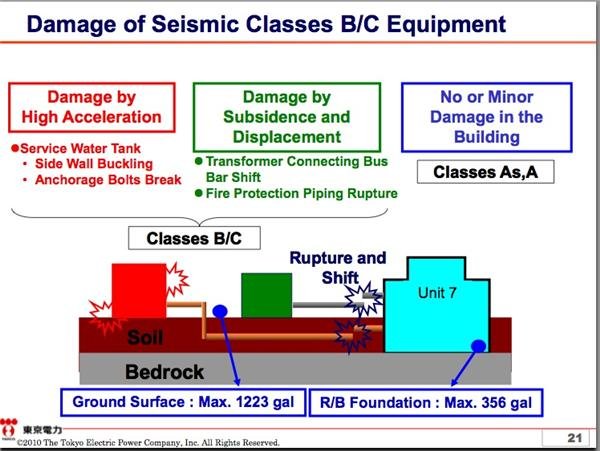
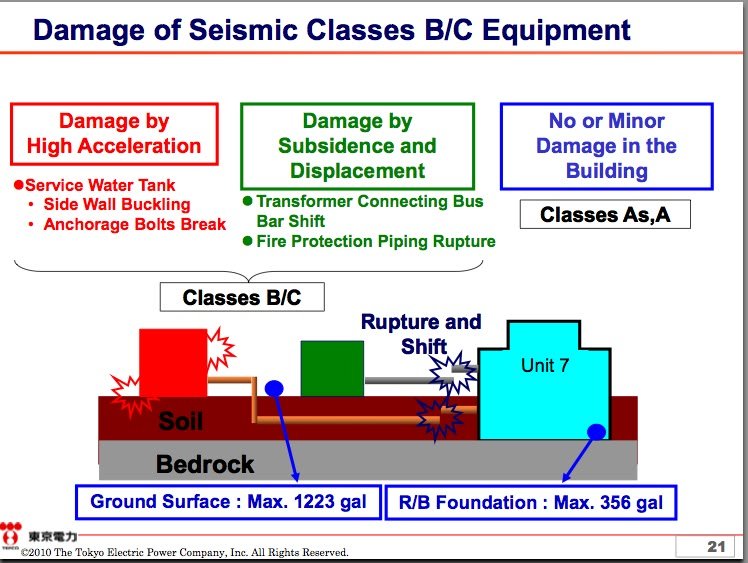
@edano as to the piping, the Japanse understand the problem. This schema was taken from a meeting presentation after the KK event. The NCO quake, though not the strongest, shook the plant on one base mat 3.5 times more violently that expected in the design. Yet, there was no damage to the reactors and they could be shutdown safely with minor rad releases and fairly minor damage to auxiliary structures. This experience bolstered the idea that Japanese reactors are safe, and also that it must have been all the tsunami's fault at Fukushima. i1214.photobucket.com
by Peter via I1214.photobucket 10/22/2011 8:09:50 PM- Tepco implemented a variety of fixes after this experience to enhance the quake resistance of the plant though. www.jsm.or.jpby Peter 10/22/2011 8:14:38 PM
- @Peter Greiswald yes, the others i don't know. and i don't like these block designs. :)by Edano 10/22/2011 8:16:21 PM
- @Edano , so reunification may have saved the country in unintended ways!by Peter 10/22/2011 8:19:25 PM
- @Peter TEPCO did upgrades at Kashiwazaki. They did basically none at Fuku. INcluding a bunch of building reinforcements that Chubu considered at Hamaoka but decided upgrades were too costly and scrapped their oldest units that were identical to Fuku.by lillymunster 10/22/2011 8:19:51 PM
- @Peter who knows who knows ?by Edano 10/22/2011 8:20:10 PM
www.jsm.or.jp
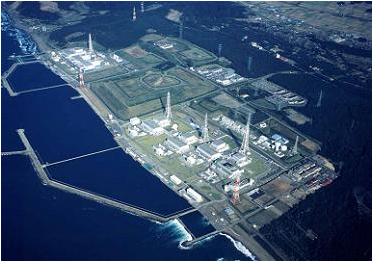
Kashiwazaki-Kariwa is built on an island at sea level ??? this is a bult-in disaster. good night, japan !by Edano via Jsm.or.jp 10/22/2011 8:26:43 PM- @Edano People really do think they are invincible don't they.by lillymunster 10/22/2011 8:27:19 PM

Japan Earthquake | Page 2540
- Who's Blogging
-
 hudebnik
 alblee
 UKVal
UKVal Oliver (ScribbleLive)
 Jonathan Keebler
 Matt (ScribbleLive)
 kaykodh
 PKelley
 Markfm
 dean
dean Angie
Angie- Edano
 Deb
Deb Mid Valley
- Pedro Jesus
 George Gibb
- elainekirk
- lillymunster
 bo
bo IanGoddard