Japan Earthquake | Page 2775
 I find it telling that this dog & pony show was scheduled the exact same time as the task force meetingby lillymunster 12/14/2011 5:33:11 PM
 The Greek commissioner (name?) clearly, imo, has deep disdain in his attitude. What I can't figure out is if it's directed to Jazco, or to the oversight committee, or both!by M.I.A. 12/14/2011 5:35:27 PM
- @M.I.A. Apostolakis?by lillymunster 12/14/2011 5:37:40 PM
- @lillymunster I keep missing his nameplate, and evrybody seems to say it differently. lolby M.I.A. 12/14/2011 5:38:24 PM
- To summarize all the events and particle this first time ever, NRC Hearing, I would have to conclude this: The March 11th Fukushima Nuclear Event is the biggest disaster to occur in the history of the world's nations.by MaryW 12/14/2011 5:40:27 PM
- Rep. Welch said a cooling tower FELL Down at Vermont Yankee, and Entergy said it was no big deal, and NRC didn't go after them? I never heard about that. Did I hear correctly?by M.I.A. 12/14/2011 5:41:27 PM
- @MaryW Truly a world-changing catastrophe...by M.I.A. 12/14/2011 5:42:00 PM
- Second Panel of NRC hearing beginning NOWby MaryW 12/14/2011 5:42:47 PM
- @MaryW The fukushima task force?by lillymunster 12/14/2011 5:43:08 PM
- @lillymunster ? not sure what you are askingby MaryW 12/14/2011 5:44:13 PM
- @MaryW you said second panel of hearing starting now??by lillymunster 12/14/2011 5:44:34 PM
- @M.I.A. World History in the making. And we, our generation, is living it in our time.by MaryW 12/14/2011 5:45:22 PM
- @lillymunster That is what they are calling the 2nd part of the NRC hearing after their break minutes agoby MaryW 12/14/2011 5:46:25 PM
- @MaryW the CSPAN oneby lillymunster 12/14/2011 5:46:57 PM
- @lillymunster Their lingo, not mine :)by MaryW 12/14/2011 5:47:05 PM
- @MaryW Looks like now they are going to the inspector's investigationby lillymunster 12/14/2011 5:47:38 PM

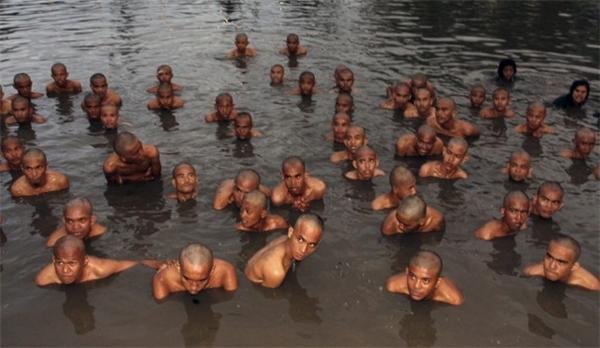
www.washingtonpost.com
Hard-line Indonesian province shaves mohawks off punk rockers detained at concert www.washingtonpost.com unbelievable www.faz.net (more pics)by Edano via Washingtonpost 12/14/2011 5:54:17 PM- Wait a sec- did 4,000 employees unanomously complain?! Issa is implying they didby M.I.A. 12/14/2011 5:57:57 PM
- @M.I.A. Issa is an overdramatic twit. :-)by lillymunster 12/14/2011 5:58:21 PM
- Burns is getting 'passionate', uh oh. Oooh, Burns just gave a polite FU to Issa who gave a polite FU back!by M.I.A. 12/14/2011 6:00:10 PM
- Perhaps these NCR hearings will set a standard for all countries to adopt in providing nuclear safety in the world. There is strong evidence that extreme stress, management conflicts among leaders, a collapse in communications and withholdings of vital information has been the trend since the Fukushima nuclear incident.by MaryW 12/14/2011 6:00:22 PM
- I am back in the Fukushima task force meeting callby lillymunster 12/14/2011 6:00:57 PM
- @MaryW Very good point. It is also clear that many members of Congress do NOT understand the worldwide potential of a nuke catastrophe. It is no respector of borders.by M.I.A. 12/14/2011 6:01:56 PM
- I will now remind folks that Pres. Carter (who initiated reorg.) was a nuke engineer.by M.I.A. 12/14/2011 6:03:15 PM
- @M.I.A. Let us all hope that this hearing will open eyes and doors. And why is Congress not up on this nuclear crisis?by MaryW 12/14/2011 6:03:34 PM
- URGENT: Japan, IAEA discussing large amount of unaccounted-for nuke materials
TOKYO, Dec. 15, Kyodo
Japan has started backstage talks with the International Atomic Energy Agency on the discovery of unaccounted-for or unreported enriched uranium and plutonium in large quantities of nuclear waste disposed of by Japanese facilities, hoping to ward off international criticism with an early report to the IAEA, senior government officials said Wednesday.
==Kyodo english.kyodonews.jpby Edano 12/14/2011 6:04:54 PM - UPDATE1: Japan, IAEA discussing large amount of unaccounted-for nuke materials
TOKYO, Dec. 15, Kyodo
Japan has started backstage talks with the International Atomic Energy Agency on the discovery of unaccounted-for or unreported enriched uranium and plutonium in large quantities of nuclear waste disposed of by Japanese facilities, hoping to ward off international criticism with an early report to the IAEA, senior government officials said Wednesday.
In October last year, nuclear substances, unaccounted for at that time, were found in waste at the Japan Atomic Energy Agency's Oarai Research and Development Center in Ibaraki Prefecture, the officials said.
The waste was disposed of before the 1977 effectuation of a safeguard agreement between Japan and the IAEA.
In a follow-up investigation, the government found some 2.8 kilograms of highly enriched uranium solidified with cement and a total of 636 grams of plutonium at the JAEA's Nuclear Science Research Institute in Tokaimura, Ibaraki.
The uranium is thought to have been imported from the United States as an experimental sample.
The science ministry, which oversees the JAEA, expanded the scope of investigation in August to about 250 facilities subject to the IAEA's safeguard program, finding unaccounted-for nuclear materials in waste at 14 facilities. Some 4 tons of low-enriched uranium at a private nuclear fuel company were among them.
The ministry also found radioactive substances in waste disposed of after the effectuation of the safeguard deal while looking into their possible presence at three electric power companies -- Chubu, Hokuriku and Chugoku -- as well as nuclear energy-related firms.
Under the IAEA's safeguards system, the international organization, tasked with promoting the peaceful use of nuclear energy, verifies the correctness and completeness of the declarations made by nations about their nuclear materials and activities. Nations are required to maintain accounting records on nuclear materials and report them to the IAEA to prevent them from being used in weapons.
Japan presented informal reports on investigation findings to the IAEA and started talks on them with the agency, the officials said, adding that 2.8 kg of highly enriched uranium and 4 tons of low-enriched uranium are seen as especially serious matters within the Japanese government.
Though the discovered nuclear materials will not directly pose a threat to international security through use in weapons or by terrorists, Japan may be criticized at the IAEA or other places if it fails to be fully accountable to international society, the officials said.
While Japan will present a safeguard report to the IAEA next year, the agency may not verify its declaration about nuclear materials and activities as correct and complete, they added.
==Kyodo english.kyodonews.jpby Edano 12/14/2011 6:05:21 PM - Congress having difficulties in pronouncing the word 'Fukushima'.by MaryW 12/14/2011 6:05:22 PM
- Return to areas with 50 millisieverts radiation dose difficult
TOKYO, Dec. 14, Kyodo
The government is considering designating land with an annual radiation dose of 50 millisieverts or more around the crippled Fukushima Daiichi power plant as an area to which evacuees will not be able to return for a long period of time, sources close to the matter said Wednesday.
The designation will come when the government rezones the evacuation area into three categories after it decides, possibly Friday, that the Fukushima plant has achieved a stable state of a cold shutdown.
There are currently two types of evacuation zones -- namely the no-entry zone set in the 20-kilometer radius of the plant as well as areas outside the no-go zone where radiation exposure is feared to reach 20 millisieverts a year.
The government plans to rezone the two into three new categories depending on the amount of the radiation dose, including the ''area difficult to return for a long period.''
An area where radiation dose is 20 millisieverts or higher but below 50 millisierverts would be categorized as a zone where habitation is restricted. Areas with less than 20 millisieverts radiation dose would be a zone where evacuation orders are ''prepared to be released.''
Prime Minister Yoshihiko Noda said at the parliament in November the government may consider the possibility of buying land where evacuees would not easily be able to return.
His comments reflect the government's judgment that it would take quite a long time despite cleanup efforts to reduce radiation doses at such land to a level below 50 millisieverts.
Evacuation orders, meanwhile, may be released as early as next spring in areas with less than 20 millisieverts radiation dose after decontamination activities.
The government is also expected to consider lifting evacuation orders in zones where habitation is restricted by checking the effects of the decontamination efforts.
==Kyodo english.kyodonews.jpby Edano 12/14/2011 6:07:59 PM - @Edano Maybe it is a cover-up by Japan...to discredit any hot spots contamination findings, thereby no release of plutonium and uranium products released from Fukushima.by MaryW 12/14/2011 6:10:07 PM
- Kyushu Electric submits test results of 3 reactors
Kyushu Electric Power Company submitted the results of primary safety assessments for 3 suspended nuclear reactors on Wednesday.
The reports to the Nuclear and Industrial Safety Agency are one of the prerequisites for restarting reactors that have been idled for regular checkups. The other condition is approval of the local municipality.
Kyushu Electric submitted the results of the so-called "stress tests" for two reactors at Sendai nuclear power plant in Kagoshima Prefecture and one reactor at Genkai plant in Saga Prefecture.
The tests say the reactors can withstand seismic shaking of 945 to 1,020 gals and tsunami of 13 to 15 meters high.
Kyushu Electric plans to ask customers to reduce their power consumption by at least 5 percent starting December 26th. All of the utility's reactors will be out of operation when the Genkai plant's No.4 reactor is shut down for regular checkups on December 25th.
Company official Akira Nakamura says nuclear power generation accounts for about 40 percent of the utility's total output, and that restarting reactors is crucial.
He adds the company will make the utmost effort to win back public trust.
Meanwhile, Genkai mayor Hideo Kishimoto says resuming operations will not be easy. He wants Kyushu Electric to enact full disclosure practices in addition to making efforts to prevent accidents.
Wednesday, December 14, 2011 19:15 +0900 (JST)
www3.nhk.or.jpby Edano 12/14/2011 6:12:25 PM - Areva to cut up to 1,500 jobs
French nuclear energy giant Areva says it will cut up to 1,500 jobs over the next 5 years and suspend projects due to business setbacks following the accident at Japan's Fukushima Daiichi plant.
The company announced a 5-year turnaround plan on Tuesday. This follows Monday's release of a projected operating loss of up to 2.1 billion dollars this year.
The new plan aims to cut annual costs by 1 billion euros, or about 1.3 billion dollars.
The plan includes cutting 1,500 jobs in Germany following that country's decision to shut down and phase out its nuclear reactors. In France, the hiring of workers to replace retirees will be frozen for the time being.
Areva also plans to suspend several projects, including construction work in France and the United States, and halt investment in uranium mines in Africa.
The company says it expects to win 10 orders for its new-generation EPR pressurized-water reactor, which it says is safer, between 2012 and 2016.
Areva Chief Executive Luc Oursel said the company had to review its business plan after the nuclear accident in Fukushima.
The firm's labor union is opposed to job cuts and says it will continue to demand that the turnaround plan be canceled.
Wednesday, December 14, 2011 09:33 +0900 (JST)
www3.nhk.or.jpby Edano 12/14/2011 6:15:26 PM - good news !by Edano 12/14/2011 6:16:53 PM
- TECH: lots of talking about phases. Phase 1 figures out what risks to deal with, Phase 2 actually dealing with them. Now back on flooding and seismic issuesby lillymunster 12/14/2011 6:16:59 PM
- @Edano I hope that means they will end work on the MOX plant at Savannah RIver...by lillymunster 12/14/2011 6:17:47 PM
- @lillymunster don't know in what u.s. plants areva is involved.by Edano 12/14/2011 6:18:38 PM
- So Mary, do I understand correctly that Mr. Burns (counsel/nrc) says Jazco has broken no laws, and followed intent of reorg under Carter, and Mr Borchardt (Ops Exec. Director) says Jazco isn't acting the way NRC Chairmen have acted in the past and it is inhibiting staff?by M.I.A. 12/14/2011 6:19:39 PM
- Areva US nuke operations us.areva.comby lillymunster 12/14/2011 6:20:24 PM
- the enriched uranium in tokaimura is discussed now .... let's not forget the rumors about secret projects in fukushima.by Edano 12/14/2011 6:21:15 PM
- @Edano It sounded like material went missing at power plants also?by lillymunster 12/14/2011 6:22:08 PM
- AREVA North America Projects - Bellefonte, Tennessee Valley in northern Alabama us.areva.com probably they mean this plant.by Edano 12/14/2011 6:23:43 PM
 @lillymunster @MIA @MaryW @Edano Just wasnted to pop in with a quick "Thank You" for the commentary and coverage, on a multiple meeting day...always lurking!by smoss 12/14/2011 6:23:52 PM
- @smoss Hi!by lillymunster 12/14/2011 6:24:23 PM
- @Edano I think Jazco said that Areva/NRC is going ahhead with an enrichment project in Idaho? @smoss Hi!by M.I.A. 12/14/2011 6:25:21 PM
- TECH: still lots of talking about what old rules letters may be applied to new inspection processesby lillymunster 12/14/2011 6:28:16 PM

Japan Earthquake | Page 2775
- Who's Blogging
-
 hudebnik
 alblee
 UKVal
UKVal Oliver (ScribbleLive)
 Jonathan Keebler
 Matt (ScribbleLive)
 kaykodh
 PKelley
 Markfm
 dean
dean Angie
Angie- Edano
 Deb
Deb Mid Valley
- Pedro Jesus
 George Gibb
 elainekirk
- lillymunster
 bo
bo IanGoddard