Japan Earthquake | Page 1215
 Am just starting to read what happened today and checked the news here in Germany. Fukushima is back on the first page with the headline "Danger of explosion". Http://www.spiegel.de (sorry if its in German but I Do Not know how to post a translated version)by andrea 5/16/2011 6:46:11 PM
 Was Fukushima a China Syndrome? he China Syndrome refers to a scenario in which a molten nuclear reactor core could could fission its way through its containment vessel, melt through the basement of the power plant and down into the earth. While a molten reactor core wouldn't burn "all the way through to China" it could enter the soil and water table and cause huge contamination in the crops and drinking water around the power plant. It's a nightmare scenario,the stuff of movies. And it might just have happened at Fukushima. ecocentric.blogs.time.comby Majj 5/16/2011 6:46:13 PM
 @LM (clapping)by Panserbjorne9 5/16/2011 6:46:31 PM
 We need a Petition to keep the IMPORTANT #AmericasMostWanted alive !! How can this be ? All the garbage and this get's canceled?by Veenie 5/16/2011 6:49:43 PM
 @Majj : south africa syndrome, i this case !by Edano 5/16/2011 6:50:22 PM
 @elainekirk those are really odd. Is that the missing data from Mar 11?by Nancy 5/16/2011 6:56:45 PM
 anyone else watching the tippycam?by UKVal 5/16/2011 6:57:55 PM
- @UKVal hmmm, fog ?by Veenie 5/16/2011 7:00:01 PM
 file:///C:/Users/maureen/Downloads/Nuclear%20power%20%20Souffl%C3%A9%20with%20crust%20-%20SPIEGEL%20ONLINE%20-%20News%20-%20International.htmby Maureen Burke 5/16/2011 7:00:35 PM
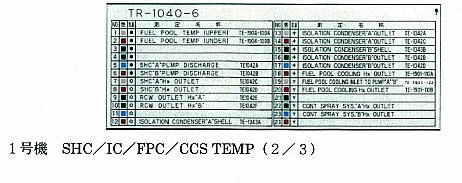
@NANCY yes @VEENIE found them www.tepco.co.jp
by elainekirk 5/16/2011 7:00:48 PM- @Veenie could be rain, it just seemed to begin in the centre of the pic - but guess 3 is not so obviousby UKVal 5/16/2011 7:01:01 PM
- nope. the speigel article is good. If you can read it in chrome it'll translate for you.by Maureen Burke 5/16/2011 7:01:28 PM
- @Veenie ah - definitely just rainby UKVal 5/16/2011 7:03:02 PM
- @UKVal I am guessing, they turned off the light's, sunrise is within the hourby Veenie 5/16/2011 7:03:43 PM
- Don't hate me for the long article. Just c&pasted it.by Maureen Burke 5/16/2011 7:04:09 PM
- Souffle With Crust- Nuclear power plant in Fukushima is melted nuclear fuel has eaten through the steel bottom of reactor. It threatens a devastating explosion.
With Japanese precision power plant technicians to determine the daily water levels in the misfortune of Fukushima reactors . Last Tuesday reported about the nuclear monitoring agency Nisa, the level in the reactor pressure vessel of unit 1 was increased by exactly 50 millimeters.
ANZEIGE
ANZEIGE
DISPLAY
The value of this apparent accuracy has really been only two days later revealed. According to Klein had to power plant operators Tepco admit that all previous data were wrong.
The truth is, the water level three feet lower than thought - this means that the fuel rods were dry and were not cooled.
This is one of the worst news since the beginning of the Japanese super-meltdown . Because it is clear: Much of the fuel rods in Block 1 are fused into a lump of uranium, which is now on the bottom of the reactor pressure vessel is located. The mass had already inch-wide holes in welds on the steel floor probably eaten, cleaned up a Tepco spokesman.
Possible nightmare scenario: If the fuel is burning and lump further down where they finally take on larger amounts of water, it could cause a devastating steam explosion.
Current status of the Fukushima-reactors
More than two months after the disaster, it appears, have the engineers at Tepco the situation is still not under control. Still, there is no cooling system. "Static, but not stable," Bill Borchardt calls from the U.S. nuclear regulatory authority the state of the NRC reactor accident. A "catastrophic development is still possible at any time," warns the British Greenpeace nuclear expert Shaun Burnie. Above all, the incident shows: Tepco has only a rough idea what is going on inside the actual reactors. This information builds the Group shaky but his crisis management.
Total were in reactor 1 over 60 tonnes of fuel. The molten uranium is like a soufflé up a crust. Therefore, the mass including cool even worse. Tepco points out however that the outside temperature at the reactor pressure vessel, only a little over a hundred degrees - an indication that the fuel mass is not extremely hot and an explosion some experts view, therefore, unlikely.
Steam explosion fears
The London reviewer John H. Large is however assumed that the process will move forward. When it finally came to the steam explosion feared the consequences would be dramatic: "The reactor pressure vessel is about the size of a large bus, then came out as a huge radioactive material."
Large fears that it is similar to the reactor blocks 2 and 3 looks like - or even worse: In reactor 3 is far more fuel, even those with so-called mixed-oxide fuel rods that contain the dangerous plutonium. Here also, the temperature is higher.
Tepco know is why everything about the situation in Block 1 because the company had announced in late April to flood it completely - another indication of how inadequate the improvised cooling still is. In preparation Tepco workers sent into the building. They noted that the assumptions about the water levels were all wrong.
More than half a million times as much cesium-134 as permitted
And it's not only the cooling problems that cause headaches for the engineers. Last Wednesday workers discovered that highly radioactive water flowed through conduits into the sea. As measurements showed it contained more than half a million times as much cesium-134 as acceptable. Presumably, the water comes out of the turbine building of reactor 3 There, in the basement of 750 mSv were measured - people were fatally contaminated by radiation in a few hours.
How experts suspect there are other as yet undiscovered leaks. However, the radiation is in many parts of the nuclear plant is so high that workers can not get at them.
Now a robot collect the contaminated scrap more than 120 containers have already been met. In sewage sludge from 15 plants in Fukushima Prefecture, meanwhile, inspectors found high concentrations of cesium.
ANZEIGE
ANZEIGE
DISPLAY
In about two weeks, starting in Fukushima, the typhoon season, it will rain very much. The rain could flush again large quantities of radioactivity into the sea.
Thus, the more infinite disaster into a story. Tepco The management had recently estimated that the reactors would have another six to nine months intensive cooling. But that timetable, the Japanese will not be able to comply.
And then, on completion of cooling, the actual cleanup will go first. According reactor manufacturer Hitachi will take 30 years to build the reactor accident completely.
THIS ARTICLby Maureen Burke 5/16/2011 7:04:30 PM - 4:27am Tuesday (JST) - Sunrise in Fukushima, Fukushima Prefecture, Japan
23 minutes from nowby Veenie 5/16/2011 7:04:35 PM - @Maureen Burke link to this article please??by Meretisa 5/16/2011 7:06:49 PM
 Noticed this on NHK..They initially said the Corium was under water. Is this condition more favorable for explosion?........................TEPCO: Fuel rods partially exposed above water
The operator of the damaged Fukushima Daiichi nuclear power plant says it believes the melted fuel rods in the No. 1 reactor are partially exposed above the water's surface.
Tokyo Electric Power Company says the reactor's fuel rods have melted and fallen to the bottom. It says holes were created and the containment vessel was also damaged. A large amount of highly radioactive water is believed to be leaking into the reactor building.
TEPCO says that as of 11 AM on Sunday, the temperature of the reactor's upper section was 110.4 degrees Celsius, and the lower part was 88.6 degrees.
It says it believes that the exposed fuel is generating hot vapor.
The company also says the temperature of the reactor's upper section fell more than 15 degrees after it increased the amount of cooling water being injected into the reactor from 8 to 10 tons per hour on Sunday.
The utility says it will carefully monitor the reactor's temperatures.
Monday, May 16, 2011 13:16 +0900 (JST)
www3.nhk.or.jpby LM 5/16/2011 7:08:19 PM @Nancy Don't get personal, I did 9 yrs in the military. The Japonese defense forces don't have any where near the capacity of the US. I don't know what the JDF has been doing, I assume they are busy rescuing people and ferrying supplies.by RBeaner 5/16/2011 7:08:52 PM
- www.spiegel.de @Meretisaby Maureen Burke 5/16/2011 7:09:23 PM
- @RBeaner - It's JAPANESE.by Maureen Burke 5/16/2011 7:10:06 PM
- @Maureen Burke thanksby Meretisa 5/16/2011 7:11:04 PM
- are you french Rbeener?by Maureen Burke 5/16/2011 7:11:43 PM
- @Maureen Burke thanks for post. really helpful as i can't get translate to work tonightby UKVal 5/16/2011 7:17:02 PM
- @Maureen Burke The Scientfic language is English. All these transltion sites are crap... And no not french ( wierd you thought that), I'm american from Conneticuitby RBeaner 5/16/2011 7:17:09 PM
- @RBeaner Do you mean to tell us that Japan, a country that is under constant nuclear threat from North Korea has absolutely no forces or equipment for handling a chemical or nuclear attack and dealing with the injured?by Nancy 5/16/2011 7:18:03 PM
- BTW, one of the towers at the power plant is now likely leaning.by Nancy 5/16/2011 7:18:46 PM
 Step back from the flames.by Markfm 5/16/2011 7:19:30 PM
 @Nancy Japan relies on US army to defend themselves against those threats. They also have military deals with South Korea who keep North Korea at bay. I don't think they would be fairly equipped to tackle chemical and nuclear threats on their own.by Pedro Jesus 5/16/2011 7:19:55 PM
- WARNING, long post coming about Compensation from TEPCO schemeby Veenie 5/16/2011 7:20:10 PM
- @Nancy - i saw you'd posted that - does it still seem to be 2 degrees out?by UKVal 5/16/2011 7:20:11 PM
- @RBeaner - What are you talking about???? Japon is Japan in French. That's why I asked. I didn't use a translation"site". Chrome is a browser.by Maureen Burke 5/16/2011 7:20:56 PM
- @Markfm agreedby UKVal 5/16/2011 7:20:59 PM
 @Pedro Jesus - I wouldn't really say relies, more like mandated by the treaty sighned at the end of WW2.by Lethbridgean 5/16/2011 7:20:59 PM
- Tepco "Compensation" For Fukushima Nuclear Crisis
Is A Political Fraud
By Yoichi Shimatsu
13 May, 2011
Global Research
The just-approved compensation deal between the Tokyo Electric Power Company (Tepco) and the Japanese government is being rushed out before the May 30 evacuation order for residents in radiation-threatened areas of Fukushima is more of a bailout for Tepco than its pretense of being a relief package for evacuees. The more important deadline for both sides falls on May 20, when Tepco must issue its annual report to shareholders. The deal
Tepco is being given 30 years to pay back the government for this bailout with borrowed money. The "compensation" package doesn't cover medical benefits for radiation-caused cancers that are not expected to surface in victims for at least two years from now. The government is going along with this publicity stunt, mainly because most politicians owe Tepco under the reigning system of money politics.
The plan is a fraud from its inception. To settle compensation claims for the nuclear disaster, the official plan is to issue bonds backed not by the financial markets or banks but by printing new money. The 5 trillion yen ($62 billion) rescue scheme is sure to put the debt-ridden nation into deeper fiscal risk, since Tepco is unlikely to make full repayment.
Cry Poverty
Confronted with the fallout from its Fukushima 1 nuclear plant, Tepco's strategy has been to claim a net loss in 2010 of more than 700 billion yen ($84 billion). The loss should be puzzling because Tepco charges one of the world's highest retail rates for electricity, far more than other regional utility companies, and controls 44 percent of Japan's energy market.
The power company has not reinvested heavily in new equipment or upgrades, as the Japanese public was shocked to discover with the absence of maintenance robots inside the damaged Fukushima plant. Even more shocking is the disclosure that Tepco was not carrying any casualty insurance. Around the world, most nuclear operators go uninsured due to the high cost of coverage following the meltdowns at Chernobyl and Three Mile Island. Nuclear is probably the only industry that can get away without risk coverage, due to its cozy connections with politicians, bureaucrats and military forces.
Maximizing one’s debt makes financial sense for large Japanese corporations for purposes of tax evasion. By arranging permanent indebtedness, Tepco does not pay corporate taxes on profits, while its customers bear the tariff on electricity rates.
Profits From Debt
Borrowing beyond any legitimate limit is standard practice for transnational corporations. Money is available to large corporate entities practically for free due to the Bank of Japan's near-zero interest rates. Abetted by a stronger yen, these funds are invested overseas in both direct investments and into money markets. Tepco has a 10-year plan to invest 1 trillion yen offshore before 2020, and the actual investment could well be much larger.
So where did all of Tepco's hidden profits go? From what can be gathered from its less-than-transparent financial records, Tepco management routinely issued bonds to finance massive investments in uranium mines in Canada and Australia. Its Canadian affiliate Tepco Resources owns a 5 percent share in Cigar Lake in Sasketchewan, one of world's largest uranium mines in a consortium with CAMECO, France's COGIMA and Idemitsu Kosan. Tepco's Perth-based office has a web of holdings in Australian uranium projects, including the gigantic Ranger open-pit mine run by Rio Tinto in the environmentally and culturally sensitive Kakadu region.
Tepco has quietly strategized to build nuclear power plants abroad by taking shares in a utility firm in Thailand and opening an office in China. A veil of secrecy surrounds these foreign nuclear projects, with its technology partners Toshiba and Hitachi, which planning to more than 30 plants each at undisclosed sites.
Hidden Connections
Its long-term business relationship with Toshiba and Hitachi are hidden in Japan's opaque system of cross-holdings of shares between related companies. Mutual share holdings are a risk strategy, as recently indicated by a sharp reversal in its decline in its stock price. A steep fall in Tepco share prices to 40 percent from the peak along with a ratings downgrade from Wall Street should have led to the financial collapse of Tepco. Instead, its share prices began to soar despite the deepening crisis at Fukushima.
The Black Hole
The price-keeping operation, or PKO as it’s called in Tokyo, was probably aided by an injection from a hedge fund run by Tepco's New York or London offices. These secret overseas funds are difficult to track down since funds can be routed through any of Tepco's 258 affiliated companies.
The exportation of borrowed money is surefire guarantee of the export of Japanese-style corruption. Mining ventures in Canada and Australia are synonymous with speculation, ramping up of share prices and bribes-for-licenses schemes. Since farmers and local residents obviously do not want a uranium mine in their backyards, bribery to local politicians must be rampant though well-disguised.
Japanese journalists and Diet members have described to me how Tepco controls politicians and bureaucrats. Since corporate donations to political parties must be reported, funds are channeled through the executives of the company or its many affiliates. The Liberal Democratic Party (LDP), the main sponsor of the nuclear industry during its four-decade tenure, receives the lion's share of bribes. The 35,000-member company union, which has never organized a picket line for workers' rights, is a donation-distribution network to the ruling Democratic Party and the opposition Clean Government Party and even the leftwing Social Democrats.
Dentsu, Asia's largest advertising company, is another agent of influence on public opinion. The corruption of publishers, news producers and senior editors is done through lucrative television commercials and special supplements inside newspapers. Recently, several newspaper editors have been threatened - and some demoted - due to their honest coverage of the Fukushima disaster.
Organized Crime
The threats against crusading editors are real due to Tepco's long-standing ties with the yakuza, which recruits homeless men and alcoholic derelicts for short-term and uninsured jobs as "jumpers", who do the clean-up duty inside nuclear reactors. After becoming irradiated, these unfortunates are driven back into squalid urban ghettoes with a fistful of cash for their next bottle of cheap alcohol or a syringe of heroin. That’s labor relations, Tepco-style, which the in-house union has failed to protest.
Despite weeks of deliberation, the details of the compensation package are still unclear as to how the fund will be allocated for relocation costs, property losses and medical care for residents versus reimbursement to government agencies and institutions involved in the nuclear disaster relief. Chances are that much of the money, to be handed over to construction companies to build temporary housing for evacuees, will find its way back into the pockets of politicians and bureaucrats.
Beasts of Burden
One thing is certain: The burden for Tepco's malfeasance will fall on taxpayers and consumers. Despite official claims that the bailout will not trigger higher taxes or electricity prices, Tepco has already raised household power rates in May, stealthily by lower discounts for households, and the government is preparing to raise the consumer sales tax to 8 percent from the current 3.5 percent. Insiders are predicting a 16 percent electricity rate hike spread over the next decade.
The only really effective solution that the paid-off politicians are avoiding is the break-up of Tepco. Its hydropower units need to be reorganized as a basic utility company. The nuclear division should be converted into a bad-debt company in charge of decommissioning all three nuclear plants not just Fukushima 1. A public trusteeship has to take over its offshore holdings in uranium mines and hedge funds on behalf of a genuine compensation fund for victims. State prosecutors must begin a sweeping investigation into the web of corruption, with all recipients of unreported donations required to hand over the ill-gotten funds with interest - or the equivalent in property - to the victims’ trusteeship. The list of all recipients should be available to the public, and the worst offenders banned from government jobs and elected office.
As radioactive fallout spreads across the Tohoku and Kanto regions, the Japanese public has a stark choice: protect nuclear power or save democracy. Over two decades of economic decline, attempts at superficial reform have failed miserably. A democratic revolution - broader and deeper than the Meiji upheaval of 1868 - must be initiated at whatever the cost or Japan faces destruction as a nation of radiation victims or hibakusha. The decision confronts us here and now: die or fight.
Yoichi Shimatsu is a Hong Kong-based journalist and Editor-at-large at The 4th Media.by Veenie 5/16/2011 7:21:02 PM - @Lethbridgean Anyway you want to put it. =)by Pedro Jesus 5/16/2011 7:22:42 PM
- @Nancy Wow, that is a pretty deep question.. I think that Japan has decided to Absorb the first hit, and then retaliation will come from the US, in a big wayby RBeaner 5/16/2011 7:23:49 PM
- talking about chemical attacks and Japan reminded me of this. Really a frightening read. en.wikipedia.orgby Panserbjorne9 5/16/2011 7:26:15 PM
- @RBeaner - Do you live in or near New London by any chance?by Maureen Burke 5/16/2011 7:26:42 PM
- @RBeaner no. People on the ground to treat the injured and deal with the medical situation on the ground. I highly doubt Japan has no forces trained in dealing with biological, chemical or nuclear hazards and the public safety.by Nancy 5/16/2011 7:27:30 PM
- @Nancy I wouldn't say they don't have the resources to tackle such situations. I am only speculating that they most probably don't possess the means to tackle emergency situations of this dimension.by Pedro Jesus 5/16/2011 7:29:10 PM
- @UKVal multiple images show it with a very slight lean and without noticeable skew of other objects. It doesn't look like it is going to fall over but makes me wonder if the ground is getting saturated. I don't know how far down the footings on those towers are
by Nancy 5/16/2011 7:29:45 PM - @Pedro Jesus : compared to a nuclear atztack, this is not a big dimenssio, do't you think ?by Edano 5/16/2011 7:30:13 PM
- tsunami damaged zones are very short of dr's clinics and only recently have the government offered a very basic level of support to enable people to access healthcare so , and just my guesswork, I would say that tepco are responsible for their employees care but and here is the rub most of the men in there are not tepco employees they are agency workers ...can you see where I am going?by elainekirk 5/16/2011 7:32:19 PM
Japan Earthquake | Page 1215
- Who's Blogging
-
 hudebnik
 alblee
 UKVal
UKVal Jonathan Keebler
 Oliver (ScribbleLive)
 kaykodh
 Markfm
 Angie
Angie Mid Valley
 Matt (ScribbleLive)
 George Gibb
- elainekirk
 PKelley
 lillymunster
 dean
dean bo
bo Edano
Edano Deb
Deb- Pedro Jesus
 IanGoddard