Japan Earthquake | Page 1571
 @DT : TBS cam doesn't let you see a bit (cloudy now). You must follow TEPCO one at www.tepco.co.jpby estacion 6/10/2011 6:38:49 PM
- LOL I cant see upper part of unit 1 now, this is steam, fog or smoke ? Or what ?by xxx 6/10/2011 6:39:41 PM
- @estacion I do have that link, but just want to see the TBS cam.by DT 6/10/2011 6:39:43 PM
- @DT "http://www.youtube.com/user/tbsnewsi#p/l/ZIa6yble2gk"by xxx 6/10/2011 6:40:03 PM
- @DT www.youtube.comby estacion 6/10/2011 6:40:44 PM

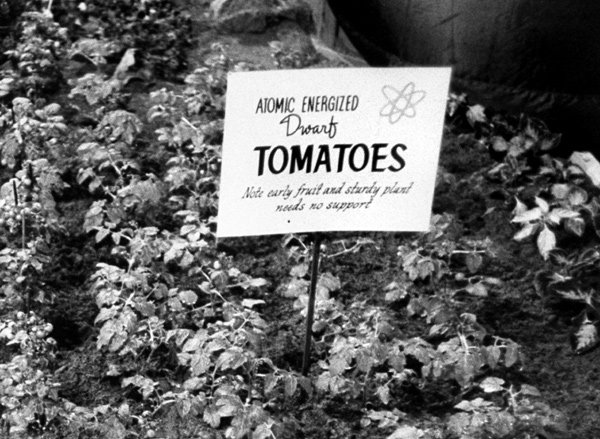
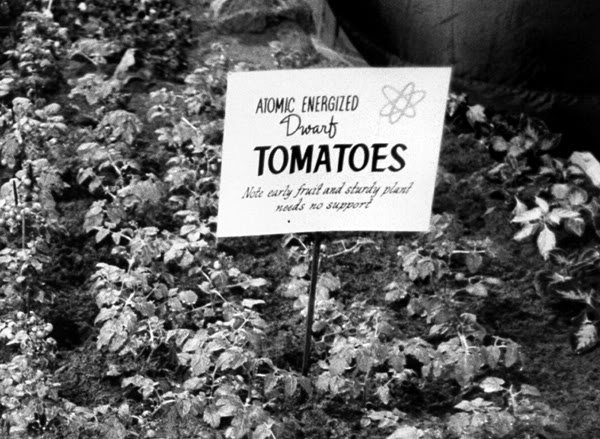
One March day in 1959, in the sleepy British seaside town of Eastbourne, a nuclear enthusiast decided to feed her dinner guests irradiated peanuts and potatoes that had been preserved with radioactive sodium. While Muriel Howorth's guests were unsure about their repast, the unusual dinner was the start of an unforeseen chain reaction that led to the birth of one of the quirkiest horticultural collectives there has ever been: the Atomic Gardening Society.
The society encouraged members to grow plants under radioactive conditions so that beneficial mutations would arise. The idea might sound strange, even dangerous, now - but back in the 1950s it was part of a broader trend. The movement was part of a concerted effort in the US and Europe to find beneficial uses for atomic energy after the destruction caused by the atomic bombs dropped on Hiroshima and Nagasaki.
In "gamma gardens" run by national laboratories in the US, plants growing in concentric circles were bombarded with radiation from a central source - such as cobalt-60 - elevated on a pole. The pole could be lowered below ground when people were tending the plants. Plants nearest the centre tended to die, a little further out they developed tumours and developmental problems, but the plants furthest out sometimes developed potentially beneficial mutations. It was hoped the treatment could, for instance, produce colour changes in flowers, disease resistance in wheat and increased sugar content in maples.
"If you think of genetic modification today as slicing the genome with a scalpel, in the 1960s they were hitting it with a hammer" says nanotechnologist Paige Johnson of the University of Tulsa, Oklahoma, who researches garden history in her spare time.
Giant ants maybe not, but the peanuts to which Howorth subjected her atomic dinner party guests had been bombarded with18,500 roentgens of X-rays - that's 37 times the dose that would kill a person in 5 hours. The peanuts originated in the lab of Walter Gregory of North Carolina State University, who would select beneficial mutants from the plants he zapped - those which produced larger or more numerous peanuts than usual. His thick-hulled "North Carolina fourth-generation X-rayed" (NC4x) strain was the size of an almond (Crops and Soils, vol 12, p 12), and it was one of these that he sent to Howorth.
The legacy of the atomic gardens can still be seen today. Working gamma gardens exist in Japan, and varieties descended from irradiated plants - such as the Rio red grapefruit - stack our supermarket shelves. 70 per cent of the peppermint sold in the US is descended from a mutant in a neutron-irradiated source. Even if atomic gardening was a misguided experiment, it has thrown up some unexpectedly tasty results.
More: www.newscientist.comby joniver via I1235.photobucket 6/10/2011 6:42:07 PM- @xxx: Steam-by estacion 6/10/2011 6:42:38 PM
- @estacion Or maaybe fog ?by xxx 6/10/2011 6:43:12 PM
 @Panserbjorne9 "We never meant to conceal the information, but it never occurred to us to make it public." - Then they are stupid as well as malicious.by Bobby1 6/10/2011 6:43:37 PM
- @DT: This link is working for me: www.youtube.comby Mina 6/10/2011 6:43:57 PM
- @xxx No. I've seen entire process of steam accumulating in the last hour, there is not wind and steam floats around the Plant.by estacion 6/10/2011 6:46:15 PM
 @estacion you describe it well . It showed a definate jet out of #4 which you cant see for steam/smoke now, presumably they are desperately pouring water in thereby elainekirk 6/10/2011 6:50:20 PM
- @joniver: Wow, this is a serious statment. We must follow further investigation on this:
Transcript
ALI MOORE, PRESENTER: Japanese authorities have admitted the crisis at the Fukushima nuclear plant in March may have been worse than a core meltdown.
In an official report that will go to the UN's nuclear watchdog, Japan says nuclear fuel in three reactors possibly melted through several pressure vessels and into the earth below.by estacion 6/10/2011 6:51:12 PM - @estacion could you please post the link , tyby fitter 6/10/2011 6:52:57 PM
- @elaine the steam comes when they pour water in +4 SFP ?by DT 6/10/2011 6:53:06 PM
- @fitter: @joniver has posted it. a bit scroll down.
www.abc.net.auby estacion 6/10/2011 6:55:51 PM 
Friday, June 10, 2011
Unsigned treaties up Japan's nuke suit risk
By MINORU MATSUTANI
Staff writer
As a nonsignatory to three international treaties on compensation for nuclear accidents, Japan is exposed to the risk of expensive lawsuits.
By the terms of the three treaties, damages cases stemming from nuclear accidents must be handled in the courts of the country where the accidents occurred. Two of the three treaties also provide a rough guideline of what the maximum compensation can be.
Because Japan has not signed any of them, Tokyo Electric Power Co. and the nation itself are potentially liable to pay an unlimited amount in damages from atmospheric and oceanic radiation leaking from the Fukushima No. 1 plant if, for example, fishermen in Russia and China file lawsuits in district courts of their countries.
Nobody outside Japan has yet filed lawsuits in their countries demanding compensation from Tepco or Japan, according to the Foreign Ministry.
"We have been considering joining treaties since even before the (March 11) quake, as China and South Korea have nuclear plants. But Japan will have to change domestic laws in order to join the treaties and it takes time and energy," said Yasuhiro Itakura of the division on compensation for damages of nuclear accidents at the Ministry of Education, Culture, Sports, Science and Technology.
Signatories to the three treaties — the Convention on Supplementary Compensation for Nuclear Damage, the Paris Convention and the Vienna Convention — are mainly countries in Europe and North and South America.
Asian countries with nuclear power plants, including China and South Korea, have not signed on.
Signing the treaties would be meaningless unless countries neighboring Japan do so as well, an official of the International Nuclear Energy Cooperation Division at the Foreign Ministry said.
The Convention of Supplementary Compensation for Nuclear Damage, signed by 14 countries and ratified by four, including the U.S., sets a ceiling on compensation at roughly 300 million SDRs, or special drawing rights — a form of international money created by the International Monetary Fund. One SDR is worth about $1.60.
Under the Paris Convention, the maximum amount is about 15 million SDRs.by Veenie 6/10/2011 6:56:26 PM @Elaine Lots of smoke/steam was coming out of 2 and 3 too, so I'm not sure what's going on...it's also possible fog has now compounded the issue but I don't doubt I saw a TON of smoke/steam!by LM 6/10/2011 6:57:12 PM
- @dt Oh yes @LM I missed that bit I saw your posts and went just before it steamed over and concentrated on that jet to the extent that I missed the happenings elsewhereby elainekirk 6/10/2011 7:02:46 PM
 @estacion @joniver That article might be an artifice of translation. It would help us understand what has actually been admitted if we could find the sources of that article. I don't think they really meant the molten core has melted through all 3 containments into the ground below the base mat in each of the three mentioned units. The article is a bit unclear. They mention the RPV breach but then they jump from that to the earth below... there are still 2 containments to breach through before the core hits the underground and that hasn't been confirmed yet, as far as we know.by Pedro Jesus 6/10/2011 7:06:05 PM
 @Panserbjorne9 That is just a maddening quote.by radioguy 6/10/2011 7:06:13 PM
- @veenie so much better that Japan didnt sign in some respects and what other countries are doing pegging limits without a mandate from their citizens is criminal, if France had a 'tepco event' british citizens would be expecting compensation at a level that reflected their lossesby elainekirk 6/10/2011 7:06:56 PM
- @estacion That the corium is now in earth was admitted by an aide to Kan. So it is now official: 3 china syndromes in progress.by Bobby1 6/10/2011 7:07:29 PM
- @Elaine 4 definitely seemed to be the worst!by LM 6/10/2011 7:08:53 PM
 @Bobby1 Can you please privide a link to the statement that the "corium is now in the earth" ? As far as we know the corium is still contained by the basemats of the reactors, right?by Reed 6/10/2011 7:10:24 PM
 @ all Hey, On this side Smoke steam at Fukushima looks different on different tepco pages. but still a lot of it perhaps this is the melt through to water, or could just be morning fog event. I guess.by carabnr 6/10/2011 7:12:41 PM
- @Reed www.abc.net.auby Bobby1 6/10/2011 7:13:06 PM
- @anybody does anyone know how those masks the workers wear stand up to the kind of moisture levels we are seeing now at fukushimaby elainekirk 6/10/2011 7:14:00 PM
- @ elaine, no but I have researched the fogging issue for my paper. The glass has a releasing layer when new, and if you scrubb it with toothpaste or wash with shampoo it will not fog up.by carabnr 6/10/2011 7:16:16 PM
- Something about the micropores to get the glass off the mold, increases fogging. Scuba divers use those techniques.by carabnr 6/10/2011 7:17:49 PM
- @Bobby1 Could you please provide an independent source for that news? (I mean apart from the unclear www.abc.net.au one)by Pedro Jesus 6/10/2011 7:18:33 PM
- I think that it is bad translation, noone can know where corium is now...by xxx 6/10/2011 7:18:45 PM
- Hmm good pointby carabnr 6/10/2011 7:19:13 PM
- @Pedro Jesus Can't you do your own searches?by Bobby1 6/10/2011 7:19:31 PM
- This is bad translation, they understand that melt-trought mean melt to ground, but no, this mean melt from RPVby xxx 6/10/2011 7:20:58 PM
 @elainekirk The filters themselves, do not like moisture at all. They contain activated charcoal and a concentric paper filter. They achieve excellent filtering capacities when dry (99.99%), but when they become wet or damp, you can't suck air through them. That is unless they are some special Fuku filter masks.by RBeaner 6/10/2011 7:21:05 PM
- @Bobby1 I haven't found any independent source claiming the same, that's why I ask. Cool down.by Pedro Jesus 6/10/2011 7:21:05 PM
- Wow RBeaner That's interesting, and scary for the workers.by carabnr 6/10/2011 7:22:55 PM
- @Bobby1 Thank you.
@ xxx
I feel that this quote has a translation problem:
"GOSHI HOSONO, SPECIAL ADVISOR TO JAPANESE PM (Translation): At present there is damage to the bottom of the reactor container, we call this ‘core melting’ in English. Part of the nuclear fuel has fallen onto the dry earth floor and it's possible that it's still lodged there."
Hosano must mean the basemat since there is no such thing as a "dry earth floor" under a RPV in a nuclear reactor. There is a basemat of 3+ meters of concrete.by Reed 6/10/2011 7:23:05 PM - @xxx My thoughts exactly.by Pedro Jesus 6/10/2011 7:23:47 PM
- @Pedro Jesus I'm busy and am just popping in here to see what is going on.by Bobby1 6/10/2011 7:24:09 PM
 Just got back in. What is the deal with the webcam?by lillymunster 6/10/2011 7:24:25 PM
- @rbeaner thank you :(by elainekirk 6/10/2011 7:24:35 PM
- @Reed Perhaps, but there is earth under there, why would he say "dry earth" if he meant concrete?by Bobby1 6/10/2011 7:25:01 PM
- @elainekirk Those masks really are a pain in the ass for the workers. They make breathing difficult and increase core temp, thus the concern for heat stroke. In a proper enviornment (controlled) with normal temp or AC, they are fine. Worn in an emergency, they suck, and I personally can't imagine having to wear them for a few shifts without enviornmental controls.by RBeaner 6/10/2011 7:25:43 PM
Japan Earthquake | Page 1571
- Who's Blogging
-
 hudebnik
 alblee
 UKVal
UKVal Oliver (ScribbleLive)
 Jonathan Keebler
 kaykodh
 PKelley
 Markfm
 Angie
Angie Deb
Deb Mid Valley
- Pedro Jesus
 Matt (ScribbleLive)
 George Gibb
- elainekirk
- lillymunster
 dean
dean bo
bo Edano
Edano IanGoddard