Japan Earthquake | Page 1828
 @Ian, gm, I just read your thoughts. First, I do not know whether there are valves at the stack that are dedicated to isolate the effluents from the two reactors. But here is a doc that gives an idea how gaseous effluents are treated in the unit: docs.google.com .by Peter Melzer 7/4/2011 2:23:41 PM
 I found the Areva brochure they handed out to members of the US congress. www.scribd.comby lillymunster 7/4/2011 2:28:04 PM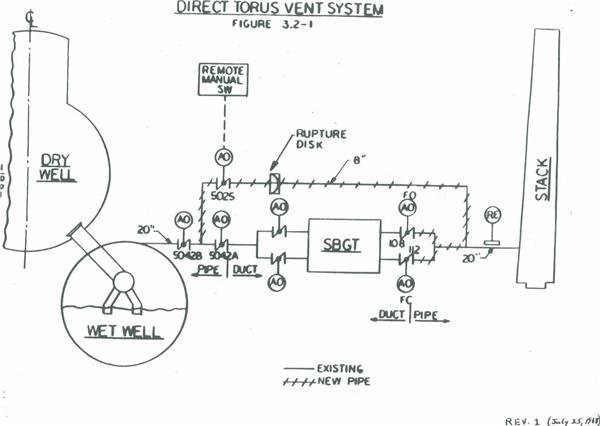
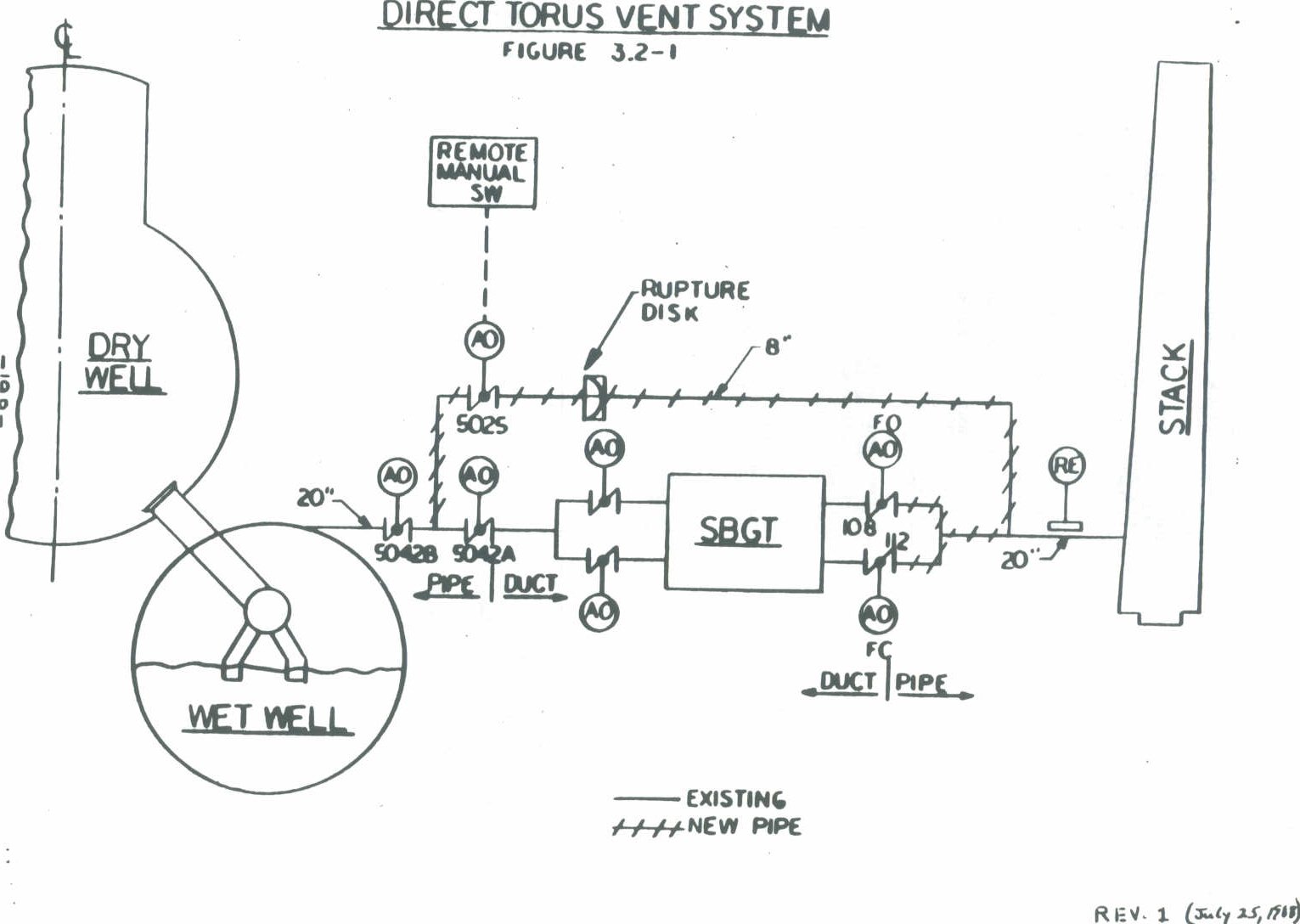
@Ian, the issue under consideration with the hydrogen explosions is HARDENED VENTING. The schema above shows the valves involved. There has been much discussion in late March that at least in Unit 1, the valves that were supposed to stop the backflow into the Standby Gas Treatment System were not closed, letting the gas seep back into the building. The point of note may be that, unlike in US plants, at Fukushima the SGTS is installed BELOW the service floor. I can't find that reference though. This would explain why we see so much damage downstairs. However, in my mind the presence of the gas in Unit 4 remains a mystery. Imagine the enormous draft that such tall stack produces! Makes me think that the flow would be always up and out, unless blocked for some reason. www.beyondnuclear.org
by Peter Melzer via Beyondnuclear.org 7/4/2011 2:39:00 PM @lillymunster I've been downloading the EPA via the search query. The recent video about how EPA is "working the numbers", got my curiosity going to verify it. The inconsistencies are there (changing filters, missing hours, missing days.) Finding a few cities I would not want to live in :(by Deb 7/4/2011 2:40:07 PM
 @Peter, yeah, maybe the Tepco vent-injection theory for U4 could be falsified with documents showing the system is designed to prevent wrong-way venting. It only stands to reason, how stupid would venting experts have to be to design a system that vents hazardous gases from on building into the neighboring building, lol!by Ian 7/4/2011 2:49:35 PM
 @Bo I'm glad. Ty.by Mona 7/4/2011 2:54:09 PM
- @Peter, Starting on pdf-page 50 here dels.nas.edu is the most detailed presentation I've seen of the vent-injection theory for the Unit-4 blast. I didn't notice you comment below the schematic. Right, and the fact that we can see an ejecting wisp is therefore significant as it indicates that the flow to the stack outlet was open.by Ian 7/4/2011 2:56:27 PM
- There is a still from the old single-shot TeppyCam that shows smoke coming out a stack, I was surprised when I saw it in a youtube-video compilation of TeppyCam stills. I can't recall what stack it was, nor at the moment exactly where that video is.by Ian 7/4/2011 2:58:29 PM

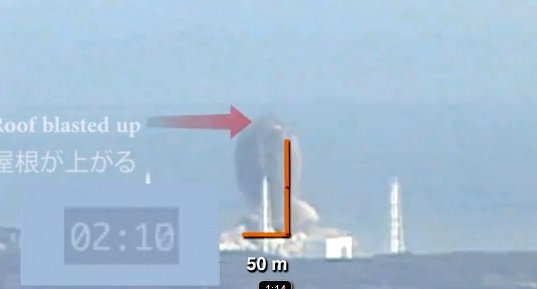
@Ian this wisp?
by elainekirk 7/4/2011 3:01:36 PM- @lillymunster that areva disclaimer is pretty comprehensive!!by elainekirk 7/4/2011 3:04:40 PM
- @Elaine, yes, good cap!by Ian 7/4/2011 3:06:17 PM
- And here we can see the Unit 3 stack vented many times from the 13th through the 14th, so the stacks was open : www.youtube.comby Ian 7/4/2011 3:06:55 PM
- The date/times for the Tepco-camera shots on that video can't be right, but the point is that the shots show the U3 stack ejected gasses several times, even well before the explosion.by Ian 7/4/2011 3:11:43 PM
- @Elaine, any more fallout from the Guardian expose.by lillymunster 7/4/2011 3:12:22 PM
- dead as a dodo @lillyby elainekirk 7/4/2011 3:13:08 PM
- @elainekirk wow. I figured it would have some repercussionsby lillymunster 7/4/2011 3:13:40 PM
 Eight Federal Agencies Have FOIA Requests a Decade Old,
According to Knight Open Government Survey
Oldest Pending Request Now 20 Years Old,
Still on Referral Among Multiple Agencies
www.gwu.eduby bo 7/4/2011 3:15:23 PM- @bo Looking at all the articles about delays, I know nothing will be fixed any time soon. Congress is so busy bickering about everything major, getting anything done anymore is pretty much impossible.by lillymunster 7/4/2011 3:18:16 PM
- Tweetdom
JapanPhotos Japan Photos.
by jakeadelstein
Google+ for journalists at risk - Committee to Protect Journalists
cpj.orgby elainekirk 7/4/2011 3:20:15 PM - tweetdom
jakeadelstein Jake Adelstein
The more I think about it, the more #TEPCO reminds me of Umbrella Corporation in the Biohazard movies/games. Except no zombies....yet.by elainekirk 7/4/2011 3:21:27 PM - Off to bed for me. Mata!by bo 7/4/2011 3:25:04 PM
- @bo sleep well boby elainekirk 7/4/2011 3:25:31 PM
- @lillymunster there are a few the financial times airing it is useful www.google.co.ukby elainekirk 7/4/2011 3:29:21 PM
- tweetdom
RT@jakeadelstein
, I'd like to say something nice about #TEPCO. Congratulations, you've managed to make British Petroleum look good!by elainekirk 7/4/2011 3:31:12 PM - Be back later -by lillymunster 7/4/2011 3:32:46 PM
- @lillymunster I have to go out for an hour too, enjoy :)by elainekirk 7/4/2011 3:36:19 PM
 @Ian : we have the exact times of the ventings (official tepco data):
#3: 3/12 20:41 ; 3/13 8:41 - 9:20 ; 3/14 5:20
#2: 3/13 11:00 ; 3/14 20:35 ; 3/15 0:02
#1: 3/12 6:40 , 10:17 , 14:30 , 13:42 (? inofficial, on videos)
you find the data in my plots. www.houseoffoust.comby Edano edited by Edano 7/4/2011 3:45:25 PM- Work underway for nitrogen injection
Work is underway at the damaged nuclear power plant in Fukushima to reduce radiation levels in the Number 3 reactor container. The move is necessary before nitrogen gas can be pumped in to prevent a hydrogen explosion.
According to Tokyo Electric Power Company's schedule to stabilize the plant, the utility needs to inject nitrogen into the containers of the first 3 reactors by July 17th. Nitrogen has already been injected into the Number 1 and 2 reactor containers.
On Friday, a US-made robot began clearing contaminated dust and debris from the floors of the Number 3 reactor building. However, radiation levels inside the building are still high with readings of between 50 and 186 millisieverts per hour.
The radiation levels need to be reduced to one-third before workers are able to begin the nitrogen injection.
On Sunday, more than 50 sheets made of steel were laid on the floor. Work continues on Monday to fill the gaps between the steel sheets.
TEPCO plans to start connecting the pipes to inject the nitrogen on Friday and hopes to complete the nitrogen injection by July 17th. Cooling the reactors and preventing more hydrogen blasts are the top priorities in TEPCO's plan to stabilize the plant.
The minister in charge of the nuclear disaster, Goshi Hosono, says once the government is able to verify that the blast prevention measures are in place, it will consider lifting an evacuation advisory for certain areas 20 to 30 kilometers from the plant.
Monday, July 04, 2011 13:42 +0900 (JST)
www3.nhk.or.jpby Edano 7/4/2011 3:48:06 PM 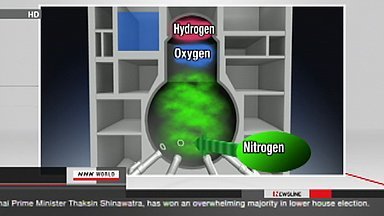 by Edano via Www3.nhk.or.jp 7/4/2011 3:48:20 PM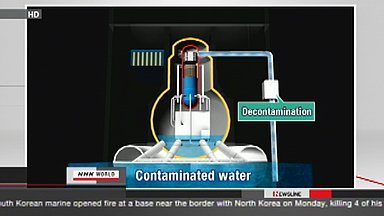
www3.nhk.or.jp
Water flow falls at No.1 reactor, but restored
The volume of cooling water flowing into the No.1 reactor of the Fukushima Daiichi nuclear plant fell on Monday, forcing workers to inject additional water.
A cooling system is in place at the number 1, 2 and 3 reactors. The system injects 3.7 tons of water every hour into the No.1 reactor.
Tokyo Electric Power Company says the reactor's water flow began to decrease gradually around 9 PM on Sunday night. By 8:13 AM on Monday, only about 3 tons of water was flowing into the No. 1 reactor, setting off an alarm.
Workers immediately began injecting double the usual amount of water. They managed to restore normal water flow in the reactor before 9 AM.
TEPCO says there was no change in temperature or pressure in the No.1 reactor.
The utility says some kind of debris may have clogged the hoses, reducing the water flow, and that it is checking to see how the failure occurred.
Monday, July 04, 2011 17:29 +0900 (JST)
www3.nhk.or.jpby Edano via Www3.nhk.or.jp 7/4/2011 3:49:43 PM- mafia meeting in paris:
Japan's leading business lobby, Areva agree on nuclear safety
PARIS, July 4, Kyodo
english.kyodonews.jpby Edano 7/4/2011 3:51:48 PM - Chubu Electric calls on state to support efforts to restart Hamaoka
TOKYO, July 4, Kyodo
Chubu Electric Power Co. President Akihisa Mizuno called Monday on the industry ministry to support the utility's efforts to seek an early resumption of operations of its Hamaoka nuclear power plant, which has been shut down at the government's request for safety reasons.
In a request handed to industry minister Banri Kaieda, Chubu Electric said it wants the government to explain to rating agencies and financial institutions that Hamaoka would be suspended for a ''limited period'' and sought the utility's exemption from petroleum and coal tax during the period of the plant's suspension.
The company also wants the government to set something like a moratorium over the payment of contributions to a state-backed entity, which is expected to be set up to financially assist Tokyo Electric Power Co. pay massive compensation to those affected by the crisis at the Fukushima Daiichi nuclear power plant, Mizuno said. english.kyodonews.jpby Edano 7/4/2011 3:53:21 PM  @Edano Talking about Mafia, during my ongoing research on Kurion I found a connection from one of their seniors to Bloomberg and CNBC. Cute, isn't it?by Pedro Jesus 7/4/2011 3:54:42 PM
- In Le Monde The Nuclear Safety Authority (ASN) announced Monday, July 4, it authorized the operation for another ten years of the nuclear reactor number one station Fessenheim (Haut-Rhin), subject to work. The reactor "is able to be operated for a period of ten additional years provided you follow a number of requirements," said the president of the ASN, Andre-Claude Lacoste. ASN requests including building before June 30, 2013, the floor slab of concrete on which the reactor was built.
Built in 1977, Fessenheim is the oldest nuclear power plant operated by EDF. It consists of two pressurized water reactors of 900 megawatts each. Many Alsatian organizations are concerned about seismic hazard in the region. Fessenheim was designed to withstand an earthquake of magnitude 6.7 or 0.5 more than the earthquake in Basel in 1356, estimated at 6.2. This item is screaming environmentalists who protest that we can evaluate from an earthquake stories of monks at a time when seismographs did not exist, and determine its magnitude on a scale developed six centuries later. (with google translate)by Olivier 7/4/2011 3:54:46 PM - European Union to require radiation checks on food from Shizuoka
BRUSSELS, July 4, Kyodo
The European Union has decided to require that food and farm items produced in Japan's Shizuoka Prefecture be inspected for radioactive contamination before being imported to the region, in the wake of radiation leaks from the Fukushima Daiichi nuclear plant, the bloc's executive body said Monday.
The decision came after the recent discovery in Shizuoka of radioactive substances above the legal limit in tea leaves and in France of radioactive cesium at more than double the EU limit in Shizuoka-produced green tea leaves.
The European Council also said the European Union has lifted such requirements for food products from Niigata and Yamagata prefectures as their safety has now been confirmed. english.kyodonews.jpby Edano 7/4/2011 3:55:00 PM - @Pedro Jesus : i am not surprised :) but when can we see your researches ?by Edano 7/4/2011 3:55:46 PM
- @all, anyone knows whether the FDA imposes similar restrictions in the US?by Peter Melzer 7/4/2011 3:56:55 PM
- i drink green tea, i looked on the package, it does not say where it is from :(by Edano 7/4/2011 3:57:27 PM
- Experts urge gov't to improve info disclosure on nuclear crisis
TOKYO, July 4, Kyodo
english.kyodonews.jpby Edano 7/4/2011 3:59:27 PM - @Edano I've started writing the text but there's still a lot of networking that requires more in-depth investigation. I'm going to post a brief schematics of the networking so others can assist because there's more information than I can handle at the moment and I'm very busy with work (music). I've traced connections from Kurion all the way to the Weapons Industry. Not nuclear, though, only conventional weapons, so far. I can't foresee a specific date but I'll try my best to post something in the near future.by Pedro Jesus 7/4/2011 3:59:31 PM
- @Pedro Jesus : yes, post it and some members will lurk deeper.by Edano 7/4/2011 4:00:47 PM
- Fukushima to begin checking people for internal exposure next week
FUKUSHIMA, Japan, July 4, Kyodo
english.kyodonews.jpby Edano 7/4/2011 4:01:24 PM - The announcement of the nuclear safety authority (ASN): www.asn.fr (in french). Note that the ASN is asking EDF to increase its resistance to corium in case of serious accidents with piercing of the tank; to install some technical rescue to evacuate a lasting residual power in case of LOCA.by Olivier 7/4/2011 4:02:00 PM
- @Edano , "Water flow falls at No.1 reactor, but restored" . This type of information is totally cryptic and very disconcerting. Where do the 3.7 tons of water every hour precisely go, and how can it be that they suddenly do not arrive in the vessel?by Peter Melzer 7/4/2011 4:02:43 PM
- @Peter Melzer : yes, this is a typical tepco info .... :) imagine, extreme angles, high pressure, human error. choose one of these reasons !by Edano 7/4/2011 4:04:41 PM

Japan Earthquake | Page 1828
- Who's Blogging
-
 hudebnik
 alblee
 UKVal
UKVal Jonathan Keebler
 Oliver (ScribbleLive)
 kaykodh
 Markfm
 Angie
Angie Mid Valley
 Matt (ScribbleLive)
 George Gibb
- elainekirk
 PKelley
- lillymunster
 dean
dean- bo
 Edano
Edano- Deb
- Pedro Jesus
 IanGoddard