Japan Earthquake | Page 2157
 seems to be casting a shadow on the building.. maybe it's just meby dean 8/15/2011 7:26:36 PM
- must be a shadow of somethingby dean 8/15/2011 7:27:37 PM
 @dean i go looky tooby elainekirk 8/15/2011 7:28:13 PM
 Oh new lighting set up. It looks like they have flood lights to the left and further away from #1. It is glowing against that low garage building and glowing through the vent tower and bushes. Man the plants are taking over. Maybe no godzilla but they seem to have man eating plants taking over. I don't think they had lights there before. I saw them doing the metal frame installation the other day so maybe they are working on that down there?by lillymunster 8/15/2011 7:28:26 PM
- I agree on the plants taking over ,,, I hope they don't grow into the electrical duct banks and cause a short or something...by dean 8/15/2011 7:30:55 PM
- Tritium being reported in water at Fuku. Is this concerning or routine for the situation? ex-skf.blogspot.comby lillymunster 8/15/2011 7:32:57 PM
- @dean I'm worried one of the workers is going to trip but I doubt landscaping is high on the priority list right now.. :-0by lillymunster 8/15/2011 7:33:29 PM
- The Chinese just ratted out Japan "According to the State Oceanic Administration, the area said to be affected by radioactive materials is a 252,000 square-meter area inside the 800 kilometer off the coast of Fukushima. Cesium-137 was found maximum 300 times the level found in the Chinese coastal waters, and strontium-90 was found maximum 10 times the level. " ex-skf.blogspot.comby lillymunster 8/15/2011 7:35:37 PM
- Japan, only 15 reactors left running! www.bloomberg.comby lillymunster 8/15/2011 7:38:49 PM
- @lillymunster I think China are getting angry plus to highlight fuku takes attention from their internal problemsby elainekirk 8/15/2011 7:39:34 PM
- Tritium showing up where it did is not good to me and suggests a cross talk of water flow from the facility to the ground water and then to the intakes.by dean 8/15/2011 7:39:57 PM
- www.nrc.gov article on tritium... it's just not good stuff to begin to be reportedby dean 8/15/2011 7:43:47 PM
- In 1976, EPA established a dose-based drinking water standard of 4 mrem per year to avoid the undesirable future contamination of public water supplies as a result of controllable human activities. In so doing, EPA set a maximum contaminant level of 20,000 picocuries per liter (pCi/L) for tritium. This level is assumed to yield a dose of 4 mrem per year.by dean 8/15/2011 7:46:44 PM
- @dean I get lost in all the diferent named measurementsby elainekirk 8/15/2011 7:49:17 PM
- @dean is tritium a short lived thing indicating more ongoing reactions etc. or sticks around a long time creating the public health concern?by lillymunster 8/15/2011 7:49:53 PM
- by dean 8/15/2011 7:50:22 PM
- @elainekirk Wiki has some good write ups that usually have comparison charts with other measurements. I can wrap my head around seiverts and becquerels so I try to convert to those to make more sense of things. I put a conversion calculator link on the group page, down toward the bottom in the side links.by lillymunster 8/15/2011 7:51:30 PM
- long 1/2 life @ lillyby dean 8/15/2011 7:52:14 PM
- 12.3 year 1/2 life @ lillyby dean 8/15/2011 7:53:40 PM
- @dean @lillymunster I dont understand the 35msv reading if they used a gamma counter and why would the chernobyl bloke be talking msv when his studies at chernobyl didnt use them it stinksby elainekirk 8/15/2011 7:56:38 PM
- added the english translation of the Yamashita led study to be done at Fukushima to the website documents so everyone can read it. wp.me
I noticed a very vague reference to maybe getting people medical care but in the manner written I personally don't put much stock in it since it outlined nothing and the rest of the study is not geared at public health and early intervention.by lillymunster 8/15/2011 7:56:44 PM  Tritium is an uncommon product of the nuclear fission of uranium-235, plutonium-239, and uranium-233, with a production of about one per each 10,000 fissions.[7][8] This means that the release or recovery of tritium needs to be considered in the operation of nuclear reactors, especially in the reprocessing of nuclear fuels and in the storage of spent nuclear fuel. The production of tritium was not a goal, but rather, it is just a side-effectby Anon 8/15/2011 7:56:58 PM
- en.wikipedia.org info on tritiumby dean 8/15/2011 7:58:38 PM
- @elainekirk msv I could understand as a calculated from a gamma counter. I think there is a conversion of clicks per minute or however the gamma counter records then it can be converted to a msv type reading.by lillymunster 8/15/2011 7:59:15 PM
- @lillymunster those studies say the cases started appearing at chernobyl +5yrs I worry that they are not interested in anything but the study the 2002 paper update says that clean up only reduces risk by 15%by elainekirk 8/15/2011 7:59:53 PM
- @anon ty for thatby elainekirk 8/15/2011 8:00:34 PM
 Traces of radioactive sulfur measured at Scripps Pier reveal extent of leakage from damaged Fukushima reactor: Atmospheric chemists at UCSD have reported the first quantitative measurement of the amount of radiation leaked from the damaged nuclear reactor in Fukushima, Japan, following the devastating earthquake and tsunami earlier this year. Neutrons and other products of the nuclear reaction leak from fuel rods when they melt. Seawater pumped into the reactor absorbed those neutrons, which collided with chloride ions in the saltwater. Each collision knocked a proton out of the nucleus of a chloride atom, transforming the atom to a radioactive form of sulfur.
When the water hit the hot reactors, nearly all of it vaporized into steam. To prevent explosions of the accumulating hydrogen, operators vented the steam, along with the radioactive sulfur, into the atmosphere.
In air, sulfur reacts with oxygen to form sulfur dioxide gas and then sulfate particles. Both blew across the Pacific Ocean on prevailing westerly winds to an instrument at the end of the pier at UCSD’s Scripps Institution of Oceanography where Thiemens’ group continuously monitors atmospheric sulfur.
Using a model based on NOAA’s observations of atmospheric conditions at the time, the team determined the path air took on its way to the pier over the preceding 10 days and found that it led back to Fukushima. After accounting for losses along the way as the sulfate particles fell into the ocean, decayed, or eddied away from the stream of air heading toward California, the researchers calculated that 400 billion neutrons were released per square meter surface of the cooling pools, between March 13, when the seawater pumping operation began, and March 20, 2011.
Concentrations a kilometer or so above the ocean near Fukushima must have been about 365 times higher than natural levels to account for the levels they observed in California. www.lajollalight.comby Majj 8/15/2011 8:00:57 PM- @elainekirk what chernobyl study are you looking at?by lillymunster 8/15/2011 8:01:42 PM
 @all Does anyone know the half-life of radioactive sulfur?by LM 8/15/2011 8:02:54 PM
- @lillymunster if you start at pg 66 www.oecd-nea.orgby elainekirk 8/15/2011 8:03:14 PM
- <80 days or so LMby dean 8/15/2011 8:03:48 PM
- @LM they all appear to be really short lived en.wikipedia.orgby lillymunster 8/15/2011 8:04:45 PM
- most of the radioactive sulfurs are much shorter 1/2 life tho.. 170 minutes so it depends on which oneby dean 8/15/2011 8:05:00 PM
- @Lilly @dean Thanks! I'm a little relieved....by LM 8/15/2011 8:06:07 PM
- the biological 1/2 life is short @ LMby dean 8/15/2011 8:07:45 PM
- Health risks
Tritium is an isotope of hydrogen, which allows it to readily bind to hydroxyl radicals, forming tritiated water (HTO), and to carbon atoms. Since tritium is a low energy beta emitter, it is not dangerous externally (its beta particles are unable to penetrate the skin), but it is a radiation hazard when inhaled, ingested via food or water, or absorbed through the skin.[14][15][16][17] HTO has a short biological half-life in the human body of seven to 14 days, which both reduces the total effects of single-incident ingestion and precludes long-term bioaccumulation of HTO from the environment.by dean 8/15/2011 8:08:59 PM - @elainekirk community doses are a bit over my head, trying to figure the formula they use and what that means as an average individual dose. The chart in gy units. Let me see if I can mash that through a converter.by lillymunster 8/15/2011 8:09:41 PM
- heh. This site has a website widget to add radiation conversion calcuations to a website. www.unitconversion.orgby lillymunster 8/15/2011 8:12:23 PM
- HEADING home .. will be back laterby dean 8/15/2011 8:14:36 PM
- @dean safe journey :)by elainekirk 8/15/2011 8:14:51 PM
- @lillymunster thank goodness you can get your head round it it flumoxes meby elainekirk 8/15/2011 8:15:20 PM
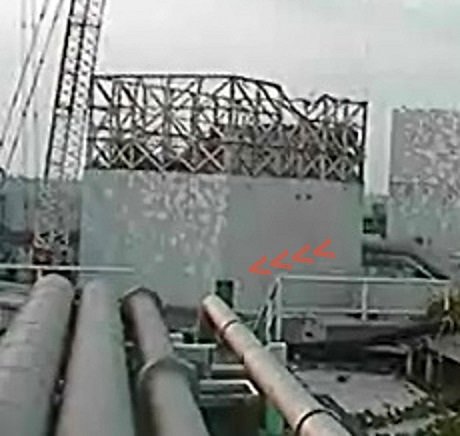
We do have a new bit
by elainekirk 8/15/2011 8:16:22 PM La Jolla research being picked up by others now; US News&World Report, Bloomberg...California Researchers Detect Radioactive Release From Fukushima Plant
www.bloomberg.comby Panserbjorne9 8/15/2011 8:18:16 PM- @elainekirk messing with various online calculators none cover all the bases. blah.by lillymunster 8/15/2011 8:18:27 PM
- @lillymunster I believe that it has to be a deliberate move to stop people making comparisons - it is alright them bleating on about stress but they are creating stress by concealing so obviouslyby elainekirk 8/15/2011 8:21:36 PM
Japan Earthquake | Page 2157
- Who's Blogging
-
 hudebnik
 alblee
 UKVal
UKVal Oliver (ScribbleLive)
 Jonathan Keebler
 kaykodh
 PKelley
 Markfm
 Angie
Angie Deb
Deb Mid Valley
- Pedro Jesus
 Matt (ScribbleLive)
 George Gibb
- elainekirk
- lillymunster
- dean
 bo
bo Edano
Edano IanGoddard