Japan Earthquake | Page 1221
 @dean the issue was the seals were considered very vulnerable. Quite wjhere the carbon csme in I'm not sure, but that was debated over at the Reuters blogby UKVal 5/16/2011 9:29:11 PM
 I need to step away for awhile.. will be back later thoby dean 5/16/2011 9:29:18 PM
 @dean be well Deanby Meretisa 5/16/2011 9:29:39 PM
 Timeline of events in Japan
Published: May 12, 2011
The strongest earthquake ever recorded in Japan at a magnitude of 8.9 struck the country on March 11. Below is a timeline of events following the earthquake and tsunami and the effect on nuclear power plants in Japan.
March 11 - May 12
FRIDAY, MARCH 11
* The earthquake took place at roughly 2:46 p.m. locally. The epicenter was located about 130 kilometers off the east coast of the island.
* Eleven reactors shut down in the quake effected area
* Cooling problem at TEPCO's 4,600 MW Fukushima Daiichi nuclear plant on the northeast coast of Japan. Fukushima Daiichi is a six-reactor plant that uses GE, Hitachi and Toshiba boiling water reactor technology. TEPCO confirms water levels falling inside reactors at the plant and says it is trying to avert the exposure of nuclear fuel rods by restoring power to its emergency power system so that it can pump water inside the reactors.
* Fire reported at Tohoku Electricity Co.’s 2,100 MW Onagawa nuclear plant, which has since been extinguished. The Onagawa consists of three boiling water reactor units.
The rest of the timeline here: www.powergenworldwide.comby joniver 5/16/2011 9:29:43 PM @dean It's on my googledocs. Copying should work. I've been updating as the NYT does (that's the source) but they are lax. A week or two behind. They're still on April 29th.by radioguy 5/16/2011 9:29:57 PM
- UKVal.. the control rods at the japanese facilities have a history of cracking also... and it was essentially acceptable to let that happenby dean 5/16/2011 9:30:00 PM
- hi Meretisa.. tyby dean 5/16/2011 9:30:20 PM
- I can copy it into extra sheets and give edit access.by radioguy 5/16/2011 9:30:38 PM
- @Dean, TKS !by wtm 5/16/2011 9:30:41 PM
- @dean hope you are feeling better. hugsby Meretisa 5/16/2011 9:30:44 PM
- Mods please delete one of those. Thanks.by joniver 5/16/2011 9:31:11 PM
 @Bobby1 How "Long-Term" one must wonder... What's our peak ablation rate? ;)by Rob in SF 5/16/2011 9:34:00 PM
 by Reed via Asahi-net.or.jp 5/16/2011 9:35:13 PM
 Air Radiation Level In Tokyo, Unofficial Version
As this blog has reported both in English and Japanese, the official number for the air radiation level in Tokyo is measured at only one location in Shinjuku, on top of the building about 18 meters from the ground.
However, there are many unofficial numbers, i.e. measured by concerned citizens and residents at the level where most people live and work - 1 meter above the ground.
Here is a Japanese site, "Environmental radiation monitoring by volunteers who are engaged in radiation and nuclear science". The site name says it all.
Looking at the numbers in different locations in Tokyo (PDF file for download), the radiation level varies significantly. To measure only at the Shinjuku location and tell the residents in Tokyo that the radiation level in Tokyo is back to normal range is highly misleading.
Here's some numbers from the "Environmental radiation monitoring" latest PDF file that exceed the "official" number (0.0629 microgray/hour, or microsievert/hour, 5/17/11)
Nishi-Shinjuku, Shinjuku-ku: 0.124 microsievert/hour, 100 cm above the side walk, 5/10/11
Kyobashi, Chuo-ku: 0.071 microsievert/hour, 100 cm above concrete, 5/10/11
Hongo, Bunkyo-ku: 0.14 microsievert/hour, 100 cm above asphalt, 5/10/11
Kanamachi, Katsushika-ku: 0.359 microsievert/hour, 100 cm above sand, 5/10/11
Shimo-Shakujii, Nerima-ku: 0.074 microsievert/hour, 100 cm above dirt, 5/6/11
Yoyogi, Shibuya-ku: 0.114 microsievert/hour, 100 cm above asphalt, 5/10/11
Nihonbashi Nakasu, Chuo-ku: 0.111 microsievert/hour, 100 cm above asphalt, 5/10/11
Kitano-maru Park, Chiyoda-ku: 0.085 microsievert/hour, 100 cm above dirt, 5/10/11
Fuchu City: 0.091 microsievert/hour, 100 cm above asphalt, 5/10/11
The number in Kanamachi, 0.359 microsievert/hour, would translate to more than 3 millisieverts per year. (8.61 microsieverts per day x 365 = 3.142 millisieverts per year)by Veenie 5/16/2011 9:36:12 PM- @radioguy "They're still on April 29th." Typical. Everyone is slacking off due to the world ending on Saturday.by Rob in SF 5/16/2011 9:36:16 PM
 @Rob in SF Cesium release has been pretty constant since April 1, it seems that this can go on for months or years. It's still spitting out Te-129m and Te-129 at about half the rate of Cs-137.by Bobby1 5/16/2011 9:36:36 PM
- @Bobby1 Years sounds right, esp. with poor cooling 'system'.
Per Chernobyl: Three different lavas are present in the basement of the reactor building: black, brown, and a porous ceramic. They are silicate glasses with inclusions of other materials within them. The porous lava is brown lava that dropped into water and thus cooled rapidly. en.wikipedia.orgby Rob in SF 5/16/2011 9:43:21 PM - @Veenie Look at the difference in radiation levels between eye level and ground where rain collects. How much is your feet going to receive vs head? What about small children? And of course inhaling this stuff. www.youtube.comby Bobby1 5/16/2011 9:43:35 PM
 Re Veenies post on Air Radiation in Tokyo - a blog article by Professor Kunihiko Takeda of Chubu University shows how radiation readings taken at ground level can be over six times higher than those measured 1 meter above ground. Since recorded levels diminish with height, he worries that many local governments are only measuring readings at 15 meters above ground. Original blog entry: takedanet.com Google translation: translate.googleusercontent.comby es 5/16/2011 9:43:48 PM
- Ok - the control rod seals are 'graphitar' & there are degredation & fatigue problems problems hps.ne.uiuc.eduby UKVal 5/16/2011 9:45:03 PM
- @Bobby1 I am aware of it.....it was all made clear long ago when Chernobyl was messured for Radiation.... criminal that they do not messure child size at least !!by Veenie 5/16/2011 9:45:45 PM
 You should notice that radiation not only depends on the half-life of the particulates but also their concentration. There still are plumes of radioactive particulates flying around the world. It is hard to estimate the trend. Higher radiation levels at some parts of the world do not intrinsically mean more radiation being emitted from Fukushima.by Pedro Jesus 5/16/2011 9:46:49 PM
- @Pedro Jesus AND EVERY AGENCY has GOT TO MESSURE !!!...especially since we all know that massive radiation has been and CONTINUES to be leaked due to core melting STEAMby Veenie 5/16/2011 9:48:17 PM
- @UKVal Chilling. Ooops. Rods stuck! Nuclear Plant Aging Research... Oy.by Rob in SF 5/16/2011 9:48:22 PM
- @Veenie The more the better so we can all assess the situation.by Pedro Jesus 5/16/2011 9:49:07 PM
- On a related note, Microwave sales on the West Coast are expected to drop 85% due to Natural capabilitiesby Veenie 5/16/2011 9:49:38 PM
- @Veenie What's more, solar cells now producing energy at night!by Rob in SF 5/16/2011 9:50:36 PM
 @Veenie LOL!by LM 5/16/2011 9:50:53 PM
- Gargle with fuku water, for a glowing smileby Markfm 5/16/2011 9:54:01 PM
 @Rob in SF: So developing my radiation to electricity cell technology would be a waste of time. No one around to buy it. :-(by DonnerT 5/16/2011 9:57:49 PM
- re control rods: here's the full paper: www.osti.govby UKVal 5/16/2011 9:59:04 PM
- @DonnerT Cockroaches will be all over that tech.by Rob in SF 5/16/2011 9:59:26 PM
- How Radioactive Water May Be Escaping From Fukushima Nuclear Power Plant
truebluenz.comby UKVal 5/16/2011 10:07:26 PM - @Bobby1 and others about that - I said earlier that I would try to get more info on the CTBTO data. I called the Swedish Radiation Safety Agency but they told me to contact the defence ministry - all the data they get from Vienna goes through there so I will try to call tomorrow. If I understood the man correctly even the radiation agency had problems getting this data in the first days of the crisis... I found this on the CTBTO site : 'As interest in CTBTO monitoring data has increased over the past few days, more scientific institutions are being granted access to this pool of information, upon request'. bit.lyby Jill in Sweden 5/16/2011 10:08:26 PM
- @Jill in Sweden DEFENSE MINISTRY??.......woooooooooowby Veenie 5/16/2011 10:11:19 PM
- @Jill in Sweden Thanks. This board is a scientific institution, isn't it? If we could get info on all the radionuclides they measure for every monitoring station for every day, it would be a great help.by Bobby1 5/16/2011 10:14:40 PM
- @Veenie hehe yes here they have nice people that the public can call and chat with concerning all kinds of things like our equivalent to the Freedom of Information Act and what info we can and cannot get... or at least in theory. I am anyway going to call and see what they have to say about teh CTBTO data...by Jill in Sweden 5/16/2011 10:15:06 PM
- @Jill in Sweden Thank you for following up with the CTBTO data hunting !by Reed 5/16/2011 10:16:29 PM
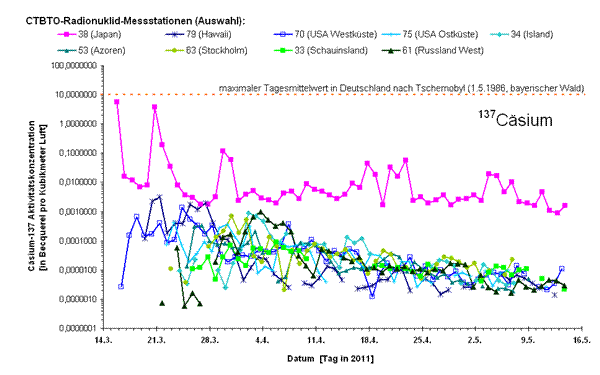
Meanwhile cesium continues to be released unabated, only the very slow reduction of decay heat of the corium blobs will reduce it. As the winds turn more east in June, and more frequent rainfall events occur, more of it will be deposited in Japan. www.bfs.de
by Bobby1 via Bfs.de 5/16/2011 10:24:37 PM- back for awhile.. greetings to allby dean 5/16/2011 10:26:27 PM
 @dean hiby elainekirk 5/16/2011 10:26:53 PM
- Monitoring post readings midnight till 9p.m. Japan time 16th May
www.tepco.co.jpby elainekirk 5/16/2011 10:27:56 PM - elaine greetings..by dean 5/16/2011 10:29:08 PM
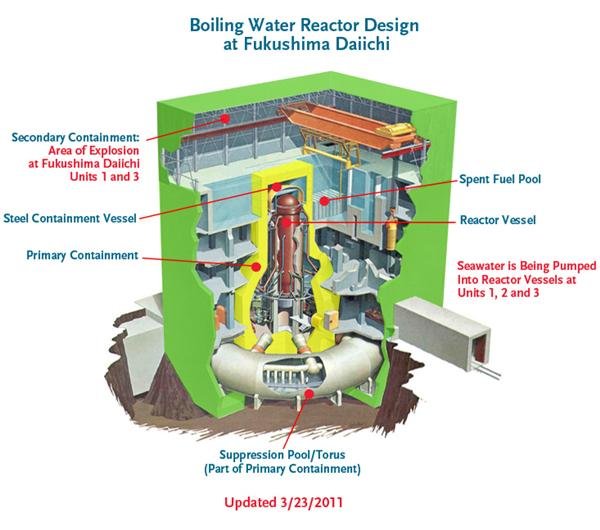
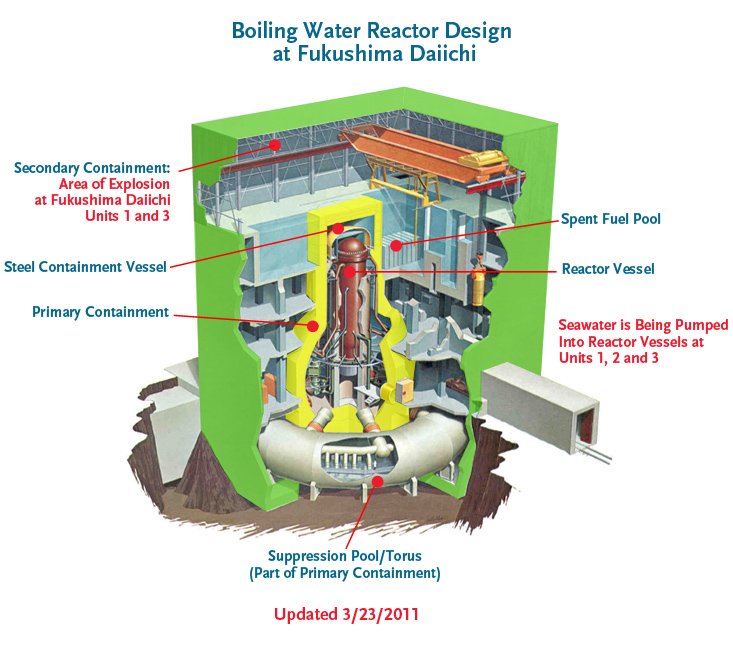
@elainekirk Hi, could you pin the schematics for Fukushima reactors that I found, please? nei.cachefly.net
by Pedro Jesus via Nei.cachefly.net 5/16/2011 10:30:41 PM- @elainekirk Also, Dean found this spreadsheet very helpful. I think it would be good to pin it as well if it is not already. spreadsheets.google.comby Pedro Jesus 5/16/2011 10:31:35 PM

Japan Earthquake | Page 1221
- Who's Blogging
-
 hudebnik
 alblee
 UKVal
UKVal Jonathan Keebler
 Oliver (ScribbleLive)
 kaykodh
 Markfm
 Angie
Angie Mid Valley
 Matt (ScribbleLive)
 George Gibb
- elainekirk
 PKelley
 lillymunster
 dean
dean bo
bo Edano
Edano Deb
Deb- Pedro Jesus
 IanGoddard